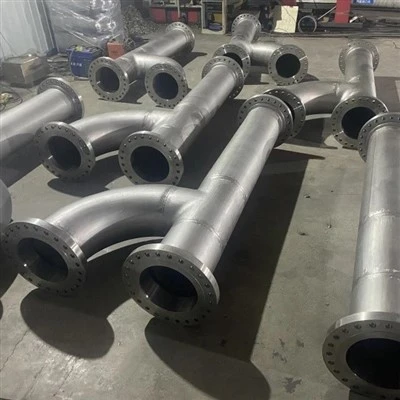
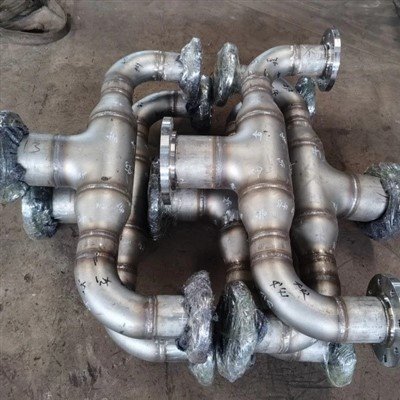
UNS N10276, universally known as Hastelloy C276, is a premier nickel alloy and has exceptional corrosion resistance. While its primary property is built on resisting everything from oxidizing to reducing agents, its hardness is equally critical for its performance. This blog delves into the precise chemical composition of Hastelloy C276 and its strength and hardness.

UNS N10276 Chemical Composition
The properties of Hastelloy C276 are a direct result of its chemical composition, as defined by standards ASTM B574. The table below outlines the main compositions.
|
Element |
Content (%) |
Functions |
|
Nickel (Ni) |
Balance |
Provides the fundamental austenitic (face-centered cubic) matrix, ensuring inherent ductility and toughness. |
|
Molybdenum (Mo) |
15.0 - 17.0 |
The primary solid solution strengthener. Molybdenum atoms, being larger than nickel atoms, create significant lattice strain, drastically increasing strength and hardness. It also confers superb resistance to reducing acids and pitting/crevice corrosion. |
|
Chromium (Cr) |
14.5 - 16.5 |
Provides resistance to oxidizing media (e.g., nitrates, ferric salts) and forms a protective passive film. Contributes moderately to solid solution strengthening. |
|
Tungsten (W) |
3.0 - 4.5 |
Acts similarly to molybdenum as a potent solid solution strengthener, further enhancing high-temperature strength and localized corrosion resistance. |
|
Iron (Fe) |
4.0 - 7.0 |
A controlled impurity that provides some solid solution strengthening while maintaining alloy compatibility. |
|
Cobalt (Co) |
2.5 max |
Typically controlled as an impurity. |
|
Manganese (Mn) |
1.0 max |
A deoxidizer used during the melting process. |
|
Vanadium (V) |
0.35 max |
Controlled as an impurity. |
|
Silicon (Si) |
0.08 max |
Kept at a very low level to prevent the formation of brittle intermetallic phases. |
|
Carbon (C) |
0.01 max |
Strictly minimized to avoid the precipitation of carbide phases at grain boundaries during welding or thermal exposure, which could impair corrosion resistance. |
|
Phosphorus (P) |
0.04 max |
|
|
Sulfur (S) |
0.03 max |
A harmful impurity kept low to maintain purity and weldability. |
Understanding UNS N10276 Hardness
The hardness of a metal refers to its resistance to deformation, such as indentation, scratching, or abrasion. The hardness of Hastelloy C276 is not achieved through heat treatment, but through a fundamental metallurgical mechanism called solid solution strengthening.
Why is Hastelloy C276 So Hard?
Pure nickel has a relatively soft crystal structure and good ductility. In Hastelloy C-276, molybdenum (Mo) and tungsten (W) are primarily dissolved into the nickel lattice to form a solid solution. The atomic sizes of these "solute" atoms differ from those of the "solvent" nickel atoms.

The larger molybdenum and tungsten atoms create localized distortions or strains within the ordered nickel lattice. When forces are applied to the material, the movement of dislocations (defects that cause plastic deformation in metals) is significantly hindered by these strain fields.
Moving dislocations within the distorted lattice requires more energy. This overall restriction on dislocation movement makes the entire alloy stronger, tougher, and harder than pure nickel or materials with lower alloy content. Chromium and iron also contribute to this effect, but not as significantly as molybdenum and tungsten.
UNS N10276 Hardness Values
Hastelloy C-276 is typically supplied in the annealed condition, which provides an optimal balance of corrosion resistance, ductility, and strength. Its hardness in this state is consistently high due to the inherent solid solution strengthening.
Typical Hardness Range (Annealed Condition):
Rockwell Hardness (HRC): 20 - 26 HRC.
Brinell Hardness (HBW): 200 - 220 HBW.
Resistance to Abrasion and Erosion: The hard surface resists wear from slurries, suspended particles, and high-velocity fluids.
Structural Integrity: The high strength allows components to maintain their shape and resist deformation under high pressure and mechanical load.
Fabrication Consideration: While beneficial in service, this hardness means that machining and cold working C276 require more power and appropriate tooling compared to softer materials.
Conclusion
By increasing the Mo and W content to enhance corrosion resistance while reducing the carbon and silicon content, researchers have created an alloy that is both one of the most corrosion-resistant materials on Earth and one of the easiest-to-machine high-performance nickel alloys.
When choosing Hastelloy C276, you are choosing an alloy with just the right balance of hardness: strong enough to resist deformation under harsh operating conditions, yet soft enough to be confidently formed and welded.