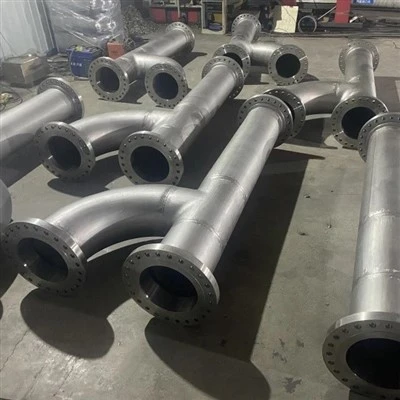
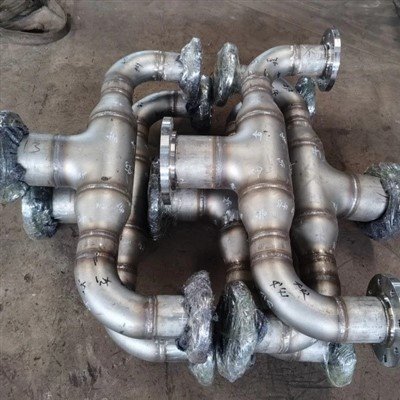
UNS N10675, also known as Hastelloy B3, is a nickel-based alloy with excellent resistance to reducing acid corrosion and superior thermal stability. Straight tees made from this alloy are critical components in piping systems handling some of the most corrosive chemical environments.

The primary function of UNS N10675 Straight Tees is to form 90 degree branch connections, enabling the splitting or merging of fluids.
Chemical Processing Industry: Hydrochloric Acid Applications
UNS N10675 straight tees are widely used in hydrochloric acid systems handling various concentrations and temperatures. They are installed in reactor feed lines, distillation columns, and heat exchanger piping for the splitting or mixing of process fluids.
The alloy's high molybdenum content gives it excellent hydrochloric acid resistance, preventing catastrophic failures and ensuring the integrity of the piping network during continuous, high-throughput operation.
Pharmaceutical and Fine Chemical Manufacturing
In the pharmaceutical and fine chemical industries, UNS N10675 tees are widely used in processes involving concentrated sulfuric acid and other corrosive catalysts.
They are commonly used in applications requiring extremely high purity and corrosion resistance, such as reaction vessels, purification equipment, and pipelines, to prevent product contamination and ensure operational safety. This alloy exhibits excellent resistance to localized corrosion, such as pitting and stress corrosion cracking.
Acetic Acid and Acetic Anhydride Production
The production of acetic acid and its derivatives utilizes highly corrosive intermediates and catalysts. UNS N10675 straight-through tees are specified for use in critical piping of these units because they can withstand the strong reducing environment caused by acidic halides and other contaminants.
Using UNS N10675 straight-through tees reduces maintenance downtime and prevents unplanned shutdowns due to failures of components in high-temperature process sections.
Alkylation and High-Temperature Acid Processes
In specialized chemical processes such as alkylation units, sulfuric acid or hydrofluoric acid is used as a catalyst under high temperature and pressure. UNS N10675 straight-through tees provide reliable performance.
Compared to earlier nickel-molybdenum alloys, this alloy exhibits higher thermal stability and a reduced tendency to form harmful secondary phases, thus maintaining excellent corrosion resistance during long-term use in the weld heat-affected zone.
UNS N10675 Straight Tee Advantages

Corrosion Resistance
The main advantage of the UNS N10675 straight-through tee lies in its superior corrosion resistance in corrosive reducing media. The alloy's high molybdenum content makes it effectively resistant to hydrochloric acid corrosion at almost all concentrations and temperatures.
This makes the tee indispensable in chemical processes involving strong non-oxidizing acids, where stainless steel would rapidly fail. This corrosion resistance ensures the long-term integrity of the system, prevents unplanned downtime, and minimizes the risk of hazardous leaks in critical piping systems.
Thermal Stability and Integrity
UNS N10675 (Hastelloy B3) is designed to significantly improve the thermal stability of its predecessor, Hastelloy B-2. This means that when exposed to high temperatures for extended periods, especially in the heat-affected zone of the weld, the material exhibits extremely high resistance to the formation of harmful intermetallic compound phases and precipitates.
This characteristic is crucial for straight-through tees, as it ensures that the welded joint retains its corrosion resistance and mechanical strength after manufacturing, effectively eliminating common failure points in piping systems transporting high-temperature corrosive fluids.
Localized Corrosion Resistance
In addition to its overall corrosion resistance, the UNS N10675 straight-through tee also exhibits excellent resistance to localized corrosion, such as pitting and crevice corrosion.
The strict control of the alloy composition minimizes vulnerable microstructural areas, ensuring uniform corrosion resistance on the inner surfaces of the tee, including critical weld seams and branch connections.
High Mechanical Strength and Durability
These straight-through tees exhibit high mechanical strength and good ductility across a wide temperature range, from low to high. This inherent durability allows them to withstand not only internal pressure loads but also external forces such as pipe support loads, thermal expansion stresses, and water hammer effects.
Machinability and Weldability
UNS N10675 offers excellent machinability, enabling the manufacture of straight-through tees with dimensions precisely conforming to standards such as ASME B16.9.
Furthermore, its superior weldability is a significant advantage compared to earlier nickel-molybdenum alloys. It can be easily welded using common welding techniques such as GTAW, requiring minimal post-weld heat treatment, and retains excellent corrosion resistance in the welded state.