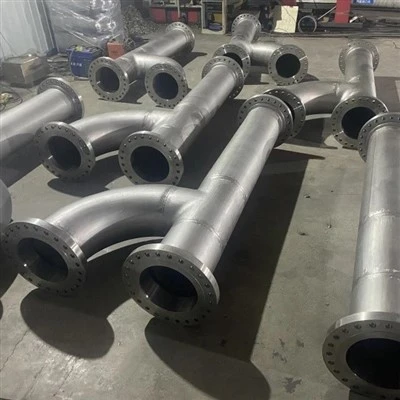
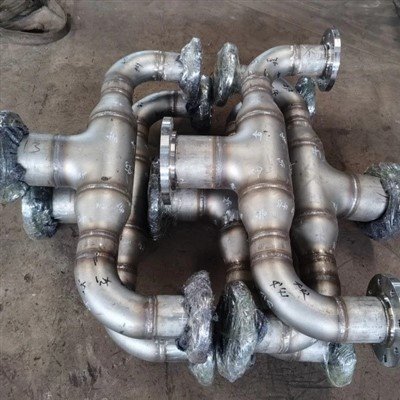
Threaded flanges, also called screwed flanges, are specialized pipe connectors featuring internal threads that screw directly onto externally threaded pipes or fittings without welding. Their primary function is to create leak-tight, demountable joints in pressurized systems while eliminating the need for field welding – a critical advantage in hazardous environments, maintenance-prone installations, or hard-to-access locations.
Unlike weld-neck or slip-on flanges, threaded variants leverage mechanical joining through precision-cut threads, enabling rapid assembly/disassembly.
This guide explores their engineering features, material grades, global standards, and best practices across industries where weldless reliability is non-negotiable.

Threaded Flange Features
Threaded flanges distinguish themselves through meticulously designed mechanical features that ensure robust, leak-free performance without fusion welding. The core element is the internal tapered thread, cut to exacting tolerances that create radial sealing pressure as the flange advances onto the pipe.
This taper induces metal-to-metal contact along the thread flanks, forming a seal that tightens under system pressure. Critical supplementary features include the raised face (RF) or flat face (FF) sealing surface, which mates with gaskets to prevent flange-to-flange leakage, and the shoulder stop at the thread's base that prevents over-tightening and maintains alignment.
Unlike weld flanges, threaded versions incorporate a thread relief groove at the bore exit to prevent thread deformation during machining and reduce stress concentration. For high-pressure services, flanges often include a counterbore to accommodate pipe end expansion under thermal cycling. Standard bore sizes match nominal pipe dimensions, while pressure classes dictate thickness and bolt hole patterns per ASME B16.5.
The absence of welding enables compatibility with thin-walled pipes and corrosion-resistant cladding that would degrade under welding heat.
Threaded Flange Advantages
The strategic adoption of threaded flanges delivers compelling operational and economic benefits, particularly in volatile or confined environments.
Rapid installation is paramount – joints assemble with basic hand tools, reducing labor time by 60–80% compared to welded alternatives. This proves invaluable in explosive atmospheres where hot work permits would halt production for hours.
Threaded systems also enable zero-downtime modifications: sections can be removed/replaced without pipe cutting or system drainage, minimizing disruption in critical water, steam, or hydraulic networks.
For maintenance crews, the non-destructive disassembly eliminates grinding/fume hazards while preserving pipe integrity for reuse. Material savings are significant – threaded joints require no beveling, back purging, or post-weld heat treatment, conserving costly alloys like Inconel 625 or Hastelloy C276.
Engineers leverage threaded flanges for thermal expansion management in cryogenic systems, where differential contraction could fracture welds; the mechanical joint accommodates micro-movement without leakage.
Additionally, they facilitate material hybridization, allowing carbon steel flanges to interface with stainless/alloy pipes without dissimilar metal welding – a key corrosion control tactic.

Threaded Flange Standards
Interoperability and safety demand strict adherence to international standards governing threaded flange dimensions, materials, and pressure ratings.
ASME B16.5 is the universal benchmark, defining pressure-temperature ratings, face types, and bolt patterns for NPT-threaded flanges from ½" to 24". Complementary standards include ASME B1.20.1 for NPT thread form and ASME B16.25 for butt-weld preparation.
In Europe, EN 1092-1 specifies flange geometries and PN ratings for BSPT threads. Critical industry-specific supplements include:
- API 6A for 10K–20K psi oil/gas services
- MSS SP-44 for large-diameter (26"-60") pipeline flanges
- ISO 7005-1 harmonizing ASME/EN/DIN/JIS dimensions
- ASME Section VIII Div. 1 Appendix 2 for flange stress calculations
Certifications like PED 2014/68/EU and NACE MR0175 impose additional material and traceability requirements. Non-compliance risks joint failure – e.g., using BSPT threads in ASME systems causes mismatched tapers and leakage.
Threaded Flange Grades
Threaded flange performance hinges on material grade selection, balancing corrosion resistance, strength, and cost. Common grades include:
|
Material Grade |
Key Properties |
Max Temp |
Typical Applications |
|
ASTM A105 |
Carbon steel, high strength |
538°C (1000°F) |
Steam, water, oil (non-corrosive) |
|
ASTM A182 F304/F316 |
Austenitic SS, pitting resistance |
816°C (1500°F) |
Chemical, marine, food processing |
|
ASTM A182 F11/F22 |
Chrome-Moly steel, creep resistance |
593°C (1100°F) |
Power gen, high-temp hydrocarbon |
|
ASTM A182 F51/F53 |
Duplex SS, chloride SCC resistance |
300°C (572°F) |
Offshore, seawater cooling |
|
ASTM B564 Alloy 625 |
Nickel-chromium, oxidation resistance |
982°C (1800°F) |
Furnaces, aerospace, nuclear |
For sour service, NACE-compliant grades like A694 F65 or A350 LF2 require hardness ≤22 HRC. Nuclear applications demand RCC-M or ASME III-certified alloys with controlled cobalt content. Alloy-clad flanges offer cost savings for corrosive media.
Threaded Flange Applications
Threaded flanges excel where welding is impractical or prohibited:
1. Oil & Gas Production
Wellhead control lines utilize 4130 alloy steel flanges (per API 6A) for 15K psi hydrogen sulfide service. Threaded connections enable quick Christmas tree component swaps during workovers.
2. Chemical Processing
In sulfuric acid alkylation units, Alloy 20 threaded flanges connect injection quills without welding-induced sensitization corrosion. Sealants like PTFE tape resist acid degradation.
3. Nuclear Power
Instrumentation lines in containment buildings use Inconel 690 threaded flanges for radiation resistance. Demountability allows sensor recalibration during outages.
4. Hydraulic Systems
Mobile equipment (cranes, excavators) leverage 3000# SAE J518 flanges for compact, vibration-resistant connections in confined spaces.
5. Renewable Energy
Geothermal plants deploy titanium Grade 2 flanges for brine handling, avoiding chloride stress corrosion at 200°C wellheads.
How to Use a Threaded Flange
Achieving leak-free threaded joints demands methodical execution:
Preparation
- Inspect threads for damage; chase with NPT/BSPT dies if needed
- Clean threads with solvent to remove oil/debris
- Apply sealant clockwise on male threads, covering 2-3 threads short of the end
Assembly
- Hand-tighten flange until shoulder contact
- Use flange alignment pins to match bolt holes
- Wrench-tighten per torque specs:
- Carbon steel: 1/4 turn past hand-tight
- Alloys: 1.5–2 turns (consult ASME PCC-1 Appendix K)
Sealing
- For >600 psi systems, use spiral-wound gaskets.
- Apply uniform bolt torque in star pattern
- Hydrotest at 1.5x working pressure
Maintenance
- Re-torque after 24 hours of thermal cycling
- Monitor for leakage with ultrasonic probes
- Replace sealants/gaskets during disassembly
Threaded flanges remain indispensable for balanced mechanical integrity and operational flexibility. By selecting ASME/EN-compliant designs, alloy-appropriate grades, and rigorous installation protocols, engineers ensure decades of service in the world's most demanding systems – no welding required.