China is one of the largest producers of stainless steel pipe in the world, and the range of suppliers is enormous: large integrated mills, specialized pipe makers, and thousands of trading companies. For an international buyer, that range creates a simple problem - some suppliers deliver certified, traceable material that performs exactly as specified, and others ship pipe that only looks the part.
The difference between them is rarely visible in a product photo or a price list. This guide explains, in plain terms, how to evaluate quality, certifications, and reliability before you place an order, and how to structure the decision so it can be defended, audited, and repeated.
Evaluate Chinese stainless steel pipe suppliers against a written purchase specification and verifiable evidence - not against price, country stereotypes, or the number of logos on a website.
|
Dimension |
What it means in practice |
|
Write the specification first |
Fix the grade, standard, manufacturing route, dimensions, tests, and documents before contacting suppliers. Suppliers can only be compared against a constant baseline. |
|
Manufacturer vs. trading company |
Neither model guarantees quality. Decide based on traceability, accountability, and the evidence you can verify. |
|
Product standards |
Match the standard to the service: ASTM A312 for austenitic pipe, ASTM A790 for duplex pipe, GB/T 14976 for the Chinese domestic seamless-pipe standard. "Equivalent" standards are not automatically interchangeable. |
|
Certifications that matter |
ISO 9001 verified as authentic where the order requires it, EN 10204 3.1 or 3.2 inspection documents where specified, PED 2014/68/EU conformity for European pressure service, and independent third-party inspection where risk justifies it. |
|
Traceability |
Every pipe should connect to a heat number and a mill test certificate. Use PMI to confirm chemistry - remembering that XRF cannot measure carbon. |
|
Reliability |
Demonstrated by audit reports, delivery records, references, and how a supplier handles complaints - not by website claims. |
|
Total cost |
Compare normalized quotations covering scope, documents, inspection, packaging, and terms - never the headline unit price. |
Table 1. Summary of the evaluation framework developed in this guide.
What should buyers define before comparing stainless steel pipe suppliers?
Write a complete purchase specification before you contact any supplier, because suppliers can only be compared against a fixed technical baseline - not against each other's sales claims.
Many sourcing failures begin before the first email is sent. "Stainless steel pipe" describes hundreds of different products: a welded 304 pipe for a handrail and a seamless 316L pipe for a pharmaceutical process line share a name and almost nothing else. A supplier who quotes both as one interchangeable item is telling you something important.
A workable purchase specification should define, at minimum:
Application and service conditions. The fluid, design temperature, design pressure, and corrosion environment. These determine almost everything else.
Grade. The alloy designation - for example 304/304L, 316/316L, 321, 347, or duplex grades such as 2205 (S32205). The grade is the alloy chemistry; it is not the product standard.
Manufacturing route. Seamless, welded, or cold-worked. Each has different integrity, cost, and tolerance characteristics.
Dimensions and tolerances. Nominal pipe size (NPS) or outside diameter, wall thickness (schedule), and length, with the tolerances you will accept.
Product standard. The specification the pipe must be manufactured and tested to, such as ASTM A312 or GB/T 14976 (see the next section).
Testing and documentation. Which tests are required and which EN 10204 inspection document type must accompany the delivery.
Delivery requirements. Incoterms, packaging, marking, and the destination market's regulatory requirements.
Once this baseline exists, every quotation can be compared line by line, and every deviation becomes visible. Buyers who skip this step end up comparing prices for different products - which is not a comparison at all.
Should you buy from a manufacturer or a trading company?
Neither business model guarantees quality - the decision should be driven by traceability, accountability, and what you can verify, not by the "factory" label.
China's stainless steel pipe market includes vertically integrated mills, specialized manufacturers, and a very large population of trading companies. Trading companies are not inherently risky - many are highly professional and add real value in sourcing, language, and logistics. But the two models distribute risk differently, and a buyer should know which one they are dealing with.
|
Factor |
Manufacturer |
Trading company |
|
Production control |
Direct control over the operations performed in-house; the sources of billet or strip and any outsourced processing or testing still need verification. |
Controls supplier selection and coordination, not the production floor. |
|
Traceability |
Direct line from heat number to finished pipe to certificate, for in-house operations. |
Depends on the underlying mill; an extra link must be documented. |
|
Sourcing flexibility |
Limited to their own equipment and grades. |
Can source many grades, forms, and mills - useful for mixed orders. |
|
Price |
Can be lower for standard products the factory actually makes - not automatic. |
Competitive for mixed or small orders; a trading margin is built in. |
|
Accountability |
One responsible party for both product and documents. |
Responsibility can be split between trader and mill if not contracted clearly. |
|
Verification needed |
Factory audit, equipment list, QMS review. |
Identify the actual mill; audit it or demand mill-issued certificates. |
Table 2. Manufacturer versus trading company: neither column is automatically "safer."
The practical rule: a trading company is acceptable when it identifies the producing mill and provides mill-issued documents; a manufacturer is acceptable when it can demonstrate the equipment and quality system it claims. Either way, the evidence requirements in the following sections apply identically.
Which product standards should stainless steel pipe meet?
The pipe must meet the product standard named in your purchase order, matched to its service - and suppliers who offer "equivalent" standards as automatically interchangeable should be treated with caution.
A common point of confusion deserves a plain-language explanation. A grade (such as 316L) tells you what the metal is made of. A product standard (such as ASTM A312) tells you how the pipe must be manufactured, tested, and documented. The same grade can appear under many standards with different requirements. "Equivalent" standards are usually similar in intent but not identical in detail - chemistry limits, tolerances, and test requirements differ, and a certificate can only attest to the standard it was actually tested against.
|
Standard |
What it covers |
Typical use |
|
ASTM A312/A312M |
Seamless, straight-seam welded, and heavily cold-worked welded austenitic stainless steel pipe for high-temperature and general corrosive service. |
Process piping, refineries, chemical plants |
|
ASTM A790/A790M |
Seamless and straight-seam welded ferritic/austenitic (duplex) stainless steel pipe for general corrosive service, with emphasis on stress-corrosion-cracking resistance. |
Chloride, marine, and offshore service |
|
ASTM A269 |
Seamless and welded austenitic stainless steel tubing for general corrosion-resisting and low- or high-temperature service. |
Instrumentation and general tubing |
|
ASTM A213 |
Seamless ferritic and austenitic alloy-steel boiler, superheater, and heat-exchanger tubing. |
Boilers, heat exchangers |
|
GB/T 14976 |
Chinese national standard for seamless stainless steel pipes for fluid transport; the 2025 edition (implemented February 2026) replaced the 2012 edition. |
Domestic-spec fluid piping in China |
Table 3. Selected product standards for stainless steel pipe and tube. Sources: ASTM International and the Chinese national standards database.
Two practical notes. First, for code-governed projects, specify the material specification and edition accepted by the governing construction code, and do not assume that ASTM and ASME designations are interchangeable. Second, when a Chinese supplier offers GB/T 14976 as an "equivalent" to ASTM A312, verify the actual requirements - chemistry, tolerances, and testing differ, and only a certificate against your named standard demonstrates compliance.
Which certifications actually matter when sourcing from China?
Only verifiable certifications matched to your application carry weight: ISO 9001 verified as authentic where the order requires it, EN 10204 3.1 or 3.2 inspection documents where specified, PED 2014/68/EU conformity for European pressure service, and independent third-party inspection where the risk justifies it.
Certification logos are easy to display and easy to fake. What separates meaningful evidence from decoration is whether the certificate can be independently verified and whether it actually covers what you are buying. The table below separates the four certification types that carry real weight.
|
Certification |
What it is - and is not |
How to verify it |
|
ISO 9001 |
A quality management system certificate. It says the supplier has audited processes - it does not certify that any specific pipe meets any specific standard. |
Look up the certificate in IAF CertSearch or with the issuing body; check validity, scope, and that the certification body is accredited. |
|
EN 10204 3.1 |
An inspection certificate issued by the manufacturer, with actual test results for the supplied material, validated by the manufacturer's inspection representative who is independent of production. |
Match certificate contents to the order and to the pipe markings. |
|
EN 10204 3.2 |
The same test results, additionally validated by the purchaser's representative or an inspector designated under official regulations - independent outside verification. |
Agree the validation scope in advance; the document is valid when countersigned as the standard requires and matched to the product marking and the order. |
|
PED 2014/68/EU |
European Union conformity requirements for pressure equipment with maximum allowable pressure above 0.5 bar. The obligation sits with the equipment manufacturer, but material documentation - and for main pressure-bearing parts in categories II–IV, a certificate of specific product control - is required. |
Check the material certificate type against the equipment category and the harmonized or approved material route claimed. |
|
Third-party inspection |
Pre-shipment inspection, during-production inspection, or factory audits performed by independent firms such as SGS, Bureau Veritas, TÜV Rheinland, and Intertek. |
Read the report's scope and date; an audit only attests to what the auditor observed, where, and when. |
Table 4. Certifications that carry weight - and what each one does and does not prove.
Three cautions apply. First, ISO 9001 certificates can be checked in minutes through the IAF CertSearch database, which confirms the certificate, the certification body's accreditation, and the accreditation body's standing in one search - a supplier who resists this check is answering your question for you. Second, ask for inspection documents by type: under EN 10204, a Type 2.2 test report contains non-specific results, while 3.1 and 3.2 inspection certificates report specific test results for the material supplied.
Where EN 10204 is not the governing regime, ASTM specifications require their own material test reports - state in the order which documentation regime applies. Third, the PED applies to pressure equipment above 0.5 bar maximum allowable pressure, and the conformity route depends on the equipment's category - a blanket promise of "PED-certified pipe" without reference to your equipment category and material documentation route is not a compliance strategy.
How can you verify material quality and traceability?
Tie every delivered pipe to a heat number and a matching inspection certificate, then confirm the chemistry independently - with the right method - whenever the risk justifies it.
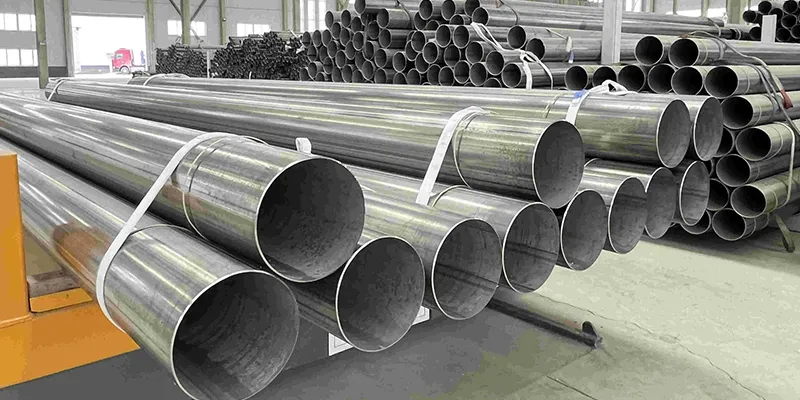
Traceability is the backbone of material quality. It is a simple chain: the mill performs a ladle (heat) analysis when the steel is melted; every pipe is marked with the heat number; the inspection certificate reports the test results for that heat and test lot; and the certificate must match the markings on the pipes you receive. On delivery, check that the heat number, test lot, dimensions, heat-treatment condition, and required inspection records all match the order - not chemistry alone. If any link is missing - unmarked pipe, a certificate without heat numbers, or numbers that do not correspond - the material cannot be proven to be what you paid for.
Buyers who cannot attend the mill in person commonly use positive material identification (PMI) to confirm chemistry. The method matters: handheld X-ray fluorescence (XRF) is fast and identifies most alloy families, including stainless steels and nickel alloys, but it cannot detect carbon. That means XRF cannot distinguish 316 from 316L - the "L" is a carbon limit - or confirm any other carbon-dependent requirement.
Where carbon content is critical, optical emission spectrometry (OES) or laboratory analysis is required. PMI also confirms surface chemistry only: it does not establish mechanical properties, heat-treatment condition, or weld integrity. Those are demonstrated by the tests the governing specification requires the manufacturer to perform - buyer-side checks are supplementary to, not a substitute for, those tests.
A risk-based testing program keeps verification proportional: routine orders may need only a document review and dimensional checks, while orders for pressure, corrosive, or safety-critical service justify witnessed or third-party testing, PMI sampling, and independent laboratory verification of retained samples.
What evidence shows that a Chinese pipe supplier is reliable?
Reliability is demonstrated by verifiable records - audits, delivery performance, references, and complaint handling - not by website claims or a polished catalog.
Quality is about the pipe; reliability is about the supplier. A supplier can pass every technical check and still be a poor partner through missed deliveries, poor communication, or denial when something goes wrong. The following evidence is difficult to fake and easy to request:
- Business registration and scope. A verified business license and, where relevant, production permits appropriate to the products being quoted.
- A third-party factory audit report. From SGS, Bureau Veritas, TÜV, or an equivalent firm, recording what the auditor observed at the site on the audit date - staffing, equipment, QC processes, calibration management, and capacity. The report's scope statement matters as much as its conclusions.
- Substantiated capacity. Capacity figures supported by shipping records, customs data, or named reference projects - not by brochure claims.
- Calibration records. Current calibration certificates for the instruments used to test your material.
- Delivery performance. On-time delivery history for comparable orders, and the production plan offered for yours.
- Complaint behavior. How the supplier describes a past failure: a credible corrective-action story (root cause, containment, prevention) is more reassuring than the claim that nothing has ever gone wrong.
Independent inspection and audit firms operating across China - including SGS, Bureau Veritas, Intertek, and TÜV Rheinland - offer vendor assessments, during-production checks, and pre-shipment inspections on the buyer's behalf, and specialist guidance on China supplier verification recommends specifically requesting recent third-party audit reports together with capacity evidence such as shipping records and calibration certificates. A trial order with full documentation is itself a reliability test: it exercises the entire system - quotation, production, testing, documentation, and logistics - at small scale before real money is at stake.
How should buyers compare quotations and total cost?
Compare normalized total cost - scope-equalized price plus documentation, inspection, packaging, logistics, and payment terms - never the headline unit price.
Two quotations that look identical are almost never identical. Before comparing prices, normalize each quotation against the purchase specification: same grade and standard, same manufacturing route, same dimensions and tolerances, same test scope, same EN 10204 document type, same inspection rights, same packaging and marking, same Incoterms, and comparable payment terms. Only then is the arithmetic meaningful.
The cheapest pipe can become the most expensive project input. Undocumented material must be re-tested or replaced; a failed hydrostatic test delays commissioning; a wrong grade discovered after installation can mean excavation or demolition. A modest premium for certified, traceable, independently verified material is not a cost - it is insurance priced in advance. Conversely, over-specifying - demanding a 3.2 certificate and third-party inspection for ornamental handrail pipe - wastes money just as surely as under-specifying process piping does. Match the evidence to the risk.
How can you score suppliers without overlooking critical risks?
Use a weighted scorecard for commercial and technical factors, but treat compliance essentials as pass/fail gates that no score can compensate for.
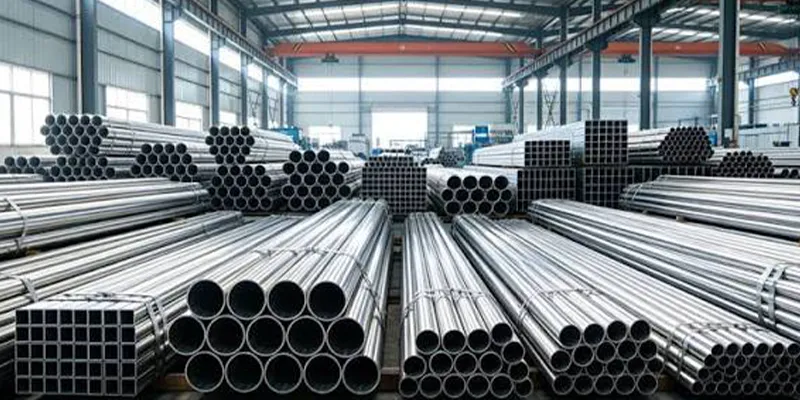
A scorecard makes the evaluation consistent and defensible - two buyers applying the same weights to the same evidence should reach the same ranking. The weights below are illustrative and should be adjusted to the project; what must never be adjusted is the gate list beneath them.
|
Dimension (illustrative) |
Weight |
What strong evidence looks like |
|
Technical capability and equipment |
20% |
Equipment list matching the product; production of the quoted grades; heat-treatment capability. |
|
Certifications and documentation |
20% |
Verified ISO 9001; correct product standard; EN 10204 3.1/3.2 issued correctly. |
|
Quality system and traceability |
20% |
Heat-number control; calibrated instruments; documented non-conformance handling. |
|
Delivery performance |
15% |
On-time history; realistic production plan; logistics competence. |
|
Communication and responsiveness |
10% |
Precise technical answers; willingness to show evidence; speed and clarity. |
|
Price competitiveness |
15% |
Competitive after normalization against the full scope - not before. |
Table 5. Illustrative supplier scorecard. Weights are examples to be adapted per project.
Before any score is counted, the following gates must each be passed outright:
Confirmed capability to produce to the named product standard and to issue the inspection documents the order requires, including any EN 10204 document type.
Regulatory conformity for the destination market where applicable - for example, PED 2014/68/EU material documentation for European pressure service.
Where the order, project specification, or buyer policy requires a quality management system certificate, a valid and verifiable ISO 9001 (or equivalent) certificate covering the relevant scope.
Verified business registration and, where the product requires them, the appropriate production permits.
Where inspection documents are required, traceability from heat number to certificate demonstrated on a sample document set.
A supplier with a 95 percent score and a failed gate is not a strong second choice - it is a non-starter. Low price never compensates for a failed material, traceability, or regulatory check.