|
Quick Answer
For oil and gas piping in hydrogen sulfide (H2S) "sour" service, NACE MR0175/ISO 15156 limits each alloy by heat-treatment condition, hardness and environment. Annealed 316L suits only mild sour service (up to 60 °C, 100 kPa H2S, 22 HRC maximum). 22Cr duplex is limited to about 10 kPa H2S, 25Cr super duplex to about 20 kPa. Above that, or at higher temperature, solid-solution nickel alloys such as Alloy 625 and C-276 are the usual route. The standard controls cracking only, so pitting and general corrosion must still be checked separately. |
What does NACE MR0175 / ISO 15156 actually cover?
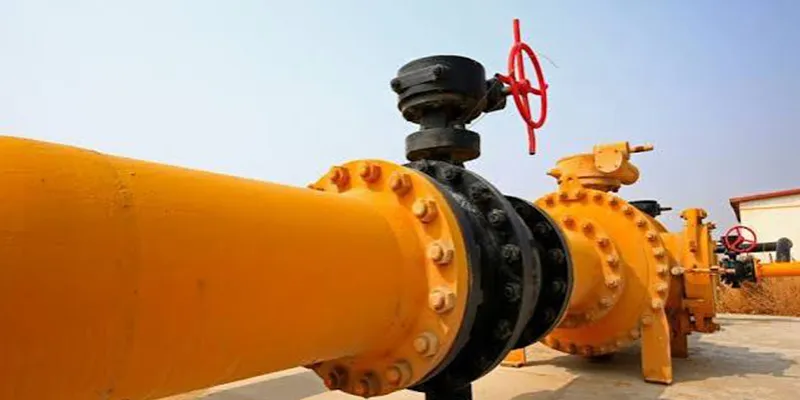
It is the oil and gas production standard for choosing metals that resist cracking caused by H2S. It covers cracking only, not general corrosion or pitting.
NACE MR0175 and ISO 15156 are the same technical text published under two names. NACE International is now part of AMPP, which keeps the MR0175 number. The standard has three parts: Part 1 gives general principles, Part 2 covers carbon and low-alloy steels and cast irons, and Part 3 covers corrosion-resistant alloys (CRAs) and other alloys. Stainless steels and nickel alloys fall under Part 3.
Part 3 addresses three cracking mechanisms: sulfide stress cracking (SSC), stress corrosion cracking (SCC) and galvanically induced hydrogen stress cracking (GHSC). Its own scope statement says loss of material by general or localized corrosion is not addressed. It also says the document is not necessarily suitable for refining or downstream equipment, which is the territory of the sister standard NACE MR0103 / ISO 17945.
Finally, the standard supplements, but does not replace, the materials requirements of the design codes. A pipe must still satisfy ASME B31.3, B31.4, B31.8 or the project specification, and satisfy MR0175 on top.
When does a piping system count as "sour service"?
Sour service starts when the H2S partial pressure reaches about 0.3 kPa (0.05 psi). The metric is partial pressure, not parts per million.
For carbon steels, ISO 15156-2 states that below 0.3 kPa H2S partial pressure normally no precautions are required. Above it, material and hardness rules apply. For stainless steels and nickel alloys, Part 3 then sets limits for the actual H2S partial pressure, temperature, chloride content and pH.
Partial pressure = total absolute pressure × H2S mole fraction. Worked example: a gas line at 100 bar absolute with 0.5 mol% H2S has 100 × 0.005 = 0.5 bar, which is 50 kPa of H2S. That is far above 0.3 kPa, so the line is sour, and it is also above the 10–20 kPa limits that apply to duplex grades (see below). Systems where H2S is only dissolved in a liquid need the gas-phase partial pressure worked out first; the standard gives the method.
How do the main grades compare under NACE MR0175?
The grades form a ladder from 316L up to nickel alloys, but the ladder is not simply ordered by PREN. PREN predicts pitting, while MR0175 limits are set by cracking behavior.
PREN (pitting resistance equivalent number) is calculated as %Cr + 3.3 × %Mo + 16 × %N. Duplex grades have a high PREN, yet their permitted H2S pressure is low, because the ferrite phase is more sensitive to hydrogen cracking than fully austenitic structures. The table shows the headline requirements for the grades most often specified for oil and gas pipe.
|
Grade |
UNS / typical pipe spec |
Condition and hardness requirement |
Environmental ceiling (as published) |
PREN |
|
316 / 316L austenitic |
S31600 / S31603; ASTM A312 |
Solution annealed and quenched; no cold work to raise strength; 22 HRC (237 HBW) max |
Up to 60 °C (140 °F) at up to 100 kPa (15 psi) H2S with no chloride limit; stricter combinations at higher temperature |
≈24 |
|
6Mo super-austenitic (254SMO, AL-6XN, 1925hMo) |
S31254, N08367, N08926; ASTM A312 |
Solution annealed; no hardness reporting needed for annealed AL-6XN (Type 3b, Table A.8) |
Set by grade in Table A.8; check the specific UNS and edition |
≈43–45 |
|
22Cr duplex (2205) |
S31803 / S32205; ASTM A790 |
Solution annealed and rapidly cooled; ferrite 35–65% |
Up to 232 °C (450 °F) and about 10 kPa (1.5 psi) H2S; cold-worked condition only about 2 kPa (0.3 psi) |
≈35 |
|
25Cr super duplex (2507, Zeron 100) |
S32750 / S32760; ASTM A790 |
Solution annealed; ferrite 35–65%; PREN above 40 |
About 20 kPa (3 psi) H2S for PREN 40–45; confirm temperature and chloride terms in Table A.24 |
≈40–43 |
|
Solid-solution nickel alloys (625, 825, C-276) |
N06625, N08825, N10276; ASTM B444, B423, B622 |
Annealed; no hardness reporting needed for annealed Alloy 625 (Table A.13) |
Set by alloy sub-group and generally broader than duplex; confirm grade by grade |
Not applicable |
Source: Rolled Alloys, "Hydrogen Sulfide – NACE MR0175/ISO 15156 & NACE MR0103" (condition and table references); Alleima SAF 2205 datasheet (2205 limits); AMPP-hosted test paper on hyper-duplex (20 kPa for PREN 40–45); ISO 15156 interpretation commentary (316 limits); PREN values calculated by EETA from typical composition. Limits shown are headline values; the governing text is Annex A of ISO 15156-3 in the edition on your purchase order.
Is 316L good enough for sour oil and gas piping?
Only for mild sour service: annealed 316L is acceptable up to 60 °C at 100 kPa H2S, with a hardness limit of 22 HRC and no strengthening by cold work.
All 300-series austenitic stainless steels share one table (Table A.2). They must be solution annealed and quenched, free of cold work intended to raise strength, and no harder than 22 HRC (237 HBW). Standard ASTM A240 plate and A312 pipe supplied in the annealed condition normally meet this, provided the reported hardness is below the limit. Some distributor pages quote 23 HRC for 316L; the austenitic limit in the standard is 22 HRC.
The limit that usually decides the question is temperature.
Above about 60 °C the permitted H2S pressure drops sharply, and chloride-driven SCC becomes the concern. For hot, chloride-bearing sour lines, 316L is rarely the right answer; step up to duplex or a higher alloy. Cold-bent pipe, cold-formed fittings and strain-hardened threads on 316L need hardness checks for the same reason.
When should you upgrade to duplex or super duplex?
Choose 22Cr duplex when H2S is low (about 10 kPa or less) and chlorides are high. Choose super duplex up to about 20 kPa. Above that, move to nickel alloys.

Duplex stainless steels have a two-phase microstructure of austenite and ferrite. To qualify under the standard, the material must be solution annealed with 35–65% ferrite, and PREN separates the two families: roughly 30 to 40 for duplex, above 40 for super duplex. Duplex gives roughly double the yield strength of 316L and much better chloride resistance, which is why it dominates seawater-injection, flowline and manifold piping.
Three traps catch buyers:
- Cold work is penalized. One producer datasheet gives 2205 about 1.5 psi (10 kPa) H2S when annealed and rapidly cooled, but only 0.3 psi (2 kPa) in the cold-worked condition. Cold-bent duplex pipe can therefore fall outside the tables.
- Super duplex limits are not one number. Published research on 25Cr super duplex shows that batches within the same UNS range can differ in sour-service performance. Where service falls outside the tables, testing to the European Federation of Corrosion guidance (EFC Publication 17) is the recognized route.
- Welds count. Weld metal must also keep a balanced ferrite level and meet the hardness requirement, so weld procedure qualification should include both.
When are nickel alloys the right choice?
Use solid-solution nickel alloys such as 625, 825 and C-276 when H2S pressure, temperature, low pH or elemental sulfur exceed what duplex is permitted to handle.
These alloys have no ferrite phase and very high nickel content, so they keep their cracking resistance across harsher conditions. Producers note, for example, that annealed Alloy 625 satisfies Table A.13 with no hardness report required, and that 625 and 600 meet the refinery standard MR0103 provided hardness is at or below 35 HRC. Alloy 625 is a common choice for sour and CO2-rich flowlines, cladding and weld overlay; C-276 is chosen where acid chlorides or oxidizing species are also present; Alloy 825 suits sour streams with sulfuric-type acids at moderate temperatures.
Honest nuance on Alloy 718. Age-hardened 718 (and 725) give high strength for valve internals, hangers and bolting rather than for line pipe.
Published hardness caps differ: one producer cites 35 HRC for downhole tubulars and packers, while an API-grade 718 datasheet works to 40 HRC.
The cap depends on the equipment category and the table that applies, so confirm it against the standard before ordering.
Remember that MR0175 does not evaluate pitting or general corrosion. A nickel alloy that passes the sour-service tables still has to be chosen for its CO2, chloride and acid behavior. See our articles on Hastelloy C276 vs C22 and Incoloy 825 in sulfuric acid.
How do strength and cost compare across these grades?
Higher-alloy grades cost more per kilogram, but their higher yield strength can reduce wall thickness and partly offset the premium.
|
Grade |
Specified minimum yield (annealed) |
Relative alloy cost per kg (EETA indicative) |
Typical oil and gas role |
|
316L |
170 MPa (25 ksi) |
$ (baseline) |
Mild sour, low temperature, utilities |
|
6Mo (S31254) |
310 MPa (45 ksi) |
$$$ |
Chloride-heavy, moderately sour, seawater-cooled |
|
2205 (S32205) |
450 MPa (65 ksi) |
$$ |
Low-H2S flowlines, topside process, manifolds |
|
2507 (S32750) |
550 MPa (80 ksi) |
$$$ (about 30–50% above 2205) |
Seawater injection, subsea, higher-chloride sour |
|
Alloy 625 (N06625) |
414 MPa (60 ksi) |
$$$$$ |
Severe sour, high temperature, clad pipe |
|
C-276 (N10276) |
283 MPa (41 ksi) |
$$$$$ |
Sour plus acid chlorides |
Which grade should you screen first for a given sour condition?
Start from H2S partial pressure and temperature, then check chloride, pH and corrosion needs. The table gives a first screen only.
|
Service condition |
First-screen grade |
Key checks |
|
H2S up to 100 kPa, up to 60 °C, low chloride |
316L (annealed) |
22 HRC max; no cold work; watch chloride SCC if temperature rises |
|
H2S up to about 10 kPa, high chloride, higher temperature |
22Cr duplex (2205) |
Ferrite 35–65%; avoid cold-worked bends; weld ferrite and hardness |
|
H2S up to about 20 kPa, seawater or hot brine |
25Cr super duplex (2507) |
PREN above 40; confirm temperature and chloride terms in Table A.24 |
|
H2S above 20 kPa, low pH, or elemental sulfur present |
Alloy 625 or C-276 |
Grade-specific table; pitting and CO2 behavior; weld filler (ERNiCrMo-3 for 625) |
|
Sour plus severe acid or oxidizing chlorides |
C-276 (or 625) |
Acid type and temperature; not covered by MR0175 |
What must a purchase order specify to prove MR0175 compliance?
Name the standard and edition, state the sour conditions, fix the heat-treatment condition, and require hardness (and ferrite for duplex) on the material test report.
- Standard and edition: "ANSI/NACE MR0175/ISO 15156-3, edition in force on the PO date, with Technical Circulars."
- Service data: H2S partial pressure, design temperature, chloride content, pH and any elemental sulfur.
- Condition: solution annealed and quenched; no cold work to raise strength; state any permitted cold forming and its limits.
- Hardness: maximum value, test method (HRC, HBW or HV with conversion rule) and test location, including weld and heat-affected zone on fabricated spools.
- Duplex only: ferrite content 35–65% in base metal, plus weld ferrite limits in the weld procedure qualification.
- Documents: EN 10204 type 3.1 certificate, positive material identification (PMI) and heat-treatment records.
- Compliance statement: ask for it in writing. Mills often do not print "MR0175" on test reports, because compliance follows from the specification and the reported hardness.
Does "NACE compliant" mean the pipe will not corrode?
No. MR0175 qualifies a material against H2S cracking only. Pitting, crevice corrosion, CO2 corrosion and erosion still need separate checks.
A line can meet every MR0175 table and still pit in warm, chloride-rich water. Designers therefore pair the standard with pitting tests such as ASTM G48, PREN screening and project rules such as NORSOK M-001. Fully qualified compliance also depends on the equipment's whole stress and environment picture, which the user's service assessment defines.
Is a new edition of NACE MR0175 / ISO 15156 coming?
Yes. The 2020 ISO edition (published by ANSI/NACE as MR0175-2021) is current, and a major restructured revision is in development.
ISO 15156-3:2020 replaced the 2015 edition, and ISO's status page lists it as due for revision with a draft in development. AMPP papers presented in March 2026 describe a rewrite organized into three new parts: material and processing requirements, service environment assessment and material selection, and verification, qualification and balloting. Until the new edition is published and adopted, the 2020/2021 text governs. Specify the edition on every purchase order so there is no ambiguity.
Frequently asked questions
Q: Is NACE MR0175 the same as ISO 15156?
A: Yes. They are the same technical text, published by ISO as ISO 15156 and by NACE (now AMPP) as MR0175. The 2020 ISO edition is currently in force.
Q: What is the hardness limit for 316L in sour service?
A: Annealed 316L is limited to 22 HRC (237 HBW), must be free of cold work intended to raise strength, and is restricted to mild environments under Table A.2.
Q: Can duplex 2205 be used above 10 kPa H2S?
A: Not under the standard's general tables. Above about 10 kPa, choose super duplex (to about 20 kPa) or a nickel alloy, or qualify the material by testing for the specific service.
Q: Does MR0175 apply to refineries?
A: No. Refining and downstream equipment fall under NACE MR0103 / ISO 17945, which has its own hardness limits (for example 28 HRC for duplex).
Q: How do I calculate H2S partial pressure?
A: Multiply total absolute pressure by the H2S mole fraction. At 100 bar absolute and 0.5 mol% H2S the result is 0.5 bar, or 50 kPa.
Q: Does an MR0175-compliant pipe resist pitting?
A: Not automatically. The standard addresses cracking only, so pitting and general corrosion need separate evaluation.
References
Rolled Alloys. Hydrogen Sulfide – NACE MR0175/ISO 15156 & NACE MR0103. https://www.rolledalloys.com/articles/hydrogen-sulfide-nace-mr0175-iso-15156-nace-mr0103/
ISO 15156-3:2020, status and scope (Genorma). https://genorma.com/en/standards/iso-15156-3-2020
AMPP. ANSI/NACE MR0175-2021/ISO 15156-2020. https://content.ampp.org/standards/book/1139/ANSI-NACE-MR0175-Petroleum-and-Natural-Gas
AMPP Conference 2026. Update to NACE MR0175/ISO 15156. https://content.ampp.org/ampp/proceedings-abstract/CONF_MAR26/2026/1/107421
Alleima. SAF 2205 material datasheet. https://integration.alleima.com/cz/technical-center/material-datasheets/tube-and-pipe-seamless/saf-2205/
AMPP. Recent H2S corrosion tests of hyper duplex stainless steel. https://store.ampp.org/recent-h-s-corrosion-tests-of-hyper-duplex-stainless-steel
TWI. Testing of superduplex stainless steel for sour service. https://www.twi-global.com/technical-knowledge/published-papers/testing-of-superduplex-stainless-steel-for-sour-service-march-2003
Corrosion Clinic. Questions and interpretations for NACE MR0175/ISO 15156. https://www.corrosionclinic.com/corrosion/programs-and-courses/continuing-education/courses/Questions%20and%20interpretations%20for%20NACE%20MR0175_ISO-15156.html
Neonickel. Alloy 718 API datasheet. https://www.neonickel.com/alloys/all-alloys/alloy-718-api