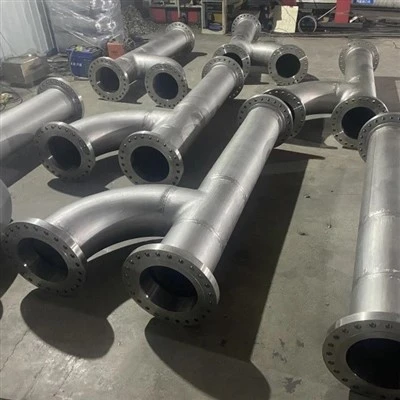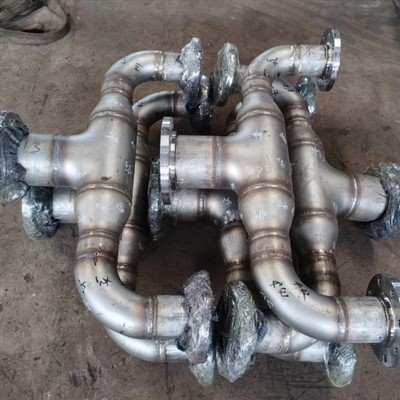
Three systems on the same ship handle the same fluid - seawater - yet they demand three different stainless steels. Seawater cooling is a continuous-flow duty, so duplex 2205 handles most of it. Ballast is an intermittent, stagnant, sediment-loaded duty, so it needs higher molybdenum or a coating strategy. Firefighting is a normally-idle, suddenly-maximum-flow duty, and it is the hardest of the three: a wet fire main can sit still for a year and then run at full velocity in ninety seconds.

If you remember only one sentence, remember this one: in seawater, stainless steel fails by crevice corrosion and under-deposit pitting, not by uniform corrosion - so the grade you choose must be matched to how long the surface stays wet and still, not just to how salty the water is.
This guide is written for piping and equipment engineers, procurement teams, and classification-society surveyors who have to defend a material choice on paper. Every section starts with a question, gives the answer in one or two sentences, and then explains the reasoning and the numbers behind it.
You can read it end to end, or jump straight to the system you are specifying: seawater cooling, ballast, or firefighting. The comparison matrix in the middle consolidates all three, and the appendix lists the standards, assumptions, and publishing metadata.
What actually determines whether a stainless steel survives seawater?
Three variables decide the outcome - alloy content (expressed as PREN), service temperature, and how often the surface is wetted and flowing. Salinity alone tells you almost nothing.
Engineers often ask for "a seawater-resistant grade" as if resistance were a single property. It is not. Seawater attacks stainless steel through localised breakdown of the passive film, and that breakdown depends on a threshold that moves with temperature.
A 316L pipe that gives fifteen years in a North Sea cooling line at 12 °C may perforate in eighteen months in a Gulf condenser outlet at 45 °C. Same water chemistry, same alloy, different temperature. The alloy did not change; the threshold moved below the operating condition.
The practical consequence is that a material datasheet without a service temperature and a flow regime is not a specification. It is a wish. Any credible proposal for a seawater system should state the design temperature, the minimum and maximum velocity, the chlorination regime, and the expected stagnant periods - because each of those four inputs can move the answer by one or two grade steps.
What does "marine grade stainless steel" actually mean?
Nothing formal. It is a marketing phrase with no definition in any standard, and it is most often applied to 316 - a grade that is genuinely suitable for deck hardware and handrails, and genuinely unsuitable for immersed seawater piping.
There is no "marine grade" classification in ASTM, EN, or ISO. What exists is a set of service-specific material selections published by classification societies, NORSOK, and owner specifications, and those documents are far more conservative than the marketing term suggests.
The confusion has a real cost. A purchaser who writes "marine grade stainless steel" on a requisition will receive 316L, because that is the cheapest grade the phrase can plausibly describe. That 316L then goes into a seawater cooling header, where it will be the first item on the failure list.
Write the UNS number instead. S31603, S32205, S32750, S31254 - these are unambiguous, they appear on the mill certificate, and they can be verified. "Marine grade" cannot be verified, which is exactly why it should never appear on a purchase order.
How is PREN calculated, and what value do you actually need?
PREN = %Cr + 3.3 × %Mo + 16 × %N. For continuously flowing cold seawater you need roughly PREN 35; for warm, stagnant, or crevice-prone service you need PREN 40 or higher. But PREN is a screening tool, not a guarantee.
PREN, the pitting resistance equivalent number, is a weighted sum of the three elements that stabilise the passive film against chloride attack. Chromium forms the film; molybdenum and nitrogen repair it locally when chloride breaks through.
The formula is deliberately simple, which is both its strength and its weakness. It ignores microstructure, inclusion content, surface finish, and heat treatment - all of which matter. Two heats of 2205 with identical PREN can differ measurably in measured critical pitting temperature if one was improperly annealed.
That is why serious specifications do not stop at the calculated number. They require a measured result: a critical pitting temperature from ASTM G48 Method A, or a corrosion test to ASTM G150, reported on the actual heat. The table below shows typical values; treat the PREN column as a design aid and the CPT column as the acceptance criterion.
|
Grade (UNS) |
Common name |
Typical PREN |
Typical CPT, °C (ASTM G48 A) |
Practical seawater ceiling |
|
S31603 |
316L |
24–26 |
20–25 |
25–30 °C, flowing only |
|
N08904 |
904L |
34–36 |
40–50 |
35–40 °C |
|
S32205 |
Duplex 2205 |
34–36 |
45–55 |
45–50 °C |
|
S31254 |
6Mo / 254SMO |
42–44 |
65–80 |
60–70 °C |
|
S32750 |
Super duplex 2507 |
41–43 |
80–90 |
80–90 °C |
|
N06625 |
Alloy 625 |
~50 |
>85 |
Severe, plus high strength |
Note the ordering anomaly: 6Mo has a slightly higher PREN than super duplex 2507, yet 2507 performs better in many seawater duties. PREN does not capture the benefit of the duplex microstructure, which resists chloride stress corrosion cracking in a way that fully austenitic 6Mo cannot. This is the first place where a single number misleads.
Why does 316L fail in seawater even though it is the "marine grade"?
Because its critical pitting temperature is only about 20–25 °C, and its critical crevice temperature is lower still. In most seawater systems the metal spends much of its life inside a crevice at a temperature above that threshold.

Look at where 316L actually fails. It is rarely a straight run of pipe. It is under a gasket at a flange face, beneath a pipe support saddle, under a barnacle cluster, inside a threaded joint, or in the dead leg behind a closed valve.
Each of those locations is a crevice: a geometry where seawater enters but cannot freely exchange. Oxygen is consumed faster than it can be replenished, the local chemistry shifts, chloride concentrates, and the pH inside the gap drops. The passive film cannot rebuild in that environment, and pitting starts.
This is why 316L seawater failures look the way they do - isolated deep pits with bright metal at the bottom, surrounded by untouched surface. The pipe did not corrode. One square centimetre of it did.
There is a counter-intuitive twist worth knowing. Natural seawater forms a biofilm on stainless steel that raises its corrosion potential by roughly 200–400 mV, and a higher potential means a greater driving force for crevice attack.
Chlorination prevents that biofilm, so chlorinated seawater is often less aggressive to stainless steel than clean, unchlorinated seawater - the opposite of what most people assume. Biofouling control is therefore a corrosion-control measure, not only a heat-transfer measure.
What is the difference between CPT and CCT, and why does CCT govern your flange design?
CPT is the temperature at which pits start on an open surface; CCT is the lower temperature at which they start inside a crevice. For austenitic grades CCT sits roughly 15–25 °C below CPT, and for duplex grades the gap is smaller but still real.
The distinction matters because almost every seawater stainless component contains crevices by design. A bolted flange with a spiral-wound gasket is a controlled crevice. A tube-to-tubesheet rolled joint is a controlled crevice. A valve seat is a controlled crevice.
If you select on CPT, you are selecting for the easiest location on the component. If you select on CCT, you are selecting for the location that will actually fail.
The engineering response is not only to upgrade the alloy. It is also to reduce the crevice. Weld instead of flange where maintenance access allows. Use full-face gaskets rather than raised-face. Specify a seal weld on tube-to-tubesheet joints. Keep supports clear of the pipe surface with a drainage gap, and never let a stainless line sit on a carbon steel saddle.
|
Design detail |
What it creates |
Mitigation |
|
Bolted flange, raised face |
Crevice between gasket and flange face |
Full-face gasket, or weld the joint |
|
Pipe support saddle |
Permanent wet crevice plus galvanic couple |
Clamp with drainage gap, isolate from steel |
|
Threaded joint |
Deep, uninspectable crevice |
Replace with welded or flanged joint |
|
Tube-to-tubesheet |
Annular gap at the rolled joint |
Seal weld, or controlled expansion |
|
Dead leg behind a valve |
Stagnant seawater, no oxygen renewal |
Eliminate dead legs; add drain and flush point |
Which grades are actually used in marine seawater systems?
Six grades cover almost everything: 316L for closed loops and non-immersed hardware, 904L for moderate chloride, duplex 2205 as the workhorse, 6Mo for small-bore and plate heat exchangers, super duplex 2507 for hot or high-chloride duty, and nickel alloys for the extreme cases.
The table below is the short list that appears in real specifications. Anything not on it is either a specialist choice or a mistake.
|
Grade |
Where it earns its place |
Where it does not |
|
316L (S31603) |
Closed cooling loops, instrument air, deck hardware, splash zone above the wet line |
Any continuously immersed seawater piping |
|
904L (N08904) |
Moderate-chloride process lines, some scrubber circuits |
Warm seawater; cost is hard to justify against 2205 |
|
Duplex 2205 (S32205) |
Seawater cooling piping above DN50, plate heat exchanger plates, pump casings, valves |
Stagnant ballast lines, hot seawater above 50 °C, high-stress welded joints without controls |
|
6Mo (S31254) |
Small-bore seawater piping, instrument lines, plate heat exchangers, firewater deluge nozzles |
Large-bore piping on cost grounds |
|
Super duplex 2507 (S32750) |
Hot seawater, high-chloride brines, electrochlorination circuits, high-pressure firewater |
Low-temperature low-chloride duty where 2205 is sufficient |
|
Nickel alloys (625, C276) |
Flare tips, severe sour plus chloride, critical unreplaceable components |
General seawater piping; cost is an order of magnitude higher |
A useful rule of thumb for procurement: the alloy step from 316L to 2205 roughly doubles the corrosion allowance in temperature terms, and the step from 2205 to 2507 roughly doubles it again. Each step costs far less than the step before it in maintenance terms, which is why the middle grades dominate real specifications.
Seawater cooling: which grade for piping, plate heat exchangers, and tube bundles?
Duplex 2205 for piping and plate packs, super duplex 2507 or 6Mo where the outlet temperature exceeds about 50 °C, and titanium for tube bundles in critical coolers. 316L belongs only in the closed loop.
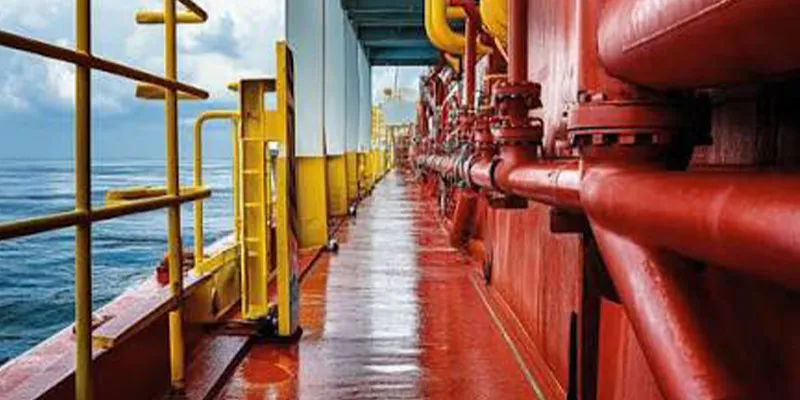
Seawater cooling is the most forgiving of the three systems because the flow is continuous. Continuous flow keeps oxygen supplied, keeps deposits from settling, and keeps the surface above the velocity threshold where biofouling cannot attach. That is precisely the regime where 2205 performs well.
The design details that matter most are the ones at the edges of the continuous-flow assumption. The standby pump branch, the idle spare cooler, the bypass line, and the drain connection are all stagnant. These are the locations where a 2205 system will eventually show its first pit, and they are the locations most often omitted from a material selection review.
|
Cooling system element |
Recommended |
Reason |
|
Main seawater piping, DN50 and above |
Duplex 2205 |
Continuous flow, moderate temperature, good CCT |
|
Small-bore and instrument lines |
6Mo |
Thin wall, low flow, crevice at every fitting |
|
Plate heat exchanger plates |
2205, or 2507 above 50 °C |
High turbulence, tight crevices at gaskets |
|
Shell-and-tube tube bundle |
Titanium Gr2 or super duplex 2507 |
Thin wall, highest temperature, least accessible |
|
Pump casing and impeller |
Duplex 2205, cast equivalent |
High velocity, erosion plus corrosion |
|
Strainer basket and housing |
6Mo or 2507 |
Low flow, heavy deposit, frequent opening |
|
Standby and bypass branches |
Same grade as the main line, plus drain |
Stagnant - the real failure point |
One further note on plate heat exchangers: the gasket groove is a designed crevice, and the plate material is thin. A plate pack that is opened and re-gasketed repeatedly accumulates scratches that become pit initiation sites. Specify 2205 as a minimum, and inspect plate edges at every service.
Why is flow velocity a material-selection parameter?
Below about 1 m/s, biofouling and sediment settle and create under-deposit corrosion. Above roughly 3.5 m/s for copper alloys and 6 m/s for stainless steels, erosion-corrosion removes the passive film mechanically. The design window is narrow, and it is part of the material choice.
Velocity is usually treated as a hydraulic parameter, decided by the piping engineer and handed to the materials engineer afterwards. That sequence is backwards. Velocity determines whether the passive film is replenished or destroyed, so it belongs in the material selection discussion.
At low velocity the failure mode is biological. Larvae attach, mussels grow, sediment accumulates in low points, and the metal beneath the deposit becomes an anaerobic crevice. At high velocity the failure mode is mechanical: turbulence at elbows, reducers, and valve bodies strips the film faster than it can reform, and the metal erodes.
|
Material |
Minimum velocity |
Maximum velocity |
Failure mode outside the window |
|
316L |
1.0 m/s |
~4 m/s |
Crevice and under-deposit pitting at low flow |
|
Duplex 2205 |
1.0 m/s |
~6 m/s |
Biofouling at low flow, erosion at high flow |
|
Super duplex 2507 |
1.0 m/s |
~6–7 m/s |
Same, with wider temperature margin |
|
90/10 CuNi |
1.0 m/s |
~3.5 m/s |
Erosion-corrosion above 3.5 m/s |
|
Titanium Gr2 |
1.0 m/s |
>10 m/s |
Essentially velocity-unlimited in clean seawater |
The practical design target for stainless seawater lines is 1.5–3.5 m/s. That range keeps the surface scoured without approaching the erosion threshold, and it leaves margin for the fouling that will inevitably occur between dockings.
Ballast systems: why is stagnation worse than salinity?
Because ballast duty is intermittent by nature. A ballast line may be full for a week, empty for a month, then half-full with sediment for a year. That cycle produces the worst possible environment for stainless steel: anaerobic, sulfide-bearing, and loaded with deposits.
A ballast system is not a cooling system with a different name. It is a completely different duty cycle, and the duty cycle drives the metallurgy.
During a ballast voyage the tanks and lines are full and quiet. Oxygen is consumed by respiring bacteria and by the corrosion reaction itself. Sulfate-reducing bacteria produce hydrogen sulphide, which is aggressive to both stainless steel and copper alloys. Sediment settles in tank bottoms and low points, creating deep deposits where the metal is fully shielded from any oxygen renewal.
This is the environment where microbially influenced corrosion, or MIC, becomes the dominant mechanism. MIC is not a separate kind of corrosion; it is crevice corrosion accelerated by a biologically modified local chemistry. The metallurgical response is the same as for any crevice: more molybdenum, more nitrogen, or a barrier coating.
|
Ballast system element |
Typical material |
Key consideration |
|
Ballast tank, coated |
Carbon steel with epoxy to IMO PSPC |
Coating is the barrier; stainless is not the primary defence |
|
Ballast tank, uncoated |
316L or duplex 2205 |
Chemical tankers commonly use 316L; higher chloride favours 2205 |
|
Ballast piping, main |
Duplex 2205 or GRP |
Drainability matters more than grade |
|
Ballast piping, small bore |
6Mo or 2507 |
Thin wall plus stagnant equals early failure |
|
Ballast pump casing |
Duplex 2205, cast |
Erosion at impeller, corrosion at cutwater |
|
Tank cleaning machines |
316L or 2205 |
Intermittent, high velocity, often overlooked |
Two design decisions outweigh the grade choice. The first is drainability: a line that cannot be fully drained will hold seawater in its low points indefinitely, and no alloy survives that indefinitely. The second is coating integrity in tanks. A coated carbon steel tank with a maintained coating outperforms an uncoated stainless tank with a failed coating strategy, at a fraction of the cost.
What changes when a ballast water management system is installed?
The most aggressive stream on the ship. Electrochlorination generates hypochlorite at high chloride concentration, and the treatment unit, its pipework, and the neutralisation circuit all see oxidiser plus chloride plus occasional hydrogen. This is super duplex, 6Mo, or titanium territory - never 316L.

The Ballast Water Management Convention required all ships to meet the D-2 discharge standard by 8 September 2024, so essentially every vessel afloat now carries a treatment system. That retrofit changed the material selection problem, and many specifications have not caught up.
Treatment technologies split into two families with different material consequences. Physical systems - filtration plus UV - are comparatively benign: the wetted surfaces see filtered seawater and ultraviolet light, and duplex 2205 is generally adequate. Chemical and electrochemical systems are not benign.
Electrochlorination is the demanding case. The cell generates sodium hypochlorite from seawater, so the local environment combines high chloride, high oxidiser concentration, a low pH at the electrode, and a hydrogen by-product. Titanium is the standard electrode material, and the cell housing and immediate downstream piping are normally super duplex, 6Mo, or a non-metallic.
|
BWMS element |
Recommended material |
Why |
|
Filter housing |
Duplex 2205 |
Continuous seawater, moderate temperature |
|
UV reactor chamber |
316L or 2205 |
No oxidiser, but crevices at seals |
|
Electrochlorination cell body |
Super duplex 2507, 6Mo, or PVDF |
High chloride plus high oxidiser |
|
Hypochlorite injection line |
2507, 6Mo, or PTFE-lined |
Highest oxidiser concentration on the ship |
|
Neutralisation circuit |
2507 or non-metallic |
Reducing agent plus seawater |
|
Sample and monitoring lines |
6Mo |
Small bore, stagnant, frequent shutdown |
The common retrofit error is to reuse the original 316L ballast piping downstream of the injection point. That section now carries chlorinated seawater at a concentration the original design never anticipated, and it typically fails within the first two years.
Firefighting systems: why is the fire main the hardest case?
Because it combines the worst features of the other two systems. A wet fire main is stagnant for months, accumulates sediment and marine growth, and then must deliver full flow at full velocity the instant a pump starts. Crevice corrosion, under-deposit pitting, and erosion all occur in the same component.
Firefighting is the system people think about least and should think about most. It has no redundancy in operation - it either works or the ship is in trouble - and it spends 99.9% of its life in the condition that stainless steel likes least.
Consider the duty cycle. The main is pressurised and static. Seawater sits in it, oxygen is consumed, biofilm forms, sediment settles at low points and behind closed valves. Then a fire occurs, the pump starts, and the line goes from zero to design velocity in seconds, carrying that sediment load through every elbow and strainer.
The failures that follow are predictable. Pits under the sediment at low points. Crevice attack at hydrant branch connections. Erosion-corrosion at the first elbow after the pump. Blocked strainers and nozzles from dislodged growth. None of these is caused by the water being salty; all of them are caused by the water being still.
|
Firefighting element |
Recommended material |
Reason |
|
Fire main, wet, large bore |
6Mo, super duplex 2507, or 90/10 CuNi |
Long stagnation plus sudden high flow |
|
Fire main, dry |
Carbon steel with internal coating, or 2205 |
Dry condition removes the crevice driver |
|
Hydrant branches and valves |
Same grade as main, welded not threaded |
Branch connection is the classic crevice |
|
Deluge and sprinkler nozzles |
6Mo or 2507 |
Small orifice, stagnant, easily blocked by corrosion product |
|
Foam concentrate piping |
316L |
Concentrate chemistry, not seawater, governs |
|
Fire pump casing |
Duplex 2205, cast |
High velocity at start-up |
Two design measures reduce the material burden more than any upgrade. First, arrange the main so it can be fully drained, and drain it during maintenance. Second, flush the main with fresh water after every flow test if the ship has the capacity. A drained main is a main that is not corroding.
There is also a regulatory dimension. SOLAS Chapter II-2 requires the fire main to deliver two simultaneous jets at a minimum hydrant pressure, and classification societies require the material to be suitable for the service. A main that has lost half its bore to corrosion product still passes a visual survey and still fails the flow test.
How do the three systems compare side by side?
The three systems diverge on duty cycle, not on water chemistry. Cooling is continuous, ballast is intermittent and anaerobic, firefighting is idle-then-extreme. That single difference explains almost every material recommendation in this guide.
|
Criterion |
Seawater cooling |
Ballast |
Firefighting |
|
Flow regime |
Continuous, controlled |
Intermittent, long stagnant periods |
Idle for months, then maximum |
|
Dominant failure mode |
Crevice corrosion at flanges and supports |
MIC and under-deposit pitting |
Under-deposit pitting plus erosion at start-up |
|
Temperature |
10–50 °C, highest at HX outlet |
Ambient, roughly 0–35 °C |
Ambient |
|
Oxygen |
Replenished by flow |
Consumed, anaerobic |
Consumed during stagnation |
|
Chlorination |
Continuous, 0.2–0.5 mg/L residual |
Intermittent, from BWMS |
None, unless flushed |
|
Default grade |
Duplex 2205 |
2205 with drainage, or coated steel |
6Mo, 2507, or 90/10 CuNi |
|
Grade that fails first |
316L |
316L, especially small bore |
316L and galvanised steel |
|
Cost of failure |
Production loss, tube rupture |
Regulatory non-compliance, tank damage |
Loss of firefighting capability |
Read the table down the "default grade" column and the logic is clear. As the duty cycle becomes less continuous, the required alloy content rises. The water did not change; the wetting pattern did.
When do copper-nickel and titanium beat stainless steel?
Copper-nickel wins where biofouling resistance is the dominant requirement, because copper ions suppress marine growth. Titanium wins where velocity, thin walls, and heat transfer dominate, because it is effectively immune to seawater at any velocity. Stainless steel wins on strength, weight, and the absence of copper discharge.

The 90/10 and 70/30 copper-nickel alloys were the default seawater piping material for most of the twentieth century, and they remain a legitimate choice. Their advantage is biological: copper released from the surface is toxic to marine organisms, so the pipe stays clean without chlorination.
Their disadvantages are equally real. The maximum velocity is about 3.5 m/s, above which erosion-corrosion becomes rapid. Sulphide-polluted or ammoniacal water attacks them severely. And copper discharge is increasingly restricted in some ports and inland waterways, which is pushing owners toward stainless steel and non-metallics.
Titanium is the technical answer for the hardest locations - tube bundles, high-velocity seawater, thin walls where a pitting perforation is unacceptable. It is not the economic answer for general piping, at roughly five times the material cost of 316L.
|
Material |
Relative material cost (316L = 1.0) |
Biofouling resistance |
Velocity limit |
Best application |
|
316L |
1.0 |
Poor without chlorination |
~4 m/s |
Closed loops only |
|
Duplex 2205 |
1.3–1.5 |
Poor without chlorination |
~6 m/s |
General seawater piping |
|
6Mo |
2.4–2.8 |
Poor without chlorination |
~6 m/s |
Small bore, plate HX |
|
Super duplex 2507 |
2.3–2.7 |
Poor without chlorination |
~6–7 m/s |
Hot seawater, BWMS |
|
90/10 CuNi |
2.2–2.6 |
Excellent |
~3.5 m/s |
Biofouling-critical piping |
|
Titanium Gr2 |
5.0–6.0 |
Good |
>10 m/s |
Tube bundles, high velocity |
Costs are indicative and move with nickel and molybdenum prices. Use the ratios for structure, not for budgeting.
How should these grades be welded and fabricated?
Duplex and super duplex are less forgiving than austenitic grades. They need controlled heat input, nitrogen purging, no preheat, limited interpass temperature, and verification of ferrite balance. Get these wrong and the corrosion resistance you paid for disappears in the heat-affected zone.
The metallurgy is straightforward. Duplex steels are roughly half ferrite and half austenite, and that balance gives them their strength and their chloride resistance. Welding disturbs the balance: too fast a cooling rate leaves excess ferrite, too slow a rate precipitates sigma phase and nitrides.
Both errors reduce corrosion resistance, and neither is visible on a finished weld. That is why duplex welding is a procedure-qualification problem, not a skill problem.
|
Parameter |
Duplex 2205 |
Super duplex 2507 |
|
Preheat |
None |
None |
|
Heat input |
0.5–2.0 kJ/mm |
0.5–1.5 kJ/mm |
|
Interpass temperature |
≤150 °C |
≤100–150 °C |
|
Root purge oxygen |
<100 ppm |
<50 ppm |
|
Filler metal |
ER2209 |
ER2594 |
|
Ferrite in weld metal |
35–65% |
35–65% |
|
Post-weld heat treatment |
Not permitted |
Not permitted |
Two further fabrication points apply to all the grades in this guide. First, iron contamination: carbon steel tooling, grinding dust, and fabrication-yard debris embed iron particles in the stainless surface, and those particles rust and initiate pitting. Dedicated stainless tooling and a final pickling or passivation step are not optional.
Second, surface finish matters more than most specifications admit. A rough weld cap or a ground surface with embedded contamination will pit before the parent metal, regardless of alloy content. Specify the finish, inspect it, and do not accept "as welded" on a seawater line.
What is the 25-year cost comparison?
On a 25-year basis, duplex 2205 is usually the lowest-cost option for seawater piping, and 316L is usually the most expensive - more expensive than carbon steel. The cheapest material per kilogram is rarely the cheapest material per service life.
The table below models 400 metres of DN200 seawater cooling line. Installed cost includes material, fabrication, and installation. Replacement cost includes removal, access, reinstallation, and lost availability, which is why it is higher than the original installation.
|
Option |
Installed cost, USD |
Expected life |
Replacements in 25 years |
25-year total, USD |
|
Carbon steel, epoxy lined |
76,000 |
7 years |
3 |
442,000 |
|
316L |
132,000 |
9 years |
2 |
554,000 |
|
Duplex 2205 |
192,000 |
25 years |
0 |
192,000 |
|
Super duplex 2507 |
300,000 |
25+ years |
0 |
300,000 |
|
90/10 CuNi |
312,000 |
25 years |
0 |
312,000 |
|
GRP / GRE |
96,000 |
20 years |
1 partial |
250,000 |
The result that surprises most project teams is the 316L line. It costs 74% more than 2205 over the life of the system, because it is replaced twice and each replacement costs more than the original installation. The second surprise is that carbon steel with a maintained coating beats 316L outright.
GRP is competitive on cost but limited by temperature, pressure class, and fire performance, which is why it dominates ballast and seawater lines on some vessel types and is excluded from others.
These figures are a model, not a quotation. The assumptions are listed in the appendix, and the ranking is robust to reasonable changes in discount rate and downtime cost. What is not robust is any comparison that counts only first cost.
Which standards and certificates apply?
Product standards define the material; test standards prove the properties; project standards define the acceptance criteria. A purchase order that cites only a product standard is incomplete, because it does not say what evidence the mill must supply.
Three layers of documentation govern a marine stainless purchase. Product standards such as ASTM A240 or A790 tell the mill what to make. Test standards such as ASTM G48 or A923 tell the laboratory how to verify it. Project specifications such as NORSOK M-630 tell the supplier what acceptance criteria apply.
|
Layer |
Standard |
What it covers |
|
Plate and sheet |
ASTM A240 / A480 |
Composition, mechanical properties, finish |
|
Seamless and welded pipe |
ASTM A312, A790, A928 |
Austenitic and duplex pipe |
|
Heat exchanger tube |
ASTM A249, A789 |
Welded tube for exchangers |
|
Fittings |
ASTM A403, A815 |
Austenitic and duplex fittings |
|
Flanges and forgings |
ASTM A182 |
F304L, F316L, F51, F53, F55, F44 |
|
Bar |
ASTM A276, A479 |
Bar and forgings for valves and pumps |
|
Pitting test |
ASTM G48 Method A |
Critical pitting temperature |
|
Intermetallic phase |
ASTM A923 |
Sigma phase in duplex |
|
Ferrite content |
ASTM E562 |
Ferrite count in duplex welds |
|
Material data sheets |
NORSOK M-630, MDS D41 / D51 / D55 / D57 |
Duplex, super duplex, 6Mo acceptance |
|
Ballast water |
IMO BWM Convention, BWMS Code |
Treatment standard D-2 |
|
Ballast tank coating |
IMO PSPC, MSC.215(82) |
Coating specification |
|
Fire main |
SOLAS Chapter II-2, Reg 10 |
Capacity and arrangement |
For a seawater purchase, the minimum acceptable document package is: mill certificate to EN 10204 3.1, heat-specific chemical analysis including nitrogen, ASTM G48 Method A result at the specified test temperature, and for duplex, an ASTM A923 or ferrite check. If the supplier cannot produce the G48 result for the actual heat, the grade claim is unverified.
What are the eight most common specification mistakes?
Most seawater stainless failures trace back to a specification error, not a material defect. These eight account for the majority of them.
One: specifying "marine grade" instead of a UNS number. The phrase has no definition, so it defaults to the cheapest interpretation. Write S32205, not "marine grade".
Two: ignoring crevices. A grade selected on CPT will fail at the gasket, because CCT is 15–25 °C lower. Design the crevice out, or select for it.
Three: designing for stagnation. Dead legs, undrainable low points, and idle standby branches are where the first pit appears. They are also the easiest problems to fix at the drawing stage.
Four: treating PREN as a guarantee. Two heats with the same PREN can differ in measured CPT. Require the test result, not the calculation.
Five: mixing grades without galvanic isolation. A stainless line connected to carbon steel becomes a large cathode driving a small anode. Use isolating kits at transitions, and never use graphite gaskets.
Six: specifying duplex without fabrication controls. Heat input, purge oxygen, interpass temperature, and ferrite balance must be in the specification, not left to the shop.
Seven: forgetting the biofouling strategy. Without chlorination or mechanical cleaning, stainless seawater lines foul and then corrode under the deposit. Material selection and fouling control are one decision.
Eight: buying on cost per kilogram. The 25-year comparison shows 316L costing more than 2205. First cost is not a proxy for life-cycle cost.
Frequently asked questions
Is 316 stainless steel suitable for seawater?
No, not for continuously immersed service. 316L has a critical pitting temperature of only about 20–25 °C and a lower critical crevice temperature, so it pits at gaskets, supports, and under deposits in most seawater systems. It is suitable for closed cooling loops, deck hardware, and splash-zone items that stay dry.
What is the best stainless steel for seawater cooling?
Duplex 2205 is the best general choice for seawater cooling piping and plate heat exchangers. Use super duplex 2507 or 6Mo where the outlet temperature exceeds about 50 °C, and titanium for critical tube bundles.
What PREN value do I need for seawater?
PREN 35 is the practical minimum for continuously flowing cold seawater, and PREN 40 or higher is needed for warm, stagnant, or crevice-prone service. PREN is a screening number; confirm the actual resistance with an ASTM G48 test on the heat.
Can duplex 2205 be used for ballast water piping?
Yes, provided the line is drainable and the chlorination regime is understood. 2205 is widely used for main ballast piping. Small-bore ballast lines and any section downstream of a chlorination injection point should be upgraded to 6Mo or 2507.
Why does a fire main need a higher grade than a cooling line?
Because it is stagnant for months and then flows at maximum velocity. That combination produces under-deposit pitting during idle periods and erosion at start-up. 6Mo, super duplex 2507, or 90/10 CuNi are the usual choices; 316L and galvanised steel are the usual failures.
What is the difference between CPT and CCT?
CPT is the temperature at which pitting starts on an open, freely exposed surface. CCT is the lower temperature at which pitting starts inside a crevice. Because real components contain crevices, CCT is the number that governs service performance.
Is super duplex 2507 worth the extra cost?
It is worth it where the service temperature exceeds about 50 °C, where chloride concentration is elevated, or where the component cannot be replaced. Below those conditions, 2205 delivers the same service life at roughly half the material cost.
Can stainless steel be used in ballast tanks?
Yes. 316L is common in chemical tanker ballast tanks and duplex 2205 is used where chloride or temperature is higher. Coated carbon steel remains the default for dedicated ballast tanks because the coating, not the steel, is the corrosion barrier.
How does chlorination affect material selection?
Chlorination prevents biofilm formation, and biofilm raises the corrosion potential of stainless steel by 200–400 mV. Chlorinated seawater is therefore often less aggressive than clean unchlorinated seawater. However, the concentrated hypochlorite at an electrochlorination injection point is highly aggressive and requires 2507, 6Mo, or titanium.
Which filler metal should be used for duplex welding?
ER2209 for duplex 2205 and ER2594 for super duplex 2507. Both require nitrogen purging, controlled heat input, and interpass temperature limits, and neither permits post-weld heat treatment.
Does stainless steel suffer MIC in seawater?
Yes. Sulfate-reducing bacteria produce sulphide in anaerobic, sediment-loaded conditions, which is exactly the environment inside a stagnant ballast line or an idle fire main. The result is accelerated under-deposit pitting. Higher molybdenum grades and drainable design are the mitigations.
What certification should I require from the mill?
EN 10204 3.1 mill certificates with heat-specific chemistry including nitrogen, ASTM G48 Method A results at the specified temperature, and for duplex, ASTM A923 or a ferrite content check. Third-party witness of the corrosion test is advisable for critical systems.
How should you specify and order seawater stainless steel?
Specify by UNS number, state the duty cycle explicitly, require the corrosion test on the heat, and define the fabrication controls. A specification that does any one of these without the other three is incomplete.
The checklist below is the minimum content of a purchase specification for a seawater stainless system. It is deliberately short, because a specification that nobody reads is worse than a short one that everybody does.
|
Item |
What to write |
Why it matters |
|
Grade |
UNS number plus common name |
Removes ambiguity from "marine grade" |
|
Product standard |
ASTM A240, A790, A928, or A815 as applicable |
Defines what the mill must make |
|
Duty |
Design temperature, velocity range, stagnant periods |
These three inputs drive the grade choice |
|
Corrosion test |
ASTM G48 Method A at a stated temperature |
Converts a claim into evidence |
|
Microstructure |
Ferrite content for duplex, A923 where specified |
Detects harmful phases |
|
Surface finish |
Pickled and passivated, or specified Ra |
Finish controls initiation sites |
|
Fabrication |
Heat input, purge oxygen, interpass limit |
Protects the HAZ corrosion resistance |
|
Documentation |
EN 10204 3.1, test reports, heat traceability |
Makes the whole chain auditable |
Two commercial notes complete the picture. First, lead time for duplex and super duplex is longer than for 316L, and mill rolling schedules for 2507 plate can extend a project by weeks. Order early or accept the substitute. Second, price volatility in molybdenum and nickel means a quotation older than about a month is indicative only.