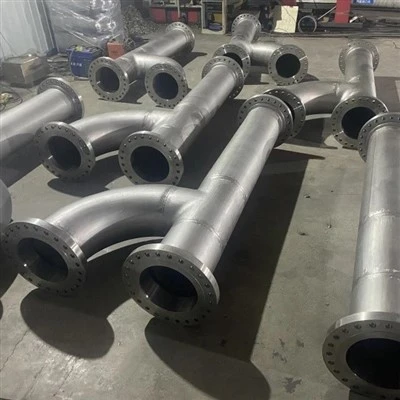
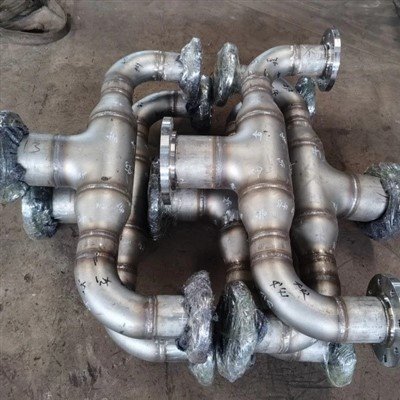
Stainless Steel 316H is a high-carbon variant of the standard 316 alloy, used for elevated temperature and high-pressure applications. With a carbon content of 0.04–0.10%, it delivers superior tensile strength, creep resistance, and thermal stability compared to 316L, making it ideal for critical industries like oil and gas, chemical processing, power generation, and pharmaceuticals.

This article provides a detailed overview of 316H buttweld and forged fittings, their standards, functionalities, and advantages.
316H Stainless Steel Advantages
Corrosion Resistance: Superior pitting and crevice corrosion resistance in chloride-laden settings, outperforming 304 grades in marine and chemical processing applications.
Mechanical Strength: Higher tensile strength (typically 515 MPa minimum) and yield strength (205 MPa minimum) at elevated temperatures compared to standard 316.
Formability and Weldability: Exhibits good formability through hot and cold working processes, though its work-hardening rate requires controlled fabrication to avoid distortion.
Heat Resistance: Maintains structural integrity in oxidizing atmospheres up to 925°C intermittently and 870°C continuously, ideal for pressure vessels and heat exchangers.
Stainless Steel 316H Butt-Weld Pipe Fittings
Butt-weld pipe fittings are welded directly to the pipe ends, creating a seamless, leak-proof connection suitable for high-pressure and high-temperature systems.

The primary specification for 316H butt-weld fittings is ASTM A403 WP316H, which covers wrought austenitic stainless steel piping fittings for pressure piping applications. Dimensional standards include:
ASME/ANSI B16.9 for factory-made wrought butt-welding fittings.
ASME B16.28 for short-radius elbows and returns.
MSS-SP-43 for lightweight corrosion-resistant fittings.
316H Butt-Weld Pipe Fittings and Their Functions
Common butt-weld fittings in 316H include the following:
|
Type |
Description |
Function and Role |
|
Elbow (45° and 90°) |
A curved fitting with beveled ends, available in long-radius (1.5D) or short-radius (1D) configurations. |
Changes the direction of fluid flow while minimizing pressure drop and turbulence; essential in space-constrained layouts or to accommodate pipeline routing around obstacles. |
|
Tee (Equal and Reducing) |
A T-shaped fitting with three outlets; equal tees have uniform branch sizes, while reducing tees vary in diameter. |
Divides or combines flow from a main line to branches; used in distribution systems to maintain balanced pressure and flow rates. |
|
Reducer (Concentric and Eccentric) |
A conical fitting that connects pipes of different diameters; concentric maintains centerline alignment, eccentric offsets it. |
Reduces or increases pipe size to adjust flow velocity or pressure; concentric for vertical lines to prevent air pockets, eccentric for horizontal to avoid sediment buildup. |
|
Cap |
A dome-shaped end closure with a beveled edge. |
Seals the end of a pipe to stop flow, providing a permanent or temporary closure for system maintenance or expansion. |
|
Cross |
A plus-shaped fitting with four outlets. |
Allows flow intersection from multiple directions; applied in complex manifolds where four-way branching is required. |
|
Stub End |
A short length of pipe with a flared or lap joint end. |
Facilitates bolted connections with lap joint flanges, enabling easy disassembly for inspection or cleaning in corrosive environments. |
Stainless Steel 316H Forged Pipe Fitting Types
Forged pipe fittings are produced through a forging process that enhances material density and strength, making them ideal for high-pressure, small-diameter applications. In 316H, they offer superior fatigue resistance at elevated temperatures.
Standards for Forged Pipe Fittings
The governing specification is ASTM A182 F316H, which outlines requirements for forged or rolled alloy-steel pipe flanges, fittings, and valves for high-temperature service. Dimensional and pressure class standards include:

ASME B16.11 for socket-weld and threaded fittings in classes 2000#, 3000#, 6000#, and 9000#.
MSS SP-79, 83, 95, and 97 for additional socket-weld reducing inserts and unions.
BS 3799 for steel pipe fittings, screwed and socket-welding for the petroleum industry.
Fittings are typically available in sizes from 1/8" NB to 4" NB, with socket-weld or threaded connections.
316H Forged Pipe Fittings and Their Functions
316H forged fittings are categorized into socket-weld and threaded. Common types include:
|
Type |
Description |
Function and Role |
|
Elbow (45° and 90°) |
Similar to butt-weld but with socket or threaded ends. |
Redirects flow in tight spaces; socket-weld for leak-proof high-pressure systems, threaded for adjustable installations. |
|
Tee (Equal and Reducing) |
Three-outlet fitting for branching. |
Splits flow into branches; used in instrumentation lines or high-pressure headers. |
|
Coupling (Full and Half) |
Straight connector for joining two pipes. |
Extends pipe runs or repairs sections; full for equal diameters, half for transitions. |
|
Union |
Three-piece assembly with a nut for disconnection. |
Allows easy disassembly without cutting pipes; ideal for maintenance in valves or instruments. |
|
Cap |
End closure for pipes. |
Seals pipe ends to prevent leakage; used in testing or capping unused lines. |
|
Cross |
Four-outlet fitting. |
Provides multi-directional branching; applied in compact, high-pressure manifolds. |
|
Bushing |
Insert to reduce thread size. |
Adapts larger fittings to smaller pipes; prevents over-threading in pressure systems. |
|
Plug (Hex, Square, Round) |
Male-threaded closure. |
Blocks openings in fittings or pipes; hex head for easy wrenching in confined areas. |
Conclusion
Stainless Steel 316H pipe fittings offer unmatched reliability in high-temperature, corrosive environments. Whether selecting buttweld fittings for seamless high-pressure integration or forged fittings for compact, high-strength connections, our products meet the most demanding standards.
Contact us for technical data sheets, custom quotes, or expert guidance on your piping system with 316H solutions.