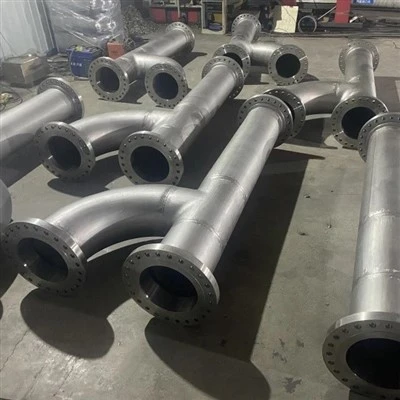
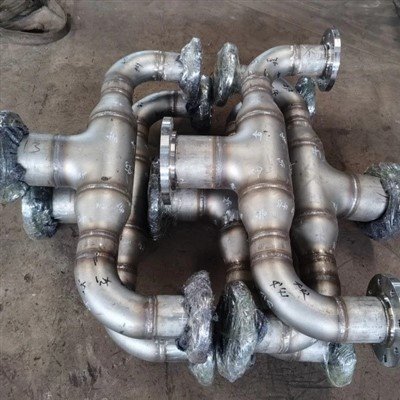
|
Metric |
Value |
|
Global hydrogen production via SMR |
~76 million metric tons/year (2024) |
|
SMR share of total H2 production |
~70% of global industrial hydrogen |
|
Typical reformer tube wall temperature |
850–950 °C (1560–1740 °F) |
|
Typical reformer operating pressure |
20–35 bar (290–500 psi) |
|
Design life of reformer tubes |
100,000 hours (≈11.4 years) |
|
Primary failure mode |
Creep rupture (accounts for >80% of tube failures) |
|
Leading alloy for reformer tubes |
HP40 Nb Micro-alloy (centrifugal cast) |
|
Leading alloy for pigtails/headers |
Incoloy 800HT (wrought) |
Source: IEA Global Hydrogen Review 2024; API 530; thyssenkrupp Uhde, 2024

What Is Steam Methane Reforming?
Steam methane reforming (SMR) is the dominant industrial process for producing hydrogen. Methane reacts with steam at high temperature over a nickel-based catalyst, yielding hydrogen and carbon monoxide. The process runs inside thousands of vertical tubes packed with catalyst, heated externally by burners to 850–950 °C.
The reaction is strongly endothermic-it requires massive heat input. The reformer furnace is therefore one of the most thermally stressed pieces of equipment in any chemical plant. Every component-catalyst tubes, pigtails, outlet headers, and transfer lines-must withstand extreme temperatures, corrosive gas mixtures, and sustained mechanical loads for 100,000 hours or more.
SMR Process Conditions
|
Parameter |
Typical Range |
Significance for Materials |
|
Tube wall temperature |
850–950 °C |
Drives creep-the #1 failure mode |
|
Internal pressure |
20–35 bar |
Creates hoop stress in tube walls |
|
Process gas composition |
H2, CO, CO2, H2O, CH4 |
Carburization and oxidation risk |
|
Steam-to-carbon ratio |
2.5–3.5 |
Higher ratio = more oxidation; lower = more coking |
|
Heat flux |
50–90 kW/m² |
Drives thermal gradient through tube wall |
|
Design life |
100,000 hours |
Long-term creep-rupture design required |
Source: API 530, 7th Ed.; Szablowski et al., Energy, 2025
Why Nickel Alloys Are Essential for SMR
Nickel alloys are the only commercially viable material class that can simultaneously resist creep, carburization, and oxidation at SMR operating temperatures for 100,000+ hours. Stainless steels lack sufficient creep strength above 700 °C, and carbon steels fail catastrophically in hydrogen service.
Nickel's face-centered cubic (FCC) crystal structure remains stable at temperatures where iron-based alloys undergo phase transformations that weaken creep resistance. The high nickel content also provides inherent resistance to carburization-a critical degradation mechanism in reformer environments where carbon from methane decomposition diffuses into tube walls, causing embrittlement and volume expansion.
Four Critical Material Requirements
Creep is the slow, progressive deformation of metal under stress at high temperature. In reformer tubes, internal pressure creates hoop stress. Over 100,000 hours at 900 °C, even small creep strains accumulate and lead to rupture. Nickel alloys with chromium and carbide-forming elements (Nb, Ti) develop stable precipitates that pin grain boundaries and resist creep.
Carburization Resistance
The SMR environment is carbon-rich. Carbon atoms diffuse into the alloy, forming chromium carbides that deplete the protective chromium oxide layer and cause metal dusting. Higher nickel content fundamentally reduces carbon solubility and diffusivity. Alloys with ≥32% Ni (e.g., Incoloy 800HT) and ≥60% Ni (e.g., Inconel 625) show dramatically lower carburization rates than 25% Ni alloys.
Oxidation Resistance
Steam (H2O) is present at partial pressures of 8–15 bar. At 900 °C, water vapor accelerates oxidation by promoting the formation of volatile CrO3. Chromium content ≥20% is required to form a stable, self-healing Cr2O3 scale. Additions of aluminum (≤1.5%) and silicon (≤0.5%) further improve scale adhesion in wet-gas environments.
Thermal Fatigue Resistance
Reformer start-ups and shutdowns create thermal cycles. The temperature difference between inner and outer tube walls can exceed 100 °C. Repeated cycling causes fatigue cracking, especially at welded joints and thin-wall pigtails. Nickel alloys' low thermal expansion coefficient (especially Incoloy 800H/HT at ~14.4 × 10⁻⁶/°C) reduces thermal stress compared to austenitic stainless steels.
Nickel Alloys for Steam Methane Reformer Service
Six alloy families dominate SMR service: Incoloy 800H/800HT for pigtails and headers; HP40 Nb and Centralloy G 4852 Micro for catalyst tubes; Inconel 600/625 for critical welds and specialized components; and Hastelloy X for internal hardware. Each is selected based on specific temperature, stress, and corrosion conditions.
Chemical Composition Comparison
|
Alloy |
Ni (%) |
Cr (%) |
Fe (%) |
C (%) |
Other Key Elements |
|
Incoloy 800H (UNS N08810) |
30–35 |
19–23 |
≥39.5 |
0.05–0.10 |
Al 0.15–0.60, Ti 0.15–0.60 |
|
Incoloy 800HT (UNS N08811) |
30–35 |
19–23 |
≥39.5 |
0.06–0.10 |
Al+Ti: 0.85–1.20 |
|
HP40 Nb (25Cr-35Ni) |
33–37 |
24–28 |
Bal. |
0.35–0.45 |
Nb 1.0–1.5, Si ≤1.5 |
|
Centralloy G 4852 Micro |
32–36 |
24–27 |
Bal. |
0.40–0.50 |
Nb+Ti+Zr micro-additions |
|
Inconel 600 (UNS N06600) |
≥72 |
14–17 |
6–10 |
≤0.15 |
Cu ≤1.0 |
|
Inconel 625 (UNS N06625) |
≥58 |
20–23 |
≤5 |
≤0.10 |
Mo 8–10, Nb 3.15–4.15 |
|
Hastelloy X (UNS N06002) |
≥47 |
20.5–23 |
17–20 |
0.05–0.15 |
Mo 8–10, Co 0.5–2.5, W 0.2–1.0 |
Source: Special Metals, INCOLOY 800H/800HT Tech Bulletin; Schmidt+Clemens Data Sheet; Special Metals, INCONEL 625 Tech Bulletin; Haynes International, HASTELLOY X Data Sheet
Mechanical Properties at Elevated Temperature
|
Alloy |
Temp (°C) |
Tensile Strength (MPa) |
Yield Strength (MPa) |
Creep Rupture, 100kh (MPa) |
Max Service Temp (°C) |
|
Incoloy 800H |
800 |
340 |
180 |
48 |
980 |
|
Incoloy 800HT |
900 |
185 |
95 |
20 |
980 |
|
HP40 Nb (cast) |
900 |
- |
- |
25–30 |
1050 |
|
Centralloy G 4852 Micro |
900 |
- |
- |
30–38 |
1050 |
|
Inconel 625 |
800 |
500 |
275 |
70 |
980 |
|
Inconel 625 |
900 |
- |
- |
28 |
980 |
|
Hastelloy X |
800 |
360 |
205 |
52 |
1200 |
|
Hastelloy X |
900 |
- |
- |
22 |
1200 |
Source: ASME Section II, Part D, 2023; Schmidt+Clemens; Special Metals Tech Bulletins. Note: 100kh = 100,000-hour creep rupture strength; "-" = data not standardized for cast alloys at that temperature.
Alloy-by-Alloy Analysis for SMR Applications

Incoloy 800H and 800HT are the most widely specified wrought nickel-iron-chromium alloys for reformer pigtails, outlet headers, and transfer lines. Their controlled carbon content and grain size (ASTM 5 or coarser) provide superior creep-rupture performance in the 600–950 °C range.
Incoloy 800H (UNS N08810) contains 0.05–0.10% carbon with a minimum solution-anneal at 1149 °C, producing a coarse grain structure optimized for creep resistance. Incoloy 800HT (UNS N08811) adds tighter control over aluminum and titanium (Al+Ti: 0.85–1.20%), providing more consistent long-term performance.
Key advantages in SMR service:
• Excellent creep-rupture strength: 48 MPa at 800 °C / 100,000 hours (ASME II-D)
• Superior carburization resistance due to ≥30% Ni content
• Good oxidation resistance up to 980 °C in steam/hydrogen environments
• Well-characterized in API 530 and ASME code cases
• Widely available in pipe, tube, and fittings forms
HP40 Nb Modified - The Workhorse of Reformer Tubes
Centrifugal-cast HP40 Nb (25Cr-35Ni-1Nb) is the dominant alloy for reformer catalyst tubes worldwide, offering the best balance of creep strength, carburization resistance, and weldability at 850–950 °C.
The high carbon content (0.35–0.45%) forms a network of chromium and niobium carbides (M23C6 and MC) that dramatically strengthen the alloy against creep. The centrifugal casting process produces a dense, equiaxed grain structure ideal for pressure-containing tubes. Niobium additions prevent sensitization during welding and improve ductility after long-term aging.
HP40 Nb typically achieves 25–30 MPa creep rupture strength at 900 °C over 100,000 hours-approximately 50% higher than the older HK40 (25Cr-20Ni) alloy it replaced. Typical tube dimensions: OD 100–180 mm, wall thickness 10–18 mm, length 10–13 m.
Centralloy G 4852 Micro - Next-Generation Reformer Tube Alloy
Centralloy G 4852 Micro represents the current state-of-the-art for reformer tubes, delivering 20–30% higher creep rupture strength than standard HP40 Nb through micro-alloying with Ti, Zr, and rare earth elements.
Developed by Schmidt+Clemens, this alloy builds on the HP40 Nb base chemistry but adds precisely controlled micro-additions of titanium, zirconium, and rare earth elements. These form a finer, more stable carbide dispersion that resists coarsening during 100,000+ hours at temperature. The result: creep rupture strength of 30–38 MPa at 900 °C / 100,000 hours.
Practical benefits:
• Thinner tube walls → lower thermal stress and improved heat transfer
• Extended tube life or higher allowable operating temperatures
• Compatible with existing HP40 Nb welding consumables
• Proven in >200 reformers worldwide since 2010
Inconel 600 - Corrosion-Resistant Hardware
Inconel 600 (UNS N06600) is used for reformer internal hardware, thermowells, and components where exceptional resistance to stress-corrosion cracking and caustic environments is required, though its creep strength limits use above 700 °C.
With ≥72% nickel, Inconel 600 provides outstanding resistance to chloride stress-corrosion cracking-a risk in the water-gas shift reactor downstream of the reformer. Its chromium content (14–17%) provides moderate oxidation resistance. However, the lack of carbide-strengthening elements means creep properties are inferior to Incoloy 800H/HT above 700 °C.
Inconel 625 - High-Strength Weld Overlay and Critical Components
Inconel 625 (UNS N06625) excels in high-stress, corrosive environments within the reformer complex-particularly for weld overlays, bellows, and transition pieces-due to its combination of solid-solution strengthening (Mo + Nb) and outstanding pitting/crevice corrosion resistance.
The molybdenum (8–10%) and niobium (3.15–4.15%) additions provide solid-solution strengthening without relying on carbide precipitation, giving Inconel 625 excellent ductility and toughness after prolonged high-temperature exposure. Creep rupture strength at 800 °C / 100,000 hours is approximately 70 MPa-significantly higher than Incoloy 800H at the same temperature.
Hastelloy X - The Highest Temperature Capability
Hastelloy X (UNS N06002) offers the highest continuous service temperature (up to 1200 °C) among the alloys discussed, making it suitable for reformer burner components, internal supports, and hot-gas ducting where oxidation resistance at extreme temperatures is paramount.
The combination of chromium (20.5–23%), molybdenum (8–10%), and cobalt (0.5–2.5%) provides exceptional oxidation and carburization resistance.
Hastelloy X maintains useful mechanical properties at temperatures where most other alloys have lost structural integrity. Its limitation is lower nickel content compared to Inconel 625, which reduces resistance to chloride-induced stress corrosion cracking.
Comparative Performance for SMR Component Selection
No single alloy is optimal for every SMR component. Catalyst tubes demand maximum creep strength (HP40 Nb / G 4852 Micro), while pigtails and headers prioritize weldability and ductility (Incoloy 800HT), and specialized hardware requires corrosion resistance (Inconel 625) or extreme-temperature capability (Hastelloy X).
|
Property |
Incoloy 800HT |
HP40 Nb |
G 4852 Micro |
Inconel 625 |
Hastelloy X |
|
Creep strength at 900 °C |
★★☆ |
★★★★ |
★★★★★ |
★★★ |
★★☆ |
|
Carburization resistance |
★★★★ |
★★★ |
★★★★ |
★★★★★ |
★★★★ |
|
Oxidation resistance |
★★★ |
★★★★ |
★★★★★ |
★★★★ |
★★★★★ |
|
Weldability |
★★★★★ |
★★★ |
★★★ |
★★★★ |
★★★★ |
|
Code acceptance (ASME/API) |
★★★★★ |
★★★★ |
★★★ |
★★★★★ |
★★★★★ |
|
Thermal fatigue resistance |
★★★★★ |
★★★ |
★★★ |
★★★★ |
★★★★ |
|
Availability/cost |
★★★★★ |
★★★★ |
★★★ |
★★☆ |
★★☆ |
|
Max service temp (°C) |
980 |
1050 |
1050 |
980 |
1200 |
Source: Compiled from ASME II-D, API 530, Special Metals, Schmidt+Clemens, and Haynes International data sheets. Rating: ★ = low to ★★★★★ = excellent.
Component-to-Alloy Selection Guide
|
SMR Component |
Primary Alloy |
Alternative |
Key Selection Rationale |
|
Catalyst tubes |
HP40 Nb / G 4852 Micro |
HP40 Micro |
Highest creep rupture strength; centrifugal cast to code |
|
Inlet pigtails |
Incoloy 800HT |
Incoloy 800H |
Weldability + thermal fatigue resistance + ASME-coded |
|
Outlet pigtails |
Incoloy 800HT / Inconel 625 |
Inconel 600 |
Higher temp at outlet requires creep + carburization resistance |
|
Outlet headers/collectors |
Incoloy 800HT |
Inconel 625 |
Large-diameter wrought pipe availability + ASME code compliance |
|
Transfer line |
Incoloy 800HT (lined) |
Inconel 625 (clad) |
Thermal cycling resistance; internal refractory lining |
|
Burner hardware |
Hastelloy X |
Inconel 601 |
Extreme temperature + oxidation resistance required |
|
Thermowells |
Inconel 600 |
Inconel 625 |
Stress-corrosion cracking resistance in wet service |
|
Weld overlays |
Inconel 625 |
Inconel 825 |
Pitting + crevice corrosion protection on carbon steel substrates |
Source: API 530; NACE International; thyssenkrupp Uhde; industry practice
Frequently Asked Questions
HP40 Nb micro-alloy (or its advanced variant, Centralloy G 4852 Micro) is the industry standard for catalyst tubes. It provides the highest creep rupture strength (30–38 MPa at 900 °C / 100,000 hours), excellent carburization resistance from its 35% Ni content, and proven weldability. For new construction, G 4852 Micro offers 20–30% higher creep strength than standard HP40 Nb, enabling thinner walls and longer design life.
Why is Incoloy 800HT preferred for reformer pigtails and headers?
Incoloy 800HT (UNS N08811) is preferred because it is a wrought alloy available in standard pipe and tube sizes per ASME B36.19, has excellent thermal fatigue resistance from its low thermal expansion coefficient, and its creep properties are fully documented in ASME Section II, Part D. The tighter Al+Ti control (0.85–1.20%) compared to 800H provides more consistent long-term performance, which is critical for pigtails that undergo frequent thermal cycling.
How long do steam methane reformer tubes last?
Design life is typically 100,000 hours (approximately 11.4 years of continuous operation). Actual service life ranges from 60,000 to 120,000 hours depending on operating conditions. The primary life-limiting factor is creep damage. A tube operating 10–15 °C above its design temperature can lose 50% of its expected remaining life. Regular inspection using eddy current testing, replica metallography, and ultrasonic wall thickness measurement is essential for predicting remaining life.
What is the difference between Incoloy 800H and 800HT?
Both are nickel-iron-chromium alloys with the same base composition. The differences are: (1) 800HT has a more restricted aluminum + titanium range (0.85–1.20% vs. 0.30–1.20% for 800H), providing more consistent creep performance; (2) 800HT requires a minimum solution-anneal temperature of 1149 °C; (3) 800HT's UNS designation is N08811 vs. N08810 for 800H. For new SMR pigtail and header construction, 800HT is generally preferred.
Can stainless steel be used in steam methane reformers?
Standard austenitic stainless steels (304H, 316H, 321H, 347H) are used in the colder sections of the hydrogen plant (shift reactors, heat exchangers, downstream piping) where temperatures are below 700 °C. However, they lack sufficient creep strength for the reformer furnace environment (850–950 °C). The 18% Ni content of 347H also provides inferior carburization resistance compared to the 30–35% Ni content of Incoloy 800HT or the 35% Ni of HP40 Nb.
When should Inconel 625 be specified instead of Incoloy 800HT?
Inconel 625 is specified when: (1) the environment contains chlorides or other halides that could cause pitting/crevice corrosion; (2) weld overlay protection is needed on carbon steel substrates; (3) components require higher short-term tensile strength at moderate temperatures (600–800 °C); or (4) resistance to reducing acid environments is needed. Inconel 625 is significantly more expensive (3–5× the cost of Incoloy 800HT) and is not as well-suited for long-term creep-dominated applications above 800 °C.
How does hydrogen embrittlement affect nickel alloys in SMR service?
Nickel alloys are inherently resistant to hydrogen embrittlement at SMR operating temperatures. The FCC crystal structure of high-nickel alloys has low hydrogen diffusivity and solubility. At elevated temperatures (above 300 °C), hydrogen damage manifests primarily as high-temperature hydrogen attack (HTHA), which is addressed by Nelson curves (API 941). Alloys with ≥30% Ni, such as Incoloy 800HT and Inconel 625, are essentially immune to HTHA at all SMR operating conditions.