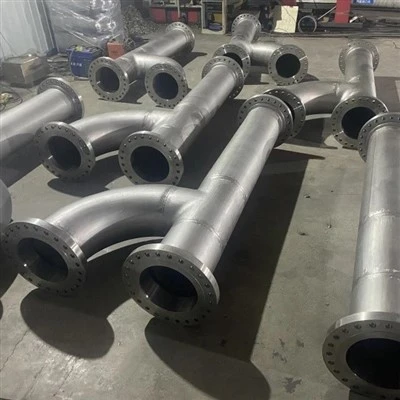
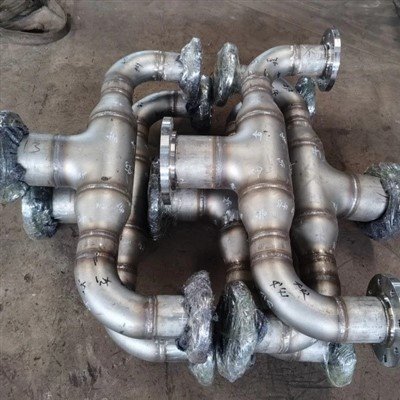
Monel 400 (UNS N04400, W.Nr. 2.4360) is a single-phase nickel–copper alloy - about 67% nickel and 30% copper - with outstanding resistance to seawater, hydrofluoric acid and hot caustic environments. It welds reliably, but it rewards a disciplined procedure: gas tungsten arc welding (GTAW/TIG) with ERNiCu-7 filler metal, strict cleanliness to prevent porosity, controlled heat input to prevent hot cracking, and thorough post-weld cleaning to restore corrosion resistance.

This article answers the questions welders and engineers ask most: what the alloy is, which process and filler to choose, exact GTAW parameters, how to prevent porosity and hot cracking, how to weld dissimilar joints, what post-weld cleaning really requires, whether heat treatment is needed, and how to qualify and inspect Monel 400 welds. Every quantitative statement is traceable to the standards and manufacturer sources listed in the References section.
Monel 400 Welding at a Glance
The table below condenses the answers this article develops in detail. Each row can be extracted and cited independently.
|
Item |
Short answer |
|
Designation |
UNS N04400; W.Nr. 2.4360; Monel® 400 (trademark of Special Metals Corporation) |
|
Alloy family |
Single-phase nickel–copper solid solution (Ni+Co 63–70 wt %, Cu 28–34 wt %) |
|
Primary welding process |
GTAW (TIG) - reference procedure for root passes, thin sections and corrosion-critical joints |
|
Filler metal (GTAW/GMAW) |
ERNiCu-7, AWS A5.14 (nickel–copper filler with titanium) |
|
Filler metal (SMAW) |
ENiCu-7 electrode, AWS A5.11 |
|
Polarity (GTAW) |
DCEN - direct current, electrode negative (straight polarity) |
|
Shielding gas |
100% argon, 15–20 cfh; helium additions for heavy sections; argon back purge for pipe |
|
Preheat |
Not required (single-phase, non-hardenable alloy) |
|
Interpass temperature |
Hold ≤ 150 °C (some procedures allow up to ~200 °C) |
|
Heat input |
Moderate, ~0.5–1.5 kJ/mm; stringer beads, no weaving |
|
Post-weld heat treatment |
Generally not required for Monel 400; age-hardening is only relevant to Monel K-500 |
|
Post-weld cleaning |
Dedicated stainless brush; nitric-acid pickling to remove heat tint and iron contamination; rinse and dry |
|
Sour-service note |
Monel 400 is listed in NACE MR0175/ISO 15156-3 for H₂S service at a maximum hardness of 35 HRC |
What Is Monel 400 and Why Does It Need a Special Welding Procedure?
Monel 400 (UNS N04400) is a single-phase nickel–copper alloy containing roughly 63–70% nickel and 28–34% copper, and it welds well by conventional arc processes - the procedure matters not because the alloy is hard to join, but because its weld metal is unusually sensitive to two preventable defects: porosity from contamination and hot cracking from heat input and contamination.
Monel 400 is not a "stainless steel" and not an age-hardening alloy. It is a solid-solution nickel–copper alloy: the two elements are fully soluble in each other, so the microstructure is austenitic at every temperature and cannot be hardened by heat treatment. That single fact explains the welding rules that follow - no preheat for metallurgical reasons, no mandatory post-weld heat treatment, and no transformation cracking, which is a risk in hardenable steels.
Table 2 lists the nominal composition and the corrosion job of each element.
|
Element |
Range (wt %) |
Primary function |
|
Nickel + cobalt (Ni+Co) |
63.0 min (to ~70) |
Base element; seawater, HF acid and caustic resistance; high ductility |
|
Copper (Cu) |
28.0–34.0 |
Resistance to non-oxidizing acids (H₂SO₄, HF) and marine biofouling attack |
|
Iron (Fe) |
2.5 max |
Minor strengthening; kept low for corrosion neutrality |
|
Manganese (Mn) |
2.0 max |
Deoxidizer during melting; sulfur control |
|
Carbon (C) |
0.30 max |
Strength contribution; no carbide-related hardening in this alloy |
|
Silicon (Si) |
0.5 max |
Fluidity and deoxidation |
|
Sulfur (S) |
0.024 max |
Kept low - sulfur promotes hot cracking in the weld metal |
Table 2. Nominal composition of Monel 400 (UNS N04400, per ASTM B164 and manufacturer datasheets).
The combination gives Monel 400 its classic applications: seawater piping, pumps and valves in marine service; equipment for hydrofluoric acid, sulfuric acid and caustic alkalis; heat exchanger tubes; and fasteners, springs and instrument components. Product forms are covered by ASTM B127 (plate/sheet), B164 (bar/rod), B165 (seamless pipe/tube), B163 (condenser tube) and B564 (forgings), with ASME equivalents for pressure service. Because the alloy is single-phase, weldability is fundamentally good - the procedure simply has to protect a clean, low-heat, low-contamination weld pool.
Which Welding Process and Filler Metal Should I Use for Monel 400?
Use GTAW (TIG) with ERNiCu-7 filler metal (AWS A5.14) as the reference procedure for Monel 400; GMAW with the same ERNiCu-7 wire and SMAW with ENiCu-7 electrodes (AWS A5.11) are practical production alternatives for thicker or less critical work.
Filler selection follows the classic matching rule for solid-solution alloys: the filler should match the base metal chemistry so that the weld deposit has the same microstructure and corrosion resistance as the parent metal. ERNiCu-7 (often sold under the trade name Monel 60 / Alloy 60) is the AWS A5.14 designation for this filler. Its nominal composition is nickel 62–69%, copper balance (about 27–34%), titanium 1.5–3.0%, manganese up to about 4.0%, iron up to 2.5%, silicon up to 1.25% and carbon up to 0.15%. The deliberate addition of titanium is the key detail: it deoxidizes the weld pool and helps suppress porosity, which is the single most common Monel weld defect.
For covered-electrode (stick) welding, AWS A5.11 ENiCu-7 electrodes (Monel 190-type) provide the same matching deposit for SMAW. For GMAW (MIG), the same ERNiCu-7 wire is fed with argon or argon–helium shielding. Figure 2 compares the nominal compositions of the base metal and the filler to show why ERNiCu-7 is called a "matching" filler: the two are nearly identical except for the titanium addition in the filler.

Figure 2. Nominal composition of Monel 400 base metal versus ERNiCu-7 filler (typical values, wt %; ranges per UNS N04400 and AWS A5.14).
Table 3 summarizes how the three main processes are usually divided.
|
Process |
Filler |
Typical use |
Key characteristics |
|
GTAW (TIG) |
ERNiCu-7 (AWS A5.14) |
Root passes, thin-wall tubing, repair, corrosion-critical joints |
Best control of heat and contamination; DCEN; highest quality |
|
GMAW (MIG) |
ERNiCu-7 (AWS A5.14) |
Production welding of thicker sections |
Higher deposition rate; argon or argon–helium shielding |
|
SMAW (stick) |
ENiCu-7 (AWS A5.11) |
Field work, heavy sections, out-of-position joints |
Portable; slag must be fully removed between passes |
Table 3. Welding processes for Monel 400 and their typical roles.
How Do I Prepare Monel 400 for Welding?
Preparation is where most Monel 400 weld problems are actually decided: degrease the joint with a clean solvent, remove oxides with dedicated stainless-steel tools, and keep the joint free of sulfur, lead, copper and carbon-steel contamination - then use a joint design that gives the welder access without excessive heat input.
Monel 400 is supplied with a thin, tenacious surface oxide that must be removed before welding. Start with degreasing: wipe the joint area and the filler wire with acetone or an approved solvent to remove oil, grease, cutting fluid and shop dust - these are the direct causes of weld porosity. Then remove surface oxide mechanically with a stainless-steel wire brush or a clean abrasive, and wipe again. The brush must be dedicated to Monel/nickel alloys: a brush previously used on carbon steel will embed iron particles into the surface, and iron contamination causes local rusting and pitting after the weld is in service.
Contamination rules are strict. Never use sulfur-bearing marking pens or crayons near the joint - sulfur promotes hot cracking. Never let copper or copper-alloy tools (brass hammers, copper backing bars, copper chipping tools) touch the molten pool: molten copper wets the nickel alloy and forms low-melting films that crack. Joint design is conventional: for pipe and plate, a single-V bevel of about 60–70° included angle with a root gap that allows full fusion, and the joint should be clean and dry immediately before welding. Because Monel has lower fluidity than steel, open access and good fit-up reduce the risk of lack-of-fusion defects.
What Are the Exact GTAW Parameters for Monel 400?
For GTAW of Monel 400, use direct current electrode negative (DCEN), 100% argon shielding at 15–20 cfh, a short arc, stringer beads without weaving, moderate heat input of roughly 0.5–1.5 kJ/mm, and hold the interpass temperature at or below about 150 °C - no preheat is required.
DCEN (electrode negative) is standard for Monel GTAW: it concentrates heat in the workpiece for good penetration while keeping the tungsten electrode cool. Pure argon is the normal shielding gas at 15–20 cfh (about 7–9.5 L/min); for thicker sections, helium or an argon–helium mix can be added to raise heat input into the joint. On pipe, an argon back purge protects the root from oxidation. Keep the arc short - a long arc draws air into the shielding and is a proven porosity generator.
The current range depends mainly on filler wire diameter and section thickness, as summarized in Table 4 (values compiled from filler-metal manufacturer guidance; the exact values must come from a qualified welding procedure specification, WPS).
|
Filler wire diameter |
Typical current (A) |
Typical voltage (V) |
Comment |
|
1.2 mm (0.045 in) |
80–110 |
13–16 |
Light-gauge tubing and root passes |
|
1.6 mm (1/16 in) |
90–130 |
14–18 |
Most common size for general GTAW |
|
2.4 mm (3/32 in) |
70–120 |
10–18 |
Medium sections; overlap with 1/16 in range |
|
3.2 mm (1/8 in) |
120–175 |
10–18 |
Heavier sections and fill passes |
Table 4. Typical GTAW parameter ranges for Monel 400 with ERNiCu-7 filler (DCEN, 100% argon).
Heat input is controlled by the combination of current, travel speed and technique. Keep the arc moving in straight, narrow stringer beads and avoid wide weaving, which overheats the pool. Because Monel 400 expands more than steel when heated, distortion builds up quickly on multi-pass welds; moderate travel speed and interpass control keep both distortion and hot-cracking risk in check. Many procedures limit interpass temperature to 100–150 °C; some permit up to about 200 °C, but 150 °C is the conservative control point. The complete six-step sequence - from material verification to inspection - is shown in Figure 1.

Figure 1. Monel 400 GTAW welding workflow - six steps (schematic; not a substitute for a qualified WPS).
Why Do Monel Welds Get Porosity, and How Do I Prevent It?
Porosity is the number-one defect in Monel 400 welding, and it is almost always contamination - oil, grease, cutting fluid, moisture, sulfur-bearing markers or poor gas coverage - not the welding parameters themselves; clean surfaces, dry consumables and good shielding prevent it.
The mechanism is gas evolution during solidification. When hydrocarbons, moisture or other contaminants are heated by the arc, they break down into hydrogen, oxygen and steam. These gases are soluble in the liquid weld pool but almost insoluble in the solidifying nickel alloy, so they are rejected at the solidification front and trapped as bubbles. Because nickel–copper weld metal solidifies over a narrow temperature range, the bubbles have little time to float out, and the result is a porous, leaking, mechanically weak weld.
Prevention is a checklist, not a secret:
- Cleanliness - Degrease the joint and filler wire with acetone or solvent immediately before welding.
- No contaminants - Wipe off cutting fluids, lubricants and shop dust; never weld over paint or marker ink.
- Dry consumables - Store filler wire in dry packaging; rod or wire with visible rust, scale or moisture is rejected.
- Shielding - Use high-purity argon and check flow; a long arc or drafty shop breaks shielding.
- Back purge - Purge the inside of pipe with argon so the root is protected on both sides.
- Between passes - Keep the interpass temperature controlled and clean each pass with a dedicated stainless brush.
Why Does Monel 400 Crack During Welding, and How Do I Prevent Hot Cracking?
Hot cracking (solidification cracking) in Monel 400 is caused by low-melting eutectics - films rich in sulfur, phosphorus or copper that stay liquid while the surrounding metal has already solidified - and it is prevented by clean surfaces, low heat input, stringer beads, controlled interpass temperature, and a strict ban on copper-alloy tools.

As a weld pool cools, dendrites grow from the fusion line toward the center. If tramp elements such as sulfur and phosphorus are present, they concentrate in the last liquid to freeze and form low-melting films along the grain boundaries. When the contracting, solidifying weld is put under shrinkage stress - higher with high heat input, wide weave beads, high restraint or thick sections - these still-liquid films tear open, and the crack is frozen in. This is why Monel procedures are so insistent on low-sulfur material, clean joints and low heat input.
Copper contamination deserves special mention because of the alloy's own chemistry. If copper from brass hammers, copper backing bars or copper-alloy chipping tools enters the molten pool, it combines with the nickel to form low-melting nickel–copper eutectics that crack easily. In effect, the weld pool becomes its own crack-sensitive alloy. The rule is absolute: never touch the hot weld area with copper or brass, and use only steel tools that are dedicated to nickel alloys.
Practical anti-cracking controls mirror the porosity list: verify low sulfur content of base and filler; degrease thoroughly; use moderate heat input (0.5–1.5 kJ/mm) with stringer beads; hold interpass ≤ 150 °C; avoid excessive joint restraint by good fit-up and sequencing; and for multi-pass welds, let the weld cool between passes. If a crack is found, grind it out completely and re-weld - welding over a crack never heals it.
How Should I Weld Monel 400 to Carbon Steel or Stainless Steel?
Monel 400 welds successfully to carbon steel and to stainless steel using nickel–copper or nickel fillers - typically ERNiCu-7 or ENiCu-7 - with a qualified WPS, controlled dilution, and an understanding that the dissimilar joint inherits the mechanical properties of the weaker side.
Dissimilar Monel-to-steel joints are common in chemical and marine plants where a Monel component (valve, pump, tube) is joined to carbon steel or stainless piping. ERNiCu-7 is the standard filler for these joints because its deposit is compatible with both sides: it matches the Monel side and accepts moderate iron dilution from the steel side without forming brittle phases. For steel cladding applications, a first buttering layer of pure nickel filler may be applied to control iron pickup before finishing with ERNiCu-7.
The two engineering risks are dilution and differential thermal expansion. Iron from the steel side dilutes the weld deposit, so heat input and welding technique should keep dilution low - buttering and multiple passes help. Thermal expansion differs between Monel and steel, so long, highly restrained joints should be designed with flexibility in mind. Qualification always precedes production: the joint must be covered by a WPS qualified to the governing code, and welders must be qualified for the process and materials involved.
What Post-Weld Cleaning Does Monel 400 Require?
Post-weld cleaning removes heat tint, oxide scale and embedded iron contamination using dedicated stainless-steel brushing and a nitric acid-based pickling treatment, followed by rinsing and drying; this restores the corrosion resistance of the weld area - though strictly speaking it is cleaning, not "passivation" in the stainless-steel sense, because Monel has no chromium-oxide film to form.
During welding, the heat-affected zone develops a heat tint - a thin oxide layer - and shop tools can leave iron particles embedded in the surface. Neither is protective: the oxide scale is a site for corrosion initiation, and iron contamination rusts in service and pits the nickel alloy. The same cleanliness logic that governs pre-weld preparation applies after welding, and it matters for corrosion-critical applications such as seawater piping and HF acid service.
A typical Monel 400 post-weld cleaning sequence is: (1) remove heat tint and weld spatter with a dedicated stainless-steel wire brush or clean abrasive - never carbon-steel brushes; (2) for stubborn oxide scale, pickle with a nitric acid-based solution (for example, about 10% nitric acid with 1–2% hydrofluoric acid for heavy scale, or a room-temperature ~20% nitric acid treatment to clean the surface and remove loose scale, following ASTM A380/A380M-style cleaning and pickling practice adapted to nickel alloys); (3) rinse thoroughly with clean or deionized water; and (4) dry completely. Acid residues left in crevices attack the alloy, so rinsing is not optional.
The common shop phrase "passivating Monel" is technically loose: stainless steel passivation deliberately grows a chromium-oxide film, and Monel 400 contains no chromium. What the nitric treatment actually does is remove oxide scale, smut and iron contamination so that the alloy's own nickel–copper surface - which is inherently corrosion resistant in its service environments - is exposed clean. Always confirm the pickling recipe with the alloy producer or a qualified surface treatment specialist, and handle all acids with proper PPE and facility permits.
Does Monel 400 Need Post-Weld Heat Treatment?
No - Monel 400 is not hardenable, so post-weld heat treatment is generally not required and is not needed to restore corrosion resistance; stress relief is applied only when the design calls for it, and age-hardening after welding applies to Monel K-500, not Monel 400.

Because Monel 400 is a single-phase solid solution with no transformation on cooling, welding does not create a hard, brittle microstructure in the heat-affected zone and does not sensitize the alloy - there are no chromium carbides to precipitate, as there can be in stainless steels. As-welded Monel 400 retains its corrosion resistance and ductility, which is exactly why the standard procedure is simply weld, clean and inspect.
Two nuances. First, stress relief is occasionally specified for dimensional stability or residual-stress reduction on heavily welded or machined components; when it is, it should follow the governing code and the manufacturer's recommended temperature range, because an unsuitable cycle can coarsen grain structure. Second, do not confuse Monel 400 with Monel K-500 (UNS N05500): K-500 is precipitation-hardenable and, when welded, must be re-aged after welding to restore its strength - that is a different procedure from the one described here for Monel 400.
How Do I Qualify and Inspect Monel 400 Welds?
Qualify the welding procedure to the governing code - typically ASME Boiler and Pressure Vessel Code Section IX (WPS supported by a PQR) for pressure equipment - qualify the welders, then inspect with visual testing plus penetrant, radiography or ultrasonic testing as the code requires; for sour service, add hardness checks to confirm NACE MR0175/ISO 15156 compliance at ≤ 35 HRC.
A Monel 400 weld is only as trustworthy as its paper trail. The written Welding Procedure Specification (WPS) records the essential variables - process, base metal, filler metal, polarity, current range, shielding gas and flow, preheat/interpass limits and post-weld treatment - and must be supported by a Procedure Qualification Record (PQR) from destructive and non-destructive testing of a test coupon. Welders must hold performance qualifications (WPQ) for the process. This is the standard framework of ASME Section IX, and it applies unchanged to Monel 400.
Inspection normally starts with 100% visual testing (VT) to catch surface porosity, cracks, undercut, and incomplete fusion - all the defects this article has described. Liquid penetrant testing (PT) is the standard surface crack finder for nickel alloys; radiography (RT) or ultrasonic testing (UT) is added for pressure-retaining and critical structural welds per the applicable code and client specification. Where the component will see H₂S-containing service, NACE MR0175/ISO 15156-3 lists Monel 400 as acceptable at a maximum hardness of 35 HRC, so hardness surveys on weld metal and heat-affected zone are a standard acceptance step, and consumable traceability is demonstrated with material certificates (for example, EN 10204 3.1 mill certificates) for the base metal and the ERNiCu-7 filler batch.