Selecting the right alloy for seawater piping and heat exchangers is one of the most consequential decisions in marine engineering. Two alloys dominate this discussion: Monel 400 (UNS N04400), a nickel-copper alloy, and cupronickel 90/10 (UNS C70600), a copper-nickel alloy. Both are proven, corrosion-resistant materials with decades of service in the world's oceans - but they are engineered for different jobs and carry very different price tags.
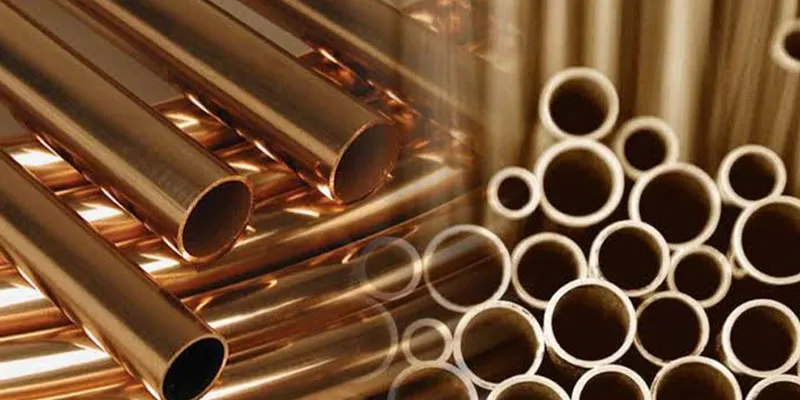
Cupronickel 90/10 is the cost-effective, industry-standard default for most seawater piping and heat-exchanger tubing, with roughly double the thermal conductivity of Monel 400 and the best natural biofouling resistance of any engineering alloy. Monel 400 is the premium choice where flow velocities are high, seawater is polluted or variable, or strength and long-term reliability under upset conditions justify an initial cost that is typically several times higher.
This guide compares the two alloys across composition, corrosion resistance, flow velocity, biofouling, heat transfer, mechanical properties, cost, fabrication, and application fit. Every section opens with a direct conclusion so the answer can be extracted and cited quickly, followed by the engineering rationale behind it.
What you will learn in this article:
- Corrosion: which alloy resists seawater corrosion better, and under which conditions
- Flow velocity: how flow velocity changes the material-selection equation
- Heat transfer: why cupronickel 90/10 dominates heat-exchanger service
- Cost: how upfront cost compares with lifecycle cost
- Selection: a practical decision checklist for piping and heat exchangers
What Are Monel 400 and Cupronickel 90/10?
Monel 400 is a nickel-based alloy containing roughly 63–70% nickel and 28–34% copper, while cupronickel 90/10 is a copper-based alloy containing roughly 88–90% copper and 9–11% nickel. The metal that dominates each alloy - nickel in Monel 400, copper in cupronickel 90/10 - drives nearly every difference in performance and price that follows.
The names of the two alloys are easily confused, but their chemistry is very different. "Monel 400" is the trade name for nickel-copper alloy UNS N04400; "cupronickel 90/10" (also written Cu-Ni 90/10 or CuNi10Fe1Mn) is the common name for copper-nickel alloy UNS C70600. The nominal compositions are shown in Table 1.
|
Element (wt.%) |
Monel 400 (UNS N04400) |
Cupronickel 90/10 (UNS C70600) |
|
Nickel (Ni) |
63.0 min |
9.0–11.0 |
|
Copper (Cu) |
28.0–34.0 |
Balance (approx. 88.6 min) |
|
Iron (Fe) |
2.5 max |
1.0–1.8 |
|
Manganese (Mn) |
2.0 max |
0.5–1.0 |
|
Carbon (C) |
0.30 max |
0.05 max |
|
Silicon (Si) |
0.50 max |
- |
|
Sulfur (S) |
0.024 max |
0.02 max |
Table 1. Nominal chemical composition of Monel 400 (UNS N04400) and cupronickel 90/10 (UNS C70600). Sources: ASTM B164/B466 and published alloy data sheets.
Both alloys are single-phase solid-solution alloys: they cannot be hardened by heat treatment, only by cold working, and both weld and fabricate reliably. Monel 400's high nickel content gives it higher strength, superior resistance to aggressive chemicals, and a substantially higher price. Cupronickel 90/10 is essentially "marine-grade copper": its copper-rich matrix provides excellent thermal conductivity, outstanding natural antifouling, and a much lower material cost. Understanding this one fundamental difference makes the rest of the comparison intuitive.
Which Alloy Has Better Corrosion Resistance in Seawater?
In clean, flowing seawater, both alloys perform excellently and are rated for decades of service - but Monel 400 is the more forgiving alloy when conditions turn aggressive. It resists pitting, crevice corrosion, and chloride-induced stress-corrosion cracking (SCC) across a wider range of flow velocities, temperatures, and water qualities, including polluted and sulfide-bearing seawater. Cupronickel 90/10 is outstanding in clean seawater but is more sensitive to stagnant, low-flow, or polluted conditions.
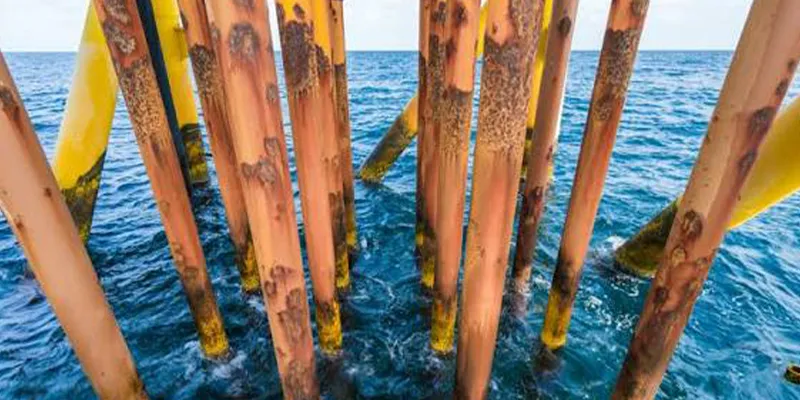
Both alloys protect themselves with thin, self-healing oxide films and are effectively immune to chloride-induced stress-corrosion cracking - the failure mode that limits austenitic stainless steels such as 316L in seawater. Reported uniform corrosion rates are very low for both materials. Monel 400 is typically below 0.025 mm/year in flowing seawater, with published values commonly in the range of 0.002–0.013 mm/year. Cupronickel 90/10 shows general corrosion rates of about 0.002–0.008 mm/year in quiet natural seawater. For identical clean-seawater duty, the two are roughly equivalent.
The difference appears when the environment becomes less ideal. Monel 400 tolerates rapidly flowing and warm seawater, resists hydrofluoric and sulfuric acids under reducing conditions, and handles sulfide pollution far better than copper-based alloys. Cupronickel 90/10 is sensitive to ammonia and can suffer sulfide-induced pitting in polluted or de-aerated stagnant water; both alloys can experience localized pitting, crevice attack, or microbiologically influenced corrosion (MIC) under deposits in low-flow zones. Design for flow and cleanliness matters as much as alloy choice.
Which Alloy Handles Higher Seawater Flow Velocities?
Monel 400 is decisively superior at high flow velocities. Its protective film resists erosion-corrosion far beyond cupronickel's practical limits: cupronickel 90/10 should be conservatively limited to about 3.5 m/s in clean seawater (with 1.8–2.5 m/s the recommended design band), whereas Monel 400 is routinely specified where velocities are several times higher, and published data report negligible corrosion even at very high flow rates.
Every alloy in flowing seawater has a "breakaway velocity": above a critical speed, the protective film is stripped away faster than it can reform, and erosion-corrosion (impingement attack) begins. For cupronickel 90/10, industry guidance recommends design velocities of about 1.8–2.5 m/s and a conservative maximum of about 3.5 m/s in clean seawater, with some codes allowing up to about 4.5 m/s in intermittent service. Below about 1 m/s, cupronickel needs protection from sediment settling and under-deposit corrosion.
Monel 400 has no comparable practical velocity limit in clean seawater. It is a standard choice for pump discharge lines, impellers, valve trim, and tube inlets where velocities and turbulence are high. Liquid-impingement testing (ASTM G73) shows Monel 400 losing 60–75% less material than 316L stainless steel under equivalent impingement conditions, and published data report negligible seawater corrosion even at flow velocities approaching 30 m/s. Where design velocities exceed roughly 3.5 m/s, Monel 400 is the safer metallurgical answer.
Which Alloy Resists Marine Biofouling Better?
Cupronickel 90/10 is the benchmark alloy for biofouling resistance. Its copper-rich surface continuously releases copper ions into the boundary layer, naturally deterring barnacles, mussels, and algae without chemical dosing. Monel 400 also benefits from its 28–34% copper content and clearly outperforms stainless steel and titanium, but cupronickel 90/10 remains the stronger, more economical choice when fouling control is a priority.

Biofouling - the settlement of marine organisms on wetted surfaces - blocks piping, insulates heat-transfer surfaces, and creates the deposits under which localized corrosion begins. Copper alloys resist fouling because they release small amounts of biocidal copper ions (Cu⁺ and Cu²⁺) into the water layer next to the metal. Cupronickel 90/10, at roughly 88–90% copper, is the strongest natural antifouling alloy in common marine use; it is specified for fire mains and condenser tubes precisely because bores stay clean and flow and heat transfer remain stable for decades.
Monel 400's 28–34% copper gives it measurable antifouling capability - better than stainless steel or titanium - but less than cupronickel. In warm, stagnant, or nutrient-rich water, biofouling and MIC risk on Monel increases, and flow velocity, chlorination, or cleaning is still required. Neither alloy eliminates the need for good system design; both benefit from continuous flow above minimum velocity.
Which Alloy Provides Better Heat Transfer in Heat Exchangers?
Cupronickel 90/10 wins decisively on heat transfer. Its thermal conductivity of about 40–50 W/(m·K) is roughly double Monel 400's ~22 W/(m·K), so for the same heat-exchange duty, cupronickel tubing requires less surface area - or transfers more heat - than Monel tubing of the same geometry.
Thermal conductivity measures how easily heat moves through a metal wall, and it is the single most important property for heat-exchanger tube selection. Table 2 puts both alloys in context: cupronickel 90/10 conducts roughly twice as much heat as Monel 400, and both outperform stainless steel.
|
Material |
Typical thermal conductivity (W/(m·K), ~20–25 °C) |
|
Cupronickel 90/10 (C70600) |
40–50 (typical ~45) |
|
Cupronickel 70/30 (C71500) |
~29 |
|
Monel 400 (N04400) |
~21.8 |
|
Stainless steel 316 |
~16 |
Table 2. Typical thermal conductivity of candidate heat-exchanger alloys. Sources: CDA (Copper Development Association) data and published alloy data sheets.
In heat-exchanger design, higher conductivity means smaller bundles, lighter shells, and lower cost for the same duty. The natural antifouling of cupronickel 90/10 adds a second benefit: clean surfaces maintain heat transfer over time, keeping the fouling factor low. This is why cupronickel 90/10 tubes dominate coastal power-plant condensers, marine coolers, and desalination plants.
There is one important caveat. Where cooling water is very high velocity, silt-laden, or polluted, Monel 400's superior erosion-corrosion resistance and higher strength (allowing thinner tube walls) can offset its lower conductivity. In extreme duty, the reliability gain can justify the surface-area penalty - but for the economic mainstream of seawater heat exchangers, cupronickel 90/10 is the standard answer.
How Do Their Mechanical Properties Compare?
Monel 400 is roughly 1.5–2 times stronger than annealed cupronickel 90/10, allowing thinner walls, lighter piping, and higher design pressures. Cupronickel 90/10 is softer and more ductile, which makes it easier to form, bend, and machine.
|
Property (typical, annealed) |
Monel 400 (N04400) |
Cupronickel 90/10 (C70600) |
|
Tensile strength (MPa) |
483–655 |
~276–380 |
|
Yield strength, 0.2% offset (MPa) |
172–345 |
~100–140 |
|
Elongation (%) |
35–50 |
30–40 |
|
Modulus of elasticity (GPa) |
~179 |
~124 |
|
Density (g/cm³) |
8.80 |
8.94 |
|
Melting range (°C) |
1300–1350 |
1170–1240 |
Table 3. Typical annealed mechanical and physical properties. Sources: ASTM B164, ASTM B466, and published alloy data sheets.
Monel 400 can also be strengthened substantially by cold working, which is why it is preferred for pump shafts, impellers, and valve stems that must hold dimensional tolerances under load. Cupronickel 90/10's lower strength is rarely a limitation for piping at moderate pressures - standard pipe schedules handle typical design pressures comfortably - but thin-wall, high-pressure, or weight-critical designs shift the balance toward Monel 400. Both alloys remain tough at low temperatures, which matters for cryogenic and cold-water service.
Which Alloy Is More Cost-Effective Over the Asset Lifecycle?
Cupronickel 90/10 is dramatically cheaper upfront - typically several times less per kilogram than Monel 400 - because nickel, which makes up 63–70% of Monel 400, has historically traded at roughly 3–4 times the price of copper. For routine seawater duties, cupronickel is the clear economic winner. Monel 400 only pays back its premium in critical, high-velocity, or aggressive services where premature failure would cost far more than the material itself.

Material price tracks metal content. Monel 400 is roughly 65% nickel, and nickel has historically traded at about 3–4 times the price of copper; cupronickel 90/10 is roughly 10% nickel and 88–90% copper. As a result, market listings consistently show Monel 400 plate and tube at several times the per-kilogram price of cupronickel 90/10. Exact multiples move with London Metal Exchange (LME) prices, so any procurement decision should be based on current quotes.
Purchase price, however, is not the whole story. In severe service - high velocity, polluted water, frequent upsets - Monel 400 delivers longer inspection intervals, fewer failures, and lower cleaning and downtime costs, which can make its total cost of ownership competitive or lower over a 20–30-year asset life. In mild service, cupronickel 90/10 already meets the required life at a fraction of the installed cost. The engineering reality: the cheapest alloy is the one that meets the service-life requirement at the lowest total cost of ownership, not the one with the lowest purchase price.
How Do They Compare in Fabrication, Welding, and Machining?
Both alloys weld and fabricate well with proper procedures and matching filler metals. Cupronickel 90/10 is the easier material to machine, cold-form, and weld because it is softer; Monel 400 requires more robust tooling and tighter heat-input control, but it is a standard, well-understood material in marine fabrication.
- Welding - Monel 400: Monel 400 is welded with matching nickel-copper consumables - AWS ERNiCu-7 wire for GTAW/GMAW and AWS ENiCu-7 electrodes for SMAW - with clean surfaces and controlled heat input.
- Welding - cupronickel 90/10: Cupronickel 90/10 is welded with copper-nickel consumables - AWS ERCuNi wire for GTAW/GMAW and AWS ECuNi electrodes for SMAW - using low heat input and backing gas to protect the weld root.
- Machining: Cupronickel 90/10 is soft and can be "gummy" under the tool; sharp tools and positive rake angles give clean results. Monel 400 work-hardens quickly and needs rigid setups, slower speeds, and coolant.
- Cold forming: Cupronickel 90/10 has excellent bendability and is routinely supplied as thin-wall bent tubing. Monel 400 forms well but needs more force and larger bend radii.
- Product-form standards: Monel 400: ASTM B127 (plate/sheet), B164 (bar/rod/wire), B165 (seamless pipe/tube), B564 (forgings). Cupronickel 90/10: ASTM B466/B466M (seamless pipe/tube), B467 (welded pipe), B111 (condenser and heat-exchanger tube), B171 (plate), B151 (bar), B552 (desalination tube).
Which Alloy Is Better for Seawater Piping?
For the majority of shipboard and plant seawater piping - cooling water, ballast, bilge, and fire mains at normal velocities - cupronickel 90/10 is the industry-standard, cost-effective default with a multi-decade service record. Specify Monel 400 when design velocities exceed cupronickel limits, when water quality is poor or variable, when thin-wall high-pressure design saves weight, or when downtime costs are extreme.

Cupronickel 90/10 is the most widely specified grade for seawater piping worldwide. Its natural antifouling keeps fire mains and cooling lines clean, its corrosion rate is negligible in clean flowing seawater, and its installed cost is a fraction of Monel 400's. It is the right answer whenever clean seawater and velocities up to roughly 3.5 m/s describe the duty.
Monel 400 is chosen where cupronickel would be at risk: high-velocity discharge lines and pump internals, impellers, valve trim, shafting, and fasteners in critical systems. It tolerates polluted and sulfide-bearing water, is non-magnetic (valuable near navigation and instrumentation), and its higher strength allows thinner walls and lighter systems. Table 4 summarizes the decision logic.
|
Selection driver |
Choose cupronickel 90/10 |
Choose Monel 400 |
|
Water quality |
Clean, aerated seawater |
Polluted, sulfide-bearing, variable quality |
|
Design velocity |
≤ ~3.5 m/s |
High velocity, impingement, cavitation risk |
|
Pressure and weight |
Standard schedules, moderate pressure |
Thin-wall, high-pressure, weight-critical |
|
Fouling control |
Biofouling-prone waters (best antifouling) |
Also good; MIC-critical systems |
|
Criticality |
Routine systems, budget-sensitive |
Safety-critical, downtime-critical |
|
Budget |
Lower installed cost |
Higher cost; longer life in severe duty |
Table 4. Decision guidance for seawater piping applications.
Which Alloy Is Better for Heat Exchanger Tubing?
Cupronickel 90/10 is the default, most economical choice for seawater heat-exchanger and condenser tubing: it combines roughly double the thermal conductivity of Monel 400 with the best natural antifouling, so exchangers stay smaller, cleaner, and more efficient. Monel 400 tubing is specified where cooling-water velocity or aggressiveness exceeds cupronickel's limits, or where thin-wall strength and corrosion margin justify the cost.
Heat-exchanger economics are driven by thermal conductivity and the fouling factor. Cupronickel 90/10 scores highest on both: it conducts heat about twice as well as Monel 400 and resists fouling naturally, so bundles remain compact and efficient over decades. It is the standard tube material for coastal power-plant condensers, marine coolers, and desalination plants, specified against ASTM B111 and B552.
Monel 400 tubes appear in the minority of exchangers where duty exceeds cupronickel's envelope: very high-velocity cooling water at tube inlets, polluted or silt-laden water, or high-pressure designs where Monel's strength permits thinner walls and higher margins. It is also selected in chemical-service exchangers where hydrofluoric or sulfuric acid may be present. As a rule of thumb: if clean seawater at velocities under roughly 3.5 m/s describes your duty, cupronickel 90/10 is almost always the right tube material; move to Monel 400 only when velocity, pollution, or pressure rules it out.
Monel 400 vs Cupronickel 90/10
Table 5 consolidates every comparison in this guide into a single extractable reference.
|
Property |
Monel 400 (UNS N04400) |
Cupronickel 90/10 (UNS C70600) |
Advantage |
|
UNS designation |
N04400 |
C70600 |
- |
|
Alloy family |
Nickel-copper |
Copper-nickel |
- |
|
Base metal |
Nickel (63–70%) |
Copper (~88–90%) |
- |
|
Thermal conductivity |
~22 W/(m·K) |
~40–50 W/(m·K) |
Cupronickel 90/10 |
|
Tensile strength (annealed) |
483–655 MPa |
~276–380 MPa |
Monel 400 |
|
Yield strength (annealed) |
172–345 MPa |
~100–140 MPa |
Monel 400 |
|
Elongation |
35–50% |
30–40% |
Monel 400 |
|
Corrosion in clean flowing seawater |
<0.025 mm/yr |
~0.002–0.008 mm/yr |
Equivalent |
|
Chloride SCC resistance |
Immune |
Immune |
Equivalent |
|
Max seawater flow velocity |
Very high; no practical clean-water limit in most references |
~3.5 m/s continuous |
Monel 400 |
|
Biofouling resistance |
Good (copper-bearing) |
Excellent (best in class) |
Cupronickel 90/10 |
|
Polluted / sulfide-bearing water |
Good tolerance |
Sensitive |
Monel 400 |
|
Heat transfer |
Moderate |
Excellent |
Cupronickel 90/10 |
|
Relative material cost |
High (several × cupronickel) |
Low–moderate |
Cupronickel 90/10 |
|
Typical products |
Shafts, impellers, valve trim, high-velocity lines |
Piping, fire mains, condenser and heat-exchanger tubes, desalination |
- |
Table 5. Monel 400 vs cupronickel 90/10 - consolidated comparison. Values are typical published data for annealed material; verify against current mill test reports for specific products.
Frequently Asked Questions
Q1. Is Monel 400 the same as cupronickel?
No. Monel 400 (UNS N04400) is a nickel-copper alloy with roughly 63–70% nickel and 28–34% copper. Cupronickel 90/10 (UNS C70600) is a copper-nickel alloy with roughly 88–90% copper and 9–11% nickel. The base metal is different, and so are strength, thermal conductivity, cost, and typical applications.
Q2. Which is better for seawater: Monel 400 or cupronickel 90/10?
It depends on the duty. For clean seawater at normal flow velocities, cupronickel 90/10 is usually the better value: lower cost, roughly double the thermal conductivity, and superior biofouling resistance. Monel 400 is better where velocities are high, water is polluted, or strength and reliability under upset conditions are critical.
Q3. Why is Monel 400 so expensive?
Monel 400 contains 63–70% nickel, and nickel typically trades at roughly 3–4 times the price of copper. Because cupronickel 90/10 is mostly copper, its raw-material cost is far lower. On a per-kilogram basis, Monel 400 commonly costs several times more than cupronickel 90/10.
Q4. Can cupronickel 90/10 be used at high seawater velocities?
Yes, within limits. Recommended design velocities are about 1.8–2.5 m/s, with a conservative maximum of about 3.5 m/s in clean seawater. Above that, erosion-corrosion (impingement attack) can strip the protective film and cause rapid metal loss.
Q5. Does Monel 400 corrode in seawater?
Barely, under normal conditions. Uniform corrosion rates in flowing seawater are typically below 0.025 mm/year, often 0.002–0.013 mm/year. However, like cupronickel, it can suffer localized pitting or crevice attack in stagnant, polluted, or sulfide-bearing water; good flow and system design prevent this.
Q6. Which alloy is used for seawater heat-exchanger tubes?
Cupronickel 90/10 is the most common choice for seawater condenser and heat-exchanger tubes because of its high thermal conductivity and natural antifouling. Monel 400 is reserved for high-velocity, polluted, or high-pressure duties that exceed cupronickel's limits.