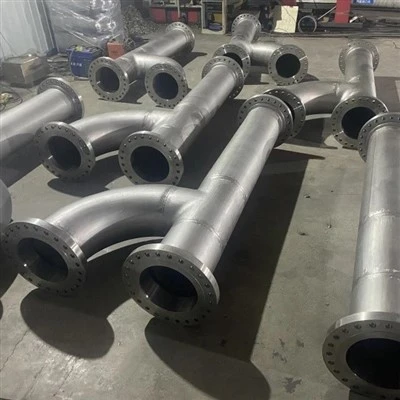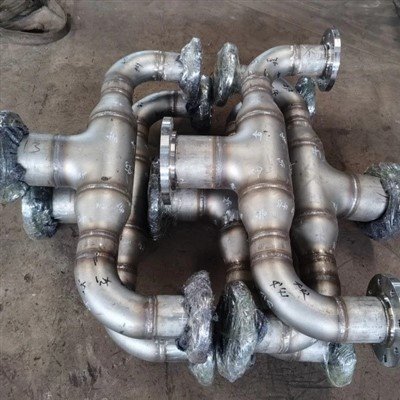
Monel 400 and Monel K500 share the same nickel-copper base chemistry and near-identical seawater corrosion resistance, yet they are used for very different marine components - one for pump trim and fasteners that need reliable corrosion resistance, the other for propeller shafts and rigging hardware that need three times the strength. The difference comes down to a small addition of aluminum and titanium that makes K500 age-hardenable.
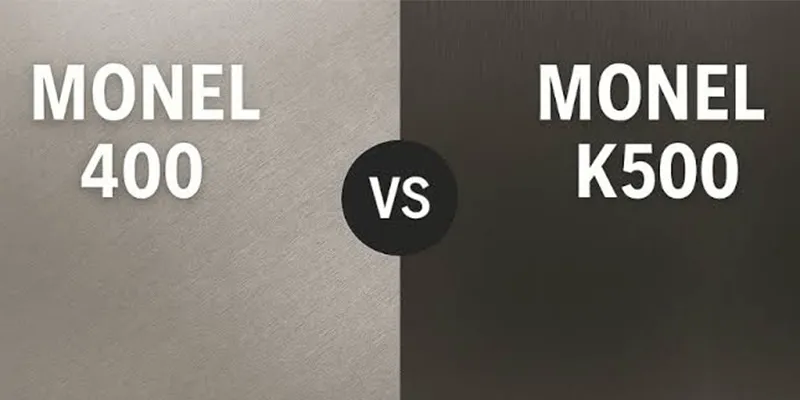
This guide compares the two alloys' strength, corrosion behavior, and - critically - the hydrogen embrittlement risk that has caused real, documented marine hardware failures when K500 is misapplied, so engineers can select the right alloy for the right component with full awareness of the trade-offs.
What Are Monel 400 and K500, and Why Are They Compared in Marine Engineering?
Monel 400 (UNS N04400) is a solid-solution nickel-copper alloy valued for its seawater corrosion resistance, while Monel K500 (UNS N05500) is the same base alloy with added aluminum and titanium that allow it to be age-hardened to roughly three times the strength - the two are compared because marine engineers often must choose between corrosion-resistant moderate strength and higher strength with similar corrosion resistance for the same class of component.
|
Element (wt%) |
Monel 400 (UNS N04400) |
Monel K500 (UNS N05500) |
|
Nickel (Ni) |
63.0–70.0 |
63.0–70.0 |
|
Copper (Cu) |
28.0–34.0 |
27.0–33.0 |
|
Iron (Fe) |
≤2.5 |
≤2.0 |
|
Aluminum (Al) |
Not specified |
2.30–3.15 |
|
Titanium (Ti) |
Not specified |
0.35–0.85 |
|
Strengthening mechanism |
Solid solution only |
Solid solution + age-hardening (Ni3(Al,Ti) precipitates) |
Table 1 - Representative composition per ASTM B127 (Monel 400) and ASTM B865 (Monel K500). The aluminum and titanium additions are the sole chemical difference and the entire reason for K500's strength advantage.
How Does K500's Strength Compare to Monel 400?
In its age-hardened condition, Monel K500 delivers roughly two-and-a-half to three times the yield strength of annealed Monel 400, along with substantially higher hardness, making it suitable for highly loaded marine components where Monel 400 would be undersized or require an impractically large cross-section.
|
Property (typical) |
Monel 400 (annealed) |
Monel K500 (age-hardened) |
|
Yield strength |
~170–280 MPa (25–40 ksi) |
~550–830 MPa (80–120 ksi) |
|
Tensile strength |
~550–620 MPa (80–90 ksi) |
~900–1100 MPa (130–160 ksi) |
|
Elongation |
~35–50% |
~20–30% |
|
Typical hardness |
~65–80 HRB |
~28–35 HRC |
Table 2 - Representative mechanical properties. Actual values depend on product form, cold work, and specific aging treatment per ASTM B127/B865; confirm against certified mill test reports for design use.
Age hardening works by precipitating fine Ni3(Al,Ti) particles throughout the nickel-copper matrix during a controlled heat treatment (typically several hours at approximately 480–620°C). These precipitates block dislocation motion far more effectively than solid-solution strengthening alone, which is why K500 reaches such a large strength increase from a relatively small compositional change. Monel 400 has no aluminum or titanium addition and therefore has no precipitation-hardening pathway available, capping its strength at whatever cold work and solid-solution strengthening can provide.
Does K500's Extra Strength Come at the Cost of Corrosion Resistance?
In most marine environments, K500 retains general corrosion resistance very close to Monel 400 because the aluminum and titanium additions are small and do not significantly alter the alloy's fundamental nickel-copper corrosion chemistry - but K500's higher strength and hardness do introduce a specific, well-documented vulnerability to hydrogen embrittlement that Monel 400 does not share to the same degree.

General corrosion resistance in nickel-copper alloys comes primarily from the nickel-copper matrix itself, which forms a protective, adherent oxide/sulfide film in seawater. Because K500's aluminum and titanium content totals only a few percent, this protective film-forming behavior is largely preserved. However, high-strength, high-hardness metals are inherently more susceptible to hydrogen-assisted cracking than lower-strength, more ductile metals, because atomic hydrogen entering the metal (from cathodic protection, galvanic coupling, or corrosion reactions) has a much more damaging effect on a highly stressed, hardened microstructure than on a softer, more ductile one. This is the critical trade-off marine engineers must manage when specifying K500 for highly stressed components.
How Do Both Alloys Perform in Seawater and Marine Atmospheres?
Both Monel 400 and K500 offer excellent general corrosion resistance in flowing seawater, marine atmospheres, and brackish water, with low uniform corrosion rates and good resistance to biofouling-related attack, making either alloy a reliable choice for the base corrosion environment alone.
- Flowing seawater: Both alloys perform excellently, with corrosion rates low enough for decades of service in pump shafts, propeller components, and piping systems.
- Stagnant or low-velocity seawater: Both alloys can experience localized crevice corrosion under deposits or in tight crevices, a limitation shared with most non-molybdenum-bearing alloys in stagnant chloride environments.
- Marine atmosphere (splash zone, salt spray): Both alloys resist general atmospheric corrosion well and are commonly used for above-water deck hardware and fittings.
- Biofouling resistance: Nickel-copper alloys are known for natural resistance to marine organism attachment, reducing (but not eliminating) fouling-related maintenance compared with many other metals.
Which Alloy Is More Susceptible to Hydrogen Embrittlement and Stress Corrosion Cracking?
Monel K500 is significantly more susceptible to hydrogen embrittlement and hydrogen-assisted stress corrosion cracking than Monel 400, and this vulnerability has caused real, well-documented failures of K500 marine rigging and hardware when the alloy was used in high-stress, cathodically protected, or crevice-prone applications without adequate precautions.
Rationale: K500's high strength and hardness make it far more sensitive to hydrogen that enters the metal from cathodic protection systems (sacrificial zinc or aluminum anodes), galvanic coupling with less noble metals, or crevice corrosion reactions. Several documented failures of K500 sailing yacht rigging components - including turnbuckles and swage fittings - have been attributed to hydrogen-assisted stress corrosion cracking, particularly in fully hardened tempers used in high-stress standing rigging applications combined with cathodic protection from the vessel's underwater hardware.
Monel 400's lower strength and hardness make it far less susceptible to this failure mode, which is one reason it remains the preferred choice for components where hydrogen embrittlement risk cannot be fully controlled.
Practical precautions when specifying K500 for marine service
- Avoid combining fully hardened K500 tempers with direct or indirect cathodic protection exposure in highly stressed components such as standing rigging.
- Where K500 must be used near cathodic protection systems, consult the manufacturer's guidance on temper selection, since lower-strength, less fully aged tempers carry reduced embrittlement risk.
- Design out crevices and stagnant water pockets in K500 components, since crevice corrosion can locally generate hydrogen even without an external cathodic protection source.
- Consider Monel 400 or another alloy for critical safety components where hydrogen embrittlement risk cannot be adequately managed through design and temper selection.
How Does Galling and Wear Resistance Compare Between the Two Alloys?
Monel K500's higher hardness gives it somewhat better wear and galling resistance than Monel 400, but both nickel-copper alloys are inherently prone to galling when mated against themselves or other nickel alloys without adequate lubrication or a hardness differential between mating parts.
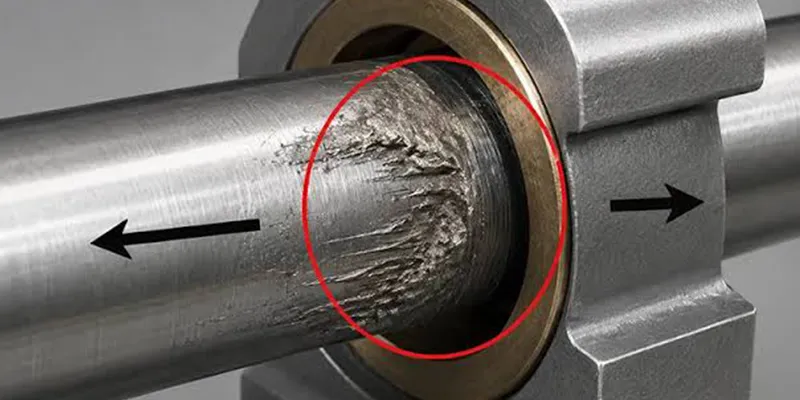
Galling occurs when two metal surfaces under load and relative motion locally weld and tear rather than sliding smoothly, a tendency that is generally worse for softer, more ductile metals and improved (though not eliminated) by increased hardness. K500's age-hardened condition provides a meaningful galling resistance improvement over annealed Monel 400 in threaded fasteners and sliding components, but neither alloy should be assumed galling-free; anti-galling lubricants, dissimilar mating materials, or a deliberate hardness difference between threaded components remain standard best practice for both alloys in marine fastener and valve applications.
Which Alloy Is Easier to Fabricate and Weld?
Monel 400 is considerably easier to fabricate, form, and weld than Monel K500, which requires careful control of pre-weld and post-weld heat treatment to manage its age-hardening response and avoid cracking or unintended softening in the heat-affected zone.
|
Fabrication Factor |
Monel 400 |
Monel K500 |
|
Cold forming/bending |
Good ductility supports straightforward forming |
Limited; typically formed before aging, then age-hardened |
|
Weldability |
Good; standard GTAW/SMAW with matching filler |
More difficult; welding is usually done in the annealed (solution-treated) condition, followed by re-aging |
|
Post-weld heat treatment |
Not required for corrosion performance |
Re-aging heat treatment typically required to restore strength after welding |
|
Machinability |
Good with proper tooling and speeds |
More difficult in the age-hardened condition due to higher hardness |
Table 3 - Comparative fabrication characteristics of Monel 400 and Monel K500.
Which Alloy Should Be Selected for Specific Marine Components?
Monel 400 should be the default choice for corrosion-critical components with moderate strength needs, while Monel K500 should be reserved for components where high strength is the governing requirement and hydrogen embrittlement risk can be properly managed through design and temper selection.
|
Component |
Recommended Alloy |
Reason |
|
Pump and valve trim, seawater piping |
Monel 400 |
Corrosion resistance is the governing requirement; moderate strength is sufficient |
|
Propeller shafts, pump shafts |
Monel K500 |
High strength-to-weight ratio needed to resist bending and torsional loads |
|
Standard marine fasteners (non-critical) |
Either, per strength requirement |
Both offer good corrosion resistance; select based on required strength |
|
Standing rigging hardware (turnbuckles, swage fittings) |
Monel 400, or K500 only with documented embrittlement mitigation |
Historical K500 rigging failures make careful temper and application review essential |
|
Springs and high-load fasteners away from cathodic protection |
Monel K500 |
High strength and moderate corrosion resistance without direct embrittlement exposure |
Table 4 - Application-based alloy selection guide for marine components.
How Does Cost Compare Between Monel 400 and K500?
Monel K500 typically costs 20–40% more per unit mass than Monel 400 due to its additional alloying elements and the extra processing step of age-hardening heat treatment, a modest premium relative to the substantial strength increase it provides.
Rationale: The aluminum and titanium additions themselves add only a small material cost, but the controlled solution-anneal and aging heat treatment required to develop K500's full strength adds processing cost and time compared with Monel 400, which is typically supplied simply hot-worked and annealed. For components where K500's higher strength allows a smaller cross-section or lighter component, the cost premium is often more than offset by material savings and weight reduction, making total installed cost - not raw material price per kilogram - the more meaningful comparison for structural marine components.
Frequently Asked Questions
Monel K500 can be used near cathodic protection systems, but only with careful attention to temper selection and design details that avoid concentrating hydrogen uptake, since fully hardened K500 combined with cathodic protection has a documented history of hydrogen-assisted cracking failures in marine hardware; Monel 400 is often the safer default where this risk cannot be fully managed.
Why is Monel K500 stronger than Monel 400 if they have almost the same base chemistry?
Monel K500 is stronger because its small aluminum and titanium additions allow it to be age-hardened, forming fine Ni3(Al,Ti) precipitates that block dislocation motion far more effectively than the solid-solution strengthening alone that limits Monel 400's strength.
Is Monel K500 more corrosion resistant than Monel 400 because it is a newer alloy?
No. Both alloys have very similar general corrosion resistance in seawater and marine atmospheres, since the corrosion-resisting nickel-copper matrix is nearly identical in both; K500 is not more corrosion resistant, it is more susceptible to hydrogen embrittlement in specific high-stress, cathodically protected conditions.
Should I always choose the stronger alloy (K500) for marine hardware?
No. Higher strength should only be specified where the application actually requires it, since K500's strength advantage comes with a real hydrogen embrittlement risk in certain marine conditions that does not apply to Monel 400; matching the alloy to the governing failure mode of the specific component is the correct approach.
Can Monel 400 be age-hardened like K500 with special heat treatment?
No. Monel 400 lacks the aluminum and titanium additions required for age hardening, so no heat treatment can increase its strength beyond what cold working and solid-solution strengthening provide; achieving K500-level strength requires using the K500 alloy itself.