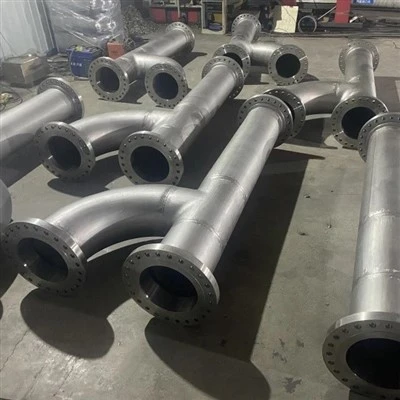
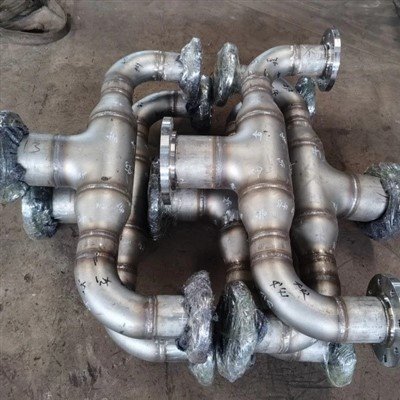
⚡ QUICK ANSWER - Monel 400 in Seawater
• General corrosion: very low in flowing, aerated seawater - commonly cited around 0.02-0.03 mm/yr (roughly 1 mpy).
• Pitting: essentially controlled by velocity, not chloride concentration; risk rises sharply once flow stops.
• Crevice corrosion: the alloy's main seawater failure mode - occurs under gaskets, marine growth, and sediment in stagnant or low-flow service unless cathodically protected.
• Biofouling: NOT resistant in the way copper-nickel alloys are, despite containing 28-34% copper - Monel 400 is a nickel-matrix solid solution, not a copper-matrix alloy.
• When stagnant-seawater duty is unavoidable, Alloy 625, C-276, or super duplex stainless are the usual step-up specifications.
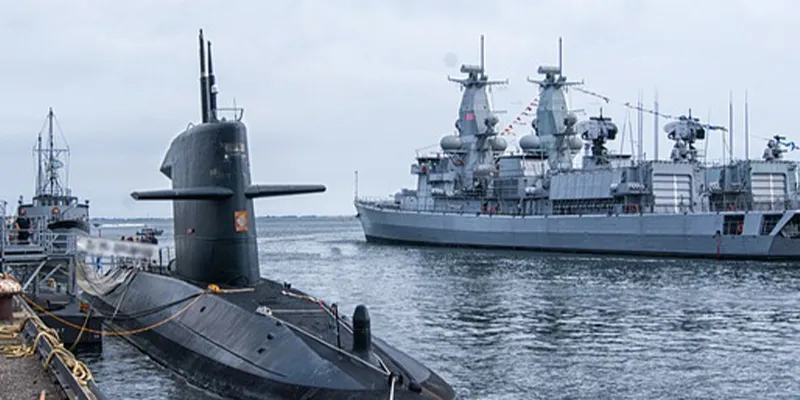
MONEL® alloy 400 (UNS N04400) has been specified for seawater-wetted pump shafts, valve trim, fasteners, and piping since the early twentieth century, and it remains a first-choice alloy wherever fast-moving, well-aerated seawater is the service condition. But "marine grade" claims for Monel 400 are frequently overstated in distributor literature, particularly regarding stagnant-water performance and biofouling.
This article works through the actual mechanisms and data behind pitting, crevice corrosion, and biofouling in seawater, and compares Monel 400 against the copper-nickel, austenitic, and duplex alloys it is most often specified alongside or against.
Does Monel 400 Resist Pitting Corrosion in Seawater?
Yes, but only under flow. In aerated, flowing seawater, Monel 400 develops a thin, adherent corrosion product and shows negligible pitting; the alloy's pitting resistance collapses once velocity drops and the surface film composition shifts.
Monel 400's resistance to seawater does not work the way stainless steel's does. Type 316 and other austenitic grades depend on a passive chromium-oxide film that chloride ions can locally rupture, which is why 316 develops pitting and crevice attack once flow velocity falls below roughly 1.5 m/s (about 5 ft/s) in seawater.
Monel 400 has no chromium and therefore no chromium-oxide passive film to break down. Its resistance comes from the intrinsic corrosion behavior of the nickel-copper solid solution itself: a single-phase, face-centered-cubic matrix (Ni 63% min., Cu 28.0-34.0%, Fe 2.5% max., per the alloy's limiting chemical composition) with no second phase to selectively corrode.
The practical result is a corrosion mode that is governed by oxygen and flow rather than by chloride concentration. Special Metals' own bulletin states plainly that alloy 400 products show very low corrosion rates in flowing seawater, while stagnant conditions have been shown to induce both crevice and pitting attack - the primary producer literature does not publish a quantified stagnant-seawater pitting rate, which is itself a useful data point: there is no manufacturer-backed number to design a corrosion allowance around for quiet-water pitting.
Independent seawater-corrosion reviews commonly cite a flowing-seawater general corrosion rate for Monel 400 on the order of 0.02-0.03 mm/year (roughly 1 mpy) in aerated conditions, low enough that most marine hardware is sized on mechanical strength rather than corrosion allowance. This figure comes from secondary compilations rather than the primary SMC-053 bulletin, and should be treated as a typical order-of-magnitude value rather than a guaranteed design number.
Table 1 - Corrosion Behavior of Monel 400 by Seawater Flow Regime
|
Flow Condition |
General/Pitting Behavior |
Typical Governing Mechanism |
|
Fast-flowing, aerated (e.g., pump/propeller shafts) |
Very low general corrosion; pitting effectively absent |
Continuous removal of stagnant boundary layer; stable thin film |
|
Moderate, continuous flow (piping, heat-exchanger tubes) |
Low corrosion; occasional pitting at flow-disturbance points |
Localized turbulence and eddies can nucleate isolated pits |
|
Stagnant or intermittent flow (idle equipment, dead legs) |
Crevice and pitting corrosion become likely |
Oxygen-concentration cells; sulfide/marine-growth accumulation |
|
Sediment/mud contact, stagnant |
Moderate to severe corrosion reported |
Sulfide release from anaerobic bacterial activity in mud |
Source: Behavior summarized from Special Metals SMC-053 and marine-corrosion field literature; sediment/sulfide behavior corroborated by Copper Development Association field reports referenced in independent Monel seawater reviews.
Is Crevice Corrosion the Real Weak Point of Monel 400 in Seawater?
Yes. Crevice corrosion - not open-surface pitting - is Monel 400's dominant seawater failure mode, and it appears specifically where flow is interrupted: under gaskets, fasteners, marine growth, and sediment deposits.
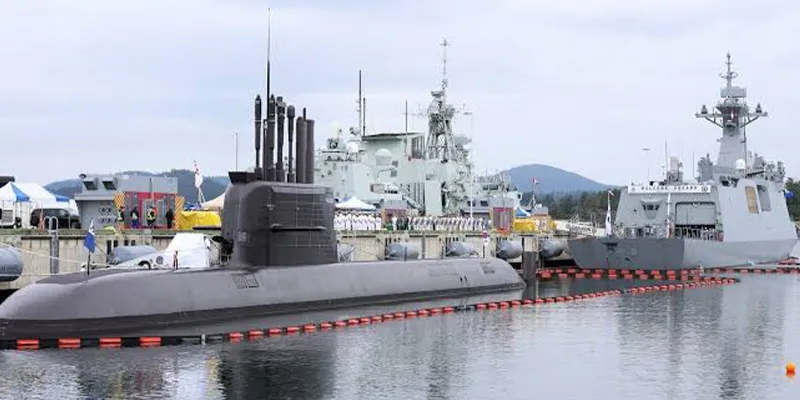
A crevice concentrates a stagnant micro-volume of water against a tight gap, whether that gap is a gasket face, a bolted joint, or the underside of an attached barnacle. Oxygen inside the crevice is quickly depleted, chloride concentrates, and the local chemistry can diverge sharply from the bulk seawater around it. Monel 400 is explicitly listed by its own producer as susceptible to this mechanism under stagnant conditions, alongside general pitting, even though the alloy performs well in the same water once it is moving.
Laboratory and field work at the LaQue Center for Corrosion Technology (Wrightsville Beach, North Carolina) compared crevice-corrosion behavior of Monel 400, Monel K-500, 90-10 copper-nickel (CDA 706), and 70-30 copper-nickel (CDA 715) under both ozonated and chlorinated seawater over extended exposure periods.
Two findings from that program are worth flagging honestly rather than smoothing over: in-lab electrochemical and crevice-coupon testing correctly predicted the general morphology of crevice attack, but it did not predict the actual extent of corrosion observed in the outdoor North Carolina seawater exposures. That is a meaningful caveat for anyone relying on short-duration lab data alone to qualify a Monel component for long-term stagnant or intermittent-flow seawater service.
The practical design implication is that cathodic protection matters more for Monel 400 in seawater than chloride resistance alone does. Alloys with higher chromium and molybdenum content - Alloy 625 (UNS N06625) and Hastelloy C-276 (UNS N10276) among them - resist pitting and crevice attack in quiet seawater across a much wider range of flow conditions, which is why they are the usual upgrade path for stagnant-water Monel applications rather than a higher grade of Monel itself.
Does Monel 400's Copper Content Make It Resistant to Biofouling?
No. Despite containing 28-34% copper - a fraction comparable to the 70-30 copper-nickel family - Monel 400 is not classified as biofouling-resistant in engineering practice, because biofouling resistance in copper alloys is a copper-matrix surface-film effect, not a bulk-composition one.
This is the single most common misconception repeated in Monel marketing content, and it deserves a direct correction. The established biofouling-resistant alloys in marine engineering are the wrought copper-nickels - C70600 (90-10 CuNi) and C71500 (70-30 CuNi) - and the accepted mechanism is specific: these alloys are copper-majority (roughly 88-90% Cu for C70600, roughly 69% Cu for C71500), and their surface forms a cuprous-oxide-based film from which copper ions are gradually released into the immediate boundary layer. Marine organisms do not tolerate that boundary-layer chemistry, so macrofouling (barnacles, mussels, weed) either fails to establish or remains loosely attached and sloughs away.
Monel 400 is a nickel-majority alloy - a single-phase, nickel-matrix solid solution with copper dissolved into it, not a copper-matrix alloy with nickel added. The surface film it forms in seawater is correspondingly nickel-rich rather than the cuprous-oxide film that copper-nickel relies on for its antifouling behavior.
A university engineering study comparing new copper-bearing hardfacing alloys against established marine materials found that an alloy with only 16% copper concentrated into a copper-rich matrix phase achieved fouling resistance similar to Monel 400's, and concluded this was because the copper needed to be locally concentrated in the surface-exposed phase to be effective - bulk copper percentage on its own was not the deciding factor. A U.S. patent on antifouling thermal-spray coatings goes further, grouping Monel alloys together with stainless steels as materials that are "generally considered corrosion resistant but are subject to biofouling," in direct contrast to copper-nickel coatings tested in the same work.
None of this means Monel 400 fouls as readily as bare carbon steel - its seawater corrosion behavior is still far better than steel's, and some incidental antifouling benefit from its copper content is plausible. But "has copper, therefore resists biofouling like copper-nickel" is not a claim the corrosion literature supports, and specifying Monel 400 for a biofouling-critical application on that basis is a design error worth catching before it reaches a purchase order.
Table 2 - Copper Content and Biofouling Classification Across the Copper-Nickel/Monel Family
|
Alloy (UNS) |
Matrix |
Nominal Cu |
Nominal Ni |
Recognized Biofouling-Resistant? |
|
Monel 400 (N04400) |
Nickel-majority solid solution |
28-34% |
63% min. |
No - not classified as such in marine engineering practice |
|
70-30 Cu-Ni, C71500 |
Copper-majority |
~69% |
29-33% |
Yes - established biofouling-resistant alloy |
|
90-10 Cu-Ni, C70600 |
Copper-majority |
~89% |
9-11% |
Yes - the most widely used biofouling-resistant marine alloy |
|
316L stainless (S31603) |
Iron-chromium, passive-film |
~0% |
10-14% |
No |
Source: Composition ranges per ASTM B466/B127/A240 as compiled in copper-alloy and Monel producer literature; biofouling classification per CDA/Nickel Institute biofouling literature cited above.
How Does Monel 400 Compare to 316L, Super Duplex, and Copper-Nickel in Seawater Overall?
Monel 400 sits between standard austenitic stainless steel and the premium nickel-alloy/duplex tier: it beats 316L on flowing-seawater pitting resistance and general corrosion, loses to super duplex and Alloy 625/C-276 on stagnant-water pitting and crevice resistance, and loses to true copper-nickel on biofouling.
Table 3 - Seawater Performance Comparison
|
Property |
Monel 400 |
316L Stainless |
90-10 Cu-Ni |
Super Duplex (2205/2507) |
|
Flowing seawater general corrosion |
Very low (~0.02-0.03 mm/yr typical) |
Low, but pitting risk rises above ~1.5 m/s |
Low; alloy is designed for seawater flow |
Very low |
|
Stagnant-water pitting/crevice risk |
Significant unless cathodically protected |
Significant - chloride-driven passive-film breakdown |
Low to moderate |
Low - high PREN resists quiet-water pitting |
|
Biofouling resistance |
Not classified as resistant |
Not resistant |
Recognized resistant (copper-ion surface film) |
Not resistant |
|
Non-magnetic |
Yes (near Curie point at room temp.) |
Effectively yes (austenitic) |
Yes |
No (ferritic-austenitic, magnetic) |
|
Relative cost tier |
Moderate-high |
Low (baseline) |
Moderate |
High |
Source: Compiled from Special Metals SMC-053, Nickel Institute seawater-corrosion guidance (Carol Powell, 2020), and CDA/Nickel Institute copper-nickel biofouling literature cited in this article. PREN and duplex-family pitting-resistance context per the Super Duplex 2507 chloride-SCC comparison referenced below.
The honest selection takeaway is that no single alloy in this table is unconditionally "best" for seawater. Monel 400 wins on the specific combination of high strength, non-magnetic behavior near room temperature, and excellent flowing-seawater resistance that makes it the standard choice for pump and propeller shafting; it does not win on stagnant-water pitting/crevice resistance (duplex and Ni-Cr-Mo alloys are better) or on biofouling (copper-nickel is better).
When Should You Specify Monel 400 vs. an Alternative for Seawater Service?
Specify Monel 400 where seawater flow is continuous and the part benefits from its strength and non-magnetic properties; move to copper-nickel, super duplex, or Alloy 625/C-276 as soon as stagnant exposure, biofouling control, or extreme chloride severity becomes the driving requirement.
Pump shafts, propeller shafts, valve stems and trim in continuously flowing seawater - Monel 400's classic, well-proven application.
Instrumentation, compasses, and sensor housings needing non-magnetic behavior in a marine environment - Monel 400 or Monel K-500 for higher strength.
Seawater intake screens, condenser tubing, and structures where biofouling control is a design driver - specify 90-10 or 70-30 copper-nickel instead.
Dead-leg piping, idle standby equipment, or components that see intermittent stagnant seawater - consider Alloy 625, C-276, or super duplex stainless, or ensure reliable cathodic protection if Monel 400 is retained.
Fasteners and hardware under marine growth or sediment contact - flag for cathodic protection or upgrade; unprotected Monel 400 in mud/sediment has documented moderate-to-severe corrosion in field reports.
Budget-sensitive general marine hardware where 316L's known velocity limits (pitting above roughly 1.5 m/s) are acceptable - 316L remains the lower-cost baseline, with the same stagnant-water caution as Monel 400.
Which Standards Govern Monel 400 for Marine Procurement?
Monel 400 marine hardware is most commonly procured to ASTM B127/B164/B165 for plate, bar, and seamless pipe, with NACE MR0175 governing sour-service qualification where applicable.
|
Product Form |
Governing Standard(s) |
|
Plate, sheet, strip |
ASTM B127 / ASME SB127 |
|
Rod, bar, wire |
ASTM B164 / ASME SB164 |
|
Forgings |
ASTM B564 / ASME SB564 |
|
Seamless pipe and tube |
ASTM B165 / B725 / B829 / ASME equivalents |
|
Welded pipe and tube |
ASTM B725 / B730 / B751 / B775 |
|
Sour-gas/oilfield service qualification |
NACE MR0175 / ISO 15156 |
Source: Special Metals Corporation, SMC-053, Available Products and Specifications section.
Frequently Asked Questions
Q: Does Monel 400 pit in seawater?
A: Rarely in flowing seawater, but pitting risk rises sharply once the water becomes stagnant, since the alloy's resistance depends on continuous flow rather than a chloride-stable passive film.
Q: What is the corrosion rate of Monel 400 in seawater?
A: Commonly cited around 0.02-0.03 mm/yr (about 1 mpy) in flowing, aerated seawater, though this figure comes from secondary compilations rather than a quantified value in the primary Special Metals bulletin, which reports the behavior only qualitatively.
Q: Is Monel 400 resistant to crevice corrosion?
A: No - crevice corrosion under gaskets, fasteners, marine growth, and sediment in stagnant or low-flow conditions is Monel 400's primary seawater failure mode, and cathodic protection is the standard mitigation.
Q: Does Monel 400 resist biofouling like copper-nickel pipe?
A: No - despite containing 28-34% copper, Monel 400 is a nickel-matrix alloy and is not classified as biofouling-resistant; that classification belongs to copper-matrix alloys such as 90-10 and 70-30 copper-nickel, whose antifouling behavior comes from a copper-majority surface film, not from bulk copper content.
Q: Should Monel 400 be cathodically protected in seawater?
A: Yes, for stagnant or intermittent-flow service. Cathodic protection is the standard mitigation against crevice and pitting attack when continuous flow cannot be guaranteed.
Q: What alloy should replace Monel 400 for stagnant seawater service?
A: Alloy 625, Hastelloy C-276, or a super duplex stainless such as 2205/2507, all of which resist pitting and crevice corrosion across a much wider range of seawater flow conditions than Monel 400 does.