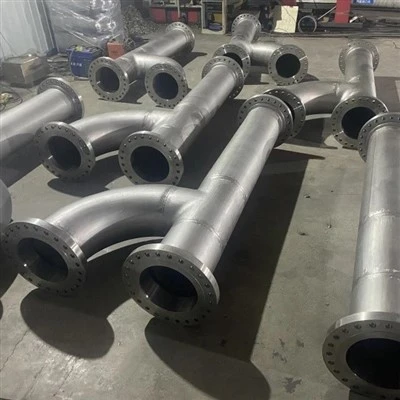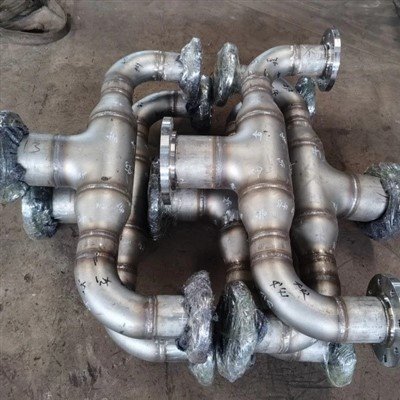
Monel 400 (UNS N04400) is one of the preferred metals for oxygen service because it has a very high ignition resistance and, if ignited, a very low flame-propagation (burn) rate; its safe use, however, depends above all on rigorous cleanliness - no oil, grease, or particles - and on verifying compatibility under ASTM G94 with ignition and burn tests such as ASTM G124 (autoignition) and ASTM G125 (burn rate).

In one sentence: specify Monel 400 for oxygen duty only with components cleaned to ASTM G93 / CGA G-4.1 cleanliness levels and qualified by G94- referenced burn/ignition testing, because clean metal - not just metal choice - is what prevents oxygen fires.
Why does material selection matter so much in oxygen service?
In an oxygen-enriched environment almost any metal can burn if conditions are severe enough, so material choice plus cleanliness decides whether a small ignition becomes a catastrophic fire; some metals (titanium, carbon steel) ignite and propagate flames far more readily than others (copper, Monel 400).
Oxygen supports combustion aggressively: a leak, a particle impact, or a contaminant can release enough heat to ignite metal. Once a metal ignites, the question is whether the flame sustains and propagates - that depends on the alloy's burn rate and ignition energy, both of which vary enormously by material and oxygen pressure.
- Contaminants: Hydrocarbon contaminants (oil, grease) ignite at low energy - the most common oxygen-fire trigger.
- Pressure: In high-pressure oxygen, even normally 'safe' metals can burn; pressure is the key variable.
- Guidance: The standard framework for judging all this is ASTM G94.
Why is Monel 400 widely used in oxygen service?
Monel 400 (Ni-Cu, UNS N04400) is favored for oxygen service because its nickel-copper matrix resists ignition, needs high energy to start burning, and - critically - does not sustain rapid flame propagation the way titanium or carbon steel can.
Two properties make it stand out:
High ignition threshold: Monel 400's autoignition temperature in oxygen is high, and it tolerates high surface temperatures without self-igniting at moderate pressures.
Low burn rate: Even if locally ignited, Monel 400 has a very low burning (flame-propagation) rate and tends to self-extinguish, limiting damage.
This is why Monel 400 (and related copper-nickel alloys) appears in oxygen valves, regulators, manifolds, and piping where titanium would be forbidden and carbon steel would be risky.
How does Monel 400 compare with other metals in oxygen?
Relative oxygen-fire risk from highest to lowest is roughly titanium and aluminum (very high) - carbon steel - stainless 316 - copper alloys - Monel 400 - copper; Monel 400 sits among the safest structural metals because it combines strength with low burn propagation.
|
Metal |
Relative ignition/burn hazard |
Sustained burning in O2? |
Typical oxygen-service verdict |
|
Titanium (Gr 2/5) |
Very high |
Yes, vigorous |
Avoid in oxygen |
|
Aluminum alloys |
High |
Yes (in bulk/particles) |
Avoid in oxygen |
|
Carbon steel |
Moderate-High |
Yes at high pressure |
Use with caution, clean |
|
Stainless 316 |
Moderate |
Possible at high pressure |
Widely used, clean |
|
Copper |
Low |
No / very low |
Accepted |
|
Monel 400 (N04400) |
Low |
No / very low |
Preferred |
|
Inconel 600/625 |
Low-Moderate |
Low |
Accepted for high temp |
Hazard ranking is pressure-dependent: at very high oxygen pressure even Monel 400 requires validated cleanliness and flow-velocity limits. Always confirm with G94-based testing for the specific service.
What is ASTM G94 and what does it cover?
ASTM G94 is the umbrella 'Standard Guide for Evaluating the Compatibility of Materials in Oxygen-Enriched Atmospheres'; it does not prescribe a single test but directs you to the right ignition and burn test methods (G124, G125, G86, G63, G120, G131) based on the component, pressure, and failure mode.
|
ASTM method |
What it evaluates |
|
ASTM G94 |
Overall guide; selects the appropriate oxygen-compatibility tests |
|
ASTM G124 |
Autoignition temperature of materials in gaseous oxygen |
|
ASTM G125 |
Liquid and solid material fire limits ('burn rate') in gaseous oxygen |
|
ASTM G86 |
Ignition sensitivity to mechanical impact in liquid oxygen |
|
ASTM G63 |
Resistance to impact by solid objects in liquid oxygen |
|
ASTM G120 |
Mechanical impact and friction ignition in gaseous oxygen |
|
ASTM G131 / G132 |
Friction ignition screening in oxygen |
|
ASTM G93 |
Cleaning methods and cleanliness levels for oxygen equipment |
For Monel 400 components, the most common qualifications are a burn-rate screen (G125) and an autoignition-temperature check (G124), supported by the cleanliness practice G93.
What cleanliness levels are required for Monel 400 oxygen components?
Oxygen-service components must be cleaned to ASTM G93 / CGA G-4.1 limits - essentially free of oil, grease, and particulates - with typical acceptance levels such as nonvolatile residue (NVR) at or below about 100 mg per ft2 of surface and oil/grease at or below about 350 mg per m2, plus particle-count limits.
|
Cleanliness parameter |
Typical acceptance limit (representative) |
Why it matters |
|
Nonvolatile residue (NVR) |
<= 100 mg / ft2 of surface (approx.) |
Residue can hold combustion energy |
|
Oil / grease |
<= 350 mg / m2 (or wipe test negative) |
Hydrocarbons are the top ignition source |
|
Particulate count |
Low particle load; e.g. <= 350 particles / ft2 (>= 5 micrometer), verified by sampling |
Particles erode and spark on impact |
|
Fibers / lint |
None visible |
Can trap hydrocarbons, abrade |
|
Chlorides / halides |
Zero residue |
Pitting + energy concentration |
|
Visual |
Bright, unsoiled metal |
Quick field check |
Exact limits depend on oxygen pressure and service class (CGA G-4.1 defines cleanliness classes). High-pressure breathing/industrial oxygen is the strictest. Always specify the cleanliness level on the purchase order.
What is burn testing per ASTM G125, and what does it show for Monel 400?
ASTM G125 measures a material's fire limits - essentially whether and how fast it burns - by igniting a sample in a pressurized oxygen flow; Monel 400 typically shows a very low burn rate or self-extinguishes, confirming it as a low-hazard metal for oxygen.
How the test works in plain terms:
- Setup: A shaped specimen is placed in a high-pressure oxygen chamber.
- Ignition: A controlled ignition source (e.g., hot wire or fuse) starts a flame at one end.
- Measurement: Observers measure whether the flame propagates and at what speed ('burn rate').
- Result: Metals that propagate slowly or stop are rated low hazard; those that burn vigorously are high hazard.
Monel 400 consistently rates as a poor sustained burner - its flame either does not propagate or dies quickly - which is the core reason it is specified for oxygen valves, regulators, and manifolds.
What is autoignition temperature testing per ASTM G124?
ASTM G124 determines the autoignition temperature - the temperature at which a material self-ignites in gaseous oxygen without an external spark; Monel 400's value stays high across practical pressures, meaning it tolerates hot surfaces and compression heating far better than steel or titanium.
|
Material |
Autoignition behavior in oxygen (representative) |
Implication |
|
Titanium |
Ignites at relatively low temperature; pressure-sensitive |
Avoid hot surfaces |
|
Carbon steel |
Moderate autoignition temperature; drops with pressure |
Limit surface temp / velocity |
|
Stainless 316 |
Higher than steel; pressure-sensitive |
Widely acceptable |
|
Monel 400 |
High autoignition temperature, low sensitivity |
Preferred for hot/high-pressure oxygen |
Exact autoignition temperatures are pressure-dependent and published in oxygen-compatibility databases; they are screening values, not design limits. For final design, use G124 data for the actual oxygen pressure and validate cleanliness.
How does oxygen pressure change the burn hazard for Monel 400?
The burn and ignition hazard rises steeply with oxygen pressure and purity - so although Monel 400 is low-risk, at high pressure it still demands validated cleanliness, controlled flow velocity, and particle exclusion; a common practical threshold is that above about 200-300 psig (1.4-2.1 MPa) oxygen, rigorous cleaning and velocity limits become mandatory regardless of alloy.
Pressure: Higher O2 partial pressure lowers ignition energy and raises burn rate for all metals.
Purity: Pure (medical/industrial) oxygen is more severe than air or oxygen-enriched air.
Velocity: Fast flow accelerates particles that can spark on impact with a wall or valve.
Rule: Even Monel 400 follows the same rule: clean + slow + particle-free as pressure climbs.
What cleaning procedure should be followed for Monel 400 oxygen parts?
Clean Monel 400 oxygen components per ASTM G93 / CGA G-4.1: degrease, wash, rinse, dry, and package in certified-clean bags, then verify with a wipe or solvent-extraction test for NVR and oil/grease before installation.
Degrease: Remove bulk oil/grease with an approved solvent (halogen-free, low-residue).
Wash: Wash with clean water/detergent, avoiding chloride-containing agents on Monel.
Rinse/dry: Final rinse with filtered (particle-free) water or solvent; dry with clean, oil-free air.
Verify: Wipe test or solvent-extraction analysis for NVR and hydrocarbon residue.
Protect: Store and ship in sealed, labeled 'oxygen-clean' bags to prevent recontamination.
What design practices keep Monel 400 oxygen systems safe?
Beyond material and cleaning, safe Monel 400 oxygen systems use smooth bores, no dead legs or traps, controlled flow velocity, non-sparking seating, and particle filtration - design, not just alloy, prevents ignition.
|
Design factor |
Oxygen-safe practice |
|
Surface finish |
Smooth, polished bores reduce particle capture and hotspots |
|
Dead legs / traps |
Eliminate where possible to avoid particle and residue buildup |
|
Flow velocity |
Limit to code/guideline values (pressure-dependent) to avoid particle impact |
|
Seats / seals |
Use non-sparking metal-to-metal or compatible seats; avoid hydrocarbon elastomers |
|
Filtration |
Install particle filters upstream of critical components |
|
Joint design |
Use proper gaskets; avoid trapped volume and galling |
Which standards and specs govern Monel 400 oxygen service?
Governing documents are ASTM G94 (compatibility guide), ASTM G93 / CGA G-4.1 (cleaning), ASTM G124 / G125 (ignition/burn tests), and EIGA / CGA oxygen-system guidelines; material itself is covered by ASTM B165/B164 for Monel 400 product forms.
|
Standard / body |
Scope |
|
ASTM G94 |
Guide for oxygen-compatibility evaluation (selects tests) |
|
ASTM G93 |
Cleaning methods and cleanliness levels for oxygen equipment |
|
CGA G-4.1 |
Cleaning of equipment for oxygen service (industry standard) |
|
ASTM G124 |
Autoignition temperature in gaseous oxygen |
|
ASTM G125 |
Material fire limits / burn rate in gaseous oxygen |
|
EIGA / CGA guidelines |
Oxygen system design and safe practice |
|
ASTM B165 / B164 |
Monel 400 seamless pipe / rod and bar |
Frequently asked questions about Monel 400 in oxygen service
Yes. Monel 400 is one of the preferred structural metals for oxygen because it resists ignition and has a very low, self-extinguishing burn rate; safety still requires rigorous cleanliness and validated design.
What cleanliness is required for Monel 400 oxygen parts?
Clean to ASTM G93 / CGA G-4.1: free of oil and grease (commonly <= 350 mg/m2), with low nonvolatile residue (about <= 100 mg/ft2) and minimal particulates; verify by wipe or solvent-extraction test.
What does ASTM G94 burn testing involve?
G94 is a guide that selects the right test; the actual burn test is typically ASTM G125, which ignites a sample in pressurized oxygen and measures whether and how fast it burns - Monel 400 shows low or no propagation.
Can Monel 400 burn in oxygen?
In principle any metal can burn in oxygen under extreme conditions; Monel 400 has a high ignition threshold and very low flame-propagation rate, so it is far safer than titanium or carbon steel, but it still requires clean, controlled service.
How does pressure affect Monel 400 in oxygen?
Hazard rises with oxygen pressure and purity; above about 200-300 psig (1.4-2.1 MPa) rigorous cleaning and flow-velocity limits are mandatory for all alloys, including Monel 400.
What filler is used if Monel 400 oxygen pipe is welded?
Nickel-copper filler ERNiCu-7 / ENiCu-7; the weld must then be cleaned to oxygen-clean level, since weld spatter and contamination are ignition risks.