|
What a heat number is |
A unique ID assigned by the steel mill that ties every pipe to its own chemical and mechanical test results. |
|
Mixed heats are legal |
One bundle or one fabricated spool may contain several heats, provided each piece carries a matching, traceable Mill Test Report. |
|
The real risk |
Not the mix itself, but an untraceable mix, a pipe with no matching certificate or a grade stamped on it that the chemistry does not support. |
|
Primary proof of identity |
The EN 10204 certificate (3.1 or 3.2) plus the heat number physically marked on the pipe. |
|
On-site verification tool |
Positive Material Identification (PMI) by XRF or OES confirms the chemistry of an actual pipe in seconds. |
|
Bottom line |
Reconcile heat numbers, certificates, and PMI before any piece is cut, beveled, or welded. |
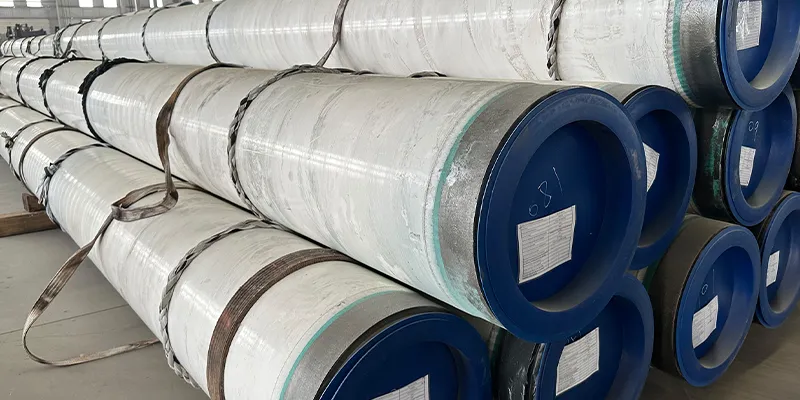
A pipe bundle with mixed heat numbers is normal and fully acceptable, as long as every heat is identified and traceable to its own Mill Test Report. The danger is not the mix, it is a pipe whose identity cannot be proven. Verify identity by reconciling heat numbers with certificates and confirming chemistry with Positive Material Identification (PMI) before any fabrication step.
What Does a Mixed-Heat Pipe Bundle Actually Mean?
A mixed-heat bundle is simply a batch of pipes that came from two or more separate mill melts, and that is perfectly normal in day-to-day supply.
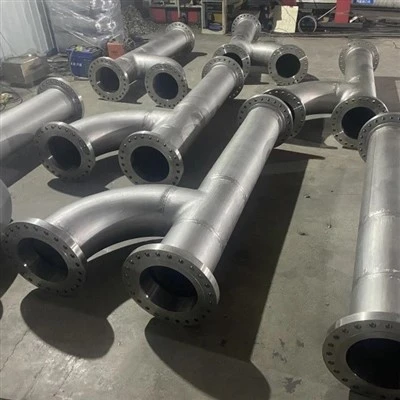
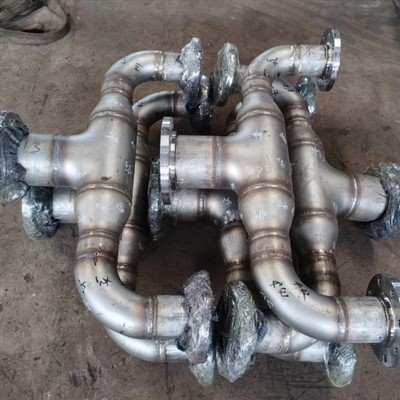
A heat number (sometimes called a melt number or lot number) is the unique identification a steel or nickel-alloy mill stamps on every length it produces from one controlled melt. Think of it as the pipe's birth certificate: it links the physical pipe to the exact chemical analysis and mechanical test results recorded when that melt was poured. A bundle is a shipping group, a spool is a fabricated assembly, and neither is required to contain a single heat.
In practice, a project often receives pipes from several heats because mills roll material in campaign lots, and distributors combine stock to fill an order. The phrase mixed heat numbers therefore describes logistics, not a defect. What matters is whether each heat can be individually identified and proven.
Why Does Material Identity Matter More Than the Grade Name?
The grade name on a pipe, for example Hastelloy C276 or 316L, proves almost nothing by itself; material identity backed by traceable test data is what codes, insurers, and your own liability require.
A grade name is a promise about chemistry and properties. Identity is the evidence that a specific pipe keeps that promise. In corrosive, high-pressure, or sour service, the cost of a wrong material is a leak, a failure, or a safety incident, not just a paperwork error. That is why procurement and quality standards care far more about the documented, verifiable identity of each piece than about how many heats sit in the bundle.
For nickel alloys in particular, small chemistry differences change corrosion behavior dramatically. A buyer who accepts a bundle on the strength of a label alone has no defense if the alloy is later questioned. Traceability turns a label into a fact.
Is It Acceptable to Have Multiple Heat Numbers in One Bundle?
Yes, multiple heat numbers in one bundle or one spool are acceptable and common, provided each heat is individually traceable to its own certificate.
No major specification, ASTM, ASME, or EN, requires a bundle to be single-heat. What they require is that the material can be identified and that its properties are verifiable. Pipes from different heats of the same grade are metallurgically equivalent for service; the only rule is that you must know which certificate belongs to which pipe.
The failure mode is not the mixture, it is the loss of the link between pipe and paper. A bundle where heats are mixed but every heat number is recorded and matched to an MTR is compliant. A bundle where heats are mixed and the links are missing is not.
Which Documents Prove a Pipe's Material Identity?
The Mill Test Report (MTR), issued to the EN 10204 standard, is the primary proof of identity, with the 3.2 version adding independent third-party attestation.
An MTR is the document that records the actual chemical analysis and mechanical test results for a specific heat. EN 10204 defines the levels of certification. A 3.1 certificate is a declaration by the manufacturer based on its own tests; a 3.2 certificate adds verification by an independent inspection body. For critical service, many owners specify 3.2 or require third-party inspection.
Supporting documents include the certificate of conformance, the material certificate attached to the bundle tag, and any inspection release note. For our nickel alloy product forms, the applicable ASTM specifications are summarized on the Hastelloy C276 standards page and the Inconel 625 standards page.
Document types that establish material identity
|
Document |
Issued to |
What it proves |
|
EN 10204 3.1 MTR |
Manufacturer |
Actual chemistry and mechanical test results for the heat, declared by the maker. |
|
EN 10204 3.2 MTR |
Maker plus independent inspector |
Same data, with third-party attestation of accuracy. |
|
Certificate of Conformance |
Manufacturer |
Confirms the lot meets the ordered specification, usually without full test detail. |
|
Bundle / spool tag |
Mill or stockist |
Physical link between the pipe and its heat number and certificate. |
|
Inspection release note |
Third-party (SGS, BV, TUV) |
Confirms visual, dimensional, and NDE acceptance per the inspection plan. |
How Do You Reconcile Heat Numbers Across Pipe, Tag, and Certificate?
Reconciliation is a three-way match, every heat number marked on a pipe must appear on the bundle tag and must correspond to a line on an MTR.
Start by listing every heat number you can see on the pipes and on the tag. Then open the MTR and check that each listed heat appears with the correct grade, specification, and dimensions. Any heat on a pipe with no MTR line is a gap to close before acceptance.
Watch for the common trap where the tag shows one heat but the MTR covers a different one, or where a pipe is unmarked. Mark such pieces aside immediately; they are the seeds of a material-mix incident. A clean reconciliation record is also what auditors and end users expect to see years later.
Three-way reconciliation checklist
|
Source of the number |
What to check |
Acceptance rule |
|
Pipe surface stencil or ink |
Heat or lot number is present and legible |
Every pipe must carry its own identifier. |
|
Bundle or spool tag |
Lists the heat numbers shipped |
Tag heats must equal the union of pipe heats. |
|
Mill Test Report |
Has a line per heat with chemistry and properties |
Every tag heat must map to an MTR line. |
|
Purchase order |
Grade, spec, and quantity match |
MTR grade and ASTM spec must equal the order. |
How to Verify Material Identity in a Mixed-Heat Pipe Bundle
Collect the paperwork. Gather the purchase order, the bundle tag, and every Mill Test Report (MTR) for the heat numbers listed on the tag. Confirm the grades and specifications on the MTR match the order, for example the ASTM specification shown on our Hastelloy C276 standards page.
Read and record every heat number. For each pipe, read the heat or lot number stenciled or inked on the surface and on the bundle tag. Write it down against the piece identifier; do not rely on memory or on a single master tag.
Reconcile heats to certificates. Match every recorded heat number to a line item on an MTR. A heat with no matching certificate is non-conforming until proven otherwise and must be quarantined.
Confirm certificate type and standard. Check whether the certificate is EN 10204 3.1 (maker declaration) or 3.2 (independent third-party attestation). Confirm the product form and ASTM grade, as explained on our alloy pipe overview.
PMI a statistical sample per heat. Run Positive Material Identification (XRF or OES) on a representative sample of pipes from each heat. Keep the reading within the alloy's specified chemistry band before accepting the lot.
Verify dimensions, surface, and any required NDE. Confirm outside diameter, wall, and surface condition, and perform any contracted non-destructive examination. Log results against the heat-to-piece map.
Record the heat-to-piece map. Enter each pipe, its heat number, its certificate, and its PMI result into the material registry and the weld map so traceability survives fabrication, as practiced in our pipe spool prefabrication process.
Quarantine and reject anything unproven. Hold and clearly mark any pipe lacking a matching MTR or failing PMI. Do not cut, bevel, or weld it until identity is established to the governing specification.
What Is Positive Material Identification and When Is It Required?
Positive Material Identification (PMI) is an on-site chemical test that confirms a pipe is the alloy its paperwork claims, and it is required whenever the consequence of a mix is high or the specification calls for it.
PMI uses portable analyzers to read the alloy's elemental composition in seconds, typically X-ray fluorescence (XRF) for most elements or optical emission spectroscopy (OES) for light elements such as carbon. It is the practical confirmation that the metal in your hand matches the certificate, and it catches the dangerous case where a pipe is correctly labeled but physically wrong, or vice versa.
Owners frequently specify PMI for sour, high-pressure, or corrosive service, and reference frameworks such as NACE MR0175 / ISO 15156 expect material verification in hydrogen-sulfide environments. Even when not mandated, PMI is inexpensive insurance on a mixed-heat bundle.
PMI method comparison
|
Method |
Best for |
Limitation |
|
XRF (X-ray fluorescence) |
Ni, Cr, Mo, Fe, Cu, Ti in nickel and stainless alloys |
Cannot reliably measure carbon; surface must be clean. |
|
OES (optical emission) |
Adds carbon and light elements |
Needs argon purge; slightly slower than XRF. |
|
LIBS (laser induced) |
Carbon-capable, no argon |
Less mature for nickel alloys; check calibration. |
Which Tests Confirm Identity Beyond PMI?
When PMI is not enough, or a dispute must be settled, laboratory chemical analysis and mechanical testing on a sample provide definitive identity confirmation.
- A laboratory digest-and-analyze method gives a full, certifiable chemistry that resolves any ambiguity PMI leaves about carbon or trace elements. Mechanical testing, tensile, hardness, and impact, confirms the material also meets the property side of the specification, not only the chemistry.
- Non-destructive examination such as ultrasonic, radiographic, penetrant, or magnetic-particle testing does not prove chemistry, but it confirms the piece is sound and free of defects that would make it unfit regardless of grade. Used together, these tests turn a question mark into a closed case.
What Are the Acceptance Criteria and Rejection Triggers?
Accept a mixed-heat bundle when every heat is certified, reconciled, and within specification; reject or quarantine any piece that cannot meet those three tests.
A piece passes when its heat number is legible, it maps to an MTR line of the correct grade and ASTM specification, its PMI reading sits inside the specified chemistry band, and its dimensions and condition meet the order. The moment any one of those fails, the piece is non-conforming and must be segregated, not quietly used.
Acceptance criteria and rejection triggers
|
Check |
Accept when |
Reject or quarantine when |
|
Heat number present |
Legible on every pipe |
Any pipe is unmarked or unreadable. |
|
Certificate match |
Every heat maps to an MTR line of the ordered grade |
A heat has no matching MTR. |
|
PMI chemistry |
Within the grade's specified element ranges |
Reading falls outside the band or matches a different grade. |
|
Dimensions and surface |
Within tolerance, no harmful defects |
Out of tolerance or with rejectable defects. |
|
Spec and standard |
ASTM grade equals the purchase order |
Grade or standard differs from the order. |
How Do You Keep Traceability From Mill to Installed Spool?
Traceability survives fabrication only if you carry the heat-to-piece map forward into cutting, welding, and the final weld map.
When a bundle is cut into spool pieces, each cut length inherits its parent heat number and certificate reference. During welding, the weld map records which heat fed which joint, so a future inspector can still trace any weld back to the original melt. This is exactly why our Hastelloy C276 welding guide and Inconel 625 welding guide stress heat continuity through fabrication.
Good practice is to assign a unique spool or piece number at cutting, stamp or tag it with the source heat, and file the MTR against that number. The result is a chain of custody that holds from the mill heat to the installed, tested system, which is what audits and warranty claims depend on.
Does Mixing Heats Affect Corrosion or Mechanical Performance?
Within the same grade and specification, mixing heats does not change corrosion resistance or mechanical performance; the danger is only an undocumented or wrongly identified mix.
Pipes from different heats of, say, 316L or Hastelloy C276 are produced to the same composition and property limits, so a bundle that contains several conforming heats behaves as one uniform material in service. The corrosion rate and strength are set by the grade, not by which melt produced a given length.
Performance only suffers when a pipe is not actually the grade claimed, which is why identity verification, not heat-counting, is the control that matters. A documented mix is safe; an unidentified mix is a latent failure.
How Does Verification Differ for Nickel Alloys Versus Stainless Steel?
The verification logic is identical for both, but nickel alloys demand tighter chemistry control, so PMI and certificate checks carry more weight.
Stainless grades such as 316L or duplex super duplex are widely stocked and their identity is usually confirmed by grade and PMI. Nickel alloys such as Hastelloy C276, Inconel 625, Inconel 600, Monel 400, and Nickel 200 are higher value and more sensitive to small chemistry shifts, so owners more often require 3.2 certificates and per-heat PMI.
Practically, treat every nickel-alloy bundle as high-consequence: reconcile completely, PMI a meaningful sample per heat, and keep the heat map through welding. The procedure does not change, only the strictness of its application.
Frequently Asked Questions
Q1. What is a heat number?
A heat number is a unique identification assigned by the mill to one controlled melt of steel or nickel alloy. It links each pipe to the specific chemical analysis and mechanical test results recorded when that melt was produced, and it is the backbone of material traceability.
Q2. Can one pipe bundle legally contain more than one heat?
Yes. No ASTM, ASME, or EN rule requires a bundle or spool to be single-heat. Multiple heats of the same grade are acceptable as long as each heat is individually identified and traceable to its own Mill Test Report.
Q3. What is the difference between EN 10204 3.1 and 3.2?
A 3.1 certificate is a declaration by the manufacturer based on its own tests. A 3.2 certificate adds verification by an independent inspection body, giving stronger third-party assurance. Both prove identity; 3.2 is preferred for critical service.
Q4. What is a Mill Test Report, or MTR?
An MTR is the document that records the actual chemical analysis and mechanical test results for a specific heat. It is the primary evidence that a pipe meets the ordered grade and specification, and it is issued to the EN 10204 standard.
Q5. What does PMI stand for and how does it work?
PMI means Positive Material Identification. It uses a portable analyzer, usually XRF or OES, to read a pipe's elemental chemistry on site in seconds, confirming the metal matches its certificate without destructive sampling.
Q6. Is XRF or OES better for verifying nickel alloys?
XRF handles most nickel-alloy elements such as nickel, chromium, molybdenum, and iron very well, but it cannot reliably measure carbon. OES adds carbon and other light elements and is the better choice when carbon content is decisive, as it often is for nickel alloys.
Q7. How many pipes should be PMI-tested in a bundle?
Test a representative statistical sample from each heat rather than the whole bundle, with the sample size set by your inspection plan or owner specification. At minimum, confirm at least one pipe per heat, and increase coverage for high-consequence service.
Q8. What if a pipe has no heat number stamped on it?
Treat it as non-conforming and quarantine it. An unmarked pipe cannot be traced to an MTR, so its identity is unproven. Do not cut, bevel, or weld it until the heat number is established and matched to a certificate.
Q9. Can two pipes of the same grade from different heats be welded together?
Yes. Pipes of the same grade from different conforming heats are metallurgically equivalent and can be welded together using the standard filler for that grade. The requirement is that both heats are identified and certified, not that they are the same melt.
Q10. What is a weld map and why does it matter for traceability?
A weld map records which heat number and piece fed each welded joint. It carries material identity forward through fabrication so any weld can later be traced back to its original mill heat, which is essential for audits, maintenance, and warranty.
Q11. What is the difference between material certification and material identification?
Certification is the paper evidence, the MTR, that a heat meets the specification. Identification, especially PMI, is the physical confirmation that the actual pipe in your hand matches that paper. Both are needed for true assurance.
Q12. How do you reject a non-conforming pipe in a mixed bundle?
Segregate and clearly tag the piece, record the reason, notify the supplier, and withhold it from cutting and welding. Keep it isolated until identity is established or it is returned, so it cannot accidentally re-enter production.
Q13. Does mixing heats change the corrosion rate of a bundle?
No, not when every heat is the same conforming grade. Corrosion resistance is set by the grade, not by which melt produced a length. Mixing only becomes a risk when a pipe is wrongly identified or undocumented.
Q14. Which standards govern material identity and traceability?
Key references include EN 10204 for material certificates, ASTM product specifications such as B574, B575, B622, and B619 for nickel alloys, ASME Boiler and Pressure Vessel and B31 piping codes, and NACE MR0175 or ISO 15156 for sour service.
Q15. How should heat numbers be recorded for audit?
Record the heat number against a unique piece or spool identifier, the matching MTR reference, the PMI reading, and the inspector, then file it with the project records. A clear heat-to-piece map is what survives an audit years later.
Q16. Is PMI required by NACE MR0175 or ISO 15156?
These standards govern material selection for sour, hydrogen-sulfide service and expect verified, identified materials. While they mandate a verification mindset rather than a fixed PMI percentage, most owners specify PMI for such service as part of their inspection plan.
Q17. What is the difference between a lot number and a heat number?
A heat number refers to one melt from the mill. A lot number is a broader grouping used by stockists or for smaller items, and one lot may contain several heats. For pipe, the heat number is the precise traceability key.
Q18. Can material be verified without an MTR?
A pipe without an MTR can still be physically identified by PMI or laboratory analysis, but its documented conformance to a specification cannot be proven. For regulated or critical service, an MTR is normally required, so a missing certificate is itself a non-conformance.