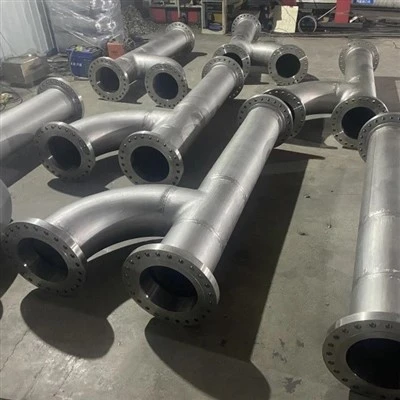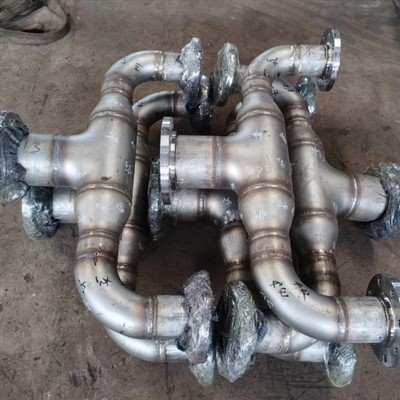
Specify stainless steel tubing as part of a qualified connection system-not as a grade and size alone. For repeated assembly and disassembly, the purchase specification must connect material condition, outside diameter, wall thickness, surface quality, fitting compatibility, and a defined reassembly procedure. Fitting manufacturers explicitly tie reliable performance to these interacting variables.
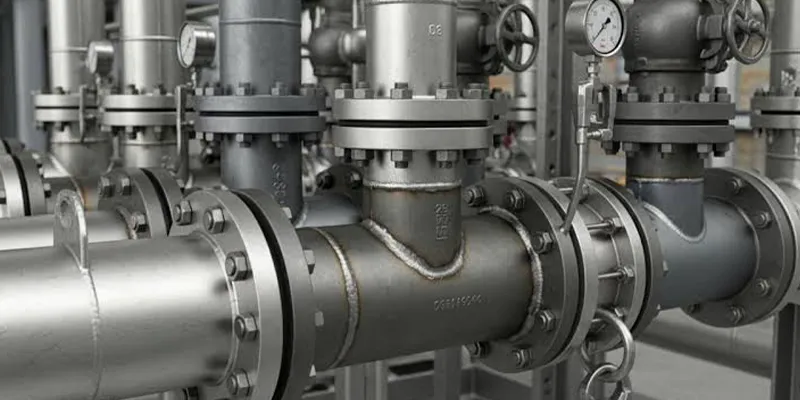
This guide addresses reusable mechanical connections on metallic tubing. It is not a pressure-design calculation or a substitute for the applicable piping code. Recommendations for qualification and purchasing below are proposed engineering requirements, not claims of original product testing.
What should a specification for repeatedly assembled tubing include?
Specify the operating duty, the exact tube-and-fitting combination, and measurable acceptance criteria before choosing a supplier.
A useful request for quotation describes how the joint will be used, not merely what the tube is made of. Swagelok identifies material, hardness, wall thickness, and surface finish as key purchasing variables; its installation instructions separately define initial assembly and reassembly.
Operating conditions: fluid composition, contaminants, cleaning chemicals, design pressure, temperature range, vacuum duty, and external exposure.
Mechanical duty: intended number and frequency of disconnects, vibration, pressure cycling, thermal cycling, and available installation space.
Product definition: alloy designation, product standard and edition, manufacturing route, heat-treatment condition, outside diameter (OD), wall thickness, tolerances, and approved fitting manufacturer and series.
Acceptance plan: inspection records, material traceability, leak-test method and limit, cycle qualification, replacement rules, and responsible engineering approval.
Define a cycle explicitly: one safe disconnection followed by one reassembly and the specified verification test. Pressure cycles and connection cycles are different duties; qualify both when both occur.
Which connection design is best for repeated disassembly?
Use a manufacturer-approved remakable fitting for maintenance access; evaluate a dedicated face-seal interface when the disconnect point is central to the system design.
|
Connection approach |
Main advantage |
Specification consequence |
|
Two-ferrule tube fitting |
Documented reassembly is available for identified product families. |
Control tubing condition and dimensions; retain the preswaged tube-end assembly and follow the exact remake procedure. |
|
Metal-gasket face seal |
Designed make-and-break interface for high-purity welded systems. |
Specify gland, gasket, nut, cleanliness, and component-replacement instructions as a complete system. |
|
Permanent welded run with a selected disconnect |
Places service access at a deliberate location. |
Treat the weld as permanent; separately qualify the removable interface and its access requirements. |
The first two comparisons follow Swagelok's tube-fitting instructions and VCR product description; the third is a proposed layout strategy. A remakable fitting does not mean that every sealing component has unlimited reuse life. Obtain the exact gasket-replacement rules for the selected face-seal product.
Keep manufacturer and product-family boundaries explicit. Swagelok warns against mixing its tube-fitting components with those of other manufacturers. Similar dimensions do not establish interchangeable sealing geometry.
How should you compare stainless steel grades and nickel alloys?
Select the alloy for the chemical environment, then verify that the selected fitting can seal and grip that alloy in its supplied condition.
A material upgrade is not automatically a connection upgrade. Swagelok publishes different tubing requirements for austenitic stainless steels, super duplex stainless steel, and nickel alloys; a single hardness or pressure rule cannot be applied across all of them.
|
Material option |
What to compare |
Decision rule |
|
304/304L or 316/316L stainless steel |
Actual corrosion duty plus approved annealed tubing requirements. |
Choose only after reviewing fluid, cleaning, temperature, and external exposure. |
|
Duplex / super duplex stainless steel |
Corrosion and strength benefits versus fitting-specific requirements. |
Do not substitute into a fitting qualified only for conventional austenitic tubing. |
|
Nickel alloys such as 625 or C-276 |
Specific chemical duty, tubing standard, hardness, and fitting qualification. |
Require an approved alloy-specific combination rather than assuming compatibility. |
Both 304L and 316L can suffer chloride stress-corrosion cracking in warm chloride-rich environments. Outokumpu describes improved resistance from suitable duplex and higher-alloyed grades, but the choice remains condition-dependent. "Stainless" is not a guarantee against corrosion.
For example, Swagelok's tubing data lists ASTM B622 for C-276 and ASTM B444 for alloy 625, while its conventional stainless guidance lists ASTM A269/A213 or equivalent. Use the applicable product specification-not a stainless-steel designation copied onto a nickel-alloy order.
Is seamless tubing better than welded tubing for repeated assembly?
Seamless tubing is not automatically more reusable; qualify the manufacturing route together with surface condition, dimensions, material condition, and pressure design.
ASTM A269/A269M covers both seamless and welded austenitic stainless steel tubing and requires heat-treated material and specified testing. Compliance establishes a product baseline, not a guaranteed number of assembly cycles.
Swagelok's ordering guidance accepts seamless or welded-and-drawn stainless tubing, while its published pressure tables apply specified reductions to welded-and-drawn tubing. Do not transfer a seamless-tube pressure value directly to a welded product; use the applicable code and the selected manufacturer's documented assumptions.
For procurement, compare qualified alternatives on total installed cost: tube price, inspection effort, assembly time, spare components, and downtime. This is a purchasing framework, not a claim that one route always costs less.
What hardness and heat-treatment condition should you specify?
For conventional stainless two-ferrule fittings, specify fully annealed tubing and the fitting manufacturer's hardness limit-not the highest available tube strength.
Ferrules are small rings that grip the tube and help establish the seal. Swagelok states that tubing for its metal tube fittings must be softer than the fitting material; its conventional stainless ordering guidance limits hardness to 90 HRB or 200 HV. HRB and HV identify different hardness-test scales.
Parker's instrumentation installation manual states a stainless-tubing maximum of 90 HRB and recommends 80 HRB. These are manufacturer-specific criteria, not a universal hardness prescription for all stainless and nickel-alloy connections.
Require the supplier to document the specified heat treatment and agreed hardness verification. If thin walls prevent the chosen test method from producing valid results, agree an appropriate method before purchase. Do not silently substitute cold-worked, high-strength tubing into a fitting qualification based on annealed material.
How do OD, wall thickness, and surface condition affect reuse?
Specify the complete dimensional envelope and protect the sealing surface; nominal size alone is insufficient.
Swagelok limits tubing wall thickness to its qualified ranges and warns that some permitted tube ovality can prevent insertion into precision fittings. Its pressure-table calculations use maximum OD and minimum wall thickness and exclude allowances for corrosion, erosion, welding, and bending.
OD and ovality: state the allowed dimensions and confirm compatibility with the selected fitting.
Wall thickness: satisfy the pressure design and the fitting's minimum and maximum wall limits. More wall is not automatically better outside those limits.
Sealing zone: require freedom from scratches and damage that could interfere with the seal; define inspection and rejection criteria.
Preparation and handling: deburr tube ends, protect exposed ends, and avoid dragging tubing across racks or rough surfaces.
For gas service, Swagelok explains that scratches can form leak paths and that heavier walls within its approved ranges better resist ferrule action. This is not permission to accept damaged tubing or to specify arbitrarily thick walls.
If a surface-roughness limit is needed, state which surface is controlled, the roughness parameter, and the measurement method. An internal high-purity finish and the external ferrule-sealing surface are different requirements; do not treat one finish value as proof of both.
How can you reduce galling and installation damage?
Control the fitting's thread system, cleanliness, alignment, and approved lubrication; changing the tube grade alone will not prevent galling.

Galling is adhesive damage between sliding metal surfaces, which can make threads seize. The Nickel Institute recommends attention to material pairing, lubrication, load, temperature, and handling, and says lubricant compatibility and torque requirements should be evaluated.
Do not add a generic anti-seize compound without approval. It may change assembly behavior or violate process-cleanliness requirements.
Manufacturer-applied plating also matters: Swagelok warns that removing the silver plating from VCR female nuts through cleaning or passivation can cause thread galling and prevent a proper seal.
Provide wrench clearance, adequate straight tube length, and supports that limit movement. Swagelok's tubing data specifically calls for sufficient straight length near bends and appropriate supports. Do not use a fitting nut to pull a misaligned tube run into position.
How should stainless steel tube fittings be reassembled?
Use the exact reassembly procedure for the selected fitting; do not repeat the initial make-up turns at every service event.
For its conventional fittings 1 in. (25 mm) and smaller, Swagelok specifies the following sequence. These instructions are product-specific and must not be generalized to other connection families.
Depressurize the system before disassembly. Apply the site's isolation, draining, purging, and hazardous-fluid controls as appropriate.
Before loosening the joint, mark the tube at the back of the nut and mark a line across the nut and body flats.
Reinsert the tube with its preswaged ferrules until the front ferrule seats against the fitting body.
Hold the body steady and return the nut to the previously pulled-up position indicated by the marks; then tighten slightly as instructed.
Do not use that conventional fitting's gap inspection gauge on the reassembled joint. Do not mix manufacturers' parts.
Include inspection, cleanliness control, and a defined post-maintenance leak check in the site procedure. Stop when threads bind, sealing surfaces are damaged, the tube end is distorted, or the required test fails; obtain an approved repair or replacement decision rather than tightening indefinitely.
How many assembly cycles can stainless steel tubing withstand?
There is no defensible universal cycle count based only on stainless grade or compliance with ASTM A269.
Swagelok says its conventional tube fittings can be disassembled and reassembled "many times," but that instruction does not establish a numerical life for every application. ASTM A269 is a tubing product specification, not a connection-cycle certification.
Specify a qualification program for the actual combination. The following is a proposed project framework, not a published pass/fail standard:
Test representative tubing lots, fitting sizes, wall thicknesses, and installation conditions. Include realistic dimensional and hardness variation.
Define the required disconnect count and an engineering-justified qualification margin. Document which parts remain in use and which are replaced.
Reproduce relevant thermal exposure, pressure cycles, cleaning, and vibration; do not claim room-temperature bench cycling represents all service conditions.
Record leak performance before cycling and at defined intervals. State test medium, pressure or vacuum, temperature, stabilization time, detection method, and numerical acceptance limit.
Inspect for thread damage, sealing damage, tube movement, and abnormal assembly behavior. Define failure criteria and replacement policy before testing.
A successful initial pressure test does not demonstrate repeated-disassembly life. Keep pressure containment, leak tightness, and remake durability as separate acceptance questions.