|
To overcome low-temperature brittleness in LNG plants, engineers must select materials whose ductile-to-brittle transition temperature (DBTT) is well below the operating temperature of -162 degrees C. The proven solutions are 9% nickel steel (primary containment tanks), austenitic stainless steel grades 304L and 316L (process piping), aluminum alloy 5083 (cold boxes and ISO containers), and Invar membrane alloy for thin-membrane tanks. Each material must be impact-tested at its minimum design temperature per ASME or EN code requirements. |

Why Low-Temperature Brittleness Is the Defining Challenge of LNG Plants
Liquefied Natural Gas is stored and transported at −162°C (−260°F) - the boiling point of methane at atmospheric pressure. At this temperature, many common engineering materials undergo a fundamental change in behavior: they transition from ductile (bending before breaking) to brittle (shattering without warning). This phenomenon, known as the ductile-to-brittle transition, is one of the most dangerous failure modes in cryogenic engineering.
The consequences of a brittle failure in an LNG facility are severe. An uncontrolled release of LNG can vaporize into a flammable cloud with explosive potential, or - if ignited - burn as a pool fire that is extraordinarily difficult to extinguish. The 1944 Cleveland LNG tank disaster, which resulted from a tank made with steel containing insufficient nickel, killed 128 people and destroyed an entire neighborhood. That event established the foundational principle still governing LNG material selection today: the right alloy is not optional.

|
Key Definition: The Ductile-to-Brittle Transition Temperature (DBTT) is the temperature below which a material fractures suddenly without significant plastic deformation. A material is only safe for cryogenic service if its DBTT is well below the minimum operating temperature, confirmed by Charpy V-Notch (CVN) impact testing. |
The Metallurgy Behind Low-Temperature Embrittlement
Metals derive their toughness from the ability of atoms to reorganize (slip) along crystal planes when stressed. At low temperatures, this atomic mobility decreases. For body-centered cubic (BCC) metals - including carbon steel and ferritic/martensitic stainless steels - slip becomes so restricted below the DBTT that cracks propagate faster than the metal can absorb energy. The result is sudden, catastrophic fracture at stress levels well below the material's rated tensile strength.
Face-centered cubic (FCC) metals behave differently. Their crystal structure enables atomic slip even at cryogenic temperatures, so toughness is maintained down to absolute zero. This is why austenitic stainless steels (FCC) and aluminum alloys (FCC) are the primary choices for LNG piping - they simply do not have a DBTT.
BCC metals (carbon steel, ferritic SS): exhibit a sharp DBTT - dangerous in cryogenic service unless specially alloyed.
FCC metals (304L/316L SS, aluminum alloys): no DBTT - remain tough at −269°C. First choice for LNG piping.
High-nickel ferritic alloys (9% Ni steel): DBTT suppressed to below −196°C through nickel addition - the engineering solution for large storage tanks.
Material Performance at Cryogenic Temperatures: Comparative Data
The table below presents standardized low-temperature mechanical properties for the seven materials most commonly specified for LNG plant service. All minimum values are per ASTM or equivalent EN standards.
|
Material |
Min. Design Temp. |
CVN Toughness |
Elongation |
Primary LNG Application |
|
Carbon Steel (A516-70) |
−29°C (−20°F) |
27 J @ −29°C |
21% |
Ambient storage tanks |
|
3.5% Ni Steel (A203 Gr.E) |
−101°C (−150°F) |
27 J @ −101°C |
21% |
Ethylene / propylene vessels |
|
9% Ni Steel (A353 / A553) |
−196°C (−320°F) |
34 J @ −196°C |
20% |
LNG primary containment |
|
304/304L SS (A312 TP304) |
−269°C (−452°F) |
>100 J @ −196°C |
40% |
Cryogenic piping & fittings |
|
316L SS (A312 TP316L) |
−269°C (−452°F) |
>100 J @ −196°C |
40% |
Cryogenic piping, pump casings |
|
Invar (Fe-36Ni, F1684) |
−196°C (−320°F) |
Excellent |
30% |
Membrane LNG tank systems |
|
Aluminum Alloy 5083 (B241) |
−196°C (−320°F) |
Good |
16% |
LNG storage, ISO containers |
Sources: ASTM A353, A553, A312, A240, B241, F1684; ASME Section VIII Div.1; EN 14620. CVN = Charpy V-Notch impact energy. All values are minimum code-required figures; actual certified values are typically higher.
Zone-by-Zone Material Selection Decision Guide
An LNG plant is not one uniform environment - it spans a temperature gradient from ambient at the battery limits to −162°C at the cold box and storage tanks. Different zones demand different materials. Using the wrong material in any zone - even briefly - creates a brittle fracture risk. The matrix below is your primary reference for zone-based selection.
|
Plant Zone |
Temp. Range |
Recommended Material |
Key Specification Note |
|
Feed Gas Inlet / Slug Catcher |
0°C to −20°C |
Carbon Steel A333 Gr.6 |
ASME B31.3; limited PWHT required |
|
Pre-cooling Section (MR) |
−20°C to −80°C |
3.5% Ni Steel or 304L SS |
Impact tested per ASME VIII Div.1 UHA |
|
Liquefaction Cold Box |
−80°C to −165°C |
304L / 316L SS; Al 5083 |
Full CVN test @ min. design temp. |
|
LNG Storage Tank (inner) |
−162°C (−260°F) |
9% Ni Steel or Invar membrane |
EN 14620 / API 625; 100% RT on seams |
|
LNG Storage Tank (outer) |
Ambient |
Pre-stressed Concrete or CS |
Thermal barrier between shells |
|
LNG Pump & Piping (in-tank) |
−162°C |
304L / 316L SS; Al 5083 |
ASTM A182 F304L flanges; low-temp bolting |
|
BOG Compressor Suction |
−100°C to −162°C |
304L SS or Al 6061-T6 |
Non-magnetic, low-temp tested |
|
LNG Loading Arms |
−162°C |
316L SS with Al or 9%Ni fittings |
API 1540; cryogenic swivel joints |
PWHT = Post-Weld Heat Treatment. HAZ = Heat-Affected Zone. BOG = Boil-Off Gas. RT = Radiographic Testing. Specifications are indicative; always verify against project-specific design codes and owner engineering standards.
The Three Pillars of Cryogenic Material Selection
No cryogenic material specification is complete without Charpy V-Notch (CVN) impact testing at or below the minimum design temperature. CVN testing measures the energy a standard notched specimen absorbs before fracturing - a direct indicator of toughness at that temperature. For carbon and low-alloy steels, the minimum required energy is typically 27 Joules (20 ft-lb). For austenitic stainless steels, values above 100 J at −196°C are routinely achieved. Do not accept materials without heat-specific CVN certification.
Toughness is highly sensitive to trace chemistry. Sulfur and phosphorus impurities embrittle ferritic steels at low temperatures. For 9% Ni steel, nitrogen content must be controlled below 0.01% to prevent strain-age embrittlement during fabrication. For austenitic stainless steels, carbon must be limited to 0.03% maximum (the "L" grade designation) to prevent sensitization during welding. Positive Material Identification (PMI) - using X-ray fluorescence (XRF) or optical emission spectroscopy - must be performed on 100% of alloy components prior to installation to verify that no lower-grade material has been substituted.
Welds are the most vulnerable locations in any pressure system, and doubly so at cryogenic temperatures. The heat-affected zone (HAZ) of a weld experiences a rapid thermal cycle that can alter grain structure and reduce toughness. Every weld procedure specification (WPS) for cryogenic service must include procedure qualification records (PQRs) with CVN testing on weld metal and HAZ at the minimum design temperature. For 9% Ni steel, filler metals are typically nickel-alloy based (ENiCrMo-6 or ENiCrFe-9) rather than matching composition, specifically because nickel filler retains toughness across the full cryogenic range.
Mandatory Testing Requirements: At a Glance
The table below consolidates the critical tests, applicable standards, and acceptance criteria that govern material qualification for LNG plant service.
|
Test Type |
Standard |
When Applied |
Acceptance Criterion |
|
Charpy V-Notch (CVN) |
ASTM E23 / EN ISO 148 |
At minimum design temperature |
Accept: ≥27 J (ferritic); ≥100 J (austenitic) |
|
Drop-Weight Tear Test |
ASTM E436 |
9% Ni and low-alloy steels |
100% shear fracture appearance |
|
Tensile (Low-Temp) |
ASTM A370 |
At −196°C for cryogenic grades |
UTS and yield must meet min. @ test temp. |
|
Hardness (Vickers/Brinell) |
ASTM E92 / E10 |
Weld HAZ; post-PWHT |
HV 10 max 350 per BS PD 5500 |
|
Radiographic (RT) |
ASTM E94 / EN ISO 17636 |
All full-penetration butt welds |
Acceptance per ASME B31.3 or EN 13480 |
|
Ultrasonic (UT) |
ASTM E164 |
Plate and heavy wall fittings |
Phased-array UT preferred for thick sections |
|
Liquid Penetrant (PT) |
ASTM E165 |
Austenitic SS final surface |
Detect surface cracks; clean with acetone |
|
Positive Material ID (PMI) |
ASTM E1476 (XRF) |
All alloy components at installation |
Verify Ni, Cr, Mo content; 100% inspection |
Standards referenced are current ASTM / EN / ASME editions. Project-specific inspection and test plans (ITPs) may impose more stringent requirements. Always reconcile with the applicable design code - typically ASME B31.3 for process piping, API 625 / EN 14620 for storage tanks.
Five Common Material Selection Mistakes - and How to Avoid Them

Mistake 1: Using carbon steel below −29°C without impact testing.
Standard carbon steel (A106 Gr.B) is not impact-tested and has an unpredictable DBTT. Always use A333 Gr.6 (impact-tested to −46°C) or a cryogenic-grade alternative for temperatures below −29°C. Even a temporary excursion below this threshold - during plant cooldown, for example - can initiate a brittle crack.
Mistake 2: Assuming 304 SS and 304L SS are interchangeable.
In cryogenic service, the 'L' designation matters. Standard 304 (max 0.08% C) risks sensitization at the weld HAZ, creating chromium-depleted zones susceptible to intergranular corrosion in trace moisture. Always specify 304L or 316L for welded cryogenic piping.
Mistake 3: Skipping PMI on 'certified' material from the warehouse.
Mix-ups between alloy grades in the warehouse or fabrication shop are a documented cause of cryogenic failures. A piece of carbon steel pipe misidentified as 9% Ni steel is visually indistinguishable. PMI at the point of installation catches errors that paper documentation cannot.
Mistake 4: Using standard bolting materials for cryogenic flanged joints.
Standard ASTM A193 B7 studs (alloy steel) are not rated for cryogenic temperatures. Specify ASTM A320 L7 studs and A194 Gr.4 or Gr.7 nuts, which are impact-tested to −101°C. For LNG service at −162°C, ASTM A320 B8M (316 SS) bolting is required.
Mistake 5: Inadequate thermal cycling analysis during design.
LNG plants do not remain at steady-state temperature. Cooldown and warm-up cycles - during commissioning, planned shutdowns, and emergencies - impose thermal stresses on every component. A material with adequate toughness at steady-state may accumulate fatigue damage through repeated thermal cycling. Specify materials with a minimum design temperature at least 10°C below the lowest credible operating temperature to provide a safety margin.
Frequently Asked Questions
316L stainless steel is excellent for piping, pumps, and fittings at −162°C. However, for primary containment tanks - which are large, thick-walled pressure vessels - 9% Ni steel and Invar membrane are the standard solutions because they offer a more cost-effective combination of weld-ability, fabrication ease, and cryogenic toughness at the scale required for tanks holding tens of thousands of cubic meters.
9% Ni steel (ASTM A553) is used in full-containment double-wall tanks as the inner shell, typically 20 to 50 mm thick, directly in contact with LNG. Invar (Fe-36Ni) has an extraordinarily low coefficient of thermal expansion and is used in thin-membrane tank designs (such as GTT's Mark III and No.96 systems) where the membrane flexes and deforms during thermal cycles without cracking. Both are verified to −196°C; the choice is driven by tank design philosophy and licensing agreements.
Yes. Aluminum alloy 5083 (ASTM B241) is widely used for LNG cold boxes, heat exchangers, and ISO container inner vessels. It maintains good toughness at −196°C, has low density (reducing dead load), and is non-magnetic. It is not suitable for high-pressure applications above approximately 25 bar without careful design analysis, but for moderate-pressure cryogenic service it is a proven and cost-effective choice.
Conclusion
Overcoming low-temperature brittleness in an LNG plant is not a matter of finding one universal material - it is a matter of mapping each plant zone to the right alloy, verifying that alloy through rigorous testing, and controlling fabrication and welding to preserve the properties you paid for. The decision framework is clear:
Identify the minimum design temperature for every system and component.
Select materials whose DBTT is confirmed to be below that temperature by CVN impact data.
Choose FCC materials (austenitic SS, aluminum) for piping; 9% Ni or Invar for large tanks.
Specify and enforce PMI on 100% of alloy components at installation.
Qualify all weld procedures with cryogenic CVN testing on weld metal and HAZ.
Apply a thermal margin: design to at least 10°C below the lowest credible operating temperature.
Applied consistently, this framework eliminates the material-related failure modes that have historically caused the industry's most costly and dangerous incidents. The upfront investment in correct material specification is always less than the cost of a single field failure.
|
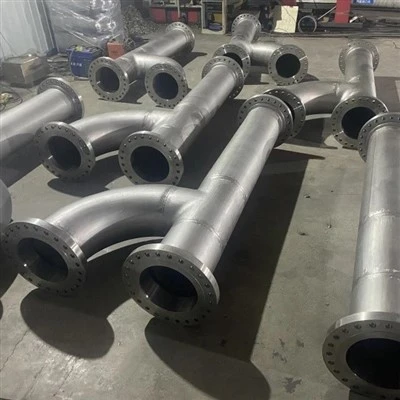
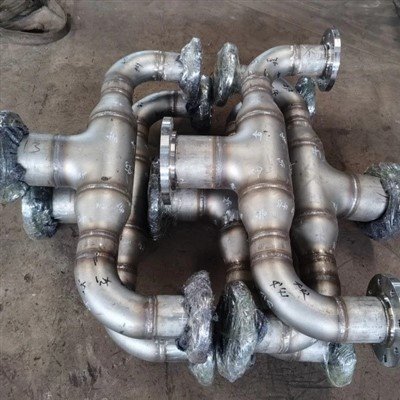
Ready to Source? We manufacture stainless steel and nickel alloy pipe, fittings, and flanges to ASTM A312 (TP304L, TP316L), A182 (F304L, F316L), and related cryogenic specifications, with full low-temperature impact test certification and PMI documentation. Contact our technical team for stock availability, material certificates, and project-specific support. |
ASTM A312 / A182 - Austenitic Stainless Steel Pipe and Fittings
ASTM A353 / A553 - 9% Nickel Steel Plate (Double and Single Normalized & Tempered)
ASTM A320 / A194 - Low-Temperature Alloy Steel Bolting
ASTM B241 - Aluminum Alloy 5083 Seamless Pipe and Seamless Extruded Tube
ASME B31.3 - Process Piping Code
ASME Section VIII Div.1, Part UHA - Rules for Austenitic Stainless Steel
API 625 - Tank Systems for Refrigerated Liquefied Gas Storage
EN 14620 - Design and Manufacture of Site-Built Vertical LNG Storage Tanks
NFPA 59A - Standard for the Production, Storage, and Handling of LNG
BS PD 5500 - Specification for Unfired Fusion Welded Pressure Vessels
© 2026 - Engineering Content Series. All rights reserved. Reproduction with attribution permitted.