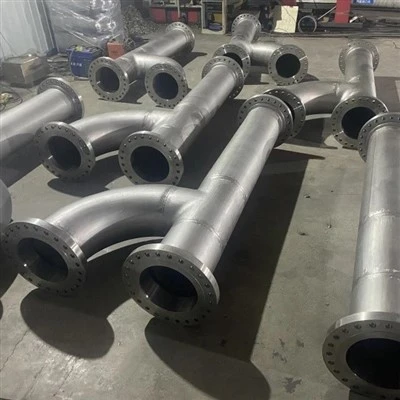
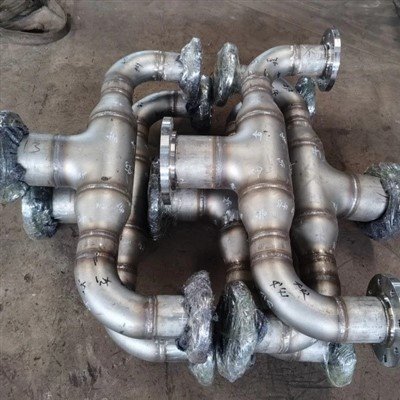
Why Duplex Stainless Steel Pipes Are Critical for Offshore Oil Rigs
|
Duplex stainless steel pipes are critical for offshore oil rigs because they uniquely combine high strength, outstanding resistance to seawater corrosion, and immunity to stress corrosion cracking (SCC) - the three leading causes of pipe failure in marine environments. No other commercially available pipe material at a comparable cost delivers all three properties simultaneously. |

An offshore oil rig is one of the most hostile environments on earth for metal. Seawater. Salt-laden air. High pressure. Fluctuating temperatures. Hydrogen sulfide (H2S) in produced fluids. Any single one of these factors can destroy ordinary steel pipe within years - sometimes months. Together, they create a corrosion environment that demands extraordinary materials.
The global offshore oil and gas industry operates more than 1,400 fixed platforms and hundreds of floating production units worldwide. Piping systems - carrying produced fluids, seawater injection, gas lift, and utilities - account for a significant share of total platform weight and capital cost. More critically, a single piping failure can trigger production shutdowns costing $500,000 to $1,000,000 per day, environmental penalties, or worst case, a catastrophic safety incident.
This is precisely why duplex stainless steel has become the material of choice for offshore piping engineers. Not by accident - but because its metallurgical composition directly addresses every major threat the ocean presents.
What Is Duplex Stainless Steel?
Duplex stainless steel is a family of alloys with a two-phase microstructure: roughly equal proportions of austenite and ferrite (hence the name "duplex"). This mixed crystal structure is not an accident - it is engineered to harvest the best properties of both phases.

Austenite phase (face-centered cubic): delivers toughness, ductility, and corrosion resistance.
Ferrite phase (body-centered cubic): delivers strength and resistance to stress corrosion cracking.
The result is a material that simultaneously outperforms austenitic grades (like 316L) in strength and SCC resistance, while remaining significantly more corrosion-resistant than carbon or low-alloy steels. A key benchmark is the Pitting Resistance Equivalent Number (PREN), which predicts a material's resistance to pitting corrosion in chloride environments:
PREN = %Cr + 3.3 x %Mo + 16 x %N
A PREN above 40 is considered mandatory for seawater service. Standard duplex 2205 achieves a PREN of ~35; super duplex 2507 achieves ~42. Carbon steel scores below 10.
The Four Corrosion Threats on Every Offshore Platform
Seawater contains 19,000–35,000 ppm of chloride ions. These ions aggressively attack the passive oxide film on stainless steel, initiating pits that can penetrate pipe walls within months. Standard 316L stainless steel (PREN ~24) is frequently insufficient. Super duplex 2507 (PREN ~42) resists pitting even in hot, stagnant seawater.
SCC is arguably the most dangerous failure mode in offshore piping. It occurs when three conditions coincide: tensile stress, a corrosive environment (chlorides, H2S), and a susceptible material. Austenitic stainless steels - including 316L - are notoriously susceptible to chloride SCC. The ferrite phase in duplex alloys acts as a crack arrestor, dramatically improving SCC resistance. In laboratory testing at 100 degrees Celsius in 1,000 ppm chloride solution, duplex 2205 shows no SCC failure, while 316L fails in under 200 hours.
High-velocity production fluids carrying sand particles create erosion-corrosion - a synergistic attack far more destructive than either mechanism alone. The higher yield strength of duplex steel (450 MPa for 2205 vs. 170 MPa for 316L) means thicker protective oxide films and greater wall resistance per unit thickness, extending service life by a factor of 2 to 4 compared to austenitic grades.
Wells containing H2S (sour service, per NACE MR0175 / ISO 15156) generate atomic hydrogen that diffuses into steel and causes blistering or cracking. Duplex grades with controlled ferrite content and low hardness (HRC 28 max per NACE standards) pass sour service qualification, making them suitable for both sweet and sour crude applications.
Material Performance Comparison: Duplex vs. Alternatives
The table below presents objective mechanical and corrosion data for the pipe materials most commonly evaluated for offshore service. All data reflects ASTM/EN standard minimum values.

|
Material |
UTS (MPa) |
Yield (MPa) |
PREN |
SCC Resistance |
|
316L Stainless Steel |
485 |
170 |
~200 |
Moderate |
|
Duplex 2205 (S31803) |
620 |
450 |
>500 |
Excellent |
|
Super Duplex 2507 |
795 |
550 |
>600 |
Superior |
|
Carbon Steel (API 5L) |
415 |
290 |
~100 |
Poor |
|
Inconel 625 |
827 |
517 |
>500 |
Exceptional |
Sources: ASTM A790, A928, A276; EN 10216-5; NACE technical reports. SCC resistance rated in chloride-bearing environments at 60-100 degrees C.
Where Duplex Stainless Steel Pipes Are Used on Offshore Rigs
Duplex and super duplex pipe systems appear throughout an offshore platform wherever seawater, produced fluids, or aggressive gases contact the piping:
Seawater injection and firewater systems - 2507 super duplex is the de facto standard for high-pressure seawater injection headers
Production manifolds and flowlines - transporting crude oil mixed with formation water and H2S
Topside process piping - separators, coolers, heat exchanger shells, and interconnecting pipework
Subsea umbilicals and risers - flexible and rigid riser systems in water depths exceeding 300 m
Ballast and utility water lines - where seawater contact is continuous
Flare headers and gas lift lines - handling high-pressure gas with condensate
In deepwater and ultra-deepwater applications (water depth > 1,500 m), where repair is extraordinarily expensive or impossible, the business case for duplex becomes even more compelling.
The True Cost of Getting the Material Wrong
Operators sometimes resist duplex pipe on the basis of its higher initial cost - typically 2.5 to 4 times the material cost of carbon steel per meter. This comparison is misleading when lifecycle costs are considered.
|
Failure Scenario |
Est. Repair Cost |
Downtime |
Lost Revenue* |
|
Piping system corrosion failure |
$2–8M |
14–45 days |
FFFFFF |
|
Stress corrosion cracking (SCC) |
$5–20M |
30–90 days |
F4F6F8 |
|
Seawater injection line failure |
$1–4M |
7–21 days |
FFFFFF |
|
Topside process pipe replacement |
$3–12M |
21–60 days |
F4F6F8 |
Lost revenue estimated at $500,000/day for a mid-size FPSO. Actual costs vary by field and operator. Data compiled from published HSE incident reports and industry cost benchmarks.
A duplex pipe system typically carries a 25-year design life in offshore service. Carbon steel or even standard austenitic stainless systems require corrosion allowances and inspection regimes that add cost throughout the operational life. When total cost of ownership is calculated over a 20-year field life, duplex consistently delivers lower lifecycle expenditure despite higher upfront cost.
|
Key Insight: A 2019 Norwegian Petroleum Safety Authority (PSA) study found that piping corrosion accounted for 28% of all offshore hydrocarbon leaks. The majority of incidents involved carbon steel or inadequately specified alloy pipe - not duplex. |
Selecting the Right Duplex Grade for Your Application
Not all duplex alloys are equal. Selecting the appropriate grade requires matching the PREN, mechanical properties, and sour service qualification to the actual operating environment.

|
Grade (UNS) |
Category |
PREN |
UTS/YS (MPa) |
Primary Offshore Application |
|
2101 (S32101) |
Lean Duplex |
26 |
620/450 |
Structural, low-corrosion topside |
|
2205 (S31803) |
Standard Duplex |
35 |
620/450 |
General offshore piping, risers |
|
2507 (S32750) |
Super Duplex |
42 |
795/550 |
Seawater systems, HP flowlines |
|
2707 (S32707) |
Hyper Duplex |
>48 |
900/620 |
Ultra-deepwater, high-Cl service |
Source: ASTM A790 / A928, EN 10216-5, NACE MR0175 / ISO 15156. PREN values are nominal; actual heat chemistry must be verified per project specification.
For most general offshore applications, duplex 2205 provides the optimal balance of performance and cost. Where seawater temperatures exceed 30 degrees C or chloride concentrations are very high, super duplex 2507 is the engineering specification of choice.
Applicable Standards and Specifications
Duplex stainless steel pipe for offshore service must comply with a rigorous framework of international standards. Key documents include:
ASTM A790 / A928 - seamless and welded duplex stainless steel pipe
NACE MR0175 / ISO 15156 - materials for sour service (H2S environments)
ASME B31.3 and B31.8 - process and gas transmission piping codes
DNV-ST-F101 - submarine pipeline systems (subsea applications)
ISO 21457 - materials selection for seawater systems
ASTM A923 - detecting detrimental intermetallic phases in duplex
Procurement of duplex pipe must include mill certification of chemical composition, PREN verification, mechanical testing (UTS, yield, impact at -46 degrees C), and, for sour service, hardness verification per NACE MR0175. Full documentation traceability from heat to installed component is mandatory on most offshore projects.
Frequently Asked Questions
Yes. Duplex 2205 and 2507 are routinely welded in offshore fabrication yards and during installation. The key requirement is strict control of heat input and interpass temperature to preserve the balanced austenite-ferrite ratio and avoid precipitation of sigma phase. Qualified welding procedures per ASME IX or ISO 15614-1 and certified welders are mandatory.
Nickel alloys such as Inconel 625 offer superior corrosion resistance but cost 8 to 15 times more than duplex per kilogram. For most offshore topside and subsea piping, super duplex 2507 provides sufficient performance at a fraction of the cost. Nickel alloys are reserved for the most severe service conditions - such as downhole tubing in ultra-sour wells - where duplex is excluded.
Duplex and super duplex strip are widely used as the pressure armour and inner carcass layers in flexible riser systems. The high strength-to-weight ratio reduces the effective tension in the riser, a critical advantage in deepwater applications where riser weight becomes a design constraint.
Conclusion
Duplex stainless steel pipes are not simply a premium option for offshore oil rigs - they are the engineering specification that makes safe, reliable, and economically viable offshore production possible. Their dual-phase microstructure directly addresses the four primary corrosion threats inherent in marine and produced-fluid environments. Their strength-to-weight advantage reduces structural loads. And their 25-year service life capability eliminates the costly inspection and replacement cycles that plague carbon steel systems.
For any offshore project - from brownfield upgrades to new deepwater FPSO installations - the material selection decision should begin with duplex stainless steel as the baseline and work outward from there based on service severity and budget constraints. Specifying carbon steel or inadequate alloy grades to save initial capital is a decision that the operating economics of the field will punish for decades.
|
Ready to Specify? Our team manufactures duplex and super duplex stainless steel pipe to ASTM A790, A928, and customer-specific project requirements. We supply seamless and welded pipe in grades 2205 and 2507, with full material traceability, NACE MR0175 compliance, and third-party inspection support. Contact our sales team for datasheets, stock availability, and project pricing. |
ASTM A790 / A928M - Duplex Stainless Steel Pipe Standards
NACE MR0175 / ISO 15156 - Petroleum Industries: Materials for Use in H2S-Containing Environments
DNV-ST-F101: Submarine Pipeline Systems
Norwegian PSA (2019) - Hydrocarbon Leak Statistics for the Norwegian Continental Shelf
NACE International Technical Report 6A194: Erosion-Corrosion in Oilfield Environments
ASME B31.3 Process Piping Code
ISO 21457: Petroleum, Petrochemical and Natural Gas Industries - Materials Selection and Corrosion Control
© 2025 - Technical Content Series. All rights reserved. Reproduction with attribution permitted.