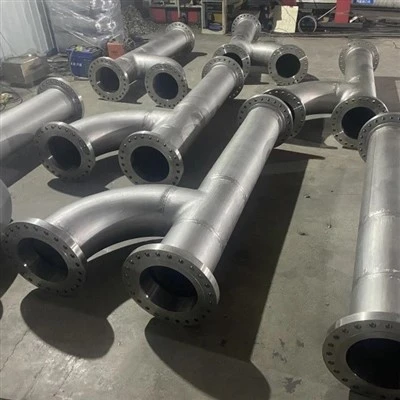
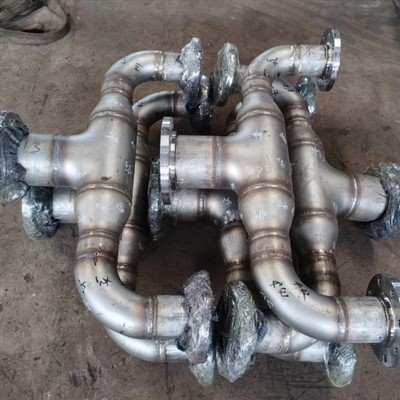
FOB, CIF, and DDP are the three most common Incoterms used in stainless steel and nickel alloy imports. FOB gives the buyer the most control over freight and insurance but requires logistics expertise. CIF bundles freight and insurance into the seller's price, reducing buyer effort but often at a markup. DDP is the most hands-off option - the seller handles everything including duties - but carries the highest total cost and greatest seller-side risk. For most experienced importers, FOB offers the best balance of cost control and flexibility.
|
Metric |
Value |
|
Global stainless steel crude production (2023) |
~58.4 million metric tons |
|
Share of steel trade using FOB or CIF terms |
~70% of transactions |
|
Typical cost premium of DDP over FOB |
8–15% of total cargo value |
|
Average marine insurance rate for metal cargo |
0.1–0.5% of insured value |
|
Insurance claim rate for steel shipments |
~2–3% of shipments |
|
Incoterms version currently in effect |
Incoterms 2020 (ICC Publication 723) |
What Are Incoterms and Why Do They Matter for Stainless Steel Imports?
Incoterms are internationally recognized trade terms published by the International Chamber of Commerce (ICC) that define who pays for what, who bears risk at each stage, and who handles which tasks in an international shipment. For stainless steel imports, choosing the wrong Incoterm can add 8–15% to your total landed cost and create gaps in insurance coverage.

Stainless steel and nickel alloy products are high-value, heavy-weight cargo. A single container of 316L stainless steel coils can be worth $80,000–$150,000, and nickel alloy grades such as Inconel 625 can exceed $250,000 per shipment. At these values, even a small misunderstanding about who is responsible for freight, insurance, or customs clearance can translate into significant financial loss.
Incoterms 2020, the current version, defines 11 trade terms. Each term specifies three critical things:
Cost allocation - Who pays for freight, insurance, loading, unloading, and customs duties.
Risk transfer - The exact point at which risk passes from seller to buyer (e.g., when goods cross the ship's rail at the port of loading for FOB).
Responsibility for tasks - Who arranges transport contracts, who handles export/import clearance, and who pays terminal charges.
The ICC updates Incoterms approximately every 10 years. The latest revision, Incoterms 2020, introduced changes such as replacing DAT with DPU and clarifying insurance obligations under CIF. Importers should always specify the version year in contracts (e.g., "FOB Shanghai, Incoterms 2020") to avoid ambiguity.
What Does FOB (Free On Board) Mean for Stainless Steel Buyers?
Under FOB, the seller delivers goods on board the vessel at the named port of loading, and the buyer takes over all costs and risks from that point forward. FOB is the preferred term for experienced importers who want maximum control over freight costs, carrier selection, and insurance.
FOB is the most widely used Incoterm in the stainless steel trade. Here is how it works in practice:
Seller's obligations: Produce the goods, package them for export, clear export customs, deliver goods on board the buyer-nominated vessel at the port of loading, and provide a clean on-board bill of lading.
Buyer's obligations: Book the vessel, pay ocean freight, arrange marine insurance, handle import customs clearance, and pay all destination charges (terminal handling, drayage, duties).
Risk transfer point: Risk passes from seller to buyer the moment goods are loaded on board the vessel at the origin port.
For stainless steel imports, FOB works well when the buyer has an established freight forwarder and can negotiate competitive ocean freight rates. Buyers who import regularly (e.g., 10+ containers per year) can often save 5–10% on freight compared to CIF pricing, because sellers typically add a 10–20% margin when they arrange shipping under CIF terms.
However, FOB is not suitable for air freight shipments. The ICC explicitly states that FOB should only be used for sea and inland waterway transport. For air shipments of nickel alloy products, FCA is the recommended alternative.
What Does CIF (Cost, Insurance, and Freight) Mean for Importers?
Under CIF, the seller pays for the freight to the destination port and provides minimum insurance coverage. The buyer assumes risk from the moment goods are loaded at the origin port - not when they arrive. CIF is best for importers who want a simplified, bundled price but are willing to accept less control over shipping and insurance.
CIF is the second most common Incoterm in stainless steel trade, particularly for first-time importers or buyers who prefer a single-quote purchase. Key features include:
Seller's obligations: Arrange and pay ocean freight to the named destination port, obtain minimum marine insurance (Institute Cargo Clauses Clause C, covering major losses only), clear export customs, and deliver goods on board the vessel at the origin port.
Buyer's obligations: Handle import customs clearance, pay import duties and taxes, cover destination terminal charges, and bear all risk from the moment goods are loaded on the vessel at origin.
Risk transfer point: Same as FOB - risk passes when goods are on board the vessel at the loading port. The seller's obligation ends when goods arrive at the destination port, not when they reach the buyer's warehouse.
A critical misconception about CIF is that the seller bears risk during transit. This is not true. The seller pays for freight and insurance, but the buyer carries the risk from the loading port onward. If the container is lost at sea, the buyer must file the insurance claim - not the seller.
The minimum insurance required under CIF (Clause C) covers only total loss and major casualties. For high-value nickel alloy shipments, buyers should either negotiate Clause A (all-risks) coverage with the seller or purchase supplemental insurance independently.
What Does DDP (Delivered Duty Paid) Mean for Buyers?
Under DDP, the seller is responsible for everything - freight, insurance, customs clearance, import duties, and final delivery to the buyer's named place. DDP offers maximum convenience for the buyer but carries the highest total cost and places significant risk on the seller, including responsibility for obtaining import licenses and paying foreign duties.
DDP is the most comprehensive Incoterm. The seller essentially becomes a door-to-door logistics provider. Here is what it involves:
Seller's obligations: Arrange all transport (origin trucking, ocean freight, destination drayage), obtain insurance, clear both export and import customs, pay all import duties and taxes, and deliver goods to the buyer's specified location - ready for unloading.
Buyer's obligations: Receive the goods at the named place, assist the seller with import-related information if required, and unload the goods (unless agreed otherwise).
Risk transfer point: Risk remains with the seller until goods are placed at the disposal of the buyer at the named place of destination, ready for unloading.
For stainless steel and nickel alloy imports, DDP is common when the buyer is a small manufacturer or distributor without in-house logistics capabilities. The seller quotes a single delivered price, and the buyer does not need to engage freight forwarders, customs brokers, or insurance agents.
However, DDP has notable drawbacks. Sellers typically add a 10–20% margin on freight, insurance, and duty costs. Additionally, the seller may lack a legal entity in the buyer's country, making it difficult to obtain import licenses or register for VAT refunds. Some countries (including the U.S.) restrict or complicate DDP arrangements for foreign sellers who cannot act as the importer of record.
How Do FOB, CIF, and DDP Compare in Cost, Risk, and Responsibility?
FOB offers the lowest total cost but requires the most buyer involvement. CIF provides a middle ground with bundled freight and insurance. DDP is the most expensive but requires the least buyer effort. The risk burden shifts progressively from buyer (FOB) to seller (DDP) as the Incoterm becomes more comprehensive.
Comprehensive Comparison Table
|
Dimension |
FOB |
CIF |
DDP |
|
Freight arranged by |
Buyer |
Seller |
Seller |
|
Freight paid by |
Buyer |
Seller |
Seller |
|
Insurance arranged by |
Buyer |
Seller (min. Clause C) |
Seller |
|
Import duties paid by |
Buyer |
Buyer |
Seller |
|
Import clearance by |
Buyer |
Buyer |
Seller |
|
Risk transfers at |
On board vessel (origin) |
On board vessel (origin) |
Buyer's premises (destination) |
|
Delivery completed at |
Origin port (on board) |
Destination port |
Buyer's named place |
|
Typical cost premium vs FOB |
Baseline |
+3–7% |
+8–15% |
|
Buyer effort level |
High |
Medium |
Low |
|
Best for |
Experienced importers |
First-time / occasional buyers |
Small buyers without logistics |
|
Suitable transport mode |
Sea / inland waterway |
Sea / inland waterway |
Any mode |
Cost Breakdown by Incoterm (Illustrative: $100,000 Stainless Steel Shipment)
|
Cost Component |
FOB (Buyer Pays) |
CIF (Seller Pays) |
DDP (Seller Pays) |
|
Goods (EXW) |
$100,000 |
$100,000 |
$100,000 |
|
Origin trucking & port charges |
$800 (Buyer) |
$800 |
$800 |
|
Export clearance |
$300 (Buyer) |
$300 |
$300 |
|
Ocean freight |
$2,500–$4,000 (Buyer) |
$3,000–$4,500 |
$3,000–$4,500 |
|
Marine insurance |
$100–$500 (Buyer) |
$200–$600 (Clause C) |
$200–$600 |
|
Destination port charges |
$1,200 (Buyer) |
$1,200 (Buyer) |
$1,200 |
|
Import duties (5% avg.) |
$5,000 (Buyer) |
$5,000 (Buyer) |
$5,000 |
|
Destination trucking |
$800 (Buyer) |
$800 (Buyer) |
$800 |
|
Seller's management margin |
N/A |
+$500–$1,000 |
+$1,500–$3,000 |
|
Estimated total cost |
$110,700–$112,300 |
$112,000–$114,400 |
$113,000–$116,300 |
Which Incoterm Offers the Lowest Total Landed Cost for Stainless Steel?
FOB consistently delivers the lowest total landed cost for stainless steel imports, primarily because the buyer eliminates the seller's freight and insurance margins. Importers who handle 10+ containers annually can save $1,500–$3,500 per shipment compared to CIF and $2,500–$5,000 compared to DDP.

Total landed cost (TLC) includes the product price plus all logistics costs: origin handling, ocean freight, insurance, destination charges, duties, and inland transport. Here is why FOB wins on TLC:
Freight rate transparency: Under FOB, the buyer negotiates directly with carriers or freight forwarders. Market rates for Asia-to-Europe or Asia-to-North America routes are published daily, allowing buyers to benchmark quotes. Under CIF, the seller embeds a margin that is invisible to the buyer.
Insurance optimization: FOB buyers can purchase all-risks coverage (Clause A) at 0.1–0.3% of cargo value. CIF sellers provide only Clause C (minimum coverage) and may charge 0.3–0.5% for the same, with limited coverage scope.
Duty drawback eligibility: When the buyer is the importer of record (as under FOB and CIF), they can claim duty drawbacks or refunds on re-exported goods. Under DDP, the seller is the importer of record, which can complicate or prevent drawback claims.
Negotiation leverage: FOB buyers can split cargo across multiple carriers to optimize routes and timing. CIF and DDP lock the buyer into the seller's chosen carrier, which may not offer the fastest or most reliable service.
The break-even point is volume. Buyers importing fewer than 3–4 containers per year may find CIF or DDP more cost-effective, because the time and effort of managing freight logistics can outweigh the savings. For high-volume importers, FOB is almost always the superior choice.
How Do Incoterms Affect Cargo Insurance for Nickel Alloy Shipments?
Under CIF, the seller is only required to provide Institute Cargo Clauses (C) - minimum coverage that excludes partial losses from theft, rainwater damage, and contamination. For high-value nickel alloy shipments ($150,000+), buyers should either negotiate Clause A (all-risks) coverage or purchase supplemental insurance under FOB terms.
Nickel alloy products such as Inconel, Hastelloy, and Monel grades are 3–5 times more expensive per kilogram than standard stainless steel. A 20-foot container of nickel alloy seamless pipes can exceed $300,000 in value. At this level, insurance coverage adequacy becomes a critical financial decision.
Insurance Coverage Comparison by Clause Type
|
Coverage Feature |
Clause C (CIF default) |
Clause B (Extended) |
Clause A (All-Risks, recommended) |
|
Total loss (vessel sinking, fire) |
Covered |
Covered |
Covered |
|
Major collision damage |
Covered |
Covered |
Covered |
|
Earthquake / volcanic eruption |
Covered |
Covered |
Covered |
|
Washing overboard |
Covered |
Covered |
Covered |
|
Rain / freshwater damage |
Not covered |
Covered |
Covered |
|
Theft / pilferage |
Not covered |
Not covered |
Covered |
|
Short delivery |
Not covered |
Not covered |
Covered |
|
Breakage / denting |
Not covered |
Not covered |
Covered |
|
Contamination / rust |
Not covered |
Not covered |
Covered (if sudden) |
|
Typical premium (% of value) |
0.10–0.20% |
0.20–0.35% |
0.25–0.50% |
The cost difference is modest. For a $200,000 nickel alloy shipment, upgrading from Clause C to Clause A costs approximately $300–$600 - a small fraction of the cargo value. Yet this upgrade covers theft, pilferage, rain damage, and breakage, which are the most common claims in steel and alloy shipments.
Under FOB, the buyer controls the insurance policy entirely and can select the insurer, coverage level, and deductible. This is the strongest argument for FOB when importing high-value nickel alloy products.
What Documentation Is Required Under FOB, CIF, and DDP?
All three Incoterms require a commercial invoice, packing list, and bill of lading. FOB and CIF buyers must additionally handle import documentation (customs entry, duty payment). DDP shifts all documentation responsibility to the seller, including the importer of record registration, import licenses, and duty payment receipts.
Documentation Responsibility Matrix
|
Document |
FOB (Responsible Party) |
CIF (Responsible Party) |
DDP (Responsible Party) |
|
Commercial invoice |
Seller |
Seller |
Seller |
|
Packing list |
Seller |
Seller |
Seller |
|
Certificate of origin |
Seller |
Seller |
Seller |
|
Mill test certificate (MTC) |
Seller |
Seller |
Seller |
|
Bill of lading (B/L) |
Seller (issues to buyer) |
Seller |
Seller |
|
Ocean freight contract |
Buyer |
Seller |
Seller |
|
Marine insurance policy |
Buyer |
Seller (to buyer benefit) |
Seller |
|
Export customs declaration |
Seller |
Seller |
Seller |
|
Import customs entry |
Buyer |
Buyer |
Seller |
|
Import duty / VAT payment |
Buyer |
Buyer |
Seller |
|
Importer of record registration |
Buyer |
Buyer |
Seller |
|
Destination delivery order |
Buyer |
Buyer |
Seller |
The Mill Test Certificate (MTC), also called a Material Test Report (MTR), is especially critical for stainless steel and nickel alloy imports. It certifies the chemical composition and mechanical properties of the material per ASTM, EN, or JIS standards. Without a valid MTC, buyers cannot verify grade compliance, and downstream customers may reject the material. Regardless of Incoterm, the seller is always responsible for providing the MTC.
What Are the Most Common Mistakes Importers Make with Incoterms?
The five most common and costly mistakes are: (1) using FOB for air freight shipments, (2) assuming CIF covers risk during transit, (3) failing to specify the Incoterms version year, (4) not verifying the named port or place precisely, and (5) neglecting to confirm insurance coverage adequacy for high-value alloy shipments.

Top 5 Incoterms Mistakes and How to Avoid Them
|
Mistake |
Impact |
Correct Practice |
|
Using FOB for air freight |
FOB is designed for sea/inland waterway only; using it for air creates legal ambiguity |
Use FCA (Free Carrier) for air and multimodal shipments |
|
Assuming CIF covers transit risk |
Buyer bears risk from loading port onward; seller only pays freight + minimum insurance |
Understand that risk transfer = same as FOB; purchase supplemental insurance if needed |
|
Not specifying Incoterms version |
Incoterms 2010 vs 2020 have meaningful differences (e.g., DAT → DPU) |
Always write: "FOB [Port], Incoterms 2020" |
|
Vague port or place naming |
"FOB China" is invalid; "FOB Shanghai" is valid |
Use specific, named ports/places per UN/LOCODE standards |
|
Accepting Clause C insurance for high-value alloys |
Clause C excludes theft, rain damage, and breakage - the most common claims |
Require Clause A or purchase supplemental all-risks coverage |
An additional mistake is failing to align the Incoterm with the letter of credit (L/C) terms. If the L/C requires a CIF bill of lading but the contract specifies FOB, the bank may refuse payment. Always ensure that the sales contract, L/C, and Incoterm are consistent.
How Should Importers Choose Between FOB, CIF, and DDP?
Choose FOB if you import 10+ containers annually and have a freight forwarder. Choose CIF if you import occasionally (3–10 containers/year) and want a simplified process. Choose DDP only if you have no logistics infrastructure or are importing into a country where you lack import registration. Always confirm insurance coverage adequacy regardless of the term chosen.
Decision Framework: Which Incoterm Fits Your Situation?
|
Your Situation |
Recommended Incoterm |
Why |
|
High-volume importer (10+ containers/year) with established forwarder |
FOB |
Lowest cost; full control over freight and insurance |
|
Medium-volume importer (3–10 containers/year) |
CIF |
Simplified logistics; reasonable cost premium |
|
Small / first-time importer (1–3 containers/year) |
DDP or CIF |
Minimal logistics involvement; focus on product quality |
|
Importing nickel alloys worth $150,000+ per shipment |
FOB (with Clause A insurance) |
Maximum insurance control; eliminate seller margins |
|
Air freight shipments |
FCA (not FOB) |
FOB is restricted to sea transport |
|
Importing into a country where you lack import registration |
DDP |
Seller handles all customs; buyer avoids compliance burden |
|
Buyer needs duty drawback / refund eligibility |
FOB or CIF (buyer as importer of record) |
DDP prevents drawback claims since seller is importer of record |
A practical approach: start with FOB as the default. If your supplier pushes back, ask for both FOB and CIF quotes. Compare the freight and insurance cost embedded in the CIF quote against your own forwarder's rates. If the CIF premium exceeds 5–7%, FOB is the better choice.
Frequently Asked Questions
Under FOB, the buyer arranges and pays for ocean freight and insurance. Under CIF, the seller arranges and pays for freight and provides minimum insurance. In both cases, risk transfers to the buyer when goods are loaded on the vessel at the origin port. The key difference is who controls the shipping arrangements and who pays the freight and insurance costs.
Q2: Is DDP better than FOB for small importers?
Yes, DDP can be better for small importers who ship fewer than 3 containers per year and lack logistics infrastructure. DDP eliminates the need to hire a freight forwarder, customs broker, and insurance agent. However, DDP costs 8–15% more than FOB due to seller margins. As import volume grows, switching to FOB typically yields savings of $1,500–$3,500 per container.
Q3: Who pays for insurance under CIF terms?
The seller pays for insurance under CIF terms, but only at the minimum level required by the Incoterm - Institute Cargo Clauses (C). This covers total loss and major casualties but excludes theft, rain damage, and breakage. The insurance policy is taken out in the buyer's name (or made assignable to the buyer), so the buyer files claims directly with the insurer. For high-value stainless steel or nickel alloy shipments, buyers should negotiate an upgrade to Clause A (all-risks) or purchase supplemental coverage.
Q4: Can Incoterms be changed after a contract is signed?
Yes, but only by mutual written agreement. Both parties must sign an amendment specifying the new Incoterm, the Incoterms version year, and the named port or place. If a letter of credit is involved, the L/C must also be amended to reflect the change, otherwise the bank may reject the shipping documents. Changes after goods have been shipped are generally not practical.
Q5: What is the best Incoterm for first-time stainless steel importers?
CIF is recommended for first-time importers. It simplifies the process by bundling freight and insurance into the seller's quote, reducing the number of third parties the buyer must coordinate. Once the importer gains experience and volume (typically after 5–10 shipments), switching to FOB allows greater cost control and savings. First-time importers should still verify that the seller provides at least Clause B insurance and request a copy of the insurance certificate before shipment.
Q6: How do Incoterms 2020 changes affect stainless steel trade?
Incoterms 2020 introduced three notable changes relevant to steel imports: (1) DAT was renamed to DPU (Delivered at Place Unloaded), clarifying that the destination can be any location, not just a terminal; (2) CIF now explicitly requires the seller to obtain minimum insurance per Institute Cargo Clauses (C), with a note that parties can agree to higher coverage; (3) FCA was enhanced with a mechanism for the buyer to instruct the carrier to issue an on-board bill of lading, making FCA more viable for letter of credit transactions. Importers should always specify "Incoterms 2020" in contracts to ensure these updated definitions apply.
Q7: What happens if goods are damaged during transit under FOB?
Under FOB, the buyer bears risk from the moment goods are loaded on the vessel. If goods are damaged during ocean transit, the buyer must file a claim with their own insurance provider. The seller has no liability once goods are on board. This is why FOB buyers must arrange adequate marine insurance (Clause A recommended) before the shipment departs. If the buyer has not purchased insurance, they bear the full financial loss.