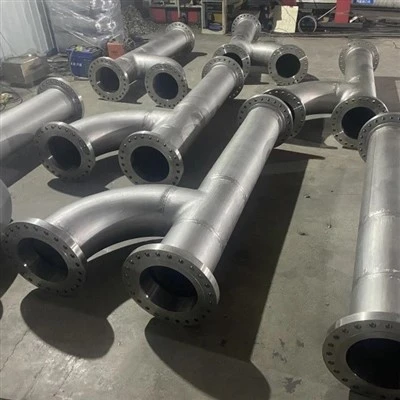
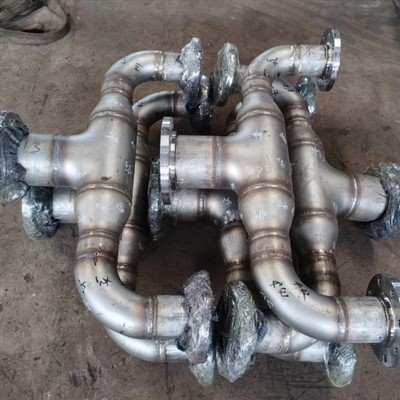
60-70% of stainless steel production uses recycled scrap as a primary input
When you buy stainless steel plate, pipe, or bar, you're not just paying for virgin ore from a mine. You're paying for a complex blend of recycled scrap, ferroalloys, and primary metals - and the scrap portion often dominates the cost structure. For nickel-containing grades like 304, 316, and nickel alloys, the scrap value embedded in the final product can exceed 40% of the raw material cost.

Yet most procurement teams and engineers rarely ask: What is the scrap value of the material I'm buying? How does the nickel price affect scrap pricing? Why does 316 scrap command a premium over 304? Understanding these questions gives you leverage in negotiations, insight into price volatility, and a clearer picture of the sustainability claims behind your material.
|
Key insight: Stainless steel scrap is not a waste product - it's a high-value secondary raw material whose price directly affects your mill's alloy surcharge. |
This article explains how stainless steel scrap recycling works, how scrap prices correlate with LME nickel and chromium, and what buyers should know about the recycled content in their material certificates.
What Is Stainless Steel Scrap? Grades, Sources, and Classification
Stainless steel scrap is categorized by alloy content, form, and cleanliness. The higher the nickel and molybdenum content, the more valuable the scrap - because those alloying elements are the primary cost drivers in stainless steel production.
Primary scrap grades and typical nickel content
|
Scrap Grade |
Typical Composition |
Ni Content (%) |
Approx. Price Range (USD/lb) |
|
304 Solid |
Cr 18-20%, Ni 8-10% |
8-10% |
$0.15-0.25 |
|
316 Solid |
Cr 16-18%, Ni 10-14%, Mo 2-3% |
10-14% |
$0.30-0.45 |
|
Mixed Stainless |
Various austenitic |
4-12% |
$0.20-0.35 |
|
Nickel Alloy (Inconel, Hastelloy) |
Ni >50%, Cr, Mo, W, Co |
50-60%+ |
$2.50-6.00+ |
|
400 Series (Ferritic/Martensitic) |
Cr 11-17%, No Ni or low Ni |
0-2% |
$0.08-0.12 |
|
Turnings/Borings |
Machining waste, mixed |
Variable |
$0.10-0.20 |
Sources of stainless steel scrap
Industrial scrap: Cut-offs, trimmings, and rejects from fabrication shops, pipe mills, and plate processors. Clean, well-characterized, highest value.
Obsolete scrap: End-of-life products - kitchen equipment, chemical tanks, offshore platforms, heat exchangers. Requires sorting and analysis.
Prompt industrial scrap: Generated within the mill itself during rolling, forging, or heat treatment. Usually returned directly to the furnace.
Nickel alloy scrap: Off-cuts from Inconel, Hastelloy, and Monel fabrication. High nickel content makes it extremely valuable - often sold back to specialty alloy producers.
|
316 stainless scrap commands a 50-100% price premium over 304 scrap because of its molybdenum content (2-3%) and higher nickel (10-14%). The Mo alone can be worth $15-25 per kg of contained metal. |
How Stainless Steel Scrap Is Recycled - EAF vs. AOD Process
Most stainless steel today is produced in Electric Arc Furnaces (EAF) using a high percentage of scrap. The scrap is melted with ferrochromium, ferronickel, and other alloys, then refined in an Argon-Oxygen Decarburization (AOD) vessel to achieve precise chemistry and low carbon content.

The recycling process in 5 steps
1. Collection & Sorting: Scrap is collected from industrial sources and sorted by grade using handheld XRF analyzers (PMI). Mixed loads are separated into 304, 316, 400-series, etc.
2. Inspection & Analysis: Samples are taken for chemical analysis. Contaminants (copper, lead, tin) are identified and removed - they can cause hot shortness or affect mechanical properties.
3. Charging the EAF: Scrap (50-80% of the charge) is loaded into the electric arc furnace with ferrochromium and ferronickel. Electrodes melt the mix at ~1600-1800°C.
4. AOD Refining: The molten metal is transferred to an AOD converter, where argon and oxygen blow through to reduce carbon content and adjust Cr/Ni/Mo levels.
5. Casting & Rolling: The refined stainless is cast into slabs, blooms, or billets, then hot-rolled and cold-rolled to final product forms.
Why EAF + scrap is the dominant production route
Electric arc furnaces using scrap are significantly more energy-efficient and lower-carbon than blast furnaces producing virgin steel from ore. For stainless steel, the EAF route typically consumes 50-70% less energy and emits 40-60% less CO₂ per tonne of finished product.
|
Production Route |
Scrap Input (%) |
Energy Use (GJ/t) |
CO₂ Emissions (t/t) |
|
EAF (stainless) |
50-80% |
8-12 |
0.8-1.5 |
|
Blast Furnace + BOF |
10-25% |
18-22 |
1.8-2.5 |
|
Integrated mill (ore-based) |
<15% |
20-25 |
2.0-3.0 |
|
Sustainability note: Using 1 tonne of stainless steel scrap saves approximately 1.5 tonnes of iron ore, 0.5 tonnes of coal, and 1.2 tonnes of CO₂ emissions compared to virgin production. |
How Scrap Prices Correlate With LME Nickel and Alloy Surcharges
Stainless steel scrap prices are not set in isolation. They track the London Metal Exchange (LME) nickel price, chromium ore prices, and molybdenum oxide prices - because the scrap's value comes from the alloying elements it contains.
The nickel-scrap price linkage
304 stainless scrap typically contains 8-10% nickel. When LME nickel rises from $12,000/t to $18,000/t, the nickel value in 304 scrap rises by 50%. Scrap dealers adjust their buying prices accordingly, though with a 2-4 week lag.
Formula for scrap nickel value (simplified):
|
Nickel value in 304 scrap = (Ni%) × (LME Ni price in $/lb) × (recovery factor ~0.95). Example: 9% Ni × $9.00/lb LME × 0.95 = $0.77/lb nickel value in scrap. Add chromium value (~$0.15-0.20/lb) and iron value (~$0.05-0.08/lb) to get approximate scrap value. |
Historical correlation: LME nickel vs. 304 scrap (2020-2025)
|
Year |
LME Ni Avg ($/t) |
304 Scrap Avg ($/t) |
Correlation |
|
2020 |
$13,800 |
$1,100-1,400 |
High |
|
2021 |
$18,400 |
$1,400-1,800 |
Very High |
|
2022 |
$24,200 |
$1,800-2,400 |
Very High |
|
2023 |
$20,500 |
$1,500-2,000 |
High |
|
2024 |
$17,200 |
$1,200-1,700 |
High |
|
2025 (YTD) |
$15,800 |
$1,100-1,500 |
High |
Why the correlation is not 100%
Scrap supply constraints: Even if nickel price spikes, scrap may not be immediately available. Collection, sorting, and logistics take time.
Mill demand for scrap: If stainless demand is weak, mills reduce scrap purchases even if nickel is high. Scrap becomes a buyer's market.
Regional differences: European and US scrap markets follow local demand and regulations. Asian markets (China, India, Southeast Asia) have different supply dynamics.
Alloy surcharge lag: Mills update alloy surcharges monthly. Scrap prices can move weekly. This creates short-term arbitrage opportunities.
How Scrap Value Is Reflected in Alloy Surcharges
When you receive a quote for stainless steel plate or pipe, the price is typically: Base price (fixed for the quarter) + Alloy surcharge (monthly adjustment) + Processing surcharge (optional). The alloy surcharge is where scrap value directly affects your cost.
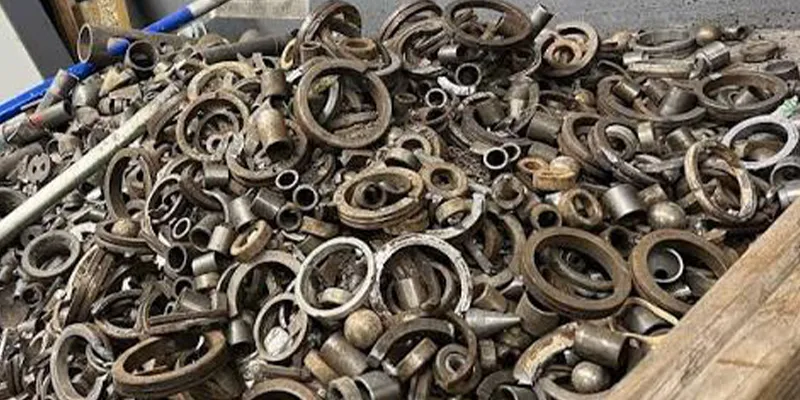
How mills calculate alloy surcharge
Step 1: Determine alloy content - For 304, typically 18% Cr, 9% Ni. For 316, add 2.5% Mo.
Step 2: Apply raw material prices - Use LME nickel, ferrochromium price, and molybdenum oxide price from a reference date (often the 15th of the previous month).
Step 3: Subtract scrap credit - If the mill uses 60% scrap in the charge, they credit back the scrap's contained value. This reduces the surcharge.
Step 4: Add recovery and processing cost - Losses during melting, refining, and handling are factored in.
Example: 304 plate alloy surcharge calculation (simplified)
|
Component |
Calculation |
Value ($/t) |
|
Ni content (9%) |
$16,000/t Ni × 9% |
$1,440 |
|
Cr content (18%) |
$1.50/kg Cr × 18% |
$270 |
|
Less scrap credit (60%) |
-$1,200/t scrap × 60% |
-$720 |
|
Processing & losses |
5% of metal value |
+$50 |
|
Total surcharge |
Sum |
$1,040/t |
|
Buying insight: If scrap prices fall faster than LME nickel, mills may increase their scrap credit and reduce the surcharge. Ask your supplier how their surcharge formula handles scrap value changes. |
Nickel Alloy Scrap - The Highest-Value Recycled Metal
Nickel alloy scrap - Inconel, Hastelloy, Monel, Incoloy - is in a category of its own. With nickel content often exceeding 50%, and with molybdenum, chromium, cobalt, and tungsten also present, this scrap can be worth 5-20× more than stainless scrap.
Typical nickel alloy scrap values (2025 market)
|
Alloy |
Ni Content |
Other Key Elements |
Scrap Value ($/lb) |
|
Inconel 625 |
≥58% |
Mo 8-10%, Cr 20-23%, Nb 3-4% |
$4.00-6.00 |
|
Hastelloy C276 |
≥57% |
Mo 15-17%, Cr 14-16%, W 3-4% |
$5.00-7.00 |
|
Inconel 600 |
≥72% |
Cr 14-17% |
$3.50-5.00 |
|
Monel 400 |
≥63% |
Cu 28-34% |
$2.50-4.00 |
|
Incoloy 800H |
30-35% |
Cr 19-23%, Fe balance |
$1.00-2.00 |
Why nickel alloy scrap is so valuable
High contained nickel: At $16,000/t nickel, 1 lb of Inconel 625 scrap contains $0.90-1.00 of nickel alone.
Molybdenum and tungsten: Mo trades at $25-30/kg, W at $30-40/kg. Hastelloy C276 scrap can contain $1.50-2.00/lb of Mo and W value.
Cobalt: Some nickel alloys (e.g., Stellite, certain superalloys) contain 5-20% Co, trading at $30-40/kg.
Specialty market: Only a handful of mills worldwide can process nickel alloy scrap. These mills pay a premium for clean, segregated scrap.
Best practices for fabricators handling nickel alloy scrap
Segregate by grade: Do not mix Inconel 625 with Hastelloy C276. Even small cross-contamination reduces scrap value by 20-40%.
Document scrap certificates: Provide mill test certificates or PMI reports for scrap lots. Verified scrap commands higher prices.
Avoid contamination: Keep copper, lead, and other impurities out. Even 0.1% Cu can downgrade a Hastelloy lot.
Partner with specialty recyclers: General scrap yards may not recognize the full value of nickel alloys. Work with recyclers who specialize in high-temp and corrosion-resistant alloys.
Recycled Content Claims - What to Ask Your Supplier
Many stainless steel suppliers promote 「recycled content」 as a sustainability credential. But what does that actually mean? And how can you verify it?
Common recycled content claims and what they really mean
|
Claim |
What It Means |
Verification Method |
|
Recycled content 60% |
Scrap made up 60% of the furnace charge. May include internal, industrial, and obsolete scrap. |
Ask for mill's scrap input ratio by product and year. Check EPD if available. |
|
Post-consumer recycled content |
Scrap from end-of-life products (not industrial off-cuts). Harder to trace. |
Request scrap source documentation. Look for third-party certification. |
|
100% recyclable |
The material can be recycled at end of life - but says nothing about current recycled content. |
This is a property of stainless steel, not a unique claim. |
|
Carbon footprint 40% lower |
Compared to industry average or a specific benchmark. Often assumes EAF + high scrap route. |
Check EPD (Environmental Product Declaration) for methodology and functional unit. |
How to verify recycled content claims
Request the mill's scrap input ratio: Ask for the percentage of scrap used in the furnace charge for the specific product and production period.
Ask for EPD or LCA report: Environmental Product Declarations document the recycled content and carbon footprint. Look for ISO 14025 or EN 15804 compliance.
Check third-party certifications: Some mills are certified by organizations like ISCC Plus or ResponsibleSteel, which audit scrap sourcing and chain-of-custody.
Be wary of vague claims: 「Green steel」 or 「sustainable stainless」 without data is marketing, not evidence.
|
Key question: Does your supplier's recycled content claim refer to the furnace charge (input) or the final product (output)? Input recycled content is easier to document. Output recycled content requires life-cycle analysis. |
Stainless Steel Scrap Market Trends
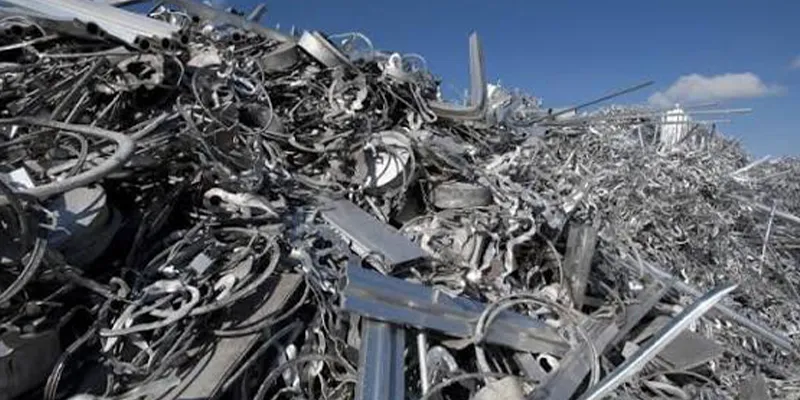
LME nickel volatility: Nickel prices remain volatile due to Indonesia's NPI (nickel pig iron) expansion, EV battery demand, and speculative trading on the LME. Scrap prices follow with a 2-4 week lag.
China's scrap consumption: China is the world's largest stainless producer. When Chinese mills increase scrap consumption (driven by environmental policy or cost), global scrap prices rise.
EU CBAM impact: The Carbon Border Adjustment Mechanism (CBAM) will price carbon emissions in imported steel from 2026. Mills using high-scrap, low-carbon routes gain a competitive advantage.
Secondary nickel supply: Nickel from recycled stainless and battery recycling is growing. This may moderate primary nickel price spikes over time.
Regional scrap availability: Europe has a mature scrap collection system. India and Southeast Asia are expanding rapidly. The Middle East and Africa remain underdeveloped.
Where to track stainless scrap prices
- ScrapMonster (US market): Tracks 304, 316, and mixed stainless scrap prices by region. Updated bi-weekly.
- Stainless Steel Club (global): Provides daily market news, price data, and supply/demand analysis for 75 countries.
- Steel Prices UK: Live UK scrap prices per kg and per tonne for 304 and 316 stainless.
- LME: The reference for nickel, chromium, and molybdenum prices. Use these to understand the alloy value in scrap.
What Stainless Steel Buyers Should Know About Scrap
As a buyer of stainless steel or nickel alloy products, you don't handle scrap directly. But understanding scrap value and recycling gives you leverage in negotiations and helps you evaluate supplier claims.

5 questions to ask your supplier
What is your mill's scrap input ratio for this product? Ask for a typical percentage range and whether it varies by product form (plate vs. pipe vs. bar).
How does your alloy surcharge formula account for scrap value? Does the surcharge include a scrap credit? How is that credit calculated?
Can you provide an EPD or LCA report documenting recycled content? Look for ISO 14025 or EN 15804 compliance. Check the functional unit and declared recycled content.
What is the origin of the scrap used? Is it industrial scrap (prompt), obsolete scrap (post-consumer), or internal mill scrap? This affects the sustainability claim.
How do you handle nickel alloy scrap from fabrication? If you're a fabricator working with Inconel or Hastelloy, ask if the mill offers a scrap buyback program.
How to use scrap knowledge in negotiations
- Track LME nickel and scrap prices: If nickel falls but the alloy surcharge doesn't, ask why. The mill may be slow to update scrap credit.
- Compare surcharge formulas: Some mills use a fixed scrap credit; others use a market-linked formula. The latter may be more transparent.
- Negotiate scrap buyback terms: If you generate significant nickel alloy scrap, negotiate a buyback price upfront. This can offset your material costs by 5-15%.
- Challenge vague sustainability claims: Ask for documentation. A supplier who cannot provide EPD or scrap data may be overstating their recycled content.
Frequently Asked Questions
Q: Why does 316 stainless scrap cost more than 304 scrap?
A: 316 scrap contains molybdenum (2-3%), which trades at $25-30/kg - far higher than chromium. The Mo alone adds $0.50-1.00/lb to the scrap value. Combined with higher nickel (10-14% vs. 8-10% in 304), 316 scrap commands a 50-100% premium.
Q: Can I specify the recycled content in my material certificate?
A: Most mill test certificates (MTCs) do not include recycled content. However, you can request an Environmental Product Declaration (EPD) or a mill letter stating the scrap input ratio. Some mills offer ISCC Plus or ResponsibleSteel certification for verified recycled content.
Q: How much nickel is recovered from stainless steel scrap?
A: In modern EAF + AOD processes, nickel recovery from scrap exceeds 95%. The nickel is not consumed - it's re-melted and becomes part of the new stainless steel. This is why stainless steel is considered a 'permanently available' material in the circular economy.
Q: Does recycled stainless steel have the same properties as virgin material?
A: Yes. Once melted and refined, stainless steel from scrap is chemically and mechanically identical to material made from virgin ore. The AOD process ensures precise chemistry control regardless of the input material.
Q: What should I do with my nickel alloy scrap from fabrication?
A: Segregate it by grade and work with a specialty recycler who handles high-nickel alloys. Document the scrap with PMI analysis or mill certificates. Clean, verified Inconel or Hastelloy scrap can be sold for $3-7/lb depending on grade and market conditions.
Q: How does CBAM affect stainless steel scrap pricing?
A: CBAM (Carbon Border Adjustment Mechanism) will price the carbon emissions embedded in imported steel. Mills using high-scrap, EAF routes have lower emissions and will face lower CBAM charges. This increases demand for scrap and may raise scrap prices relative to virgin-material-based steel.
Q: Is stainless steel scrap considered 'green' or sustainable?
A: Stainless steel scrap recycling significantly reduces energy use, CO₂ emissions, and raw material extraction compared to virgin production. However, 'green' claims should be supported by LCA data, not assumed. Look for EPDs and third-party certifications.
Need Stainless Steel or Nickel Alloy Material With Verified Quality?
At jnalloy.com, we supply stainless steel and nickel alloy plate, pipe, bar, and tube with complete mill test certificates (EN 10204 3.1/3.2), PMI verification, and documentation support. We work with mills using high-recycled-content EAF routes and can provide EPD data for sustainability reporting.
Grades available: 304/304L, 316/316L, 321, 347, 904L, duplex S31803/S32750, Inconel 600/625, Hastelloy C276/C22, Incoloy 800H/825, and more.
Contact our technical sales team:
Email: Market@jnalloy.com
Phone/WhatsApp: +86-193-3990-0211
Website: www.jnalloy.com