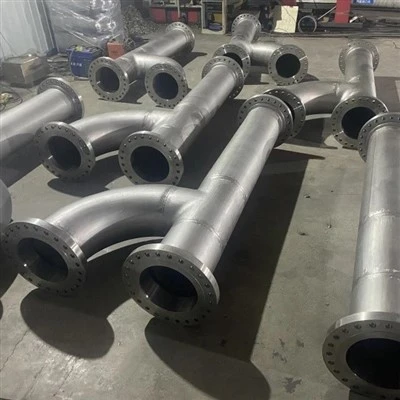
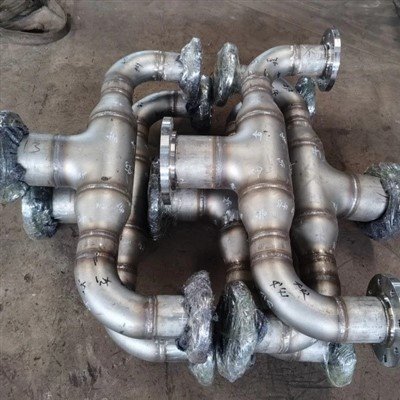
Inconel 600 and Inconel 625 are both nickel-chromium superalloys renowned for extreme-environment performance, but they are engineered for fundamentally different use cases. Inconel 600 (UNS N06600) excels in high-temperature oxidizing and carburizing atmospheres - its forte is thermal stability and resistance to heat and alkali. Inconel 625 (UNS N06625) is a more sophisticated alloy, featuring molybdenum and niobium additions that deliver superior corrosion resistance in aggressive chemical and marine environments, combined with significantly higher mechanical strength.
|
The One-Sentence Difference: Inconel 600 is your high-temperature thermal workhorse; Inconel 625 is your high-strength, multi-environment corrosion champion. Choosing the wrong grade can lead to premature failure - choosing the right one can reduce lifecycle costs by decades. |

What Are Inconel Alloys? A Plain-Language Overview
'Inconel' is a registered trademark of Special Metals Corporation (now part of Precision Castparts Corp.) covering a family of austenitic nickel-chromium-based superalloys. The term is widely used across industry as a generic descriptor for high-performance nickel alloys in this class.
Both Inconel 600 and 625 belong to the austenitic nickel alloy family - meaning their internal crystal structure (face-centered cubic, or FCC) gives them outstanding toughness, formability, and non-magnetic behavior across an extraordinarily wide temperature range: from cryogenic (-196 °C / -321 °F) to over 1000 °C (1830 °F).
Think of these alloys as the engineering world's answer to the most hostile environments on Earth: superheated chemical reactors, deep-sea oil pipelines, jet engine exhaust paths, and nuclear reactor cooling systems. Standard stainless steels fail in these environments - Inconel 600 and 625 do not.
Developed in the 1930s, Inconel 600 is one of the oldest and most widely specified nickel-chromium alloys. Its primary strengths are:
Outstanding resistance to oxidation at temperatures up to 1093 °C (2000 °F)
Excellent performance in carburizing and nitriding atmospheres (e.g., heat treatment furnaces)
Superior resistance to caustic soda (sodium hydroxide) and high-pH environments
Proven track record spanning over 80 years in industrial service
Lower alloy content = lower cost, making it economically attractive for non-aggressive environments
Inconel 625 was developed in the 1960s as a high-strength alloy for jet engine applications. The addition of molybdenum (Mo) and niobium (Nb) transformed it into one of the most versatile and corrosion-resistant alloys available. Its primary strengths are:
Exceptional resistance to pitting, crevice corrosion, and stress corrosion cracking in chloride environments (PREN ~51)
Significantly higher tensile and yield strength (~50% stronger than 600 in annealed condition)
Outstanding weldability without post-weld heat treatment; Nb prevents sensitization
Excellent fatigue and thermal fatigue resistance; critical for aerospace applications
Qualified for nuclear, subsea, aerospace, and pharmaceutical applications under multiple international standards
Chemical Composition: The Alloying Science Behind Performance
The performance differences between Inconel 600 and 625 are rooted entirely in their chemical composition. The table below presents the full elemental breakdown per ASTM standards, with the functional role of each element explained.
Table 1: Chemical Composition - Inconel 600 vs Inconel 625 (ASTM B168 / B443)
|
Element |
Inconel 600 (%) |
Inconel 625 (%) |
Functional Role & Key Difference |
|
Nickel (Ni) |
72.0 min. |
58.0 min. |
Base matrix; provides oxidation resistance, high-temperature stability, and non-magnetic character |
|
Chromium (Cr) |
14.0 – 17.0 |
20.0 – 23.0 |
Forms protective Cr2O3 oxide layer; higher Cr in 625 boosts oxidation and acid resistance |
|
Molybdenum (Mo) |
None (0%) |
8.0 – 10.0 |
Primary differentiator: Mo in 625 dramatically increases pitting and crevice corrosion resistance (PREN ~51) |
|
Niobium + Tantalum (Nb+Ta) |
None (0%) |
3.15 – 4.15 |
Solid-solution strengthener; prevents sensitization during welding; exclusive to 625 |
|
Iron (Fe) |
6.0 – 10.0 |
5.0 max. |
600 contains more Fe; 625 strictly limits Fe to preserve corrosion performance |
|
Manganese (Mn) |
1.0 max. |
0.5 max. |
Deoxidizer; both grades limit Mn to preserve toughness |
|
Silicon (Si) |
0.5 max. |
0.5 max. |
Enhances oxidation resistance at elevated temperatures |
|
Carbon (C) |
0.15 max. |
0.10 max. |
Lower C in 625 reduces sensitization risk in HAZ after welding |
|
Sulfur (S) |
0.015 max. |
0.015 max. |
Both grades strictly limit S to preserve hot workability and ductility |
|
Why Molybdenum + Niobium Make All the Difference: Molybdenum (Mo) works by reinforcing the passive oxide film that protects the alloy surface, specifically blocking chloride ion attack that causes pitting. Niobium (Nb) acts as a carbon 'scavenger' during welding - it bonds preferentially with carbon, preventing chromium carbide from forming at grain boundaries. This means Inconel 625 can be welded and used immediately in aggressive corrosive service without the risk of intergranular corrosion that affects less sophisticated alloys. |
Mechanical Properties Comparison
The mechanical performance gap between Inconel 600 and 625 is substantial. Mo and Nb in Inconel 625 provide solid-solution strengthening - a mechanism that raises strength without sacrificing ductility by locking dislocations in the crystal lattice. The result is an alloy that is roughly 50% stronger than Inconel 600 while maintaining identical elongation.
Table 2: Mechanical Properties - Inconel 600 vs Inconel 625 (Annealed Condition)
|
Property |
Inconel 600 |
Inconel 625 |
Test Standard |
Engineering Implication |
|
UTS – Annealed (min.) |
550 MPa (80 ksi) |
827 MPa (120 ksi) |
ASTM B168 / B446 |
625 is ~50% stronger in annealed condition due to Mo and Nb solid-solution hardening |
|
Yield Strength – Annealed (min.) |
240 MPa (35 ksi) |
414 MPa (60 ksi) |
ASTM B168 / B446 |
625 has 73% higher yield strength; critical for pressure vessel and structural design |
|
Elongation at Break (min.) |
30% |
30% |
ASTM B168 / B446 |
Identical ductility; both grades are highly formable and suitable for complex fabrication |
|
Hardness (Brinell, max.) |
~170 HB |
~220 HB |
ASTM E10 |
Higher hardness in 625 reflects strengthening from alloying elements |
|
Density |
8.47 g/cm³ |
8.44 g/cm³ |
ASTM |
Virtually identical; negligible difference in weight calculations |
|
Modulus of Elasticity |
207 GPa (30 Msi) |
207 GPa (30 Msi) |
ASTM E111 |
Identical stiffness; both grades deflect equally under equivalent loads |
|
Max. Continuous Service Temp. |
1093 °C (2000 °F) |
982 °C (1800 °F) |
AMS / ASTM |
600 excels at higher temperatures; 625 better suited to aggressive corrosive-thermal environments |
|
Melting Range |
1354–1413 °C |
1290–1350 °C |
ASM Handbook |
625 has a slightly lower melting range due to Mo and Nb content |
Note: Both alloys can be significantly strengthened by cold working or, in the case of 625, by precipitation hardening (Age-Hardened Grade: Inconel 625 LCF / AMS 5599 condition). Cold-worked and aged variants achieve tensile strengths exceeding 1380 MPa (200 ksi).
Corrosion Resistance: A Critical Differentiator
The Pitting Resistance Equivalent Number (PREN) is the engineering industry's primary metric for ranking an alloy's resistance to chloride pitting:
PREN = %Cr + (3.3 × %Mo) + (16 × %N)
Inconel 600 PREN: ~18 (Cr only; no Mo contribution)
Inconel 625 PREN: ~51 (Cr ~22% + 3.3 × Mo ~9% ≈ 29.7 additional points)
This nearly 3x difference in PREN explains why Inconel 625 is specified wherever seawater, brine, chlorinated process streams, or acid mixtures are present - and Inconel 600 is not.
Table 3: Corrosion Resistance by Environment - Inconel 600 vs Inconel 625
|
Environment / Corrosion Type |
Inconel 600 Rating |
Inconel 625 Rating |
Recommendation & Notes |
|
General oxidizing atmosphere (dry) |
Excellent |
Excellent |
Both grades perform well; 600 preferred for cost-efficiency in clean high-temp air |
|
Seawater / marine immersion (chloride) |
Moderate |
Excellent |
625 strongly preferred; PREN ~51 vs ~25 for 600; 625 resists pitting and crevice attack |
|
Sulfuric acid (dilute to moderate) |
Fair – Good |
Very Good |
625 recommended; Mo provides enhanced resistance to reducing acid attack |
|
Hydrochloric acid (dilute) |
Poor |
Good |
625 superior; neither grade suitable for concentrated HCl – consider Hastelloy C-276 |
|
Nitric acid (oxidizing) |
Good |
Good – Excellent |
Both acceptable; 625 offers marginal advantage in high concentrations |
|
Phosphoric acid |
Fair |
Very Good |
625 clearly preferred; Mo significantly improves phosphoric acid resistance |
|
High-temperature oxidation (>800 °C) |
Excellent |
Good |
600 preferred above 900 °C; lower Mo content gives better high-temp oxidation stability |
|
Carburizing / sulfidizing atmospheres |
Very Good |
Good |
600 traditionally specified for furnace components in carburizing atmospheres |
|
Caustic / alkali solutions (NaOH) |
Excellent |
Excellent |
Both grades highly resistant; 600 is cost-effective standard choice for caustic service |
|
Nuclear reactor cooling water (PWR) |
Qualified (historical) |
Qualified (modern standard) |
625 is now the preferred choice; 600 replaced in new PWR designs due to IGSCC concerns |
Critical Note: Neither Inconel 600 nor 625 is suitable for concentrated hydrochloric acid, concentrated hot sulfuric acid, or wet chlorine gas service. For such extreme environments, consider Hastelloy C-276 (UNS N10276) or Hastelloy C-22 (UNS N06022), which offer PREN values exceeding 65.
Physical and Thermal Properties
Beyond corrosion and strength, physical and thermal properties determine suitability for specific engineering designs - heat transfer efficiency, thermal expansion compatibility, electrical applications, and cryogenic service all depend on these data.

Table 4: Physical and Thermal Properties - Inconel 600 vs Inconel 625
|
Physical / Thermal Property |
Inconel 600 |
Inconel 625 |
Engineering Significance |
|
Thermal Conductivity (at 21 °C) |
14.9 W/m·K |
9.8 W/m·K |
600 conducts heat ~52% better; preferred for heat exchanger tube-side applications |
|
Coefficient of Thermal Expansion (20–100 °C) |
13.3 µm/m·°C |
12.8 µm/m·°C |
Similar expansion rates; both compatible with standard design approaches |
|
Specific Heat Capacity (at 21 °C) |
444 J/kg·K |
410 J/kg·K |
600 stores marginally more thermal energy; minor consideration in thermal cycling designs |
|
Electrical Resistivity (at 21 °C) |
1.03 µΩ·m |
1.29 µΩ·m |
625 has higher resistivity; relevant in electrical heating element applications |
|
Magnetic Permeability (annealed) |
1.010 µ (non-magnetic) |
1.006 µ (non-magnetic) |
Both are essentially non-magnetic; suitable for MRI-adjacent, electronic, and defense applications |
|
Cryogenic Toughness (down to -196 °C) |
Good |
Excellent |
625 preferred for LNG and cryogenic service; maintains impact toughness at liquid nitrogen temperatures |
|
Thermal Conductivity Note: Inconel 600 conducts heat approximately 52% more efficiently than 625 at room temperature (14.9 vs 9.8 W/m·K). This makes 600 the preferred material for heat exchanger tubes where thermal transfer efficiency is a design priority - provided the process fluid is not corrosive to 600. Where corrosion resistance is needed in heat exchangers, 625 is selected despite its lower conductivity, with wall thickness or surface area adjusted to compensate. |
Standards, Specifications, and Certifications
Correct material specification is not simply a procurement formality - it is a contractual and regulatory obligation in most critical industries. The tables below map each alloy to its governing standards across product forms and industries.
Table 5: Applicable Standards and Specifications - Inconel 600 vs Inconel 625
|
Standard / Specification |
Inconel 600 |
Inconel 625 |
Product Form / Application Scope |
|
ASTM (Sheet / Plate / Strip) |
B168 |
B443 |
Flat rolled product for industrial and pressure-vessel fabrication |
|
ASTM (Seamless Pipe & Tube) |
B167 |
B444 |
Pressure piping, heat exchangers, condenser tubing |
|
ASTM (Bar & Rod) |
B166 |
B446 |
Machined components, fasteners, valve stems, shafts |
|
ASTM (Welded Pipe) |
B514 / B516 |
B705 / B775 |
Welded pressure piping systems and instrumentation tubing |
|
ASME Boiler & PV Code (Section II) |
SB-168 / SB-167 |
SB-443 / SB-444 |
Pressure-bearing components in ASME-coded vessels and piping |
|
AMS (Aerospace Material Standard) |
AMS 5540 (Sheet) |
AMS 5599 (Sheet) |
Aerospace engine and airframe components requiring full traceability |
|
UNS Designation |
N06600 |
N06625 |
Universal Numbering System identifier for material traceability |
|
ISO / DIN Equivalent |
NiCr15Fe / 2.4816 |
NiCr22Mo9Nb / 2.4856 |
European standard designations for international procurement |
|
AWS Filler Metal (Welding) |
ERNiCr-3 |
ERNiCrMo-3 |
Matching filler metals per AWS A5.14; ERNiCrMo-3 also used for dissimilar metal joints |
|
Nuclear Qualification |
RCC-M / historic |
ASME Code Case N-252 |
625 preferred in modern Gen-III+ reactor designs |
All certified Inconel 600 and 625 products must be supplied with a Material Test Report (MTR), also called a Mill Certificate, that documents the chemical composition heat analysis, mechanical test results, heat/lot number, and applicable standard compliance. This traceability chain is mandatory for:
ASME pressure vessel and piping fabrication (Section IX Code compliance)
Aerospace components under AS9100 / NADCAP quality management systems
Nuclear-grade components under 10 CFR 50 Appendix B quality assurance programs
Subsea and offshore equipment under DNV GL, ABS, or Lloyd's Register classification
Verify that your supplier provides certified MTRs with each order, traceable to the specific heat of metal. Avoid purchasing without full documentation in critical applications.
Fabrication and Welding
Both alloys are classified as 'difficult to machine' relative to carbon and stainless steels, due to their high work hardening rates and strength.
Recommended practices:
Use sharp, positive-rake carbide tooling and maintain consistent feed rates to prevent work hardening
Apply generous flood coolant to manage heat at the cutting interface
Inconel 600 machines somewhat more easily than 625 due to lower strength; 625 requires slower speeds and heavier feeds
EDM (Electrical Discharge Machining) is suitable for both grades when conventional machining is impractical
Both alloys exhibit excellent cold and hot formability. Cold forming is preferred below 930 °C to maintain precise dimensions. Hot forming is conducted in the range of 1010–1175 °C for 625 and 980–1230 °C for 600. Annealing after significant cold work restores ductility and relieves residual stresses.
Inconel 600: Weld using ERNiCr-3 (AWS A5.14) filler metal. GTAW (TIG) and GMAW (MIG) processes are standard. Post-weld annealing may be required for service in hot concentrated alkali or nuclear environments to relieve sensitization.
Inconel 625: Weld using ERNiCrMo-3 (AWS A5.14) filler metal. No post-weld heat treatment is required in most applications - the Nb content eliminates sensitization risk. ERNiCrMo-3 is also used extensively as weld overlay (cladding) on carbon steel substrates to impart 625-level corrosion resistance at significantly lower cost than solid 625 construction.
|
625 Weld Overlay - A Cost-Effective Engineering Solution: Inconel 625 weld overlay (cladding) is one of the most widely used corrosion protection techniques in the oil and gas industry. By depositing a 3–5 mm layer of 625 onto carbon steel pressure vessels, pipelines, and risers, engineers achieve the corrosion performance of solid 625 at a fraction of the material cost. This technique is standardized under ASME Section IX and NACE SP0198. |
Industry-Specific Application Guide
The table below consolidates recommended alloy selection across major industries, with the primary technical reason for each recommendation.
Table 6: Application Guide by Industry - Inconel 600 vs Inconel 625
|
Application / Industry |
Use 600 |
Use 625 |
Primary Technical Reason |
|
Heat Treatment & Thermal Processing |
|||
|
Furnace muffles and retorts |
✓ Preferred |
Excellent resistance to carburizing, nitriding, and oxidizing furnace atmospheres above 900 °C |
|
|
Radiant tubes and heat-treating fixtures |
✓ Preferred |
600 is the historical standard; lower cost than 625 for non-corrosive high-temperature service |
|
|
Chemical Processing & Petrochemical
|
|||
|
Caustic soda (NaOH) evaporators |
✓ Preferred |
600 is proven standard for high-temperature caustic service; cost-effective |
|
|
Acid gas scrubbers (chloride-containing) |
✓ Preferred |
625 withstands HCl, H2SO4, and chloride combinations found in FGD systems |
|
|
Subsea chemical injection tubing |
✓ Required |
NACE MR0175 and DNVGL-OS-F101 specify 625 for subsea corrosion resistance |
|
|
Aerospace, Defense & Power Generation
|
|||
|
Jet engine thrust reversers and nacelles |
✓ Preferred |
625 selected for combination of high strength, fatigue resistance, and oxidation resistance |
|
|
Exhaust duct liners and reheater tubes |
✓ Suitable |
✓ Suitable |
Both usable; 600 preferred below 900 °C for cost; 625 chosen where fatigue loads are higher |
|
Gas turbine seals and containment rings |
✓ Preferred |
625 preferred for high-cycle fatigue resistance and steam oxidation resistance |
|
|
Marine, Oil & Gas, and Nuclear |
|||
|
Offshore flexible riser armor wire |
✓ Required |
API 17J / 17B and DNV standards specify 625 for flexible pipe applications in sour service |
|
|
Nuclear steam generator tubing (modern) |
✓ Preferred |
625 replaces 600 in Gen-III+ designs due to superior IGSCC resistance in PWR coolant |
|
|
Electrical resistance heating elements |
✓ Preferred |
600 higher electrical resistivity and proven performance in heating element applications |
|
Cost Considerations
Inconel 625 typically commands a 30–50% price premium over Inconel 600, reflecting the cost of its higher alloy content - particularly molybdenum and niobium, both of which are specialty metals with limited global supply chains. As of 2025, indicative market pricing:
Inconel 600 sheet (2B finish, ASTM B168): Approximately USD 18–24/kg depending on form and thickness
Inconel 625 sheet (2B finish, ASTM B443): Approximately USD 28–38/kg depending on form and thickness
Bar, tube, and pipe pricing follows similar differentials
Note: Prices are indicative and subject to change with LME nickel, molybdenum oxide, and ferroniobium market fluctuations. Request a formal quotation from your supplier for current pricing.
The higher upfront cost of Inconel 625 is frequently justified - and often more than recovered - through longer service life, reduced maintenance frequency, and avoidance of unplanned shutdowns in critical applications. A single equipment failure in an offshore pipeline, nuclear plant, or chemical reactor can cost orders of magnitude more than the material cost difference between 600 and 625.
Selecting 600 where 625 is the correct engineering choice is a false economy. Conversely, specifying 625 where 600 is entirely adequate (e.g., clean furnace atmospheres, caustic service) adds unnecessary cost with no performance benefit.
Use the matrix below for rapid alloy selection. For complex, safety-critical, or regulatory-governed applications, always engage a qualified materials or corrosion engineer.
Table 7: Grade Selection Decision Matrix - Inconel 600 vs Inconel 625
|
Decision Factor |
Choose 600 |
Choose 625 |
Rationale |
|
Primary concern is high-temperature oxidation (>900 °C) |
✓ |
600 maintains superior oxidation resistance at extreme temperatures |
|
|
Environment contains chlorides, seawater, or aggressive acids |
✓ |
625 PREN ~51 vs ~25 for 600; Mo and Nb provide decisive corrosion advantage |
|
|
High mechanical strength is required at service temperature |
✓ |
625 annealed UTS ~827 MPa vs ~550 MPa for 600; ~50% stronger |
|
|
Budget is the primary constraint (non-critical service) |
✓ |
600 costs 30–50% less than 625; suitable for mild corrosive/thermal environments |
|
|
Application involves welding in aggressive environments |
✓ |
625 weld overlay is industry standard; Nb prevents weld sensitization |
|
|
Nuclear, aerospace, or defense qualification required |
✓ |
625 is the modern qualified material for most critical regulated applications |
|
|
Cryogenic service (LNG, liquid nitrogen) required |
✓ |
625 retains excellent impact toughness down to -196 °C; preferred for LNG systems |
|
|
Caustic / alkali service at elevated temperature |
✓ |
600 is the proven, cost-effective standard for caustic soda and alkali processing |
Frequently Asked Questions (FAQ)
In mild high-temperature, non-chloride, non-acidic environments, 600 is a legitimate cost-effective alternative. However, substituting 600 for 625 in marine, chemical, subsea, aerospace, or nuclear applications will result in premature failure. The PREN difference (18 vs 51) is not marginal - it is transformative. Never substitute without a formal engineering evaluation of the specific service conditions.
For corrosion resistance purposes, yes - when applied correctly to a minimum thickness of 3 mm (typically 2-layer deposit), the overlay surface chemistry closely matches wrought 625 and provides equivalent corrosion performance. However, weld overlay does not provide the mechanical strength properties of solid 625; the strength is provided by the carbon steel substrate. Weld overlay is validated under ASME Section IX and widely qualified per NACE SP0198.
Inconel 625 LCF (Low Cycle Fatigue) is a controlled-chemistry variant of standard 625, optimized for high fatigue resistance in bellows, expansion joints, and flexible piping. It has tighter chemistry controls and is typically supplied to AMS 5599. The corrosion resistance is equivalent to standard 625; the improvement is in fatigue life under cyclic loading conditions.
Both Inconel 600 and 625 are essentially non-magnetic in the annealed condition (magnetic permeability < 1.01). Cold working can induce very slight magnetism in 600 due to partial martensite transformation, but this is minimal in practice. Both alloys are suitable for applications requiring non-magnetic materials, including MRI-adjacent medical equipment, naval degaussing systems, and certain electronic applications.
Visual inspection cannot distinguish these alloys. Use: (1) Mill Certificate / MTR review, which is the definitive traceability document and should accompany all certified material; (2) portable XRF (X-ray fluorescence) spectrometer, which detects molybdenum and niobium in 625 within seconds; (3) chemical spot testing kits for Mo detection. Never rely on appearance, color, or weight alone for alloy identification in safety-critical applications.
Conclusion
Inconel 600 and Inconel 625 are both exceptional engineering materials - but they are exceptional in different ways, for different environments.
Inconel 600 is the alloy of choice when the primary challenge is extreme heat: furnace atmospheres, carburizing environments, or high-temperature alkali service. Its 80+ year track record, broad standard coverage, and lower cost make it the sensible, proven solution for these applications.
Inconel 625 is the alloy of choice when the environment is simultaneously corrosive AND demanding - seawater, aggressive chemicals, high-pressure subsea conditions, aerospace fatigue loads, or nuclear service. Its molybdenum and niobium additions create a material that is more corrosion-resistant, significantly stronger, and more weld-friendly than 600. The 30–50% material cost premium is consistently justified by lifetime performance.
|
Our Expert Recommendation: When your application involves any combination of chlorides, seawater, organic acids, high mechanical stress, or critical safety qualification requirements - specify Inconel 625 (or 625 weld overlay as a cost-optimized alternative). When your application is primarily thermal (furnaces, heat treatment, high-temp oxidation) in a clean atmosphere - Inconel 600 is the proven, cost-effective standard. Our sale team is ready to assist you with grade selection, material certification review, and custom fabrication in both alloys. |