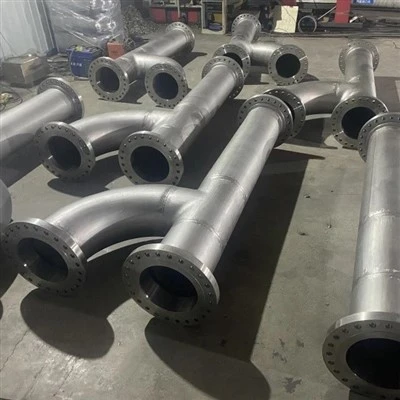
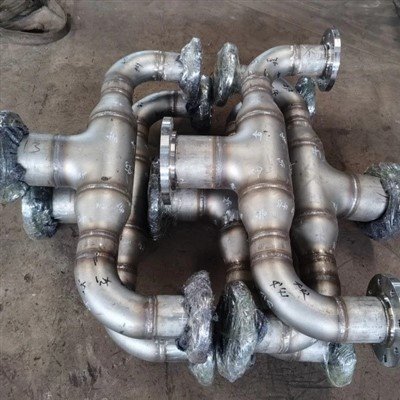
Incoloy 825 (UNS N08825, W.Nr. 2.4858) is a titanium-stabilized nickel-iron-chromium alloy with molybdenum and copper, and it is one of the most widely specified corrosion-resistant alloys (CRAs) for sour gas (H₂S) production. Its 38–46% nickel content places it far above the chloride stress corrosion cracking (CSCC) susceptibility range, and it is qualified under NACE MR0175/ISO 15156-3 for cracking-resistant sour service at a maximum hardness of 35 HRC.
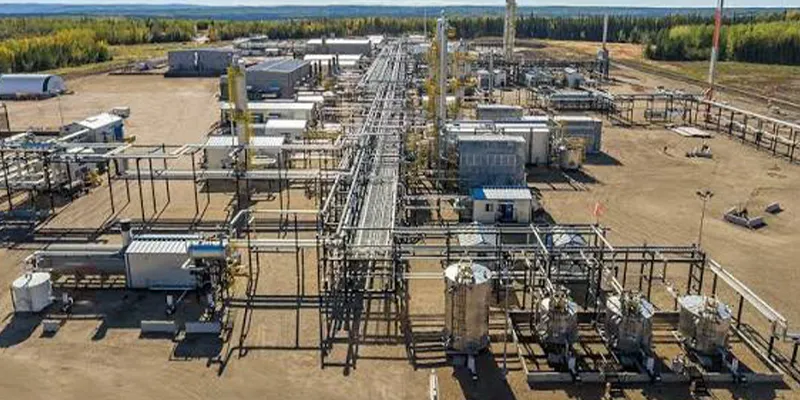
This article answers the questions engineers and procurement teams ask most: what drives chloride SCC in sour wells, why Incoloy 825 resists it, how it compares with 316L, 904L, Alloy 625 and C-276, where its practical limits lie, and how to select, weld and verify it for H₂S service. Every quantitative statement is traceable to the standards and manufacturer sources listed in the References section.
Incoloy 825 at a Glance
The table below condenses the answers this article develops in detail. It is formatted so that each row can be extracted and cited independently.
|
Item |
Short answer |
|
Designation |
UNS N08825; W.Nr. 2.4858; Incoloy® 825 (trademark of Special Metals Corporation) |
|
Alloy family |
Titanium-stabilized Ni-Fe-Cr alloy with molybdenum and copper additions |
|
Nickel content |
38.0–46.0 wt % |
|
Key alloying elements |
Cr 19.5–23.5; Mo 2.5–3.5; Cu 1.5–3.0; Ti 0.6–1.2; Fe ≥ 22.0 (balance) |
|
Chloride SCC resistance |
High - Ni content far above the cracking range (peak ≈ 8–12% Ni) |
|
Sour-service qualification |
NACE MR0175/ISO 15156-3, Type 4c CRA; hardness ≤ 35 HRC |
|
Pitting resistance (PREN) |
≈ 31 |
|
Typical sour-service envelope (industry guidance) |
H₂S partial pressure < 0.1 MPa (15 psi); temperature < 150 °C; chloride < ~20,000 ppm |
|
Common product forms |
Seamless & welded pipe (ASTM B423), plate/sheet (B424), bar (B425), condenser tube (B163), forgings (B564) |
|
Typical applications |
Downhole tubing, sour flowlines, heat exchangers, sulfuric/phosphoric acid and general chemical service |
What Is Incoloy 825 and Why Is It Specified for Sour Gas Service?
Incoloy 825 (UNS N08825) is a titanium-stabilized nickel-iron-chromium alloy containing molybdenum and copper, engineered to resist the combined attack of reducing acids, oxidizing media, hot chlorides and H₂S. It is the workhorse CRA of sour gas production because a single grade delivers chloride SCC resistance, sulfide stress cracking (SSC) resistance, pitting resistance and weldability at a cost far below premium nickel alloys such as Alloy 625 or C-276.
Incoloy 825 belongs to the Ni-Fe-Cr family rather than the Ni-Cr-Mo family, which is exactly why it is economical: iron makes up at least 22% of the matrix. Each deliberate addition has a specific corrosion job, as summarized in Table 2.
|
Element |
Range (wt %) |
Primary function |
|
Nickel (Ni) |
38.0–46.0 |
Austenitic matrix; principal driver of chloride SCC and SSC resistance |
|
Chromium (Cr) |
19.5–23.5 |
Forms the protective Cr₂O₃ passive film; resists oxidizing media |
|
Molybdenum (Mo) |
2.5–3.5 |
Pitting and crevice corrosion resistance in chloride media |
|
Copper (Cu) |
1.5–3.0 |
Resistance to reducing acids such as H₂SO₄ and H₃PO₄ |
|
Titanium (Ti) |
0.6–1.2 |
Stabilizes against sensitization and intergranular attack after welding |
|
Iron (Fe) |
≥ 22.0 (balance) |
Cost-effective matrix; contributes strength and stability |
Table 2. Nominal composition and corrosion function of Incoloy 825 (UNS N08825).
The alloy is supplied in solution-annealed condition as pipe (ASTM B423), plate/sheet/strip (B424), bar (B425), condenser tube (B163) and forgings (B564). Because the microstructure is fully austenitic and stable, Incoloy 825 retains good toughness and remains easy to weld, which is why it appears in almost every corrosion-resistance comparison for oil and gas, chemical processing and pollution control.
What Is Chloride Stress Corrosion Cracking and Why Does It Destroy Stainless Steel in Sour Wells?
Chloride stress corrosion cracking (CSCC) is a sudden, brittle, crack-like failure mode of austenitic stainless steel that requires three simultaneous conditions - tensile stress, chloride ions, and a temperature above roughly 60 °C (140 °F) - and it can fracture a component at stresses far below yield strength, often with almost no visible general corrosion.

CSCC needs all three conditions at once. (1) Tensile stress - applied by pressure or dead weight, or residual stress left by welding, forming or cold work. (2) Chloride ions - present in produced brine, completion fluids and most process streams. (3) Temperature - cracking accelerates above approximately 60 °C. Remove any one of the three and the mechanism stops.
The sequence is well understood. The passive film breaks down locally at a stress raiser such as a weld toe, scratch or pre-existing pit. Chloride ions migrate into the breach and hydrolysis of metal cations acidifies the occluded cell, driving the local pH down. Anodic dissolution proceeds at the crack tip while the surrounding metal acts as cathode, and tensile stress concentrates at the tip and drives a transgranular crack through the austenite lattice. Because the crack grows without significant wall thinning, failure can be sudden and catastrophic.
Sour gas wells are a perfect storm for CSCC: produced water is hot chloride brine; H₂S and CO₂ acidify that brine; and wellhead and downhole temperatures routinely sit between 60 and 150 °C. The controlling material variable is nickel content. As the Copson-curve concept in Figure 1 shows, chloride SCC susceptibility peaks in the 8–12% nickel range - exactly where the 304/316 stainless family sits - and falls sharply once nickel exceeds roughly 20–30%. This single relationship explains why 316L cracks in hot chloride service while higher-nickel alloys do not.

Figure 1. Schematic - chloride SCC susceptibility versus nickel content (Copson-curve concept). Not to scale; qualitative relationship. Incoloy 825 (38–46% Ni) sits far beyond the cracking range.
Is Incoloy 825 Resistant to Chloride Stress Corrosion Cracking?
Yes. With 38–46% nickel, Incoloy 825 sits far above the chloride SCC susceptibility range and is widely regarded as effectively immune to chloride SCC in practical H₂S service; in the boiling magnesium chloride test (ASTM G36) it remains crack-free where 316L fails within hours.
Three mechanisms work together. First, the nickel effect: increasing nickel raises the stacking-fault energy of the austenite, so dislocations cross-slip easily and plastic deformation spreads uniformly instead of forming persistent slip bands that rupture the passive film and nucleate cracks. Industry and research consensus puts the broad resistance threshold near 20–30% Ni; at 38–46% Ni, Incoloy 825 carries a large safety margin above it.
Second, the molybdenum effect: with PREN ≈ 31, Incoloy 825 suppresses pit initiation far better than 316L (PREN ≈ 25). Pits are the stress concentrators that turn a chloride environment into an SCC event, so pitting resistance and SCC resistance are inseparable in practice. Third, titanium stabilization prevents chromium-carbide precipitation at grain boundaries in the weld heat-affected zone, so the alloy avoids the sensitized microstructure that creates an intergranular SCC path in the as-welded condition.
One honest caveat: no alloy is absolutely immune. In the extremely severe boiling magnesium chloride test - an intentionally aggressive laboratory environment far harsher than field service - even Incoloy 825 can crack after prolonged exposure. Engineers therefore qualify against the real service environment rather than relying on a single laboratory test.
How Does Incoloy 825 Resist Sulfide Stress Cracking and H₂S Attack?
Incoloy 825 is qualified for sour service in NACE MR0175/ISO 15156-3 as a cracking-resistant Type 4c CRA, and at a hardness of ≤ 35 HRC it resists sulfide stress cracking (SSC) and hydrogen-induced cracking (HIC); the Type 4c classification carries no upper H₂S partial-pressure restriction below about 132 °C (270 °F).
Sulfide stress cracking is a hydrogen embrittlement phenomenon. In sour service, H₂S "poisons" the recombination of atomic hydrogen on the steel surface, so atomic hydrogen diffuses into the metal and embrittles microstructures that are hard or contain hydrogen-sensitive phases such as martensite and bainite. Incoloy 825 avoids the problem by design: the fully austenitic, high-nickel FCC lattice is stable, contains no hydrogen-sensitive transformation products, and tolerates absorbed hydrogen far better than ferritic or martensitic structures.
NACE MR0175/ISO 15156 (current edition ISO 15156-3:2020) is the governing standard for materials in H₂S-containing oil and gas production. Incoloy 825 is classified as a Type 4c alloy in the approved CRA tables of Part 3 (e.g., Table A.14 in current editions). The qualifying conditions are: product forms manufactured to the applicable specification, solution-annealed condition, and maximum hardness of 35 HRC (some cold-worked high-strength product forms carry lower limits, e.g., 33 HRC). For the Type 4c classification there is no H₂S partial-pressure restriction below 270 °F (≈132 °C), and the alloy remains qualified up to 200 psi H₂S at 350 °F (≈177 °C).
The standard governs cracking, not every form of corrosion. Engineers must still evaluate the complete environment - in-situ pH, chloride concentration, temperature, elemental sulfur and oxygen ingress - because general corrosion and pitting are managed by material chemistry and process control, not by the SSC listing alone.
How Does Incoloy 825 Compare with 316L, 904L, Alloy 625 and C-276?
For moderate sour gas with hot chlorides, Incoloy 825 is the cost-performance sweet spot: it far outperforms 316L and 904L on chloride SCC resistance and sour-service qualification at a similar price point, while Alloy 625 and C-276 are justified only when temperature, chlorides or H₂S severity push beyond 825's practical envelope.
Table 3 compares the five candidates engineers weigh most often for sour and chloride service.
|
Property |
316L (S31603) |
904L (N08904) |
Alloy 825 (N08825) |
Alloy 625 (N06625) |
C-276 (N10276) |
|
Nickel, wt % |
10–14 |
23–28 |
38–46 |
≥ 58 |
~57 (balance) |
|
PREN (nominal) |
~25 |
~34 |
~31 |
~52 |
~69 |
|
Chloride SCC resistance |
Low - cracks above ~60 °C |
Moderate |
High - effectively immune in practice |
Very high |
Very high |
|
ISO 15156-3 sour listing |
Listed, narrow envelope (≤22 HRC, low Cl⁻) |
Listed, narrow envelope |
Type 4c, ≤ 35 HRC |
Qualified, more severe service |
Qualified, most severe service |
|
Relative cost (indicative) |
$ |
$$ |
$$ |
$$$$ |
$$$$$ |
Table 3. Sour-service alloy comparison (nominal values; cost tiers are indicative and market-dependent).
Reading the table starts with nickel. At 10–14% Ni, 316L sits inside the worst part of the Copson curve, which is why hot chloride service cracks it - its ISO 15156-3 envelope is narrow (solution-annealed only, about 22 HRC maximum hardness, low chloride and temperature limits). 904L raises nickel to 23–28% and improves SCC resistance, but it remains a stainless steel below the broad-resistance threshold and carries the same type of hardness restriction.
Incoloy 825 at 38–46% Ni is the first family level with a large margin above the cracking range, and it is the only one of the three iron-rich grades qualified as a Type 4c CRA with a 35 HRC hardness ceiling. Alloy 625 (PREN ≈ 52, critical pitting temperature above 80 °C in 1M NaCl per ASTM G150) and C-276 (PREN ≈ 69) buy substantially higher pitting and crevice resistance at substantially higher cost; they earn their price when 825's envelope is exceeded. Note that Incoloy 825's PREN of ≈ 31 sits close to 904L's - its advantage is SCC and SSC resistance and sour-service qualification, not pitting number.

Figure 2. Nickel content and pitting resistance (PREN) of sour-service alloy candidates (nominal composition values; PREN = %Cr + 3.3×%Mo + 16×%N).
Where Is Incoloy 825 Used in Sour Gas and Chloride-Rich Service?
Incoloy 825 is specified wherever H₂S meets hot chloride brine: downhole tubing and casing in sour gas wells, sour flowlines and gathering systems, wellhead and surface equipment, produced-water and chemical-injection lines, and heat exchangers - and it is equally at home in chemical plants handling sulfuric, phosphoric and mixed acids.
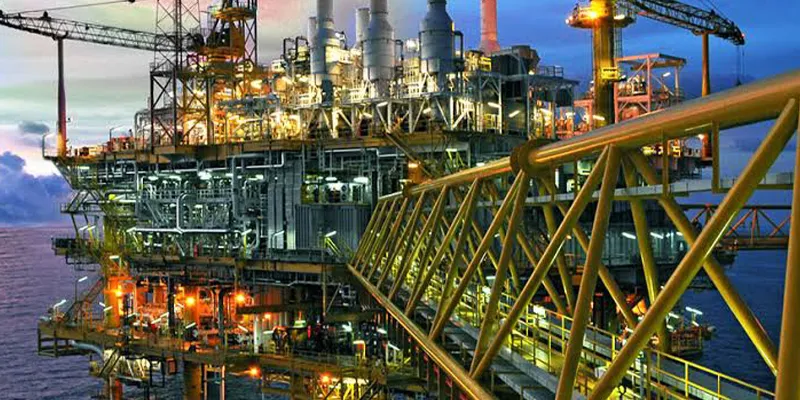
Table 4 summarizes the main application areas and the corrosion job each one demands.
|
Application area |
Typical components |
Why Incoloy 825 is selected |
|
Sour gas production (downhole) |
Tubing, casing, packers, completion accessories |
ISO 15156-3 Type 4c qualification; SSC + chloride SCC resistance; compatibility with hot brine |
|
Surface facilities and flowlines |
Gathering lines, wellhead piping, separator internals, valves |
Hot chloride brine plus H₂S; pitting/crevice resistance; availability in pipe and forgings |
|
Heat transfer |
Sour gas coolers, reactor effluent coolers, gas dehydration units |
Chloride SCC immunity in the 60–150 °C range; tolerance of cleaning and fouling conditions |
|
Produced water and injection |
Water-treatment piping, injection lines, capillary chemical-injection strings |
High-chloride, low-pH brines; alternating reducing and oxidizing conditions |
|
Chemical processing |
H₂SO₄ alkylation units, H₃PO₄ evaporators, pickling and acid-regeneration plant |
Copper + molybdenum synergy in reducing acids; titanium-stabilized weldability |
|
Pollution control and geothermal |
Flue-gas desulfurization components, geothermal production lines |
Hot chloride condensates and acid gas environments |
Table 4. Representative Incoloy 825 applications in sour gas and chloride-rich service.
What Are the Practical Limits of Incoloy 825 in H₂S Service?
As a practical selection rule, Incoloy 825 fits sour service with H₂S partial pressure below about 0.1 MPa (15 psi), temperature below about 150 °C and chloride below roughly 20,000 ppm; beyond that envelope - or when pH drops below ~3.5, oxygen ingress occurs, or HPHT conditions apply - engineers step up to Alloy 625, C-276 or equivalent higher-alloyed grades.
The ISO 15156-3 Type 4c classification defines the cracking boundary; the practical envelope above reflects widely used industry deployment guidance for Incoloy 825 in sour wells and is a starting point, not a substitute for project-specific evaluation.
The limits exist for physical reasons. PREN ≈ 31 caps pitting and crevice resistance at elevated temperature, and pitting is the precursor to chloride SCC. As temperature climbs, the passive film becomes less protective and chlorides become more aggressive; as H₂S partial pressure and chloride concentration rise together, the risk of pit-to-crack transition and of general corrosion (including sulfur deposition) increases. Elements such as oxygen ingress or pH below ~3.5 further narrow the safe window. These are precisely the situations where the higher molybdenum of Alloy 625 or C-276 earns its cost premium.
Typical upgrade triggers from Incoloy 825 to Alloy 625 or C-276 include:
- Temperature - Sustained operating temperature above ~150 °C.
- Chlorides - Chloride concentration above ~20,000 ppm combined with elevated temperature.
- H₂S severity - H₂S partial pressure above ~0.1 MPa (15 psi) with free water.
- pH - In-situ pH below ~3.5 or a low-pH condensed phase.
- Oxidizing conditions - Oxygen ingress or aerated systems that break down passivity.
- Extreme service - HPHT wells, elemental-sulfur deposition, or repeated shut-in/start-up cycles.
How Should Incoloy 825 Be Welded and Fabricated for Sour Service?
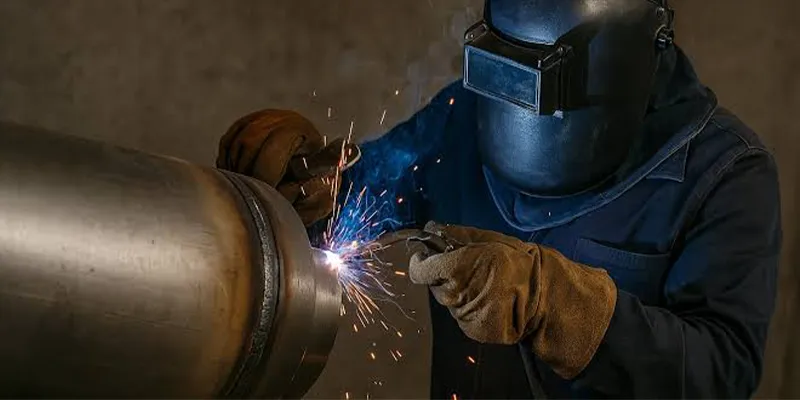
Incoloy 825 welds readily by conventional processes using over-alloyed nickel fillers - typically Alloy 82 (ERNiCr-3) or Alloy 625 (ERNiCrMo-3). Because the alloy is titanium-stabilized, post-weld solution annealing is generally not required to restore corrosion resistance; the critical controls for sour service are weld-metal and HAZ hardness (≤ 35 HRC), surface cleanliness, and qualified welding procedures.
Titanium stabilization is the key metallurgical fact. Titanium preferentially combines with carbon, so chromium remains in solid solution in the weld heat-affected zone and chromium-carbide precipitation (sensitization) is suppressed in the as-welded condition. Incoloy 825 therefore avoids the intergranular corrosion and SCC path that plagues unstabilized stainless grades after welding, and post-weld heat treatment is generally neither required nor recommended for these stabilized austenitic grades.
Filler selection follows standard CRA practice: matching Alloy 82 (ERNiCr-3) for most applications, or over-alloyed Alloy 625 (ERNiCrMo-3) where maximum corrosion margin is wanted. Nickel-alloy practice applies throughout - clean, low-sulfur surfaces; controlled heat input and interpass temperature; and strict avoidance of carbon-steel contamination from tooling or grinding.
For sour-service qualification, the same hardness ceiling that applies to the base metal applies to weld metal and heat-affected zone. Hardness surveys (per ASTM E10/E18) are a standard acceptance step, and critical projects supplement them with SSC testing per NACE TM0177 and pitting qualification per ASTM G48. Picking or passivation after fabrication completes the surface preparation.
How Do I Choose Between Incoloy 825 and Other Corrosion-Resistant Alloys?
Choose Incoloy 825 when the environment couples H₂S with chlorides at moderate temperatures and pressures; restrict 316L and 904L to mild, low-chloride conditions; and move to Alloy 625 or C-276 when temperature, chlorides or H₂S severity exceed 825's envelope.
A disciplined selection process follows five steps.
Step 1 - Define the service environment: H₂S and CO₂ partial pressures, temperature, in-situ pH, chloride concentration, elemental sulfur, oxygen ingress, water cut, and upset conditions.
Step 2 - Check the standard: confirm the candidate is listed in the latest edition of NACE MR0175/ISO 15156-3 for the exact service, including hardness limits for both product form and welds.
Step 3 - Rank the failure risks: chloride SCC (nickel content vs. the Copson curve), SSC/HIC (hardness and microstructure), and pitting/crevice corrosion (PREN and critical pitting temperature).
Step 4 - Compare economics over the asset life: material cost, fabrication, welding consumables, inspection and expected life. Incoloy 825 is typically the value pick for moderate sour service; duplex or 904L only where chlorides and H₂S are mild; Alloy 625 or C-276 only for severe conditions.
Step 5 - Validate with data: corrosion testing such as NACE TM0177 (SSC), ASTM G48 (pitting) and ASTM G36 (SCC), backed by a qualified corrosion engineer before final procurement.