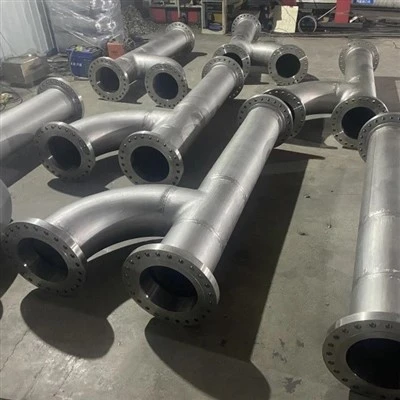
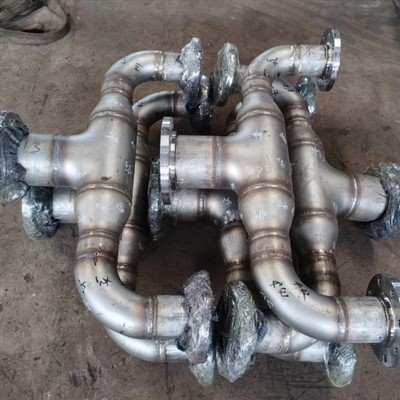
Incoloy 800 (and its high-temperature variants 800H/800HT) and HK-40 cast alloy both appear on petrochemical furnace tube specifications, but they are produced by fundamentally different routes - one wrought, one cast - and that manufacturing difference drives nearly every practical decision that follows: achievable tube size, creep strength at extreme temperature, ductility, weldability, and field repair options.

This guide compares the two materials across their manufacturing process, microstructure, mechanical performance, and real-world furnace applications, so engineers and procurement teams can specify the correct tube material rather than defaulting to whichever alloy is more familiar.
What Are Incoloy 800 and HK-40, and Why Are They Compared for Furnace Tubes?
Incoloy 800 is a wrought iron-nickel-chromium alloy tube produced by hot working and cold drawing, while HK-40 is a cast heat-resistant iron-chromium-nickel alloy produced primarily by centrifugal (spin) casting - both are used in petrochemical furnaces, but they are typically selected for different tube sizes and temperature ranges rather than being interchangeable.
Rationale: Incoloy 800/800H/800HT (UNS N08800/N08810/N08811) is manufactured as wrought seamless tube: a cast ingot is hot-extruded or pierced, then cold-drawn and annealed to final size, producing a homogeneous, fine-to-controlled-grain structure with high ductility.
HK-40 (UNS J94204, per ASTM A297/A608) is manufactured as a static or centrifugally cast tube: molten alloy is poured into a rotating mold and solidifies directly into tube form, producing an as-cast dendritic microstructure. Both alloys share a similar chromium-nickel-iron base, which is why they are often compared for the same furnace, but their production route makes one better suited to small-diameter coil tubing and fittings (Incoloy 800 series) and the other to large-diameter, long, single-piece radiant tubes (HK-40).
|
Element (wt%) |
Incoloy 800H/800HT (wrought, UNS N08810/11) |
HK-40 (cast, UNS J94204) |
|
Nickel (Ni) |
30.0–35.0 |
19.0–22.0 |
|
Chromium (Cr) |
19.0–23.0 |
24.0–28.0 |
|
Iron (Fe) |
Balance (~39–43) |
Balance (~45–50) |
|
Carbon (C) |
0.06–0.10 |
0.35–0.45 |
|
Silicon (Si) |
≤1.00 |
≤1.75 |
|
Manufacturing route |
Wrought (extruded/drawn seamless tube) |
Cast (typically centrifugal/spun cast) |
Table 1 - Representative composition and manufacturing route per ASTM B407/B163 (Incoloy 800H/800HT) and ASTM A297/A608 (HK-40). Note HK-40's much higher carbon content, which is deliberate and central to its high-temperature strength.
How Do Wrought and Cast Manufacturing Processes Differ, and Why Does It Matter?
Wrought processing produces a homogeneous, equiaxed grain structure with high ductility and design flexibility, while centrifugal casting produces a columnar/dendritic grain structure radiating from the tube's outer surface inward, which sacrifices some ductility but enables the interdendritic carbide network responsible for HK-40's superior high-temperature strength.

In wrought Incoloy 800 production, hot extrusion and cold drawing break down the original cast ingot structure and recrystallize it into new, more uniform grains during annealing. This process actively removes as-cast segregation and porosity, producing a material with predictable, isotropic mechanical properties and excellent formability for bending, flaring, and welding into complex shapes.
In centrifugal casting of HK-40, molten metal solidifies directly in its final tube shape with no subsequent hot working, so the resulting grain structure - coarse columnar grains near the outside diameter transitioning to equiaxed grains near the bore - remains permanently in the finished part. This as-cast structure includes a network of primary chromium carbides along interdendritic boundaries, which is precisely the microstructural feature that gives HK-40 its high-temperature creep strength.
Which Alloy Has Higher Creep-Rupture Strength at Typical Furnace Operating Temperatures?
HK-40 delivers substantially higher creep-rupture strength than wrought Incoloy 800H/800HT at the 900–1100°C tube metal temperatures typical of ethylene pyrolysis furnaces and steam methane reformers, which is the primary reason HK-40 - not Incoloy 800 - is the standard material for large reformer and cracking furnace tubes.
Rationale: HK-40's much higher carbon content (0.35–0.45% versus 0.06–0.10% in Incoloy 800H/800HT) allows a dense, continuous network of chromium-rich M23C6/M7C3 carbides to form along the interdendritic boundaries during solidification. At service temperature, this carbide network strongly resists grain boundary sliding and dislocation motion, the dominant creep mechanisms at these temperatures.
Incoloy 800H/800HT relies on a comparatively lighter carbide precipitation strategy plus controlled wrought grain size, which is effective up to roughly 800–900°C but does not match HK-40's strength in the 900–1100°C range where the most demanding reformer and cracking furnace tubes operate.
|
Characteristic (900–1100°C range) |
Incoloy 800H/800HT (wrought) |
HK-40 (cast) |
|
Primary strengthening mechanism |
Controlled grain size + light carbide precipitation |
Dense as-cast interdendritic carbide network |
|
Typical maximum practical operating temperature |
~800–900°C for sustained structural service |
~1000–1100°C tube metal temperature |
|
Common furnace role |
Convection sections, smaller coils, lower-temperature service |
Radiant section reformer and pyrolysis tubes |
Table 2 - Qualitative creep-service comparison. Actual allowable stress values are code- and time-dependent; consult ASME Section I/VIII Division 1 Appendix or API 530/560 furnace tube design data for numeric design values.
How Does Microstructure Differ Between Wrought Incoloy 800 and Cast HK-40?
Wrought Incoloy 800 has a fine, uniform, equiaxed grain structure with carbides distributed mainly within grains and along boundaries in a controlled, discontinuous pattern, while cast HK-40 has a coarse, columnar-to-equiaxed as-cast structure with a continuous, cast-in network of primary carbides between dendrite arms that cannot be removed by heat treatment alone.
Rationale: Because wrought Incoloy 800 is recrystallized during hot working and annealing, its grain structure can be controlled to a specified ASTM grain size for optimal strength-ductility balance. HK-40's microstructure, by contrast, is fixed at the moment of solidification; while a post-cast homogenization or stabilization heat treatment can modify carbide morphology somewhat, it cannot convert the fundamentally cast, dendritic grain structure into a wrought, equiaxed one. This permanent as-cast structure is the direct source of both HK-40's strength advantage at high temperature and its ductility disadvantage at lower temperature.
Which Alloy Offers Better Ductility and Weldability?
Wrought Incoloy 800/800H offers substantially higher ductility and more straightforward weldability than cast HK-40, which is more prone to weld cracking and generally requires specialized filler metal selection, preheat, and controlled cooling for successful field welding and repair.
|
Property |
Incoloy 800H/800HT (wrought) |
HK-40 (cast) |
|
Typical room-temperature elongation |
~35–45% |
~4–15% (lower after long service aging) |
|
Weldability |
Good; standard GTAW/SMAW procedures with matching filler |
More difficult; requires qualified procedure, often with Ni-based filler (e.g., ENiCrFe type) |
|
Susceptibility to weld/heat-affected zone cracking |
Low |
Moderate to higher, especially in aged (service-exposed) material |
|
Suitability for cold forming (bending, flaring) |
Good |
Poor; cast tube is generally not cold-formed |
Table 3 - Comparative ductility and weldability of wrought Incoloy 800H/800HT versus cast HK-40. HK-40 property ranges are strongly affected by service-induced carbide coarsening; values shown are representative, not universal.
What Tube Sizes and Wall Thicknesses Are Practical for Each Manufacturing Route?
Centrifugal casting makes HK-40 the practical choice for large-diameter, thick-wall, long single-piece tubes, while wrought Incoloy 800 is more economical and more readily available in smaller diameters and thinner walls typical of coil and convection-section tubing.

|
Parameter |
Incoloy 800H/800HT (wrought) |
HK-40 (cast) |
|
Typical outside diameter range |
Up to ~150–200 mm (6–8 in) as seamless wrought tube |
~50–300+ mm (2–12+ in), including large reformer tube sizes |
|
Typical wall thickness |
Thin to moderate (a few mm to ~15 mm) |
Moderate to thick (10–30+ mm), suited to high-pressure/high-temperature design |
|
Typical single-piece length |
Governed by wrought mill capability, often several meters |
Up to approximately 12–13 m via centrifugal casting |
|
Joining for longer runs |
Butt welding of wrought lengths |
Butt welding of cast lengths, or supply as fewer, longer cast sections |
Table 4 - Practical size ranges by manufacturing route. Exact capability varies by foundry/mill; confirm with the supplier for project-specific sizing.
How Do Fabrication and Field Repair Differ Between Wrought and Cast Furnace Tubes?
Wrought Incoloy 800 tube can generally be field-fabricated and repaired using conventional welding practices familiar to most shops, while HK-40 field repair requires a qualified procedure specifically developed for cast, carbide-rich, and often service-aged material, making repair a more specialized and higher-risk undertaking.
Wrought Incoloy 800/800H: standard shop and field welding procedures, conventional NDE (radiography, dye penetrant) apply directly, and cold-formed fittings (elbows, U-bends) are readily fabricated from the same base tube.
Cast HK-40: as-cast defects such as microporosity and shrinkage must be evaluated before welding; service-aged tubes accumulate embrittling carbide coarsening that increases cracking risk during repair welding and must be assessed by a qualified metallurgist.
Cast HK-40 repair typically uses nickel-based filler metals selected to accommodate the dissimilar-metal transition and reduce cracking sensitivity, along with controlled preheat and interpass temperature.
Post-weld heat treatment decisions for HK-40 repairs must balance restoring some ductility against the risk of further coarsening an already service-aged carbide structure - a judgment call best made by an engineer experienced with cast heat-resistant alloys.
Which Alloy Is More Cost-Effective for Large-Diameter, High-Temperature Furnace Tubes?
For large-diameter, thick-wall tubes required in reformer and pyrolysis furnaces, centrifugally cast HK-40 is typically more cost-effective than an equivalent wrought Incoloy 800 tube would be, because centrifugal casting produces a near-net-shape tube directly, avoiding the expensive hot-working steps that wrought processing requires at large sizes.

Wrought tube manufacturing costs rise sharply as diameter and wall thickness increase, since extrusion presses and drawing equipment capable of handling large, thick-wall nickel-alloy tube are limited in number and expensive to operate. Centrifugal casting scales more efficiently to large sizes because the tube is formed directly from molten metal in one step.
This is why the furnace tube industry has converged on cast HK-40 (and related higher-alloy cast grades) for large reformer and cracking tubes, reserving wrought Incoloy 800 series material primarily for smaller-diameter tubing, fittings, and applications where wrought ductility is specifically required.
Which Alloy Is Better Suited to Specific Furnace Applications?
HK-40 is the preferred material for radiant-section reformer and ethylene pyrolysis furnace tubes operating at 900–1100°C, while Incoloy 800/800H is better suited to convection sections, catalyst support components, and smaller coil tubing operating at more moderate temperatures where ductility and ease of fabrication matter more than maximum creep strength.
|
Application |
Recommended Alloy |
Reason |
|
Steam methane reformer radiant tubes |
HK-40 (or higher creep-strength cast grades) |
Extreme creep-rupture strength at 900–1000°C+ needed for decades of service |
|
Ethylene pyrolysis cracking furnace tubes |
HK-40 or cast HP-modified alloys |
Very high tube metal temperature and pressure demand cast carbide strengthening |
|
Furnace convection section tubing |
Incoloy 800/800H |
Lower temperature; ductility and cost-effective wrought fabrication favored |
|
Catalyst support baskets and internals |
Incoloy 800H/800HT |
Complex shapes favor wrought formability and weldability |
|
Furnace tube hangers and structural supports |
Incoloy 800H/800HT |
Requires forming, welding, and moderate-temperature strength rather than extreme creep resistance |
Table 5 - Application-based alloy selection guide for petrochemical furnace components.
What Are the Key Failure Modes to Watch for in Each Alloy Type?
Incoloy 800/800H tubes primarily fail from long-term creep and, in carburizing service, carburization-related embrittlement, while HK-40 tubes primarily fail from creep cavitation, service-induced carbide coarsening leading to embrittlement, and thermal fatigue cracking driven by furnace cycling - inspection programs should target each alloy's dominant mechanism.
|
Failure Mode |
Incoloy 800/800H (wrought) |
HK-40 (cast) |
|
Creep cavitation/rupture |
Occurs at end of design life; more ductile failure |
Occurs at end of design life; carbide network can promote earlier cavitation at grain boundaries |
|
Carburization embrittlement |
Possible in strongly carburizing atmospheres |
Less dominant concern; strength already carbide-based |
|
Thermal fatigue cracking |
Less pronounced due to higher ductility |
More pronounced, especially with frequent furnace shutdown/startup cycling |
|
Casting-related defects (porosity, inclusions) |
Not applicable (wrought, defect-free by process) |
Possible; requires quality control during casting and incoming inspection |
Table 6 - Dominant failure modes by alloy type, relevant to inspection and remaining-life assessment programs.
Frequently Asked Questions