Wet-process phosphoric acid (WPA) is one of the most corrosive fluids handled in industrial chemical processing, combining free sulfuric acid, fluoride, chloride, and abrasive solids in a single stream. Heat exchangers in the digestion, filtration, and evaporation sections of a WPA plant see this attack concentrated at velocity, temperature, and weld locations - exactly where failures are most costly. Incoloy 825 (UNS N08825) has become the workhorse alloy for this duty because its nickel-chromium-molybdenum-copper chemistry was specifically developed to resist both reducing sulfuric/phosphoric acid attack and localized chloride corrosion at the same time.

This guide explains why Incoloy 825 performs well in WPA heat exchangers, how it compares to 316L stainless steel and higher nickel alloys, and what design and fabrication practices are needed to get its full service life.
What Is Incoloy 825, and Why Is It Widely Used in Phosphoric Acid Production?
Incoloy 825 is a nickel-iron-chromium alloy with added molybdenum and copper, specifically formulated to resist the combined sulfuric acid, phosphoric acid, and chloride/fluoride attack found in wet-process phosphoric acid, which is why it has become the standard heat exchanger and process equipment alloy across most WPA production plants.
|
Element (wt%) |
Incoloy 825 (UNS N08825) |
|
Nickel (Ni) |
38.0–46.0 |
|
Chromium (Cr) |
19.5–23.5 |
|
Molybdenum (Mo) |
2.5–3.5 |
|
Copper (Cu) |
1.5–3.0 |
|
Iron (Fe) |
Balance (≥22.0) |
|
Titanium (Ti) |
0.6–1.2 |
|
Carbon (C) |
≤0.05 |
Table 1 - Representative chemical composition of Incoloy 825 per ASTM B424/B425/B163.
The alloy's copper addition is the key to its resistance to reducing acids such as sulfuric and phosphoric acid, while its molybdenum content adds resistance to pitting and crevice corrosion from chloride ions. Its high nickel content (38–46%) resists chloride stress corrosion cracking, a failure mode that limits standard austenitic stainless steels like 316L in this service. Because wet-process phosphoric acid contains all of these aggressive species simultaneously - sulfuric acid from the digestion step, fluoride from the phosphate rock, and chloride as a contaminant - Incoloy 825's balanced multi-element resistance makes it a practical single-alloy solution for most of the plant rather than requiring a different specialty alloy for every corrosive species.
What Makes Wet-Process Phosphoric Acid So Corrosive to Heat Exchanger Materials?
Wet-process phosphoric acid is aggressive because it combines four separate corrosion mechanisms in one stream - free sulfuric acid attack, fluoride-accelerated corrosion, chloride-induced pitting and stress corrosion cracking, and solids-driven erosion-corrosion - any one of which would challenge a standard stainless steel alone, let alone all four together.
Free sulfuric acid: WPA is produced by digesting phosphate rock with sulfuric acid, and a controlled excess of unreacted sulfuric acid typically remains in the process stream, attacking materials that lack strong reducing-acid resistance.
Fluoride content: Phosphate rock contains fluorapatite, which releases fluoride ions during digestion; fluoride can locally break down passive oxide films and accelerate corrosion, particularly at high concentration or elevated temperature.
Chloride contamination: Chloride enters from the ore, process water, or upstream contamination, and drives localized pitting and crevice corrosion, and in severe cases, chloride stress corrosion cracking of susceptible alloys.
Suspended solids and slurry erosion: WPA carries fine gypsum and unreacted rock particles, which erode protective oxide films at high velocity, particularly at tube inlets, bends, and baffle contact points in heat exchangers.
How Does Incoloy 825 Resist Corrosion Across Different WPA Concentrations and Temperatures?
Incoloy 825 maintains a low, predictable general corrosion rate across the typical wet-process acid range from dilute 28–30% P2O5 filter acid up through concentrated 40–54% P2O5 evaporator product, though corrosion rates rise with both increasing temperature and increasing fluoride/chloride contamination, which must be accounted for in exchanger design.
|
Process Stage |
Typical P2O5 Concentration |
Typical Temperature |
Incoloy 825 Performance |
|
Digestion/filtration (weak acid) |
~28–30% |
60–80°C |
Excellent general corrosion resistance; standard duty |
|
First-stage evaporation |
~30–40% |
70–90°C |
Good resistance; monitor fluoride/chloride levels |
|
Final evaporation (merchant-grade acid) |
~40–54% |
90–110°C |
Adequate but requires closer monitoring; highest-severity zones may warrant a higher alloy |
Table 2 - Representative wet-process phosphoric acid conditions by production stage and Incoloy 825's general performance range. Actual corrosion rates depend on specific plant chemistry (fluoride, chloride, and sulfate levels) and should be confirmed by coupon testing or plant history.
How Does Incoloy 825 Compare to 316L Stainless Steel in WPA Heat Exchanger Service?
Incoloy 825 substantially outperforms 316L stainless steel in wet-process phosphoric acid service, particularly with respect to pitting, crevice corrosion, and chloride stress corrosion cracking, which is why 316L is generally limited to lower-severity, lower-chloride zones while Incoloy 825 is specified for the majority of WPA heat exchanger duty.
|
Property |
316L Stainless Steel |
Incoloy 825 |
|
Nickel content |
10.0–14.0% |
38.0–46.0% |
|
Molybdenum content |
2.0–3.0% |
2.5–3.5% |
|
Chloride SCC resistance |
Limited; susceptible above moderate chloride/temperature |
Good; high nickel content resists SCC initiation |
|
General resistance to reducing acid (H2SO4/H3PO4 mixtures) |
Moderate |
Excellent, aided by copper addition |
|
Typical relative cost per unit mass |
1.0x (baseline) |
~2.5x – 3.5x |
|
Typical WPA heat exchanger role |
Lower-chloride, lower-severity duty; some plants use only where acid is well-controlled |
Standard alloy for most process heat exchangers, agitators, and piping |
Table 3 - Comparative properties of 316L stainless steel and Incoloy 825 for wet-process phosphoric acid service. Relative cost is indicative only and varies with nickel/molybdenum market pricing.
How Does Incoloy 825 Compare to Higher Alloys Like Alloy 625 in the Most Severe Zones?
Conclusion: In the most severe zones of a WPA plant - very high fluoride content, elevated chloride, or the highest-temperature evaporator stages - Alloy 625 or similar high-molybdenum nickel alloys can outperform Incoloy 825, but this added resistance comes at a significantly higher cost, so Alloy 625 is typically reserved for specific high-risk components rather than used throughout the plant.
|
Property |
Incoloy 825 |
Alloy 625 |
|
Molybdenum content |
2.5–3.5% |
8.0–10.0% |
|
Pitting/crevice resistance in high-chloride, high-fluoride zones |
Good |
Excellent |
|
Typical relative cost per unit mass (vs. 316L = 1.0x) |
~2.5x – 3.5x |
~5x – 7x |
|
Typical WPA application |
General process heat exchangers, piping, agitators |
Highest-severity components: specific evaporator zones, scrubber systems, or known problem areas identified by plant history |
Table 4 - Incoloy 825 versus Alloy 625 for the most demanding wet-process phosphoric acid zones.
The practical approach used by most WPA producers is to specify Incoloy 825 as the baseline material for the majority of process equipment, then selectively upgrade specific components - often identified through plant corrosion monitoring or prior failure history - to Alloy 625 or another high-molybdenum alloy only where local conditions (a fluoride-rich side stream, a high-velocity elbow, or a known hot spot) demand it.
What Role Does Fluoride and Chloride Contamination Play in Material Selection?
Fluoride and chloride levels - not just P2O5 concentration or temperature alone - are often the deciding factors in whether Incoloy 825 is sufficient or whether a higher alloy is warranted, because both species can locally break down the passive oxide film that protects nickel alloys from acid attack.

Phosphate rock sources vary significantly in fluoride content, and process water and recycled streams can introduce variable chloride levels that are not always reflected in a plant's nominal design basis. Because Incoloy 825's corrosion resistance depends on a stable passive film, elevated fluoride or chloride beyond the levels assumed in the original material selection can lead to unexpectedly rapid localized corrosion, even when bulk acid concentration and temperature remain within normal design limits. For this reason, effective material selection and ongoing reliability programs in WPA plants routinely include corrosion coupon testing and periodic feedstock analysis rather than relying on P2O5 concentration and temperature alone.
How Does Erosion-Corrosion from Process Slurry Affect Heat Exchanger Tube Life?
Erosion-corrosion from suspended gypsum and rock solids in WPA shortens heat exchanger tube life primarily at high-velocity locations - tube inlets, U-bends, and baffle contact points - where mechanical removal of the protective oxide film outpaces its ability to reform, making tube-side velocity control as important as alloy selection for long-term reliability.
Keep tube-side velocity within the alloy supplier's recommended range for slurry-bearing WPA service, typically well below the velocity limits used for clean, non-abrasive fluids.
Use inlet tube liners or ferrules at the tube entrance, where turbulence and impingement from the inlet nozzle concentrate erosive wear.
Design baffle cuts and spacing to minimize direct high-velocity impingement of slurry against tube walls at baffle contact points.
Monitor and periodically clean exchangers to remove settled solids, since localized deposition can create differential aeration cells that accelerate corrosion beneath the deposit.
What Welding and Fabrication Practices Preserve Incoloy 825's Corrosion Resistance in Heat Exchangers?
Preserving Incoloy 825's corrosion resistance through fabrication requires low-carbon base material and filler metal, complete shielding gas coverage (including purge gas on the tube ID), and full weld bead cleaning to remove heat tint, because any of these lapses can create a locally less-resistant zone that becomes the first point of failure in service.
Use matching Incoloy 825 filler metal (ERNiFeCr-1 / ENiCrMo-3 as applicable) to avoid a weld deposit with different corrosion resistance than the base metal.
Purge the tube interior with inert gas during welding to prevent oxidation (heat tint) on the process-wetted surface, which is far more susceptible to localized corrosion than properly shielded weld metal.
Pickle and passivate welds after fabrication to remove heat tint and restore a uniform passive chromium oxide layer across the entire wetted surface.
Control interpass temperature to limit the time spent in the sensitization temperature range, reducing the risk of chromium carbide precipitation at grain boundaries even though Incoloy 825's low carbon content and titanium stabilization already provide good sensitization resistance.
Inspect completed welds for full penetration and freedom from crevices or lack-of-fusion defects, since these geometric features become preferential sites for crevice corrosion regardless of alloy chemistry.
How Should Heat Exchangers Be Designed for Long Service Life in WPA?
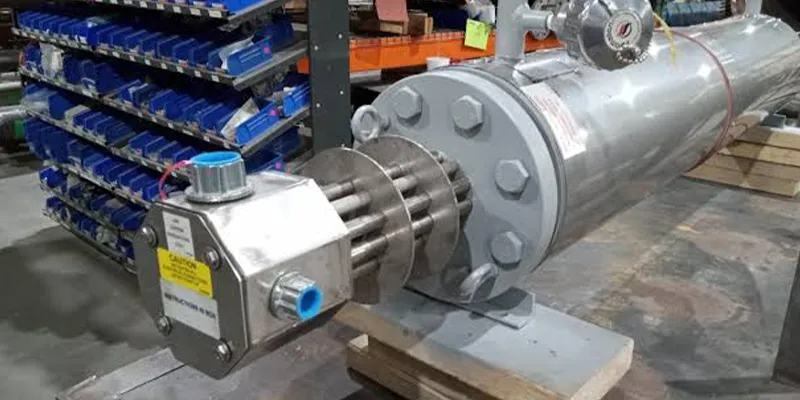
Long-lived WPA heat exchangers combine appropriate alloy selection with conservative tube-side velocity, adequate corrosion allowance, accessible tube bundles for inspection and cleaning, and material transition zones (tubesheets, channel heads) designed to avoid galvanic and crevice issues where dissimilar materials meet.
Select tube material (typically Incoloy 825, with Alloy 625 in known severe zones) based on confirmed process fluoride, chloride, and temperature data - not generic P2O5 concentration alone.
Set tube-side velocity within the range recommended for slurry-bearing service to balance heat transfer efficiency against erosion-corrosion risk.
Specify adequate wall thickness corrosion allowance based on plant-specific corrosion monitoring history rather than a generic default.
Design tubesheets and channel heads with compatible or clad materials to avoid galvanic corrosion where the tube alloy meets a different structural material.
Provide adequate bundle-pulling clearance and inspection access, since periodic tube inspection and cleaning are essential to catching localized corrosion or erosion before it causes a leak.
Establish a routine coupon-testing and inspection program to track actual corrosion rates against design assumptions and catch process chemistry changes before they cause unplanned failures.
What Is the Total Cost of Ownership for Incoloy 825 vs Alternatives in WPA Service?
Although Incoloy 825 costs several times more per unit mass than 316L stainless steel, it typically delivers a lower total cost of ownership in wet-process phosphoric acid heat exchanger service because it avoids the frequent tube failures, unplanned shutdowns, and bundle replacements that 316L experiences in this environment.
A meaningful cost comparison must include not just the initial tube bundle price but the expected interval between failures, the cost of unplanned production loss during each failure, and the labor and disposal cost of bundle replacement. In wet-process phosphoric acid, 316L exchangers often experience pitting or stress-corrosion-related leaks well within a few years of continuous service, while properly designed and fabricated Incoloy 825 exchangers commonly achieve service lives measured in a decade or more under the same conditions. When these avoided failure and downtime costs are included, Incoloy 825's higher material cost is generally recovered many times over across the exchanger's operating life, making it the economically rational choice for the majority of WPA heat exchanger duty despite its higher up-front price.
Frequently Asked Questions