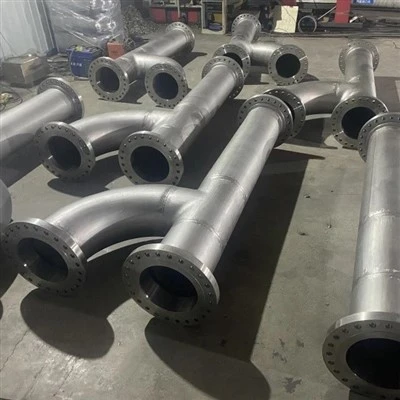
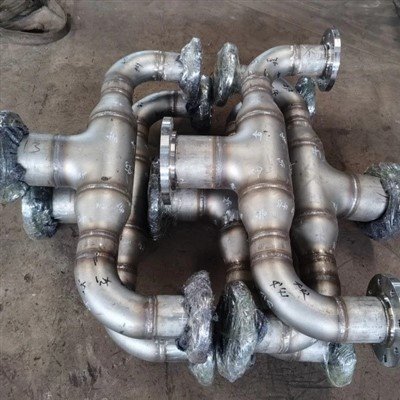
Hydrostatic testing is the final proof that a stainless steel pipe, fitting, or spool can safely hold pressure before it ever enters service. A single miscalculated test pressure - too low to catch a flaw, or too high and risking rupture - can turn a routine quality check into a safety incident or a costly project delay. This guide answers the questions engineers, welders, and QA/QC inspectors ask most often about hydrostatic testing of stainless steel and nickel alloy pipe, using the same code-based logic our engineering team applies on every mill and field test we run.

What Is Hydrostatic Testing and Why Is It Required for Stainless Steel Pipe?
Hydrostatic testing pressurizes a pipe or piping system with water to at least 1.25–1.5 times its design pressure to verify it is leak-free and structurally sound before commissioning; it is required by nearly every major piping and pressure-vessel code, including ASME B31.3, ASME B31.1, and ASTM A312/A999.
The test works on a simple principle: water is nearly incompressible, so pressurizing a pipe with water - rather than air or gas - releases very little stored energy if a defect fails. This makes hydrostatic testing far safer than pneumatic testing while still proving that welds, fittings, and the base material can withstand pressures above normal operating conditions.
For stainless steel pipe specifically, hydrostatic testing serves three verification purposes:
Weld and joint integrity - confirming girth welds, socket welds, and flanged connections do not leak under pressure.
Base-material soundness - detecting laminations, inclusions, or wall-thickness deficiencies introduced during manufacturing.
Code compliance and documentation - producing a certified test record (often per EN 10204 3.1/3.2) required for project handover and regulatory audits.
How Is the Hydrostatic Test Pressure Calculated for Stainless Steel Pipe?
Test pressure is calculated from Barlow's formula - P = 2·S·t / D - to find the pipe's allowable design pressure, which is then multiplied by the code-mandated test factor (typically 1.5 for ASME B31.3, 1.25 for API 5L field tests).
Barlow's formula relates internal pressure to hoop (circumferential) stress in a thin-walled cylinder:
P = (2 × S × t) / D
P = allowable internal design pressure
S = allowable stress of the material at test temperature (from the governing code's stress tables)
t = nominal or minimum wall thickness (design codes typically require using the minimum, i.e., nominal minus mill tolerance)
D = outside diameter of the pipe
Once the design pressure is known, the required hydrostatic test pressure is found by applying the code's test-pressure multiplier, most commonly 1.5 × design pressure for process piping under ASME B31.3.
Worked Example: 6-inch Schedule 40 ASTM A312 TP316L Pipe
|
Parameter |
Value |
|
Outside diameter (D) |
6.625 in (168.3 mm) |
|
Nominal wall thickness |
0.280 in (7.11 mm) |
|
Minimum wall thickness after 12.5% mill tolerance (t) |
0.245 in (6.22 mm) |
|
Allowable stress at ambient, 316L (S) - illustrative |
16,700 psi (115 MPa) |
|
Design pressure: P = 2 × S × t / D |
≈ 1,235 psi (8.5 MPa) |
|
Hydrostatic test pressure at 1.5 × design (ASME B31.3) |
≈ 1,855 psi (12.8 MPa) |
Illustrative calculation only. Allowable stress values, mill tolerances, and test multipliers vary by code edition, wall-thickness class, and temperature - always confirm current values in the applicable code stress tables before setting a test pressure.
What Test Pressures Do Major Piping Standards Require?
Most codes require a hydrostatic test between 1.25 and 1.5 times the design or maximum allowable operating pressure, held for a minimum of 10 minutes for visual inspection - but the exact multiplier, hold time, and allowable pressure drop differ by standard.

|
Standard |
Scope |
Typical Test Pressure |
Minimum Hold Time |
|
ASME B31.3 |
Process piping |
1.5 × design pressure |
10 minutes |
|
ASME B31.1 |
Power piping |
1.5 × design pressure |
10 minutes |
|
ASTM A312 / A999 |
Seamless & welded SS pipe (mill test) |
Per mill hydro formula, or ultrasonic/eddy-current in lieu of hydro |
Per material spec |
|
API 5L |
Line pipe (field/mill) |
1.25 × MAOP (field); mill test per spec |
Varies by class |
|
EN 13480 / PED |
European process piping |
1.43 × design pressure (typical) |
≥ 10 minutes |
Always verify the specific edition and category referenced in your project specification - test factors and hold times are periodically revised.
How Long Should Test Pressure Be Held During a Hydrostatic Test?
Most piping codes require the test pressure to be held for a minimum of 10 minutes for visual examination, though large-diameter systems, cross-country pipelines, or client specifications often extend this to several hours to detect slow leaks.
Hold time typically breaks into two phases:
Pressurization and stabilization - pressure is raised gradually (commonly in 25% increments) and allowed to stabilize before each subsequent increase, avoiding shock loading of welds and fittings.
Sustained hold for inspection - once at full test pressure, the system is held for the code-minimum duration while inspectors walk the line checking welds, flanges, and threaded connections for leaks, weeping, or visible deformation.
A measurable pressure drop during the hold (beyond the allowance for temperature-related volume change) is treated as a failed test and requires investigation before retesting.
What Safety Precautions Are Required During Hydrostatic Testing?
Safe hydrostatic testing requires a defined exclusion zone, calibrated and dual-verified pressure gauges, complete air venting before pressurization, gradual pressure increase, and a documented maximum test pressure that is never exceeded.
Vent all air before pressurizing. Trapped air is compressible and stores significant energy - an air pocket under pressure behaves far more violently than water if a defect fails.

Establish an exclusion zone around the test section, particularly near threaded fittings, flanges, and blind ends, which carry the highest risk of projectile failure.
Use calibrated gauges, ideally two independent gauges (a test gauge and a reference/master gauge) to cross-check readings.
Increase pressure gradually in stages, never in a single jump to full test pressure.
Never exceed the specified test pressure, even briefly - pressure relief devices should be set just above target test pressure as a hard limit.
Control test-water temperature. Testing stainless steel at very low ambient temperatures increases the risk of brittle-type fracture at flaws; most specifications set a minimum test-metal temperature.
Control chloride content of the test water - this is a stainless-steel-specific requirement covered in detail below.
Why Is Water Chloride Content Critical When Testing Stainless Steel Pipe?
Chloride ions in test water can trigger chloride-induced stress corrosion cracking (Cl-SCC) or pitting in austenitic stainless steel, so most specifications limit test-water chloride content to 50 ppm or less - and require prompt draining and drying after the test.
Austenitic grades such as 304/304L and 316/316L are highly susceptible to localized corrosion when chloride ions are trapped against the metal surface, especially if the water is left standing or evaporates slowly, concentrating chlorides at the last-wetted surface. This risk increases sharply with elevated temperature and with stress present in the pipe wall - exactly the conditions created during a hydrostatic test.

Recommended controls include:
Using potable or demineralized water with chloride content verified below the project-specified limit (commonly 50 ppm, sometimes 30 ppm for high-purity or high-temperature service).
Avoiding untreated seawater, brackish water, or water from unknown sources for any austenitic or duplex stainless system.
Draining the system completely immediately after the hold period and inspection are complete - do not allow test water to sit in the pipe.
Blow-drying or purging with dry air/nitrogen after draining to eliminate residual moisture pockets, particularly at low points, dead legs, and instrument taps.
Documenting water source and chloride test results as part of the test package for traceability.
What Should You Do If a Leak or Failure Occurs During Testing?
If a leak, pressure drop, or visible deformation occurs, immediately depressurize in a controlled manner, isolate and drain the system, document the failure location, and do not attempt repairs or retests under pressure.
Stop pressurization immediately and begin controlled depressurization - never attempt to locate or mark a leak while the system remains at test pressure.
Fully depressurize and drain before anyone approaches the failure point.
Document the exact location, orientation, and appearance of the defect (weld, base metal, fitting) with photographs and measurements.
Determine root cause - porosity, lack of fusion, wall-thickness deficiency, or material defect - before repair, since the repair method depends on the cause.
Repair per the applicable welding procedure specification (WPS), then repeat the full hydrostatic test from the beginning; partial retesting of only the repaired area is not acceptable under most codes.
How Does Hydrostatic Testing Differ for Nickel Alloy Pipe vs. Stainless Steel Pipe?
Nickel alloys such as Alloy 625, Alloy 825, and C-276 generally require higher hydrostatic test pressures because of their higher allowable stress values, and while they are more resistant to chloride-induced stress corrosion cracking than austenitic stainless steel, low-chloride water and prompt draining remain best practice for both material families.

|
Factor |
Austenitic Stainless (e.g., 304/316) |
Nickel Alloy (e.g., 625/825/C-276) |
|
Relative allowable stress |
Lower |
Higher - supports higher design/test pressure for the same wall thickness |
|
Chloride-SCC susceptibility |
High, especially heated/concentrated chlorides |
Lower, but not immune - good practice still applies |
|
Typical test-pressure driver |
Barlow's formula per ASME B31.3 stress tables |
Same method; higher S value raises calculated design pressure |
|
Post-test drying priority |
Mandatory to prevent pitting/SCC |
Recommended, especially for long-term or high-purity service |
Because nickel alloys support higher allowable stress, the same Barlow's-formula calculation yields a higher design pressure - and therefore a higher required test pressure - for identical pipe dimensions. Test equipment, gauges, and relief devices should be rated with sufficient margin above the calculated nickel-alloy test pressure.
What Post-Test Procedures Prevent Corrosion After Hydrostatic Testing?
After a passed hydrostatic test, stainless steel pipe should be fully drained, dried with dry air or nitrogen, inspected for surface staining, and, if needed, passivated before the system is placed into service or long-term storage.
Drain immediately - do not leave test water standing, even overnight.
Dry thoroughly using clean, dry air or nitrogen purge, targeting low points, dead legs, and gauge/instrument connections where water pools.
Inspect for surface discoloration or staining that may indicate chloride residue or flash rusting from contaminated water.
Passivate or re-passivate exposed surfaces per ASTM A967 if staining, contamination, or free iron pickup is observed.
Record the test and drying completion in the quality documentation package alongside the pressure chart or gauge readings.
Frequently Asked Questions
Typically 1.5 times the calculated design pressure for process piping under ASME B31.3, though the exact multiplier depends on the governing code - API 5L field tests, for example, commonly use 1.25 times MAOP.
Can you use tap water to hydrostatically test stainless steel pipe?
Only if its chloride content is verified to be within the project-specified limit, commonly 50 ppm or less. Untested tap water, well water, or any water from an unknown source should not be assumed safe for austenitic stainless steel.
What is the difference between a hydrostatic test and a pneumatic test?
A hydrostatic test uses water, which is nearly incompressible and releases very little stored energy if a failure occurs. A pneumatic test uses air or gas, which is compressible and stores far more energy, making pneumatic testing inherently more hazardous and generally used only when water cannot be tolerated in the system.
Is hydrostatic testing mandatory for all stainless steel pipe?
It is mandatory wherever the governing code or project specification requires it - which includes most process piping under ASME B31.3 and most pressure piping under ASME B31.1 - unless an approved alternative examination method (such as ultrasonic or eddy-current testing) is explicitly permitted in its place.
How soon after hydrostatic testing should stainless steel pipe be dried?
Immediately after the test hold and inspection are complete. Leaving water - especially chloride-bearing water - standing in stainless steel pipe for extended periods significantly raises the risk of pitting and stress corrosion cracking.
Work With a Fabricator
Correct hydrostatic testing starts with correct manufacturing - accurate wall thickness, verified material certification, and clean, low-chloride handling from the mill through final test.
Our fabrication and quality teams calculate, document, and witness hydrostatic tests to ASME, ASTM, and API requirements on every stainless steel and nickel alloy pipe spool we produce, backed by full material traceability and 3.1/3.2 certification. If your project specification calls for a defined test pressure, hold time, or chloride limit, our engineering team can confirm the calculation and testing plan before fabrication begins.