Why API 6A Material Classes Matter for Oil & Gas Equipment
API 6A material classes (AA through HH) define the temperature-environment envelope and required material group for wellhead and Christmas tree equipment. Class HH is the highest rating, requiring nickel-based corrosion-resistant alloys (CRA) such as Inconel 625 and Hastelloy C276 to withstand the most aggressive sour gas conditions, including high H₂S concentrations, elevated temperatures up to 180 °C, and high chloride content. The suffixes "L" (low temperature, to −46 °C) and "N" (normalized) further define the operating envelope. Specifying the correct material class is not optional - it is a safety-critical engineering and regulatory requirement.
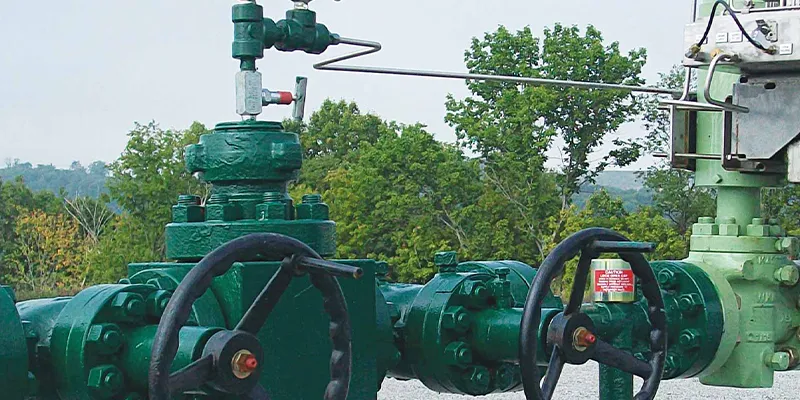
In sour gas and high-pressure oilfield applications, a single wrong material choice can cause catastrophic equipment failure: sulfide stress cracking (SSC), stress corrosion cracking (SCC), pitting, or hydrogen-induced cracking (HIC) can lead to well blowouts, environmental spills, and loss of life. API 6A (ISO 10423) provides the definitive framework for specifying wellhead equipment, and its material class system is the primary tool for matching material capability to service environment.
[Source] API Specification 6A, 21st Edition (2018), "Specification for Wellhead and Christmas Tree Equipment," Annex F - Material Requirements.
What Are the API 6A Material Classes and What Do They Cover?
API 6A defines seven material classes - AA, BB, CC, DD, EE, FF, and HH - ordered from lowest to highest corrosion resistance and temperature rating. Classes AA through FF are based on carbon and low-alloy steels with progressively stricter controls on chemistry, hardness, and heat treatment. Class HH is exclusively for nickel-based corrosion-resistant alloys (CRA) and represents the most severe service conditions. The suffix "L" (as in "DD-L", "EE-L", "FF-L", "HH-L") denotes low-temperature service down to −46 °C (−51 °F).
|
Material Class |
Material Group |
Max Temperature |
Typical Application / Environment |
|
AA |
Carbon Steel (min. S, P control) |
-29°C to +121°C |
Non-sour, low-pressure conventional wells |
|
BB |
Carbon Steel (tighter chemistry) |
-29°C to +121°C |
Non-sour, moderate-pressure wells |
|
CC |
Carbon / Low Alloy Steel |
-29°C to +121°C |
Non-sour, higher-pressure service |
|
DD |
Carbon / Low Alloy Steel + SSC req. |
-46°C to +121°C |
Mild sour gas, low H₂S (<3%), CO₂ |
|
DD-L |
Carbon / Low Alloy Steel (L-suffix) |
−46°C to +121°C |
Mild sour gas, low-temperature service |
|
EE |
Carbon / Low Alloy Steel (higher class) |
-29°C to +180°C |
Moderate sour gas, higher temperature |
|
EE-L |
Carbon / Low Alloy Steel (L-suffix) |
−46°C to +180°C |
Moderate sour gas, cold environments |
|
FF |
Carbon / Low Alloy Steel + NACE MR0175 |
-29°C to +180°C |
Severe sour gas, H₂S up to 10%, NACE-qualified |
|
FF-L |
Carbon / Low Alloy Steel (L-suffix) |
−46°C to +180°C |
Severe sour gas, cold environments |
|
HH |
Nickel-Based CRA (Inconel 625, C-276) |
-29°C to +180°C |
Most severe sour gas, high H₂S, high Cl⁻, high temp |
|
HH-L |
Nickel-Based CRA (L-suffix) |
−46°C to +180°C |
Most severe sour gas, cryogenic to 180°C range |
|
NN |
Normalized / N&T Carbon Steel |
-29°C to +121°C |
Non-sour, conventional wells (legacy designation) |
[Source] API 6A, 21st Edition, Annex F, Table F.1 - Material classes and service conditions. Temperature ratings per Annex F; actual limits depend on specific PSL and material group.
How the Temperature-Environment Matrix Works
The material class is selected by matching the service conditions to the class requirements. The two key variables are:
- Temperature: Temperature: ambient conditions and fluid temperature at the wellhead
- Environment: H₂S concentration (partial pressure), CO₂ concentration, and chloride (Cl⁻) content
As temperature rises or H₂S/CO₂ concentration increases, the required material class steps up from AA toward HH. Once temperature exceeds 121 °C (250 °F), only EE, EE-L, FF, FF-L, HH, and HH-L are eligible. For the most aggressive sour gas environments - particularly those with high chloride content and temperatures above 150 °C - Class HH nickel alloys become the only technically valid choice.
[Source] API 6A, 21st Edition, Annex F, Clause F.2 - Service condition limits for material classes.
What Makes Sour Gas Environments So Aggressive?
Hydrogen sulfide (H₂S) dissolves in produced water to form weak acid, which dissociates into H⁺ and HS⁻ ions. The H⁺ atoms diffuse into steel lattice, recombine as H₂ gas at internal defects, and generate massive internal pressure that causes hydrogen-induced cracking (HIC) and sulfide stress cracking (SSC). CO₂ dissolves to form carbonic acid (H₂CO₃), which aggressively attacks steel, causing uniform thinning, pitting, and galvanic corrosion at weld seams. Nickel alloys resist these mechanisms because their high Ni content (≥58%) is immune to SSC and their high Cr/Mo/W content passivates the surface against acid attack.

|
Failure Mechanism |
Primary Driver |
Affected Materials |
Nickel Alloy Advantage |
|
Sulfide Stress Cracking (SSC) |
H₂S + tensile stress + susceptible microstructure |
Carbon/Low Alloy steel >HRC 22 |
Ni≥58% = immune to SSC |
|
Hydrogen-Induced Cracking (HIC) |
H₂S + pressure + inclusions/microstructure |
Carbon steel with MnS inclusions |
Austenitic structure = no HIC |
|
Stress Corrosion Cracking (SCC) |
Chloride + tensile stress + temperature |
316L SS at >60°C in seawater |
Ni≥58% = immune to chloride SCC |
|
Pitting Corrosion |
Cl⁻ + oxidizer + temperature |
All stainless steels below CPT |
PREN >48 = no pitting in most oilfield conditions |
|
Uniform Acid Attack |
H₂SO₄ / HCl / H₂CO₃ |
Carbon steel, 316L |
Cr-Mo passivation = negligible uniform rate |
|
Galvanic Corrosion |
Dissimilar metals + electrolyte |
Carbon steel in contact with SS |
CRA selected for full wetted components |
[Source] NACE MR0175 / ISO 15156-1:2020, Clause 4 - Failure mechanisms in H₂S-containing environments. Haynes International, "Corrosion in Oil and Gas Production."
What Is the H₂S Threshold for Requiring Class HH?
There is no single H₂S threshold that universally triggers Class HH. The material class is determined by the combined effect of H₂S partial pressure, CO₂ partial pressure, chloride concentration, temperature, and in-situ pH - as defined in NACE MR0175 / ISO 15156-3. In general, Class HH nickel alloys are specified when: (1) H₂S partial pressure exceeds the limits for FF-class materials, (2) temperature exceeds 150 °C in sour service, (3) chloride concentration exceeds 50,000 ppm in sour service, or (4) the environment contains elemental sulfur (which accelerates SSC even at low H₂S levels).
API 6A does not provide a direct lookup table from H₂S% to material class. Instead, engineers use the ISO 15156-3 Annex A methodology, which plots the combination of H₂S partial pressure, CO₂ partial pressure, chloride concentration, and in-situ pH on an environmental severity diagram. For design reference, the following table provides approximate service conditions typically associated with Class HH:
|
Parameter |
Typical Class HH Trigger Condition |
Notes |
|
H₂S Concentration |
>5% (v/v) in gas phase |
Or H₂S partial pressure > 0.05 bar |
|
CO₂ Concentration |
>3% (v/v) in gas phase |
Or CO₂ partial pressure > 0.5 bar |
|
Chloride (Cl⁻) |
>50,000 ppm in produced water |
Accelerates SCC and pitting |
|
Temperature |
>150 °C at wellhead Christmas tree |
Exceeds FF-class limits |
|
Elemental Sulfur (S₀) |
Present in formation fluid |
Severely lowers SSC threshold |
|
pH (in-situ) |
< 4.0 in aqueous phase |
Increases general acid corrosion rate |
|
Stress Level |
Near-yield strength (weld residual + applied) |
Critical for SSC initiation |
|
Combined Severity |
Any two or more of above at high levels |
ISO 15156-3 severity diagram |
[Source] NACE MR0175 / ISO 15156-3:2020, Annex A - Environmental severity boundaries. API 6A, 21st Edition, Annex F.
What Exactly Does API 6A Require for Class HH Materials?

Material Group and Alloy Requirements
API 6A Class HH mandates nickel-based corrosion-resistant alloys (CRA) as the primary material group. The most widely accepted and stocked alloys are Inconel 625 (UNS N06625 / W.Nr. 2.4856) and Hastelloy C276 (UNS N10276 / W.Nr. 2.4819). Both alloys must comply with the relevant ASTM product specifications (ASTM B564 for forgings, B443 for plate/sheet, B622 for seamless pipe, B574 for bar) and must be qualified for sour service per NACE MR0175 / ISO 15156-3. Carbon and low-alloy steels are explicitly prohibited for HH-class components in sour service.
|
Requirement |
Inconel 625 (N06625) |
Hastelloy C-276 (N10276) |
Standard / Method |
|
Min. Nickel Content |
58–63% |
57% (balance) |
ASTM B443 / B564 |
|
Min. Chromium |
20.0% |
14.5% |
ASTM B443 / B564 |
|
Min. Molybdenum |
8.0% |
15.0% |
ASTM B443 / B564 |
|
Max. Carbon (≤) |
0.10% (Gr1), 0.15% (Gr2) |
0.01% |
ASTM B443 / B564 |
|
Max. Silicon (≤) |
0.50% |
0.08% |
ASTM B443 / B564 |
|
PREN (calculated) |
≈42 (Cr + 3.3×Mo + 16×N) |
≈48–52 (incl. W) |
ASTM G48 |
|
Max. Hardness |
HRC 40 (forgings) |
HRC 40 (forgings) |
ASTM E18 |
|
Sour Service Qualification |
ISO 15156-3 qualified |
ISO 15156-3 qualified |
NACE MR0175 / ISO 15156-3 |
|
Charpy Impact (min) |
54 J at RT (transverse) |
54 J at RT (transverse) |
ASTM E23 |
|
Solution Annealing |
1093–1171 °C, WQ or AC |
1121–1171 °C, WQ |
ASTM B443 / B564 |
|
PMI Verification |
Mandatory (XRF) |
Mandatory (XRF) |
API 6A PSL3 requirement |
[Source] ASTM B443-22 (Inconel 625 plate/sheet), B564-22 (Nickel alloy forgings), B574-22 (Nickel alloy bar), B622-22 (Seamless pipe); NACE MR0175 / ISO 15156-3:2020.
Temperature Ratings: HH vs HH-L
Class HH: Standard temperature rating from −29 °C to +180 °C (the maximum rating in API 6A).
Class HH-L: Extended low-temperature rating from −46 °C to +180 °C, required for Arctic and offshore subsea applications where ambient temperatures drop below −29 °C. The "L" suffix imposes additional impact testing requirements (Charpy V-notch at −46 °C, minimum 54 J transverse) and may require special heat treatment to achieve the required toughness at cryogenic temperatures while maintaining corrosion resistance at the upper end of the range.
|
Class |
Temp. Min |
Temp. Max |
Low-Temp Impact Test |
Typical Use Case |
|
HH |
−29°C (−20°F) |
+180°C (356°F) |
54 J at RT (transverse) |
Onshore sour gas, high-temp wells |
|
HH-L |
−46°C (−51°F) |
+180°C (356°F) |
54 J at −46°C (transverse) |
Arctic onshore, offshore subsea Xmas trees |
[Source] API 6A, 21st Edition, Annex F, Clause F.4 - Low-temperature service ratings.
Which Nickel Alloys Qualify for API 6A Class HH?

Inconel 625 vs Hastelloy C-276: Which Should You Choose?
Both Inconel 625 (UNS N06625) and Hastelloy C-276 (UNS N10276) are API 6A Class HH-qualified and NACE MR0175 / ISO 15156-3 compliant. Inconel 625 is the default choice for most API 6A wellhead and Christmas tree applications due to its superior fabricability, established track record, and excellent strength at high temperature (up to 980 °C).
Hastelloy C276 is preferred when the environment contains concentrated hydrochloric acid (HCl), high chloride at elevated temperature, or elemental sulfur - conditions where Inconel 625's molybdenum content (8–10%) is insufficient and C-276's higher Mo+W (up to 19.5%) provides additional resistance. JN Alloy stocks both alloys and can supply full API 6A-compliant forgings, pipe, and fittings.
|
Property |
Inconel 625 (N06625) |
Hastelloy C-276 (N10276) |
Winner for HH |
|
Ni / Cr / Mo |
58-63% / 20-23% / 8-10% |
57% / 14.5-16.5% / 15-17% |
625: higher Cr; 276: higher Mo+W |
|
PREN |
≈42 (Cr + 3.3×Mo + 16×N) |
≈48–52 (incl. W) |
C-276: higher PREN |
|
Max. Service Temp. |
980°C continuous |
900°C continuous |
625: slightly higher temp |
|
HCl Resistance |
Good (<15% at RT) |
Excellent (all concentrations) |
C-276 |
|
H₂SO₄ Resistance |
Good (<50% at 80°C) |
Excellent (<80% at 80°C) |
C-276 |
|
Chloride SCC Immunity |
Yes, at all temps |
Yes, at all temps |
Tie |
|
Weldability |
Excellent (ERNiCrMo-3) |
Very Good (ERNiCrMo-4) |
625 (easier to weld) |
|
API 6A Wellhead Use |
Most common; default choice |
Used for most aggressive environments |
625 (default) |
|
Cost |
Moderate (baseline for HH) |
High (premium for severe environments) |
625 (cost advantage) |
|
Stock Availability |
Widely stocked (plate, pipe, bar) |
Available but less common |
625 (stock advantage) |
[Source] Haynes International Inconel 625 datasheet; Haynes International Hastelloy C-276 datasheet; Special Metals Corporation technical data. PREN calculated per NACE TM0177 / ASTM G48 methodology.
Why Nickel Content Above 58% Is Critical for Sour Gas
The nickel content of ≥58% (Inconel 625) and ≥57% (Hastelloy C-276) is not an accident - it is the structural basis for their SSC immunity. In austenitic nickel alloys, the FCC (face-centered cubic) crystal structure has a much lower hydrogen diffusivity than BCC carbon steel, meaning fewer hydrogen atoms can penetrate the lattice. Additionally, nickel actively recombines nascent hydrogen at the surface before it can diffuse inward. Carbon steel (Ni < 0.5%) and even standard austenitic stainless steel (Ni 8–12%) cannot provide this protection, which is why they are limited to Class DD or FF at best in sour service.
How Do PSL 1, PSL 2, and PSL 3 Affect Material Requirements?
PSL (Product Specification Level) defines the documentation, inspection, testing, and traceability requirements - not the material itself. Class HH applies regardless of PSL; however, PSL 3 (mandatory for sour service per API 6A) imposes additional requirements on material verification that directly affect how you specify and accept nickel alloy components. For Class HH in sour service, PSL 3 is effectively required by most operators and regulatory bodies worldwide.
|
Requirement |
PSL 1 |
PSL 2 |
PSL 3 (Required for HH Sour Service) |
|
Material Traceability |
Heat number per lot |
Heat to component traceability |
Heat + lot + heat treatment batch traceability |
|
Chemical Analysis |
Cast analysis reported |
Cast + product analysis reported |
Cast + product analysis + PMI verification |
|
Mechanical Testing |
Tensile + hardness per lot |
Tensile + hardness + impact per lot |
Tensile + hardness + impact + SSC test (NACE TM0177) |
|
Hydrostatic Test |
Required |
Required |
Required + documented |
|
Visual & Dimensional |
Required |
Required |
Required + NDE (MPI / DPI, UT) |
|
Sour Service Qualification |
Not required |
May be specified |
Mandatory for HH in H₂S service |
|
Mill Test Report |
EN 10204 2.2 or 3.1 |
EN 10204 3.1 |
EN 10204 3.1 + material datasheet |
|
Third-Party Inspection |
Optional |
Optional |
Usually required by operator |
|
Low-temp impact for HH-L |
Not required |
Not required |
54 J transverse at −46°C |
[Source] API 6A, 21st Edition, Clause 7 - Inspection and examination requirements by PSL. NACE TM0177-2016 - SSC testing of metals.
How to Specify API 6A Class HH Materials: A Procurement Checklist

|
PO Field |
Required Entry for Class HH |
Example |
|
Governing Standard |
API Spec 6A + ISO 10423 |
API 6A 21st Edition (2018) |
|
Material Class |
HH or HH-L |
HH-L |
|
PSL |
PSL 3 (sour service) |
PSL 3 |
|
Alloy / UNS |
Inconel 625 / N06625; or Hastelloy C-276 / N10276 |
Inconel 625 UNS N06625 |
|
Product Form |
Forging / Plate / Seamless Pipe / Bar |
ASTM B564 Forging, NPS 4– 12 |
|
ASTM Grade |
Gr 1 (low-C) or Gr 2 (standard) |
ASTM B443 Gr 1 |
|
Sour Service Qual. |
ISO 15156-3 reference |
ISO 15156-3:2020 compliant |
|
Hardness Max |
HRC 40 |
HRC 40 max |
|
Impact Requirement |
54 J transverse at RT (HH) or −46°C (HH-L) |
54 J at −46°C transverse |
|
Mill Test Report |
EN 10204 3.1 |
EN 10204 3.1 TC |
|
PMI Verification |
XRF mandatory |
PMI 100% on receipt |
|
Special Requirements |
NACE TM0177 SSC test, UWQA |
NACE TM0177 Method A required |
[Source] API 6A, 21st Edition, Annex F and Clause 7; NACE MR0175 / ISO 15156-3:2020; EN 10204:2004 Metallic products - Types of inspection documents.
How to Verify Class HH Material on Receipt
Upon material receipt, always perform the following verification steps before releasing to the workshop:
Step 1 - PMI: Positive Material Identification (PMI): Use a handheld XRF analyzer to verify Ni, Cr, Mo, and W content against the C-276 or 625 specification range.
Step 2 - MTC Review: MTC (Mill Test Certificate): Verify heat number, chemical analysis, mechanical properties (tensile, yield, elongation, hardness), and heat treatment condition.
Step 3 - Impact Test: Charpy Impact Test Report: Confirm impact energy meets 54 J (transverse) at the required temperature (RT for HH, −46°C for HH-L).
Step 4 - Sour Service Qual.: NACE MR0175 / ISO 15156-3 Certificate: Confirm the material supplier's qualification documentation.
Step 5 - Visual & Dimensional: Visual Inspection: Check for surface defects, mis-machined dimensions, and correct markings.
Step 6 - NDE: ultrasonic testing (UT) or magnetic particle inspection (MPI) on critical welds
Where Is Class HH Nickel Alloy Equipment Used in the Oil & Gas Industry?
Typical Applications for API 6A Class HH Equipment
API 6A Class HH nickel alloy equipment is specified for the most demanding subsurface and surface applications where carbon and low-alloy steels fail within months. Key application areas include deep sour gas wells, high-pressure high-temperature (HPHT) reservoirs, offshore platforms with high-chloride produced water, and thermal EOR (enhanced oil recovery) projects with hot brine injection.
|
Application |
Service Environment |
Why Class HH Is Required |
|
Christmas Tree (Xmas Tree) Valves |
H₂S 5–15%, CO₂ 5–20%, Cl⁻ >50,000 ppm, 120–180°C |
High H₂S + temp + chloride = FF class insufficient |
|
Wellhead Connectors & Hangers |
HPHT sour gas, near-yield stress levels, cyclic loading |
SSC risk at high stress + H₂S requires nickel CRA |
|
Tubing Head & Casing Hangers |
Hot produced water with H₂S + CO₂ + Cl⁻ |
Galvanic + acid attack + SSC in same component |
|
Choke Beans & Flow Beans |
High-velocity erosive flow, sour gas + sand |
Erosion + corrosion + SCC in one component |
|
Safety Valve (SCSSV) Bodies |
Subsurface, H₂S + high temp, pressure cycling |
SSC risk + thermal fatigue in subsurface conditions |
|
Surface Flow Lines (for Xmas tree outlet) |
Sour gas + elemental sulfur, high temp |
Elemental S dramatically lowers SSC threshold |
|
Arctic Offshore Platform Xmas Trees |
H₂S sour gas + ambient −46°C |
HH-L required: cryogenic toughness + sour gas resistance |
|
Thermal EOR Injection Lines |
Hot brine (150–180°C) + H₂S + CO₂ |
High-temp sour brine exceeds FF-class temperature limit |
[Source] Compiled from operator project specifications; Haynes International oil & gas application references; NACE International Publication 34100 - Review of H₂S field experience.
Frequently Asked Questions
No. API 6A Class HH explicitly requires nickel-based CRA materials. While 316L stainless steel (UNS S31603) has good corrosion resistance in many environments, its nickel content (10–14%) is insufficient to provide immunity to sulfide stress cracking in H₂S-containing service. Its PREN of approximately 24 is far below the threshold required for severe sour gas environments. Only alloys meeting the nickel content and PREN requirements of Inconel 625 (UNS N06625) or Hastelloy C-276 (UNS N10276) - and qualified per NACE MR0175 / ISO 15156-3 - are acceptable for Class HH.
Q2: What is the difference between Class FF and Class HH?
Both FF and HH have the same temperature range (−29°C to +180°C), but they use fundamentally different materials. Class FF uses carbon and low-alloy steels (up to 13Cr martensitic stainless) qualified per NACE MR0175 / ISO 15156-3, with hardness limited to ≤22 HRC to reduce SSC susceptibility. Class HH uses nickel-based CRA (Inconel 625 or Hastelloy C-276), which are inherently immune to SSC regardless of hardness. HH is selected when FF-class materials cannot meet the corrosion rate, pitting, or temperature requirements of the service environment.
Q3: When is Class HH-L specified instead of Class HH?
Class HH-L is specified when the minimum operating temperature falls below −29°C (−20°F). This occurs in Arctic onshore gas fields and offshore subsea wellhead systems where ambient seawater temperatures can drop to −46°C or below. The L-suffix requires additional Charpy V-notch impact testing at −46°C (minimum 54 J transverse) to demonstrate that the nickel alloy retains adequate toughness at cryogenic temperatures without becoming brittle. The upper temperature limit (+180°C) remains the same as standard Class HH.
Q4: Does Class HH require post-weld heat treatment (PWHT)?
In most cases, NO. Both Inconel 625 and Hastelloy C-276 are used in the as-welded or solution-annealed condition for API 6A wellhead applications. Their ultra-low carbon and silicon content prevents carbide precipitation in the weld heat-affected zone (HAZ), eliminating the need for post-weld solution annealing. However, for the most severe services (concentrated HCl, elemental sulfur, or temperatures above 150°C in sour brine), solution annealing at 1093–1171°C followed by rapid water quench is recommended to restore maximum corrosion resistance. PWHT (post-weld heat treatment at lower temperatures) should be avoided as it does not improve and may degrade the corrosion resistance of these alloys.
Q5: What is the typical lead time for API 6A Class HH Inconel 625 wellhead components?
API 6A Class HH Inconel 625 forgings for wellhead bodies and bonnets typically require 16–26 weeks from order confirmation to delivery, as most are produced by specialist foundries and forge shops with API 6A monogram licenses (API 6A Q1 quality management system). Stock items such as Inconel 625 plate, bar, and seamless pipe (ASTM B443/B574/B622) may be available in 4–10 weeks from distributors. JN Alloy maintains inventory of Inconel 625 and Hastelloy C-276 plate, bar, and pipe for rapid response to inquiries. For urgent requirements, contact jnalloy123@gmail.com with your specific RFQ including size, quantity, pressure class, and delivery destination.
Q6: How does JN Alloy verify that Class HH material meets API 6A and NACE MR0175 requirements?
JN Alloy supplies Class HH nickel alloy materials with full API 6A and ISO 15156-3 compliance documentation. Every shipment includes: (1) EN 10204 3.1 Mill Test Certificate with heat chemistry, mechanical test results, and heat treatment record; (2) NACE MR0175 / ISO 15156-3 material qualification letter from the mill; (3) API 6A Q1 monogram license number (for finished components); (4) Charpy impact test results at the specified temperature; (5) optional PMI testing report and third-party inspection certificate (API 6A PSL 3). Upon receipt, buyers should perform independent PMI verification using a calibrated handheld XRF analyzer to confirm Ni, Cr, Mo, and W content matches the material specification before releasing material to fabrication.