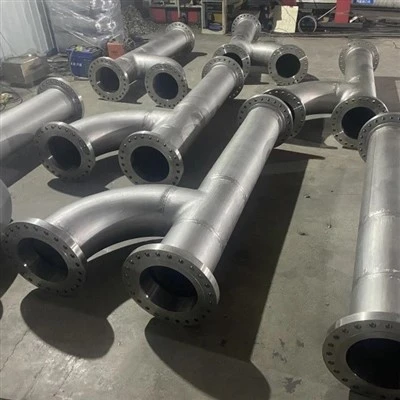
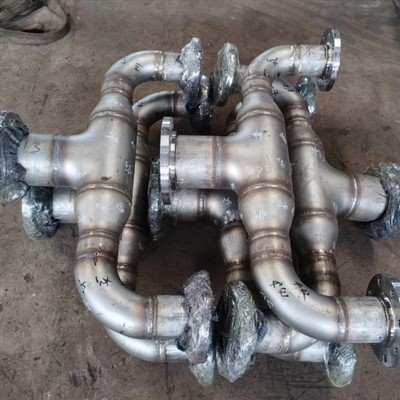
Sensitization occurs when chromium carbides precipitate at grain boundaries in the 425–815 °C range, depleting chromium below the 10.5% passivation threshold.
Low-carbon grades (304L, 316L with C ≤0.030%) are the most cost-effective prevention for welded components operating below 425 °C.
Stabilized grades (321 with Ti, 347 with Nb) bind carbon into stable carbides, ideal for high-temperature service above 425 °C.
Post-weld solution annealing (1040–1150 °C + rapid cooling) restores corrosion resistance in already-sensitized components.
Controlled heat input (≤1.5 kJ/mm for GTAW), low interpass temperatures (≤150 °C), and stringer bead techniques are essential supplementary measures.

|
Parameter |
Value |
|
Sensitization Temperature Range |
425–815 °C (800–1500 °F) |
|
Minimum Cr for Passivation |
≥10.5 wt% |
|
Low-Carbon Grade Max C |
≤0.030 wt% (ASTM A240) |
|
Solution Annealing Temperature |
1040–1150 °C (1900–2100 °F) |
|
Critical Cooling Rate |
Water quench or rapid air cool |
|
Stabilization Ratio (Ti/C, Nb/C) |
Ti ≥ 5×C, Nb ≥ 10×C (ASTM A240) |
Source: ASTM A240/A240M; ASM Handbook Vol. 1; Lippold & Kotecki, Welding Metallurgy and Weldability of Stainless Steels, Wiley, 2005.
Sensitization Intergranular Corrosion Mechanism
|
Sensitization is the loss of corrosion resistance in austenitic stainless steel caused by chromium carbide precipitation at grain boundaries, which depletes adjacent areas of chromium below the 10.5% threshold required for the passive oxide film. |
Austenitic stainless steels - such as 304, 316, 321, and 347 - rely on a self-healing chromium oxide (Cr₂O₃) passive film for corrosion resistance. This film requires a minimum of 10.5 wt% chromium in solid solution to remain stable and protective.
When standard grades (e.g., 304 with C ≤0.08%) are heated into the 425–815 °C (800–1500 °F) temperature range, carbon - which has limited solubility in the austenite matrix - migrates to grain boundaries and combines with chromium to form chromium-rich carbides, primarily Cr₂₃C₆. This process is called sensitization.
The consequences are severe:
- Chromium-depleted zones form along grain boundaries, where Cr drops below 10.5%.
- These zones become anodic relative to the bulk matrix, creating a galvanic cell.
- In corrosive environments (acids, chlorides, polythionic acids), intergranular corrosion (IGC) propagates rapidly along the weakened boundaries.
- The result: grain dropping, loss of mechanical integrity, and potential catastrophic failure - even when the bulk material appears unaffected.
- The standard industry test for sensitization is the ASTM A262 Practice A (oxalic acid etch) or Practice B–E (ferric sulfate / nitric acid immersion), which detect intergranular attack by metallographic examination or weight loss.
Source: ASTM A262 – Standard Practices for Detecting Susceptibility to Intergranular Attack in Austenitic Stainless Steels; ASM Handbook Vol. 13B: Corrosion, 2005.
Sensitization Risk in 425–815 °C Danger Zone
|
Every arc weld on standard austenitic stainless steel creates a heat-affected zone (HAZ) that passes through the 425–815 °C sensitization range. The time spent in this range - not just the peak temperature - determines the severity of carbide precipitation. |
During welding, the base metal adjacent to the fusion line experiences a thermal gradient from the melting point (~1450 °C) down to ambient temperature. The region between the fusion line and the unaffected base metal is the heat-affected zone (HAZ).
Within the HAZ, a narrow band inevitably resides in the 425–815 °C range - the sensitization window. The critical factor is not whether the HAZ reaches this range (it always does), but how long it remains there.
The time-temperature-sensitization (TTS) diagram quantifies this relationship:
- At 650–700 °C (the nose of the C-curve), sensitization can begin in as little as 5–15 minutes for 304 with 0.06% C.
- At 425 °C, it may take hundreds of hours - but in multi-pass welding, cumulative time can be significant.
- Low-carbon grades (304L, C ≤0.030%) shift the TTS curve dramatically to the right, requiring hours at peak temperature before sensitization begins.
- This is why welding parameters matter: higher heat input, slower cooling, preheating, and thick sections all extend the time in the danger zone and increase sensitization risk.
Source: Lippold, J.C. & Kotecki, D.J., Welding Metallurgy and Weldability of Stainless Steels, Wiley, 2005, Chapter 4; ASTM A240/A240M.
Low-Carbon Grades Eliminate Sensitization
|
Specifying 304L or 316L with carbon ≤0.030 wt% is the most straightforward and cost-effective method to prevent sensitization in welded austenitic stainless steel for service temperatures below 425 °C. |

The logic is simple: no excess carbon means no significant chromium carbide precipitation. ASTM A240 defines the "L-grade" carbon limit as ≤0.030 wt%, compared to ≤0.08 wt% for standard grades. This 63% reduction in carbon availability shifts the TTS curve so far to the right that sensitization under normal welding conditions is effectively eliminated.
Chemical Composition and Sensitization Risk Comparison
|
Property |
304 |
304L |
316 |
316L |
|
Carbon (max wt%) |
0.08 |
0.030 |
0.08 |
0.030 |
|
Chromium (wt%) |
18.0–20.0 |
18.0–20.0 |
16.0–18.0 |
16.0–18.0 |
|
Nickel (wt%) |
8.0–10.5 |
8.0–12.0 |
10.0–14.0 |
10.0–14.0 |
|
Molybdenum (wt%) |
- |
- |
2.0–3.0 |
2.0–3.0 |
|
ASTM Standard |
A240 |
A240 |
A240 |
A240 |
|
UNS Designation |
S30400 |
S30403 |
S31600 |
S31603 |
|
Sensitization Risk (as-welded) |
High |
Very Low |
High |
Very Low |
|
Min. Yield Strength (MPa) |
205 |
170 |
205 |
170 |
|
Typical Application |
General purpose |
Welded construction |
Chemical process |
Welded chemical equip. |
Source: ASTM A240/A240M – Standard Specification for Chromium and Chromium-Nickel Stainless Steel Plate, Sheet, and Strip for Pressure Vessels.
Key Considerations for Low-Carbon Grades
Yield strength trade-off: 304L has a minimum yield of 170 MPa vs. 205 MPa for 304. For pressure vessels designed to ASME Section VIII, this must be accounted for in wall thickness calculations.
Long-term service limit: For continuous service above 425 °C, even 304L can eventually sensitize over thousands of hours. Stabilized grades (321/347) are preferred for elevated-temperature applications.
Availability: 304L and 316L are among the most widely stocked stainless grades globally, making them a practical first choice for welded fabrication.
Source: ASME Boiler and Pressure Vessel Code, Section VIII, Division 1; ASTM A240/A240M.
Stabilized Grades (321 / 347) Lock Carbon with Titanium or Niobium
|
Adding titanium (321) or niobium (347) preferentially forms stable TiC or NbC carbides instead of Cr₂₃C₆, preserving chromium in solid solution and preventing sensitization - even during prolonged high-temperature exposure. |
Stabilization works on a different principle than carbon reduction. Instead of eliminating carbon, stabilized grades add an element with higher affinity for carbon than chromium:
Grade 321: Titanium (Ti ≥ 5 × C, but ≤0.70%) forms titanium carbide (TiC), which precipitates at temperatures above Cr₂₃C₆ formation, sequestering carbon before it can combine with chromium.
Grade 347: Niobium (Nb ≥ 10 × C, but ≤1.00%) forms niobium carbide (NbC), with even greater thermal stability than TiC.
Stabilized Grade Comparison
|
Property |
321 |
347 |
|
Stabilizing Element |
Titanium (Ti) |
Niobium (Nb) |
|
Carbon (max wt%) |
0.08 |
0.08 |
|
Chromium (wt%) |
17.0–19.0 |
17.0–20.0 |
|
Nickel (wt%) |
9.0–12.0 |
9.0–13.0 |
|
Ti Content (min wt%) |
5 × C min |
- |
|
Nb Content (min wt%) |
- |
10 × C min |
|
UNS Designation |
S32100 |
S34700 |
|
Sensitization Risk (as-welded) |
Very Low |
Very Low |
|
Max Service Temperature (°C) |
~815 |
~815 |
|
Key Advantage |
Lower cost; widely stocked |
Superior high-temp strength; better carbide stability |
Source: ASTM A240/A240M; ASM Handbook Vol. 1: Properties and Selection – Irons, Steels, and High-Performance Alloys.
Knife-Line Attack: The Stabilized Grade Caveat
Stabilized grades have one important limitation. During welding, the fusion zone reaches temperatures high enough (~1300 °C) to re-dissolve TiC and NbC. Upon cooling through the sensitization range, carbon is temporarily free and can form Cr₂₃C₆ in a very narrow band adjacent to the fusion line - a phenomenon called knife-line attack (KLA).
Prevention of KLA requires:
- Post-weld stabilization anneal at 870–925 °C, which allows Ti or Nb to re-capture the carbon.
- Using 347 over 321 in high-temperature service, as NbC re-forms more readily than TiC after dissolution.
- Combining a stabilized grade with low-carbon practice (e.g., 347 with C ≤0.04%) for critical applications.
Source: Lippold & Kotecki, Welding Metallurgy and Weldability of Stainless Steels, Wiley, 2005, Chapter 6; ASTM A240/A240M.
Post-Weld Solution Annealing Restores Corrosion Resistance After Sensitization
|
Solution annealing at 1040–1150 °C followed by rapid cooling dissolves chromium carbides and restores uniform chromium distribution, fully reversing sensitization - but it adds cost, risk of distortion, and is impractical for large or field-assembled components. |
When sensitization has already occurred - whether from improper welding of standard grades or from extended high-temperature service - solution annealing is the only process that can fully restore the microstructure.

The process involves three critical steps:
Heating: Raise the component to 1040–1150 °C. At these temperatures, Cr₂₃C₆ carbides dissolve back into the austenite matrix, returning chromium to solid solution.
Holding: Maintain temperature for a minimum of 1 minute per millimeter of thickness, ensuring complete carbide dissolution throughout the cross-section.
Rapid cooling: Water quench or rapid air cool through the 425–815 °C range fast enough to prevent re-precipitation of carbides.
Solution Annealing Parameters by Grade
|
Grade |
Soaking Temp (°C) |
Holding Time |
Cooling Method |
Result |
|
304 / 304L |
1040–1100 |
1 min/mm of thickness |
Water quench |
Full carbide dissolution |
|
316 / 316L |
1040–1100 |
1 min/mm of thickness |
Water quench |
Full carbide dissolution |
|
321 |
950–1050 |
1–2 min/mm of thickness |
Air or water cool |
TiC remains; CrC dissolves |
|
347 |
980–1060 |
1–2 min/mm of thickness |
Air or water cool |
NbC remains; CrC dissolves |
Source: ASTM A240/A240M; ASTM A182/A182M; ASM Handbook Vol. 4: Heat Treating.
Controlled Heat Input and Interpass Temperature Reduce Sensitization Risk
|
Minimizing the time the HAZ spends in the 425–815 °C range through low heat input, controlled interpass temperatures, and proper bead techniques is a necessary - but not sufficient - supplementary measure to prevent sensitization. |
Welding procedure variables directly influence the thermal cycle of the HAZ. While no welding procedure can completely eliminate passage through the sensitization range, proper control can significantly reduce the duration of exposure.
Welding Parameters: Low-Risk vs. High-Risk Practices
|
Parameter |
Low Risk Practice |
High Risk Practice |
Effect on Sensitization |
|
Heat Input (kJ/mm) |
≤1.5 (GTAW) |
≥2.5 (SAW, high amps) |
Higher input → longer time in danger zone |
|
Interpass Temp (°C) |
≤150 |
>250 |
Elevated interpass → cumulative sensitization |
|
Bead Technique |
Stringer bead |
Weave bead |
Weave increases heat input and HAZ width |
|
Pass Sequence |
Multi-pass, low amperage |
Single-pass, high amperage |
Multi-pass distributes heat, reduces peak temp |
|
Preheat |
Avoid (austenitic SS) |
Preheat >150 °C |
Preheat extends time in sensitization range |
|
Cooling Between Passes |
Air cool to ≤150 °C |
No control |
Uncontrolled cooling prolongs sensitization exposure |
Source: ASME Section IX – Welding Qualifications; AWS D18.1 – Welding of Austenitic Stainless Steel Tube and Pipe Systems.
Critical Rules for Austenitic Stainless Steel Welding
Never preheat austenitic stainless steel unless specifically required by a qualified procedure. Preheating extends time in the sensitization range.
Use GTAW (TIG) with stringer beads for the root pass and critical passes - it provides the lowest heat input and best control.
Limit interpass temperature to ≤150 °C (measured with contact pyrometer at least 25 mm from the weld). Use temp sticks or infrared for verification.
For GMAW (MIG), use pulse mode to reduce average heat input while maintaining adequate penetration.
Avoid weaving - stringer beads concentrate heat input and minimize the HAZ width.
For SMAW (stick), use small-diameter electrodes (2.5–3.2 mm) with low amperage and short arc length.
Source: AWS D18.1; ASME Section IX; Lippold & Kotecki, 2005.
Comprehensive Comparison: Which Prevention Strategy Fits Your Application?
|
The optimal sensitization prevention strategy depends on service temperature, corrosion severity, component geometry, and budget. Low-carbon grades are the first choice for most welded applications below 425 °C; stabilized grades dominate above 425 °C; solution annealing serves as rehabilitation or final assurance; and heat input control is a mandatory supplementary measure for all approaches. |
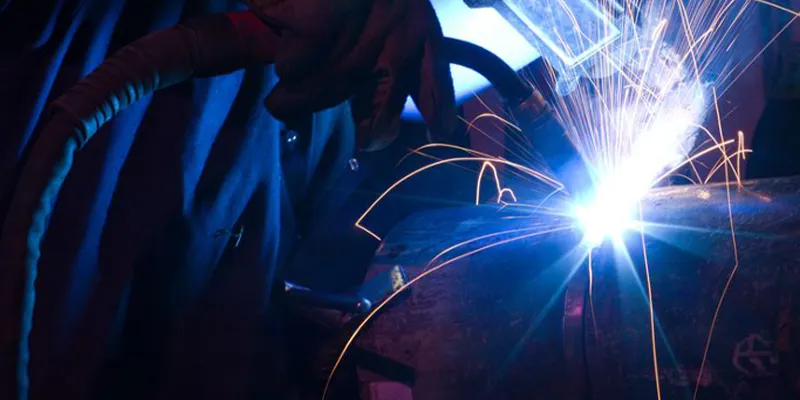
Multi-Dimensional Strategy Comparison
|
Criterion |
Low-Carbon (304L/316L) |
Stabilized (321/347) |
Solution Annealing |
Heat Input Control |
|
Mechanism |
Eliminates C source |
Binds C with Ti/Nb |
Dissolves Cr-carbides |
Minimizes time in 425–815 °C |
|
Effectiveness |
Very High (C ≤0.030%) |
Very High (stabilized carbides) |
Complete (if done correctly) |
Partial (reduces, does not eliminate) |
|
Applicable Grades |
304L, 316L, 317L, 904L |
321, 347 |
All austenitic grades |
All austenitic grades |
|
Cost Impact |
+5–15% over standard grades |
+10–25% over standard grades |
High (post-weld furnace) |
Low (procedural only) |
|
Limitations |
Lower yield strength (170 vs 205 MPa) |
Knife-line attack possible after reheat |
Distortion risk; impractical for large assemblies |
Cannot fully prevent sensitization alone |
|
Best For |
Welded pressure vessels, piping, chemical tanks |
High-temperature service (>425 °C) |
Rehabilitation of sensitized components |
Supplementary measure for all methods |
|
ASTM Reference |
A240 (L-grades) |
A240 (321/347) |
A182/A240 |
ASME IX / AWS D18.1 |
Source: ASTM A240/A240M; ASTM A182/A182M; ASME Section IX; AWS D18.1; Lippold & Kotecki, 2005.
Application-Based Selection Guide
|
Application |
Service Temp |
Corrosion Severity |
Recommended Strategy |
Grade |
|
Chemical tank (welded) |
Ambient–200 °C |
Moderate |
Low-carbon grade |
304L or 316L |
|
Offshore piping (welded) |
Ambient–150 °C |
High (chloride) |
Low-carbon + Mo |
316L |
|
Furnace component |
500–800 °C |
Moderate |
Stabilized grade |
321 or 347 |
|
Heat exchanger (welded tubes) |
200–450 °C |
High |
Low-carbon grade |
316L |
|
Large welded structure (field) |
Ambient |
Low–Moderate |
Low-carbon + heat control |
304L |
|
Rehab of sensitized component |
Any |
Any |
Solution anneal |
Per original grade |
|
High-temp flange connection |
425–650 °C |
Moderate–High |
Stabilized + anneal |
347 |
Source: JN Alloys engineering recommendation based on ASTM, ASME, and AWS standards; industry project experience in petrochemical and offshore applications.
Frequently Asked Questions
Q: Can 304L sensitize during welding?
A: Under normal welding conditions, 304L (C ≤0.030%) does not sensitize because the carbon content is too low to form significant chromium carbides. However, prolonged exposure above 425 °C over thousands of hours can eventually cause sensitization, even in L-grades. For service above 425 °C, use stabilized grades (321 or 347) instead.
Q: What is the difference between intergranular corrosion (IGC) and knife-line attack (KLA)?
A: IGC occurs in the HAZ where the metal was heated into the 425–815 °C sensitization range, forming a relatively wide sensitized band. KLA is a specific form of IGC in stabilized grades (321, 347) where the fusion zone reaches temperatures high enough to dissolve stabilizing carbides (TiC, NbC), and upon cooling, a narrow band of Cr₂₃C₃ forms right at the fusion line. KLA is narrower but can be deeper and more aggressive than conventional IGC.
Q: Is post-weld solution annealing always necessary for 304L welds?
A: No. For 304L welds in ambient to moderate-temperature service (below 425 °C), solution annealing is typically not required because the low carbon content prevents significant sensitization. Post-weld annealing is reserved for: (1) standard grades (304, 316) welded without L-grade filler, (2) critical service where zero sensitization tolerance exists, or (3) rehabilitation of already-sensitized components.
Q: Why is preheating not recommended for austenitic stainless steel?
A: Unlike ferritic and martensitic stainless steels, austenitic grades are not hardenable by quenching - they do not form brittle martensite. Preheating austenitic stainless steel extends the time the HAZ spends in the 425–815 °C sensitization range, promoting carbide precipitation. The only exception is very specific applications where hydrogen cracking is a concern, which is rare in austenitic grades.
Q: Should I use 321 or 347 for high-temperature flange applications?
A: For service above 425 °C, Grade 347 is generally preferred over 321 because: (1) NbC is more thermally stable than TiC, re-forming more readily after dissolution in the weld pool; (2) 347 has better creep-rupture strength at elevated temperatures; (3) 347 is less susceptible to knife-line attack. However, 321 may be chosen for cost reasons or availability when the service temperature is moderate (425–540 °C).
Q: How do I test for sensitization after welding?
A: The standard industry method is ASTM A262, which includes five practices: Practice A (oxalic acid etch, rapid screening), Practice B (ferric sulfate–sulfuric acid, weight loss), Practice C (nitric acid, weight loss for Mo-bearing grades), Practice E (copper–copper sulfate–sulfuric acid, bend test), and Practice F (copper–copper sulfate–50% sulfuric acid, for Mo grades). Practice A is the most common for quick screening; Practices B–F provide quantitative results.
Q: Can sensitization occur in duplex stainless steels?
A: Yes, but the mechanism and severity differ. Duplex grades (2205, 2507) have a two-phase microstructure (austenite + ferrite). Chromium carbide precipitation can occur in the ferrite phase, but the continuous austenite network provides a path for chromium re-diffusion from the ferrite, making sensitization less severe. Modern duplex grades with low nitrogen and carbon (e.g., 2205 with C ≤0.030%) are highly resistant to sensitization.