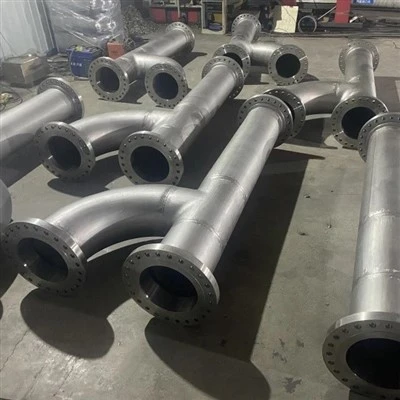
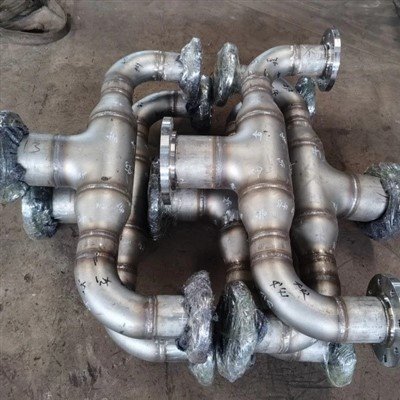
Welding transforms stainless steel. The intense heat of the arc melts the base metal and filler wire, creating a fusion zone that cools rapidly. This thermal cycle leaves behind residual stresses, microstructural changes, and in some cases, a loss of corrosion resistance. Post-weld heat treatment (PWHT) is the controlled application of heat after welding to restore properties, relieve stress, or prevent future problems.
However, PWHT is not a universal remedy. For certain stainless steel grades, heat treatment after welding can actually cause more harm than good. The distinction between when PWHT is essential and when it is harmful is one of the most consequential decisions in stainless steel fabrication. A wrong choice can lead to stress corrosion cracking, sensitization, intergranular corrosion, or costly rework.

This article provides a clear, evidence-based guide. Each section follows a 'conclusion-first' format: we state the finding, then explain the reasoning and cite authoritative sources. The goal is to give engineers, procurement teams, and quality managers a reference they can trust and cite with confidence.
Austenitic Stainless Steels: PWHT
Austenitic stainless steels represent the largest family of stainless alloys used in industry. Grades such as 304/L, 316/L, 321, and 347 are designed to be weldable without mandatory post-weld heat treatment. Their face-centered cubic (FCC) crystal structure does not undergo a martensitic transformation during cooling, which means the primary risks that PWHT addresses in carbon steels -- hardening and embrittlement -- simply do not apply.
The American Welding Society (AWS) D1.6 code, which governs structural welding of stainless steel, does not mandate PWHT for austenitic grades under normal service conditions. ASME Section IX similarly does not require PWHT as a condition of procedure qualification for these materials.
This does not mean PWHT is never used on austenitic steels. In specific scenarios -- such as severe corrosive environments, stress corrosion cracking (SCC) risk, or when fabrication codes explicitly call for it -- PWHT may be specified. But the default position, supported by decades of field experience, is that these grades perform well in the as-welded condition.
Table 1: PWHT Requirements for Common Austenitic Grades
|
Grade |
Typical PWHT Requirement |
Key Risk Without PWHT |
When PWHT May Be Considered |
|
304 / 304L |
Not required (AWS D1.6) |
Sensitization in HAZ |
SCC service above 60 C |
|
316 / 316L |
Not required (AWS D1.6) |
Sensitization in HAZ |
Urea, acid environments |
|
321 |
Not required (stabilized) |
TiC prevents sensitization |
High-temp service > 400 C |
|
347 |
Not required (stabilized) |
NbC prevents sensitization |
High-temp service > 400 C |
|
310 / 310S |
Not required |
Minor sensitization risk |
Cyclic thermal service |
Source: AWS D1.6:2017 (Structural Welding Code -- Stainless Steel); ASME Boiler and Pressure Vessel Code Section IX (2023 Edition); Outokumpu Stainless Steel Handbook, 2020
Sensitization: Incorrect Heat Treatment
When austenitic stainless steel is held in the temperature range of approximately 500 to 850 degrees Celsius (932 to 1562 degrees Fahrenheit), chromium atoms migrate from the solid solution matrix to grain boundaries, where they combine with carbon to form chromium carbides (Cr23C6). This process is called sensitization. The grain-boundary regions become depleted of chromium -- the very element that provides stainless steel its corrosion resistance. If the chromium content falls below approximately 12% at the boundary, the steel becomes susceptible to intergranular corrosion.

PWHT, if performed incorrectly, can deliberately place the weldment into this dangerous temperature zone. For standard grades like 304 and 316, a stress-relief heat treatment at 600-700 C would cause severe sensitization. This is precisely why PWHT is generally avoided for these grades unless accompanied by a solution anneal at 1040-1100 C followed by rapid cooling (quenching).
Stabilized grades (321 with titanium, 347 with niobium) and low-carbon grades (304L, 316L) were developed specifically to resist sensitization. The stabilizing elements preferentially combine with carbon, preventing chromium depletion. Low-carbon grades reduce the total carbon available for carbide formation.
Table 2: Thermal Processing Windows for Austenitic Stainless Steels
|
Phenomenon |
Temperature Range |
Mechanism |
Consequence |
|
Sensitization |
500-850 C (932-1562 F) |
Cr23C6 precipitation at grain boundaries |
Intergranular corrosion |
|
Solution Anneal |
1040-1100 C (1904-2012 F) |
Carbides dissolve back into matrix |
Corrosion resistance restored |
|
Stabilization Anneal |
850-950 C (1562-1742 F) |
TiC/NbC preferentially forms |
Prevents Cr depletion |
|
Stress Relief (Harmful) |
600-700 C (1112-1292 F) |
Falls inside sensitization zone |
Causes sensitization |
Source: ASM Handbook Volume 6A: Welding Fundamentals and Processes (2011); ASTM A240/A240M-24; Outokumpu Stainless Steel Handbook, 2020
Martensitic Stainless Steels: PWHT
Martensitic stainless steels harden by the formation of martensite during cooling from the austenitizing temperature. Welding naturally produces a thermal cycle that takes the heat-affected zone (HAZ) through this transformation. The result is a hard, brittle microstructure with high residual stress. Without PWHT, the welded joint is vulnerable to cracking -- sometimes immediately upon cooling, sometimes delayed over hours or days (delayed cracking).
The standard PWHT procedure for martensitic stainless steels involves: (1) preheating before welding to slow the cooling rate and reduce the hardness differential, (2) immediately performing a post-weld tempering treatment at 650-750 C, and (3) in some cases, a full normalize-and-temper cycle. ASME Section VIII and AWS D1.6 both address these requirements.
Precipitation-hardening martensitic grades such as 17-4PH (UNS S17400) and 15-5PH (UNS S15500) follow a different route: they receive a solution treatment followed by an aging cycle at 480-620 C (H900 to H1150 conditions). The specific aging temperature determines the final strength-toughness balance.
Table 3: PWHT Parameters for Martensitic and Precipitation-Hardening Stainless Steels
|
Grade |
UNS Number |
PWHT Type |
Temperature Range |
Expected Hardness After PWHT |
|
410 |
S41000 |
Temper |
650-750 C |
22-28 HRC |
|
420 |
S42000 |
Temper |
650-750 C |
22-30 HRC |
|
431 |
S43100 |
Temper |
600-700 C |
28-35 HRC |
|
17-4PH |
S17400 |
Age (H900) |
480 C / 1 hr |
38-44 HRC |
|
17-4PH |
S17400 |
Age (H1150) |
620 C / 4 hr |
28-36 HRC |
|
15-5PH |
S15500 |
Age (H900) |
480 C / 1 hr |
38-44 HRC |
Source: ASME SA-240/SA-240M (2023); AMS 5354 (17-4PH Heat Treatment); ASM Specialty Handbook: Stainless Steels (1994)
Duplex Stainless Steels: PWHT
Duplex stainless steels derive their strength from a balanced microstructure of approximately 50% austenite and 50% ferrite. Welding disrupts this balance. The weld metal and HAZ experience rapid thermal cycles that shift the phase ratio -- typically increasing the ferrite content. If the ferrite fraction exceeds approximately 70%, the joint becomes susceptible to reduced toughness and corrosion resistance.

In most fabrication scenarios, the use of appropriate filler metals (over-alloyed with nickel to promote austenite reformation) and controlled heat input keep the phase balance within acceptable limits without PWHT. However, when multi-pass welding, thick sections, or poor heat input control cause excessive ferrite or the formation of harmful intermetallic phases (sigma, chi), a solution anneal at 1020-1100 C followed by water quenching can restore the correct microstructure.
It is critical to distinguish between stress relief and solution annealing for duplex steels. A stress-relief treatment at 600-700 C would precipitate sigma phase and severely damage both mechanical properties and corrosion resistance. Only a full solution anneal above the sigma solvus temperature is acceptable.
Table 4: PWHT Parameters for Duplex Stainless Steels
|
Duplex Grade |
Solution Anneal Temperature |
Cooling Method |
Risk Without PWHT |
Acceptable Ferrite Range |
|
2205 (UNS S31803) |
1020-1100 C |
Water quench |
Reduced pitting resistance |
30-70% (target 50%) |
|
2507 (UNS S32750) |
1050-1120 C |
Water quench |
Sigma phase, brittle HAZ |
35-65% (target 50%) |
|
2304 (UNS S32304) |
950-1050 C |
Water quench |
Minor ferrite excess |
35-65% |
Source: ASTM A240/A240M-24; NACE MR0175/ISO 15156; Outokumpu Duplex Stainless Steels Handbook (2015); SAF 2205 and SAF 2507 Data Sheets (Sandvik)
Nickel Alloys: PWHT
Wrought nickel-based corrosion-resistant alloys such as Inconel 625 (UNS N06625), Hastelloy C276 (UNS N10276), and Monel 400 (UNS N04400) are used in the most demanding chemical, offshore, and aerospace environments. These solid-solution alloys do not harden during welding and therefore do not require PWHT for stress relief or hardness control.
However, precipitation-hardening nickel alloys -- Inconel 718 (UNS N07718), Inconel X-750 (UNS N07750), and Rene 41 (UNS N07001) -- follow a different rule. These alloys achieve their high strength through controlled precipitation of gamma-prime or gamma-double-prime phases. After welding, they require a solution treatment followed by aging. The aging cycle must be performed at precise temperatures to achieve the target strength while maintaining adequate toughness.
For Hastelloy alloys, a special consideration applies: some grades (C-22, C-276) may develop a small amount of harmful intermetallic phase after prolonged exposure in the 600-900 C range. While this is not strictly a PWHT issue, it means that any post-weld heating -- even for forming or straightening -- must be carefully controlled to avoid unintended metallurgical damage.
Table 5: PWHT Requirements for Common Nickel Alloys
|
Nickel Alloy |
UNS Number |
PWHT Requirement |
Reason |
|
Inconel 625 |
N06625 |
Not required |
Solid solution, no hardening |
|
Hastelloy C-276 |
N10276 |
Not required |
Solid solution, no hardening |
|
Monel 400 |
N04400 |
Not required |
Solid solution, no hardening |
|
Inconel 718 |
N07718 |
Solution + Age (720 C) |
Precipitation hardened |
|
Inconel X-750 |
N07750 |
Solution + Age (705 C) |
Precipitation hardened |
|
Hastelloy C-22 |
N06022 |
Not required |
Avoid 600-900 C exposure |
Source: ASME SB-443 (Inconel 625); ASME SB-575 (Hastelloy C-276); AMS 5662 (Inconel 718 Heat Treatment); Special Metals Corporation Technical Bulletins (2023)
Code and Standard References for PWHT of Stainless Steels
The decision to apply or omit PWHT is not arbitrary. It must be justified by the applicable design code, the material specification, and the service conditions. Below is a summary of the most frequently referenced codes and standards that address PWHT for stainless steel and nickel alloys.
Table 7: Key Codes and Standards Addressing PWHT for Stainless Steels
|
Code / Standard |
Scope |
PWHT Relevance for Stainless |
|
AWS D1.6:2017 |
Structural welding of stainless steel |
Does not mandate PWHT for austenitic; requires temper for martensitic |
|
ASME Section VIII Div.1 |
Pressure vessel design |
PWHT rules in UCS-56 (carbon steel) and UHA-32 (stainless steel) |
|
ASME Section IX |
Welding procedure qualification |
Specifies PWHT as an essential variable when required |
|
ASTM A240/A240M-24 |
Stainless steel plate/sheet/strip |
Heat treatment requirements per grade in the specification |
|
NACE MR0175 / ISO 15156 |
Sour service materials |
Limits on hardness and microstructure after welding |
|
API 580 / 581 |
Risk-based inspection |
PWHT as a mitigation factor for cracking mechanisms |
|
EN 13445 / EN 13480 |
European pressure vessel / piping |
PWHT requirements per material group and thickness |
Source: AWS D1.6:2017; ASME BPVC 2023 Edition; ASTM International; NACE International; American Petroleum Institute; European Committee for Standardization (CEN)
Conclusion
Post-weld heat treatment is a powerful tool when applied correctly and a destructive force when misapplied. The evidence is clear:
Austenitic stainless steels (304, 316, 321, 347) rarely need PWHT and can be harmed by it if the treatment falls within the sensitization range.
Martensitic stainless steels (410, 420, 431) almost always require PWHT (tempering) to prevent brittle failure.
Duplex stainless steels (2205, 2507) may require solution annealing if welding conditions disrupt the phase balance, but stress relief is always harmful.
Nickel alloys follow their own rules: solid-solution grades need no PWHT, while precipitation-hardening grades must be aged.
The applicable design code (ASME, AWS, NACE, EN) must always be the primary authority for PWHT decisions.
For specifications, procurement inquiries, or technical support on stainless steel and nickel alloy products, contact JN Alloys -- your trusted partner in high-performance alloys.