
|
QUICK ANSWER
Hastelloy G-35 (UNS N06035) outperforms Hastelloy G-30 (UNS N06030) in wet-process phosphoric acid, boiling nitric acid, boiling dilute hydrochloric acid, and chloride-driven pitting, crevice corrosion, and stress-corrosion cracking, because its higher chromium (33.2% vs. 30%) and molybdenum (8.1% vs. 5.5%) content build a more stable passive film in oxidizing and chloride-contaminated acids.
G-30 remains genuinely competitive - and in some cases superior - in mid-concentration (30-70%) sulfuric acid at 66-93°C (150-200°F), where its 2% copper addition still earns its keep. For new wet-process phosphoric acid evaporators, nitric-acid duty, or chloride-fouled equipment, specify G-35. For existing G-30 systems or mid-range sulfuric acid service, G-30 remains a sound, lower-cost choice. |
What Are Hastelloy G-30 and G-35, and How Do Their Compositions Differ?
G-35 (UNS N06035) is a higher-chromium, higher-molybdenum, low-iron evolution of G-30 (UNS N06030), purpose-built by Haynes International to extend corrosion resistance beyond G-30's original wet-process phosphoric acid envelope into more severe oxidizing and chloride-contaminated conditions.

Both alloys belong to the nickel-chromium-molybdenum "G" family developed specifically for wet-process phosphoric acid production - one of the most corrosive industrial environments, since the commercial acid contains unreacted sulfuric acid, fluoride ions, and chloride ions alongside the primary phosphoric acid. G-30 was the first-generation solution; G-35 was introduced later with a leaner, higher-chromium chemistry that removes most of the iron and trades G-30's copper-and-tungsten strategy for higher chromium and molybdenum.
|
Element (wt.%) |
Hastelloy G-30 (N06030) |
Hastelloy G-35 (N06035) |
|
Nickel |
Balance (~43 typical) |
58 min. (Balance) |
|
Chromium |
30 |
33.2 |
|
Molybdenum |
5.5 |
8.1 |
|
Iron |
15 |
2 max. |
|
Tungsten |
2.5 |
0.6 max. |
|
Copper |
2 |
0.3 max. |
|
Cobalt |
5 max. |
1 max. |
|
Niobium |
0.8 |
- |
|
Carbon |
0.03 max. |
0.05 max. |
|
UNS designation |
N06030 |
N06035 |
|
Werkstoff no. |
2.4603 |
2.4643 |
Source: Haynes International nominal composition data sheets for HASTELLOY G-30 and G-35 alloys.
The single biggest metallurgical difference is iron: G-30 carries 15% iron while G-35 is capped at 2%. Iron dilutes the chromium-rich passive film and is broadly detrimental to performance in oxidizing acids, which is the main reason G-35's higher-Cr, low-Fe chemistry pulls ahead in phosphoric and nitric acid despite the two alloys sharing a similar nickel-chromium-molybdenum design philosophy.
Which Alloy Better Resists Wet-Process Phosphoric Acid?
G-35 shows materially lower corrosion rates than G-30 across most of the commercially relevant wet-process phosphoric acid range, though the two alloys converge - and G-30 edges very slightly ahead - at the single most severe condition tested: 85% acid at a rolling boil.
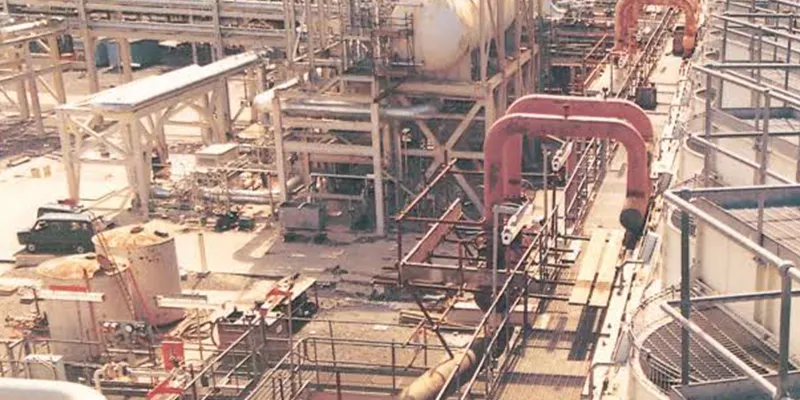
Wet-process phosphoric acid (P₂O₅) is produced by digesting phosphate rock with sulfuric acid and is progressively concentrated from about 30% up to 54% P₂O₅ through a series of evaporators; both alloys were developed and tested specifically for this duty, including in real 36/48/54% wet-process acid at 121°C (250°F) supplied by a Florida producer. The reagent-grade boiling data below isolates the acid-strength effect on a like-for-like basis.
|
Phosphoric acid conc. |
G-30, boiling (mm/y) |
G-35, boiling (mm/y) |
|
50% |
0.01 |
0.01 |
|
60% |
0.14 |
0.01 |
|
70% |
0.35 |
0.11 |
|
80% |
0.61 |
0.42 |
|
85% |
0.84 |
0.99 |
Source: Haynes International reagent-grade phosphoric acid corrosion tables, HASTELLOY G-30 and G-35 alloy data sheets (Corrosion Laboratory Jobs 5-03, 30-04, 449-82).
At 60-80% acid, G-35's corrosion rate runs 30-75% lower than G-30's - a meaningful difference for evaporator tube life. The reversal at 85% boiling is a useful reminder that alloy ranking in acid service is condition-specific: for the most concentrated, hottest phosphoric acid duty points, service data or coupon testing at the actual plant condition should confirm the selection rather than assuming the general trend holds at the extreme end of the range.
How Do G-30 and G-35 Compare in Nitric Acid and Mixed Oxidizing-Acid Service?
G-35's higher chromium content gives it a consistent, roughly 2-3x lower corrosion rate than G-30 across every matched concentration of boiling nitric acid, making it the stronger candidate for nitric-acid pickling baths, mixed nitric/hydrofluoric stainless-pickling service, and other strongly oxidizing or mixed-acid streams containing nitric acid.
|
Nitric acid conc. |
G-30, boiling (mm/y) |
G-35, boiling (mm/y) |
|
50% |
0.08 |
0.03 |
|
60% |
0.14 |
0.06 |
|
65% |
0.16 |
0.07 |
|
70% |
Not published at boiling |
0.10 |
Source: Haynes International nitric acid corrosion tables, HASTELLOY G-30 and G-35 alloy data sheets (Corrosion Laboratory Job 6-03).
Chromium content is the primary driver of passivity in oxidizing acids, and Haynes International's own comparative 0.1 mm/y line plots place G-35's performance close to Alloy 625 in hydrochloric and sulfuric acid - a materially higher bar than G-30, whose 0.1 mm/y line in sulfuric acid sits slightly above 625's. For any mixed-acid stream where the oxidizing (nitric-type) component dominates the corrosion mechanism, G-35 is the more conservative and typically the more economical long-term specification, since lower corrosion allowance can translate into thinner wall sections and longer service intervals.
Which Alloy Performs Better in Reducing Acids - Hydrochloric and Sulfuric?
G-35 shows lower corrosion rates than G-30 in boiling, dilute hydrochloric and sulfuric acid, but G-30 is measurably - in some cases dramatically - better than G-35 in the mid-concentration (30-70%) sulfuric acid band at 66-93°C (150-200°F), where G-30's copper addition still provides a real, quantifiable benefit. Neither alloy is the first choice for concentrated reducing acid duty; Hastelloy alloys such as C-276 or B-3 are generally better suited there.
Boiling, Dilute Acid: G-35 Ahead
|
Condition |
G-30 (mm/y) |
G-35 (mm/y) |
|
HCl, 1%, boiling |
0.01 |
0.05 |
|
HCl, 2%, boiling |
9.47 |
0.05 |
|
H2SO4, 5%, boiling |
0.47 |
0.07 |
|
H2SO4, 10%, boiling |
0.78 |
0.11 |
|
H2SO4, 20%, boiling |
1.35 |
0.59 |
Source: Haynes International hydrochloric and sulfuric acid corrosion tables, HASTELLOY G-30 and G-35 alloy data sheets.
The 2% boiling HCl result is the standout data point: G-30's corrosion rate jumps to 9.47 mm/y - an essentially unusable rate for a pressure boundary - while G-35 holds at 0.05 mm/y, nearly 200x lower. That gap alone rules G-30 out for any boiling, dilute-HCl duty point that G-35 can handle comfortably.
Mid-Concentration Sulfuric Acid at 66-93°C: G-30 Ahead
|
H2SO4 conc. |
Temperature |
G-30 (mm/y) |
G-35 (mm/y) |
|
30% |
93°C (200°F) |
0.55 |
2.62 |
|
40% |
93°C (200°F) |
0.54 |
5.41 |
|
50% |
79°C (175°F) |
0.26 |
2.30 |
|
60% |
79°C (175°F) |
0.27 |
2.45 |
|
70% |
66°C (150°F) |
0.11 |
1.62 |
Source: Haynes International sulfuric acid corrosion tables, HASTELLOY G-30 and G-35 alloy data sheets (Corrosion Laboratory Jobs 449-82 and 45-02).
Here the ranking flips outright: at 40% sulfuric acid and 93°C, G-30 runs roughly ten times slower than G-35 (0.54 vs. 5.41 mm/y). This is the practical payoff of G-30's copper and tungsten additions, and it means the newer, more heavily alloyed G-35 is not a universal upgrade - for a plant running mid-strength sulfuric acid streams in this temperature window, G-30 is very likely the technically better and more economical choice.
How Do G-30 and G-35 Compare for Pitting, Crevice Corrosion, and Chloride Stress-Corrosion Cracking?
G-35 provides a substantially wider margin against localized chloride attack than G-30 - a 40°C higher critical pitting temperature and a 20°C higher critical crevice temperature in acidified ferric chloride - and resists chloride stress-corrosion cracking indefinitely in boiling 45% magnesium chloride, while G-30 eventually cracks.

Chlorides concentrate beneath scale and deposits inside phosphoric acid evaporators, so localized-corrosion resistance - not just bulk acid resistance - often governs real-world tube life. This is the specific failure mode G-35 was engineered to push back.
|
Alloy |
CPT, ASTM G48 (°C) |
CCT, ASTM G48 (°C) |
Time to SCC, boiling 45% MgCl2 (ASTM G36) |
|
316L stainless |
15 |
0 |
2 h |
|
254SMO |
60 |
30 |
24 h |
|
Hastelloy G-30 |
55 |
25 |
168 h |
|
Hastelloy G-35 |
95 |
45 |
No cracking in 1,008 h |
|
Alloy 625 |
100 |
40 |
No cracking in 1,008 h |
Source: Haynes International critical pitting/crevice temperature data (acidified 6% FeCl3, ASTM G48) and stress-corrosion cracking data (boiling 45% MgCl2, ASTM G36), HASTELLOY G-30 and G-35 alloy data sheets.
G-35's 95°C critical pitting temperature puts it in the same class as Alloy 625, and its indefinite resistance to cracking in the 1,008-hour magnesium chloride test - the same result achieved by 625 - is a decisive advantage for evaporators, heat exchangers, or any equipment with crevices, gaskets, or under-deposit conditions in chloride-bearing phosphoric or mixed acid streams.
Do G-30 and G-35 Retain Corrosion Resistance in the As-Welded Condition?
Yes. Neither alloy requires post-weld heat treatment for corrosion performance - both retain resistance close to the wrought base metal as-welded, and G-35's weld metal actually outperforms its own wrought base metal in concentrated (90%) sulfuric acid.
|
Condition |
G-30 weld metal (mm/y) |
G-30 wrought (mm/y) |
G-35 weld metal (mm/y) |
G-35 wrought (mm/y) |
|
H2SO4 90%, 66°C |
2.60 |
2.61 |
1.69 |
3.12 |
|
HCl 20%, 38°C |
0.52 |
0.30 |
0.45 |
0.42 |
|
HNO3 70%, boiling |
0.14 |
0.14 |
0.12 |
0.10 |
Source: Haynes International all-weld-metal (multi-pass GMAW cruciform) vs. wrought base-metal corrosion data, HASTELLOY G-30 and G-35 alloy data sheets.
Both alloys are qualified for GTAW, GMAW, and SMAW using matching filler metals - ERNiCrMo-11/ENiCrMo-11 for G-30 and ERNiCrMo-22/ENiCrMo-22 for G-35 - and both are supplied mill-annealed, with re-annealing required only after hot forming or cold work exceeding roughly 7% outer-fiber elongation, not as a corrosion-resistance requirement for welds.
How Do Mechanical Properties and Fabrication Characteristics Compare?
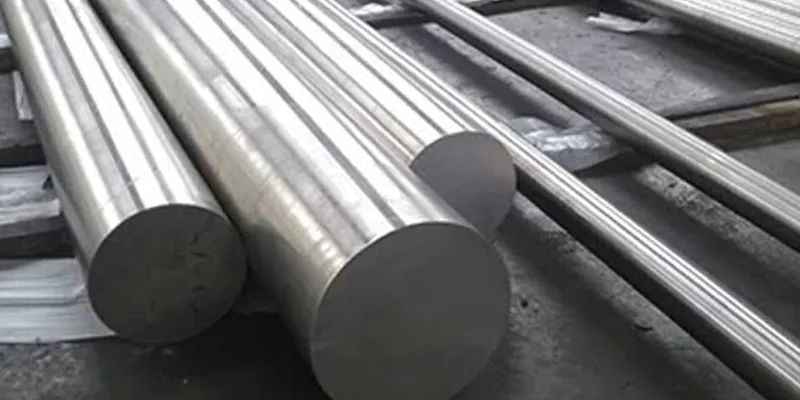
G-30 and G-35 share essentially identical minimum strength levels at room temperature, but G-35 offers higher ductility and hardness in the mill-annealed condition, and both alloys work-harden faster than austenitic stainless steels, requiring intermediate anneals during heavy cold forming.
|
Property (RT, 0.5 in / 12.7 mm plate) |
Hastelloy G-30 |
Hastelloy G-35 |
|
0.2% offset yield strength |
317 MPa (46 ksi) |
317 MPa (46 ksi) |
|
Ultimate tensile strength |
689 MPa (100 ksi) |
689 MPa (100 ksi) |
|
Elongation |
64% |
72% |
|
Hardness (plate) |
80 HRB |
87 HRB |
|
Annealing temperature |
1,177°C (2,150°F) |
1,121°C (2,050°F) |
Source: Haynes International tensile and hardness data, HASTELLOY G-30 and G-35 alloy data sheets.
Which ASTM, ASME, and Industry Standards Govern G-30 and G-35?
Both alloys are covered by a near-parallel set of ASTM/ASME product-form specifications and share NACE MR0175/ISO 15156 sour-service qualification, but they carry different specification numbers for sheet/plate and rod/bar, and different AWS filler-metal designations - details that matter when writing procurement specifications and mill-certificate reviews.
|
Product form / requirement |
Hastelloy G-30 (N06030) |
Hastelloy G-35 (N06035) |
|
Sheet, plate, strip |
ASTM/ASME B582 / SB582 |
ASTM/ASME B575 / SB575 |
|
Billet, rod, bar |
ASTM/ASME B581 / SB581 |
ASTM/ASME B574 / SB574 |
|
Seamless pipe & tube |
ASTM/ASME B622 / SB622 |
ASTM/ASME B622 / SB622 |
|
Welded pipe & tube |
ASTM/ASME B619, B626 / SB619, SB626 |
ASTM/ASME B619, B626 / SB619, SB626 |
|
Fittings |
ASTM/ASME B366, B462 |
ASTM/ASME B366, B462 |
|
Forgings |
ASTM/ASME B462 |
ASTM/ASME B564, B462 / SB564, SB462 |
|
Coated electrodes |
AWS A5.11, ENiCrMo-11 |
AWS A5.11, ENiCrMo-22 |
|
Bare wire/rod |
AWS A5.14, ERNiCrMo-11 |
AWS A5.14, ERNiCrMo-22 |
|
Sour-service qualification |
NACE MR0175 / ISO 15156 |
NACE MR0175 / ISO 15156, ASME Code Case 2484 |
|
Werkstoff / DIN |
2.4603, NiCr30FeMo |
2.4643, NiCr33Mo8 |
Source: Haynes International "Specifications and Codes" tables, HASTELLOY G-30 and G-35 alloy data sheets.
Which Alloy Should You Specify - G-30 or G-35?
Specify G-35 for new wet-process phosphoric acid equipment, nitric or mixed oxidizing-acid duty, and any chloride-fouled or crevice-prone service; specify G-30 for existing systems already qualified on that chemistry, and for mid-concentration (30-70%) sulfuric acid duty at moderate temperature, where it is the stronger and more economical performer.

- Choose G-35 for: Higher acid concentrations and temperatures in phosphoric acid evaporators, or new-build evaporator tube bundles.
- Choose G-35 for: Nitric acid or mixed nitric-acid pickling and cleaning circuits.
- Choose G-35 for: Equipment with crevices, gaskets, deposits, or other conditions prone to chloride pitting, crevice attack, or chloride stress-corrosion cracking.
- Choose G-35 for: Welded assemblies where higher ductility and toughness in the as-welded condition are valued.
- Choose G-30 for: Mid-concentration (30-70%) sulfuric acid service at 66-93°C, where its copper addition delivers a real, data-backed advantage over G-35.
- Choose G-30 for: Existing plants and spares programs already qualified and stocked on G-30, where switching alloys adds procurement complexity without a corrosion-driven need.
- Choose G-30 for: Budget-constrained projects where G-30's lower nickel, chromium, and molybdenum content offers a genuine first-cost advantage and the service condition falls inside its proven envelope.
In all cases, cross-check the selection against actual plant chemistry - including chloride, fluoride, and free-sulfuric-acid impurity levels in wet-process phosphoric acid - since both alloys' published corrosion data are generated in reagent-grade or defined test solutions, and Haynes International itself recommends field verification prior to industrial use.
Frequently Asked Questions
Q: What is the main difference between Hastelloy G-30 and G-35?
A: G-35 (UNS N06035) has higher chromium (33.2% vs. 30%) and molybdenum (8.1% vs. 5.5%), and far less iron (2% max vs. 15%), than G-30 (UNS N06030). This gives G-35 better resistance to phosphoric acid, nitric acid, and chloride pitting, while G-30 retains an edge in mid-concentration sulfuric acid thanks to its copper addition.
Q: Is Hastelloy G-35 a direct drop-in replacement for G-30?
A: Not universally. G-35 is the stronger choice for most phosphoric, nitric, and chloride-pitting service, but published Haynes International data shows G-30 outperforming G-35 in boiling and near-boiling 30-70% sulfuric acid, so the substitution should be checked against the actual acid chemistry and temperature.
Q: Which alloy is better for wet-process phosphoric acid evaporators?
A: G-35 shows lower corrosion rates than G-30 across most of the 50-80% P2O5 range, and its critical pitting temperature (95°C) and crevice temperature (45°C) are far higher than G-30's (55°C and 25°C), making it the stronger choice where chlorides concentrate beneath deposits.
Q: Do G-30 and G-35 require post-weld heat treatment?
A: No. Both alloys are solid-solution strengthened and retain corrosion resistance close to the wrought base metal in the as-welded condition using matched GMAW, GTAW, or SMAW filler metals.
Q: How does G-35 compare to Alloy 625 in phosphoric and mixed acids?
A: Haynes International's comparative data places G-35 close to Alloy 625 in hydrochloric and sulfuric acid resistance and in critical pitting temperature (95°C for G-35 vs. 100°C for 625), making G-35 a strong, often more cost-effective alternative in phosphoric acid and mixed-acid duty.
Q: What ASTM standards cover Hastelloy G-30 and G-35 pipe and tube?
A: Both alloys share ASTM B622 for seamless pipe and tube and ASTM B619/B626 for welded pipe and tube. Plate and sheet differ: ASTM B582 for G-30 versus ASTM B575 for G-35; rod and bar differ similarly: ASTM B581 for G-30 versus ASTM B574 for G-35.
Q: Can G-30 or G-35 be used where chlorides are present in the acid?
A: Yes, both were developed with chloride-contaminated wet-process phosphoric acid in mind, but G-35 offers a substantially larger safety margin: it resisted cracking for over 1,008 hours in boiling 45% magnesium chloride, while G-30 cracked at 168 hours.