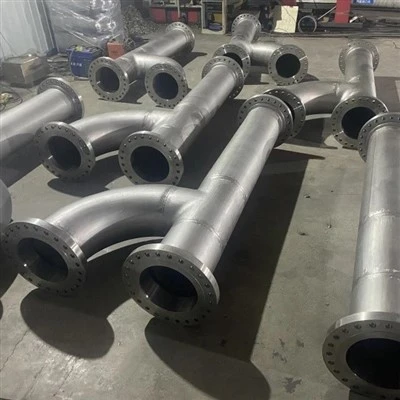
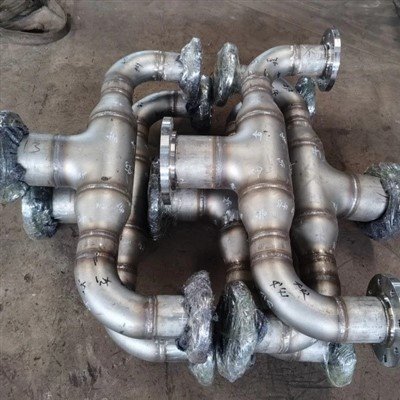
Gas turbine combustor liners, transition ducts, and afterburner components sit directly in the path of the hottest, most thermally cyclic gas stream in the entire engine - a service environment that eliminates most metals from consideration before strength is even the question. Hastelloy X (UNS N06002) has remained a standard material choice for these components for decades because it combines high-temperature strength, excellent oxidation resistance, and genuinely good fabricability in a single solid-solution-strengthened nickel alloy.

This guide explains what gives Hastelloy X its high-temperature performance, walks through representative creep rupture data at gas turbine operating temperatures, and explains why it remains a preferred choice for combustion section hardware specifically.
What Is Hastelloy X, and Why Is It Widely Used in Gas Turbine Combustion Components?
Hastelloy X is a nickel-chromium-iron-molybdenum superalloy prized in gas turbine combustion sections for its unusual combination of high-temperature strength, excellent oxidation resistance, and good fabricability - a combination that makes it well suited to the thin-walled, formed, and welded sheet metal components typical of combustor liners and transition ducts.
Representative nominal composition of Hastelloy X:
|
Element |
Approx. wt% |
Primary Role |
|
Nickel (Ni) |
Balance (≈ 47%) |
Base element; provides the austenitic matrix and general high-temperature stability |
|
Chromium (Cr) |
≈ 22% |
Forms the protective chromium oxide layer central to oxidation resistance |
|
Iron (Fe) |
≈ 18% |
Lowers raw material cost relative to higher-nickel superalloys while supporting the matrix |
|
Molybdenum (Mo) |
≈ 9% |
Provides solid-solution strengthening at elevated temperature |
|
Cobalt (Co) |
≈ 1.5% |
Contributes modestly to solid-solution strengthening and high-temperature stability |
|
Tungsten (W) |
≈ 0.6% |
Secondary solid-solution strengthener |
|
Carbon (C) |
≈ 0.10% |
Supports carbide formation contributing to strength, controlled to avoid excessive grain boundary carbide effects |
Table 1. Representative nominal composition of Hastelloy X (UNS N06002). Values are illustrative and rounded; confirm exact composition limits against the current producer data sheet or applicable specification before use in design documentation.
Combustor liners, transition ducts, flameholders, and afterburner components are thin-walled, formed, and welded sheet metal assemblies that must survive sustained high temperature, rapid thermal cycling, and an oxidizing combustion gas environment simultaneously. Many high-temperature nickel superalloys achieve their strength through precipitation hardening, a mechanism that generally makes forming and welding more difficult and often requires post-fabrication heat treatment to restore properties in the affected zones.
Hastelloy X instead achieves its strength primarily through solid-solution strengthening, discussed in the next section, which gives it a combination of high-temperature capability and genuine sheet-metal fabricability that has made it a long-standing standard material for exactly this category of gas turbine hardware.
What Gives Hastelloy X Its High-Temperature Strength Without Precipitation Hardening?
Hastelloy X achieves its high-temperature strength primarily through solid-solution strengthening from molybdenum, tungsten, and cobalt dissolved within the nickel-chromium-iron matrix, supplemented by carbide formation, rather than through the precipitation-hardening mechanisms used in many other high-strength nickel superalloys.
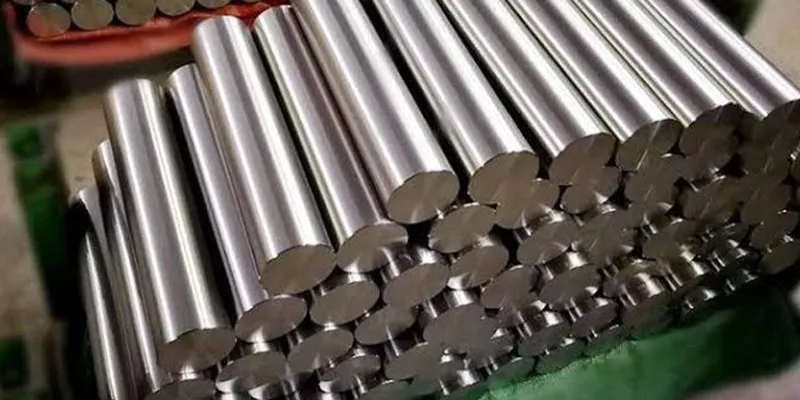
Solid-solution strengthening works by dissolving alloying atoms of a different size than the base nickel atoms directly into the crystal lattice, creating localized lattice strain that impedes dislocation movement and raises the alloy's strength; molybdenum and tungsten, both substantially larger atoms than nickel, are particularly effective contributors to this strengthening mechanism in Hastelloy X.
This approach differs fundamentally from precipitation-hardening alloys, which rely on distinct secondary-phase particles (such as gamma-prime in many nickel superalloys) that must be carefully developed through a specific aging heat treatment and can be locally disrupted by welding. Because solid-solution strengthening does not depend on a precipitate that welding heat can dissolve or coarsen unpredictably, Hastelloy X retains relatively consistent properties through fabrication and welding without requiring the same careful post-weld heat treatment regime that precipitation-hardened superalloys often need - a genuinely practical advantage for the welded sheet metal assemblies typical of combustor hardware.
What Is Hastelloy X's Oxidation Resistance Limit, and How Does It Compare to Stainless Steel?
Hastelloy X offers excellent oxidation resistance up to approximately 1200°C (2200°F) in short-term exposure, with sustained structural service more commonly cited up to roughly 1100°C (2000°F), meaningfully exceeding the oxidation limits of even high-temperature stainless steels like 310S discussed in other technical comparisons.
Hastelloy X's oxidation resistance stems from the same chromium-oxide passive layer mechanism common to stainless steels and other chromium-bearing alloys, but its substantially higher nickel content - nickel being far more stable at elevated temperature than iron, the base element in stainless steel - extends the practical temperature ceiling well beyond what iron-based stainless alloys can sustain.
This is a meaningful, quantifiable distinction from high-temperature stainless grades: where 310S stainless steel's practical continuous service ceiling sits in the range of roughly 1100–1150°C, Hastelloy X's nickel-based matrix allows both higher sustained-temperature oxidation resistance and, critically for combustor applications, considerably better retained mechanical strength at those elevated temperatures - the combination that stainless steel generally cannot match in true gas turbine combustion section service.
What Does Creep Rupture Data Show for Hastelloy X at Gas Turbine Operating Temperatures?
Hastelloy X's stress-rupture strength declines steeply as temperature rises from roughly 760°C to 1093°C, with the allowable stress for a given rupture life dropping by nearly an order of magnitude across this range - a pattern engineers must design around explicitly rather than assume a single allowable stress applies across the full combustor operating temperature range.

Representative stress-rupture data illustrating this decline:
|
Temperature |
Approx. Stress for 1,000-Hour Rupture Life |
Approx. Stress for 10,000-Hour Rupture Life |
|
760°C (1400°F) |
≈ 125–140 MPa (18–20 ksi) |
≈ 85–95 MPa (12–14 ksi) |
|
871°C (1600°F) |
≈ 55–65 MPa (8–9 ksi) |
≈ 30–40 MPa (4–6 ksi) |
|
982°C (1800°F) |
≈ 24–28 MPa (3.5–4 ksi) |
≈ 12–16 MPa (1.7–2.3 ksi) |
|
1093°C (2000°F) |
≈ 10–14 MPa (1.5–2 ksi) |
≈ 5–8 MPa (0.7–1.2 ksi) |
Table 2. Representative stress-rupture data for Hastelloy X at common gas turbine combustion section temperatures. Values are illustrative approximations compiled from commonly cited reference ranges; actual allowable design stress must be confirmed against the current producer data sheet, applicable design code, and any project-specific qualification testing, given the safety-critical nature of gas turbine combustion hardware.
This data illustrates why combustor liner and transition duct design is fundamentally a localized, temperature-mapped exercise rather than a single allowable-stress calculation: actual metal temperature varies considerably across a real combustor liner due to cooling hole patterns, film cooling effectiveness, and local hot-gas impingement, meaning the true governing creep condition is whichever specific local combination of temperature and stress is most severe - not necessarily the highest nominal operating temperature alone. This is precisely the kind of application where the Larson-Miller parameter, discussed next, becomes a practical design tool rather than an academic exercise.
How Is the Larson-Miller Parameter Applied to Predict Hastelloy X's Long-Term Creep Life?
The Larson-Miller parameter is commonly used to extrapolate Hastelloy X's long-term creep rupture life from shorter-duration test data, following the same time-temperature parameter methodology used broadly across high-temperature alloys, though nickel-based superalloys like Hastelloy X typically use a somewhat different Larson-Miller constant than the value commonly cited for stainless steel.
The Larson-Miller relationship takes the same general form covered in other technical guides on creep rupture prediction:
LMP = T × (C + log₁₀ tᵣ)
Where T is absolute temperature, tᵣ is rupture time in hours, and C is a material-specific constant fitted from test data. Nickel-based superalloys, including Hastelloy X, are commonly analyzed using a Larson-Miller constant in the range of roughly 15–17, distinct from the constant of approximately 20 commonly cited for austenitic stainless steels - a reminder that the Larson-Miller methodology's underlying framework is universal, but the fitted constant is genuinely alloy-specific and should never be assumed to transfer between different alloy families.
For Hastelloy X design and remaining-life assessment specifically, this means engineers should use a Larson-Miller master curve developed and published for Hastelloy X itself, generally available from the producer's published data, rather than reusing a constant developed for a chemically unrelated alloy.
Why Is Hastelloy X Specifically Suited to Combustor Liners and Transition Ducts?
Hastelloy X is specifically well suited to combustor liners and transition ducts because these components require an unusual combination of high-temperature strength, excellent oxidation resistance, good resistance to thermal fatigue from rapid startup and shutdown cycling, and formability into thin, complex sheet metal shapes - a combination few high-temperature alloys satisfy simultaneously.

Combustor liners and transition ducts are not simple pressure vessels; they are thin-gauge, often perforated (for cooling air film) sheet metal structures formed into complex curved geometries and welded into assemblies that must survive not just sustained high temperature but also rapid, repeated thermal cycling during every engine start and shutdown.
This thermal cycling introduces low-cycle thermal fatigue as a genuine design concern alongside creep, and Hastelloy X's solid-solution-strengthened, non-precipitation-hardened microstructure generally provides good resistance to this cracking mechanism relative to more brittle, precipitation-hardened alternatives. Combined with its favorable sheet-metal forming and welding characteristics - a direct consequence of its strengthening mechanism, discussed earlier - Hastelloy X addresses the specific, demanding combination of requirements combustor hardware presents better than most competing high-temperature alloys, which is the practical reason it has remained a standard material choice across multiple generations of gas turbine engine designs.
How Does Hastelloy X's Fabricability Compare to Precipitation-Hardened Superalloys?
Hastelloy X generally offers meaningfully better formability and weldability than precipitation-hardened nickel superalloys, because its solid-solution strengthening mechanism does not depend on a precipitate phase that welding heat or forming operations can disrupt, whereas precipitation-hardened alloys often require careful heat treatment control and are more prone to weld cracking.
Precipitation-hardened superalloys achieve much of their strength from a carefully developed gamma-prime or similar precipitate phase, and welding these alloys can locally dissolve or coarsen that precipitate in the heat-affected zone, sometimes leading to strain-age cracking during post-weld heat treatment if the alloy and procedure are not carefully matched.
Hastelloy X's solid-solution strengthening mechanism sidesteps much of this complexity: because its strength does not depend on a precipitate that welding can disrupt, it is generally considered one of the more weldable high-temperature nickel alloys, and it can typically be formed into the complex curved sheet metal shapes combustor hardware requires with comparatively fewer complications than precipitation-hardened alternatives would present in the same application. This fabricability advantage is a genuine, practical reason Hastelloy X is specified for formed and welded combustor components even in cases where an even higher-strength precipitation-hardened alloy might offer superior raw mechanical properties on paper.
What Are the Practical Temperature Limits for Hastelloy X in Sustained Gas Turbine Service?
Hastelloy X is generally suited to sustained structural service up to roughly 1000–1100°C depending on stress level and required service life, with short-term oxidation resistance extending somewhat higher, meaning practical combustor design temperature limits are set by the specific local stress and required creep life at each location on the component, not a single blanket temperature rating.
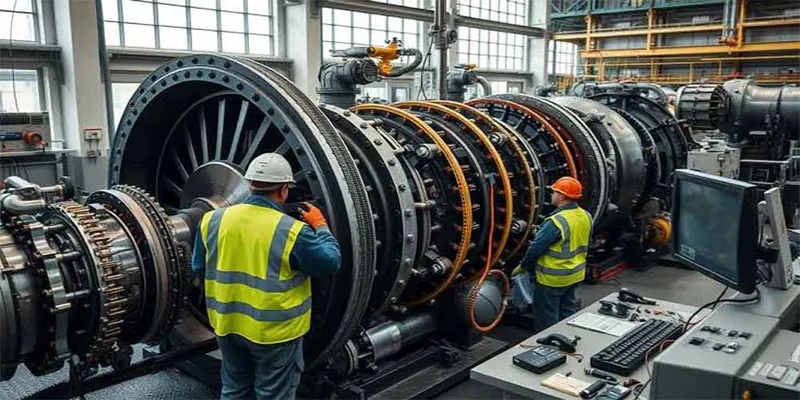
A practical approach to applying these temperature limits in combustor hardware design:
1. Map local metal temperature across the actual component geometry, accounting for cooling hole patterns and film cooling effectiveness, rather than designing to a single nominal gas temperature.
2. Apply creep rupture data at the specific local temperature and stress combination, recognizing that the governing design condition may occur at a hot spot rather than at the average operating temperature.
3. Account for thermal cycling fatigue separately from creep, since combustor components experience both mechanisms simultaneously across repeated engine start-stop cycles.
4. Confirm current allowable stress and rupture data against the producer's published data sheet, since creep rupture data is safety-critical information that should be sourced directly rather than approximated from general reference ranges for final design purposes.
5. Consider protective coatings where local conditions exceed Hastelloy X's practical uncoated limits, since thermal barrier or oxidation-resistant coatings are commonly used in gas turbine hot-section design to extend effective component life beyond the base alloy's uncoated capability.
Frequently Asked Questions
Is Hastelloy X the same as Inconel 625 or Inconel 617?
No - while all three are solid-solution-strengthened nickel-based superalloys with some compositional similarities, each has a distinct alloy chemistry and property profile; Hastelloy X is particularly noted for its combination of fabricability and combustion-section oxidation resistance, while Inconel 617 and 625 have their own distinct strength and corrosion resistance profiles suited to somewhat different applications.
Can Hastelloy X be used for rotating gas turbine components like blades and disks?
Generally no - Hastelloy X is primarily used for static, formed sheet metal combustion section components; rotating components such as turbine blades and disks typically require higher-strength, often precipitation-hardened or single-crystal superalloys specifically developed for the centrifugal stress and creep demands of rotating hardware.
Does Hastelloy X require post-weld heat treatment?
Hastelloy X generally requires less post-weld heat treatment complexity than precipitation-hardened superalloys due to its solid-solution strengthening mechanism, though a solution anneal is sometimes applied after forming or welding to relieve residual stress and restore optimal properties, and specific requirements should follow the applicable fabrication specification rather than being assumed universally unnecessary.
What is the density of Hastelloy X, and how does it compare to stainless steel?
Hastelloy X has a density of approximately 8.2–8.3 g/cm³, modestly higher than standard austenitic stainless steel (approximately 8.0 g/cm³) and broadly typical of nickel-based superalloys given their high nickel content relative to iron-based stainless grades.
Is Hastelloy X suitable for both oxidizing and reducing high-temperature atmospheres?
Hastelloy X is generally recognized for good resistance across oxidizing, reducing, and neutral atmospheres at elevated temperature, which is part of its broader appeal beyond gas turbine combustion applications, including industrial furnace and heat-treating equipment, though specific atmosphere chemistry should still be evaluated for any application with unusual or highly aggressive conditions.