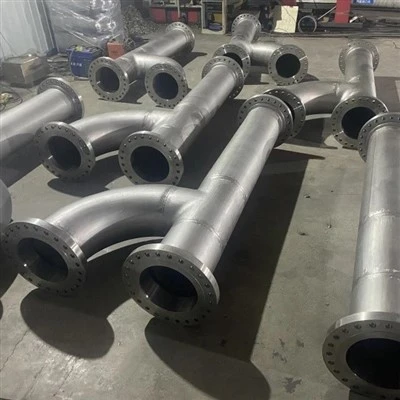
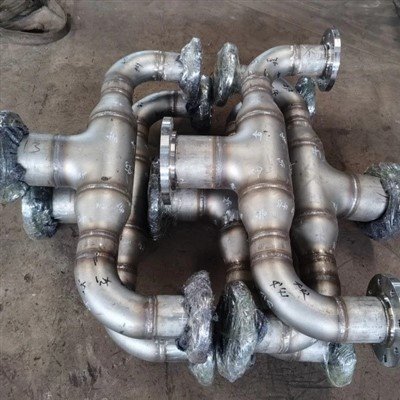
Hastelloy C4 and Hastelloy C22 both belong to the "C-family" of Ni-Cr-Mo alloys and offer excellent resistance to reducing and oxidizing media; they are not interchangeable. The differences in composition, microstructure stability, and corrosion are significant and applications.

Hastelloy C4 vs C22: Chemical Composition Comparison
|
Element |
Hastelloy C4 (N06455) |
Hastelloy C22 (N06022) |
|
Nickel (Ni) |
Balance |
Balance |
|
Chromium (Cr) |
14.0 – 18.0 |
20.0 – 22.5 |
|
Molybdenum (Mo) |
14.0 – 17.0 |
12.5 – 14.5 |
|
Tungsten (W) |
≤ 0.50 max |
2.5 – 3.5 |
|
Iron (Fe) |
≤ 3.0 |
2.0 – 6.0 |
|
Cobalt (Co) |
≤ 2.0 |
≤ 2.5 |
|
Carbon (C) |
≤ 0.015 |
≤ 0.015 |
|
Silicon (Si) |
≤ 0.08 |
≤ 0.08 |
|
Titanium (Ti) |
0.70 max |
Not added |
|
Vanadium (V) |
≤ 0.35 |
≤ 0.35 max |
C22 has significantly higher chromium and much better resistance in oxidizing environments.
C4 has slightly higher molybdenum but no intentional tungsten addition.
C4 contains titanium for microstructural stabilization; C22 does not.
Hastelloy C4 vs C22: Corrosion Resistance

Hastelloy C4 Corrosion Resistance
Hastelloy C4 has corrosion resistance in a wide range of corrosive environments:
Strong acids, including hydrochloric acid, nitric acid, fluorides, and sulfuric acid.
Chloride-induced stress corrosion cracking in high chlorine concentrations.
Both oxidizing and non-oxidizing acids.
Pitting and crevice attack in the presence of chlorides and other halides.
C4 is particularly noted for its thermal stability, which makes it suitable for applications involving hot mineral acids at elevated temperatures. It maintains its resistance to stress corrosion cracking even in demanding chloride-bearing solutions.
Hastelloy C22 Corrosion Resistance
Hastelloy C22 boasts even better overall corrosion resistance compared to C4 and other nickel-chromium-molybdenum alloys. Its superior performance includes:
Exceptional resistance to pitting, crevice corrosion, and stress corrosion cracking.
Outstanding performance in both oxidizing and moderately reducing environments.
Excellent resistance to wet chlorine, nitric acid, and oxidizing acids containing chloride ions.
Strong resistance to strong oxidizing agents such as ferric chloride, cupric chloride, and chlorine.
Good performance in mixed chemical environments where "upset" conditions might occur.
C22's higher chromium content provides enhanced resistance to oxidizing media, while its molybdenum and tungsten content contributes to its performance in reducing conditions.
Hastelloy C4 vs C22: Mechanical and Physical Properties
Hastelloy C4 Properties
|
Property |
Value |
|
Density |
8.64 g/cm³ |
|
Melting Point |
1427°C (2600°F) |
|
Tensile Strength |
738 MPa (107,000 psi) |
|
Yield Strength (0.2% offset) |
492 MPa (71,400 psi) |
|
Elongation at Break |
42% |
|
Elastic Modulus |
211 GPa (30,600 ksi) |
Hastelloy C22 Properties
|
Property |
Value |
|
Density |
8.69 g/cm³ |
|
Melting Point |
1399°C (2550°F) |
|
Tensile Strength (Sheet) |
116.3 ksi (802 MPa) |
|
Yield Strength (Sheet) |
58.5 ksi (403 MPa) |
|
Elongation (Sheet) |
57% |
|
Elastic Modulus |
206 MPa (29,878 psi) |
Hastelloy C4 vs C22: Temperature Resistance

Hastelloy C4 Temperature Ability
Hastelloy C4 offers an upper temperature limit of approximately 1900°F. It is particularly noted for its exceptional thermal stability, which is a key advantage over some other nickel-based alloys. The nucleation and growth of deleterious, second-phase precipitates in the grain boundaries of the weld heat-affected zone.
The alloy maintains its resistance to stress corrosion cracking even at elevated temperatures and demonstrates good performance in high-temperature chemical processing environments.
Hastelloy C22 Temperature Ability
Hastelloy C22 can withstand temperatures up to 1204°C, making it suitable for more extreme temperature applications compared to C4. However, it's important to note that C22 should not be used in service temperatures above 677°C for prolonged periods due to the formation of detrimental phases that form above this temperature.
C22 resists the formation of grain-boundary precipitates in the weld heat-affected zone, making it suitable for most chemical process applications in the as-welded condition.
Hastelloy C4 vs C22: Applications
Choose C4 for:
Welded chemical reactors exposed to hydrochloric/sulfuric acids.
High-temperature processes (750–1,000°C) with thermal cycling.
Cost-sensitive projects where welding simplicity is critical.
Choose C22 for:
Offshore components, flue gas scrubbers, and seawater heat exchangers.
Mixed acid environments or oxidizing chlorides.
Nuclear fuel reprocessing or pollution control systems above 1,000°C.
Hastelloy C4 vs C22: Cost

C22 is typically 20–30% more expensive than C4 due to its tungsten content and enhanced corrosion resistance.
C4 provides a cost-effective solution for high-temperature applications without severe oxidizing conditions.
In most modern specifications after 2005, Hastelloy C22 has largely replaced C4 because its broader corrosion resistance eliminates the need to stock multiple C-family grades.
We maintain an extensive stock of ASME SB366 / B16.9 Hastelloy C22 seamless butt weld fittings and can supply C4 on a project basis with short lead times. For a detailed quotation, please send it to us.