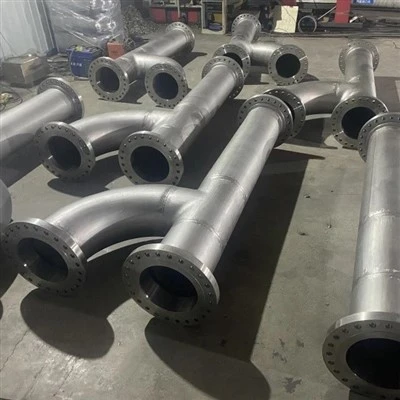
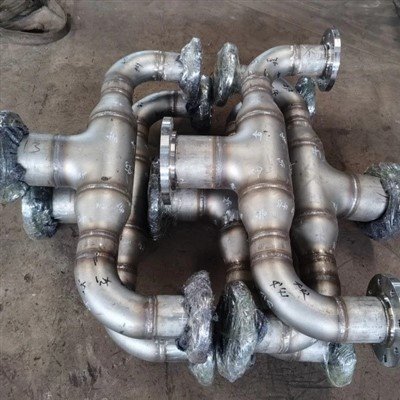
Hastelloy C4 is a nickel alloy has thermal stability and corrosion resistance in aggressive environments. As one of the most structurally stable nickel alloys, it maintains its properties even after prolonged exposure to high temperatures, making it invaluable for chemical processing applications.
This article introduces a comprehensive overview of Hastelloy C4's chemical composition, physical and mechanical properties, corrosion resistance, and applications.

Hastelloy C4 Chemical Composition
Hastelloy C4 is a wrought nickel alloy to provide performance in corrosive environments. The composition is characterized by its low carbon and silicon content, which significantly reduces the risk of carbide precipitation and subsequent intergranular corrosion in welded structures.
The nominal chemical composition of Hastelloy C4 is outlined in the following table:
|
Composition |
Content (%) |
|
Nickel (Ni) |
Balance (approximately 65%) |
|
Chromium (Cr) |
14-18 |
|
Molybdenum (Mo) |
14-17 |
|
Iron (Fe) |
3 max |
|
Cobalt (Co) |
2 max |
|
Titanium (Ti) |
0.7 max |
|
Manganese (Mn) |
1 max |
|
Silicon (Si) |
0.08 max |
|
Carbon (C) |
0.015 max |
|
Phosphorus (P) |
0.04 max |
|
Sulfur (S) |
0.03 max |
The strategic omission of tungsten distinguishes Hastelloy C4 from earlier alloys like C276, while the significantly reduced iron content enhances thermal stability by minimizing detrimental intermetallic phase formation during prolonged high-temperature exposure.
Hastelloy C4 Physical Properties
Hastelloy C4's physical properties characteristic of nickel-chromium-molybdenum alloys:
Table: Physical Properties of Hastelloy C4
|
Property |
Value |
Conditions/Notes |
|
Density |
8.64 g/cm³ (0.312 lb/in³) |
At 20°C |
|
Melting Point |
1335-1380°C (2435-2516°F) |
- |
|
Specific Heat Capacity |
408 J/kg·°C |
At 100°C |
|
Thermal Conductivity |
10.1 W/m·K |
At 100°C |
|
Coefficient of Thermal Expansion |
10.9 × 10⁻⁶/°C |
20-100°C (mean coefficient) |
|
Electrical Resistivity |
1.25 μΩ·cm |
At 20°C |
|
Modulus of Elasticity |
211 GPa (30.8 × 10³ ksi) |
In tension, at 20°C |
|
Modulus of Rigidity |
78.6 GPa (11.4 × 10³ ksi) |
At 20°C |
The relatively low thermal conductivity and moderate thermal expansion coefficient of Hastelloy C4. The high electrical resistivity contributes to its good welding characteristics compared to more conductive materials.
Hastelloy C4 Mechanical Properties

Room Temperature Mechanical Properties
In the annealed condition, Hastelloy C-4 typically exhibits:
Tensile Strength: 690-860 MPa (100-125 ksi)
Yield Strength (0.2% offset): ≥275 MPa (≥40 ksi)
Elongation: ≥40% in 2 inches
Reduction of Area: Approximately 50%
Hardness: ≤217 HB (Brinell) or ≤95 HRB (Rockwell B)
The alloy maintains remarkable ductility and toughness even at cryogenic temperatures down to -196°C, with Charpy V-notch impact values typically exceeding 120 J at both room temperature and -196°C.
Elevated Temperature Properties
Hastelloy C4 has exceptional thermal stability, retaining useful mechanical properties at temperatures up to 1040°C. The alloy maintains good ductility and corrosion resistance even after long-term aging at 650-1040°C.
Corrosion Resistance Properties
The corrosion resistance of Hastelloy C4 represents its most valuable attribute, with demonstrated performance across diverse corrosive environments:

Uniform Corrosion
Hastelloy C-4 exhibits outstanding resistance to a wide spectrum of corrosive media, including:
Hot contaminated mineral acids (sulfuric, hydrochloric, phosphoric acids)
Organic and inorganic chlorides, dry chlorine gas
Formic and acetic acids, acetic anhydride
Solvents, seawater, and brine solutions
The alloy demonstrates particularly good performance in highly oxidizing environments, where it may outperform C-276. However, in strongly reducing media like hydrochloric acid, C-276 typically shows better resistance.
Localized Corrosion
The high molybdenum content (14-17%) provides excellent resistance to pitting and crevice corrosion in chloride-containing environments. This makes Hastelloy C-4 suitable for applications in seawater, brackish water, and chemical processes involving chloride catalysts or contaminants.

The ultra-low carbon content (≤0.015%) significantly enhances resistance to sensitization and subsequent intergranular corrosion. This critical attribute minimizes the formation of grain boundary carbides in weld heat-affected zones, allowing the alloy to be used in the as-welded condition for most chemical process applications without requiring post-weld solution annealing.
Research has demonstrated that properly welded Hastelloy C4 joints can exhibit comparable or even superior corrosion resistance to the base metal, with corrosion rates as low as 5.03 mm/year in standardized intergranular corrosion tests.
Thermal Stability and Microstructural Characteristics
Hastelloy C4 was specifically formulated for enhanced thermal stability compared to earlier nickel alloys. The strategic composition controls minimize the formation of detrimental intermetallic phases and carbides during prolonged exposure to high temperatures.
The alloy features a face-centered cubic (FCC) austenitic structure that remains stable across its useful temperature range. This microstructural stability ensures consistent performance in high-temperature applications such as flue gas desulfurization systems, chemical processing equipment, and nuclear fuel reprocessing facilities where thermal cycling is common.
Fabrication and Processing Characteristics

Welding
Hastelloy C4 has good weldability using common fusion welding techniques, including:
Gas Tungsten Arc Welding (GTAW/TIG)
Gas Metal Arc Welding (GMAW/MIG)
Plasma Arc Welding
Shielded Metal Arc Welding (SMAW)
Recommended practices include:
Using matching composition filler metals (ERNiCrMo-7) or dedicated Hastelloy C-4 welding products.
Maintaining low heat input with interpass temperatures below 150°C.
Ensuring material is in annealed condition pre-welding.
Proper cleaning to remove contaminants.
Heat Treatment
Hastelloy C4 is typically supplied in the solution-annealed condition to optimize corrosion resistance. The alloy cannot be strengthened by heat treatment alone, as it does not undergo precipitation hardening.
Hot and Cold Working
Hot Working: Recommended temperature range of 1080-900°C with rapid cooling after processing.
Cold Working: Requires greater power than austenitic stainless steels due to higher work hardening rate; intermediate annealing may be necessary for severe deformations.