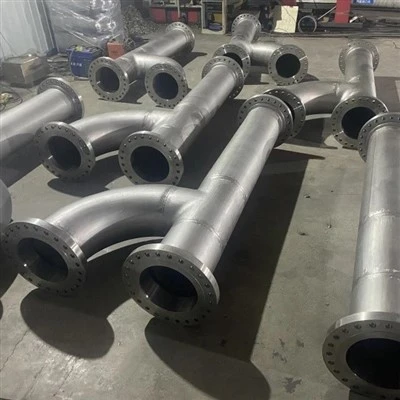
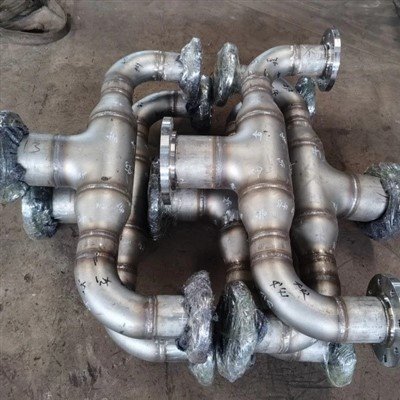
Hastelloy C22 (UNS N06022) and Hastelloy C276 (UNS N10276) are the two most prominent materials used for forged pipe fittings in extreme environments. While both belong to the "C-family," there are subtle differences in their chemical composition.

This post will clarify their differences to guide you in selecting the right material for your forged pipe fittings and components.
Chemical Composition
HASTELLOY C22 contains higher chromium content, while C276 features higher molybdenum content, creating fundamentally different corrosion resistance mechanisms.
The chromium-rich composition of C22 provides superior resistance to oxidizing environments, making it ideal for applications involving nitric acid, ferric chloride, and other oxidizing media. Conversely, C276's elevated molybdenum content delivers exceptional resistance to reducing environments, particularly against hydrochloric acid, sulfuric acid, and chloride-containing solutions.
This compositional difference dictates their primary application domains, with C22 excelling where oxidation dominates corrosion mechanisms and C276 performing better where reduction reactions prevail.
Corrosion Resistance
C22 demonstrates superior resistance to oxidizing acids and mixed oxidizing-reducing environments, whereas C276 provides better performance in highly reducing conditions and chloride-rich environments.
C22's balanced composition offers excellent resistance to pitting and crevice corrosion in environments containing both oxidizing and reducing species, making it particularly effective in pharmaceutical processing and chemical manufacturing, where process conditions can fluctuate.
C276, with its higher molybdenum and tungsten content, delivers unmatched resistance to stress corrosion cracking in hot chloride solutions and performs exceptionally well in flue gas desulfurization systems where both high temperatures and aggressive chemical environments exist simultaneously.

Performance in Specific Chemical Environments
Hastelloy C276 excels in strong reducing acids, while C22 performs better in mixed or oxidizing acids. C276 has a long, proven history of outstanding resistance to sulfuric and hydrochloric acids across a wide range of concentrations and temperatures, making it a classic workhorse for these media.
Hastelloy C22, with its higher chromium content, surpasses C276 in environments that are oxidizing or "contaminated" with oxidizing salts. It is particularly effective in handling mixtures of sulfuric and nitric acid, hypochlorite, and chlorine dioxide.
Weldability and Fabrication
Both alloys are designed for good weldability, but Hastelloy C22 is less susceptible to forming harmful precipitates in the weld heat-affected zone (HAZ).
The optimized chemistry of C22 slows the precipitation of intermetallic phases (like mu phase) during the thermal cycles of welding. This results in a weldment that maintains corrosion resistance much closer to that of the parent metal without requiring post-weld heat treatment. While C276 also has good weldability, control of heat input is slightly more critical to preserve its corrosion properties.
Temperature Resistance Capabilities
C22 maintains excellent corrosion resistance up to approximately 1000°C (1832°F) in oxidizing environments, while C276 demonstrates superior stability in reducing environments at temperatures exceeding 900°C (1652°F).

C22's chromium content provides enhanced oxidation resistance at elevated temperatures, making it suitable for high-temperature heat exchangers and furnace components where protective oxide layer formation is critical. C276's composition allows it to maintain structural integrity and corrosion resistance in reducing atmospheres at high temperatures, particularly valuable in chemical reactors and processing vessels where both temperature and aggressive chemical exposure occur simultaneously.
Cost Considerations
C276 typically commands a premium price over C22 due to its higher molybdenum and tungsten content, making C22 the more economical choice when its corrosion resistance profile meets application requirements.
While C276 offers superior performance in the most severe environments, specifying it for applications where C22 would suffice represents an unnecessary expense that impacts project economics.
Conversely, selecting the less expensive C22 for conditions requiring C276's enhanced resistance can lead to premature failure and significantly higher lifecycle costs.
Fabrication and Weldability
Both alloys exhibit good weldability, but C22 generally offers easier fabrication characteristics due to its lower alloy content and reduced tendency for hot cracking during welding operations.

C22's composition provides excellent weldability with standard techniques, requiring minimal preheating and post-weld heat treatment in most applications, which reduces fabrication costs and complexity.
C276, while still readily weldable, demands more stringent welding procedures, including controlled heat input and sometimes post-weld heat treatment, to prevent microstructural changes that could compromise corrosion resistance.
Conclusion
There is no universal "better" alloy; the correct choice depends entirely on the specific chemical environment, temperature, pressure, and fabrication requirements of your application.
Choose Hastelloy C276 when you need a reliable, cost-effective, and historically proven material for well-understood applications involving sulfuric acid, hydrochloric acid, or other reducing conditions without strong oxidants.
Choose Hastelloy C22 when facing oxidizing agents, chlorides, or mixed acids, or superior as-welded corrosion resistance and maximum safety factor are the top priorities for your forged fittings and piping systems.