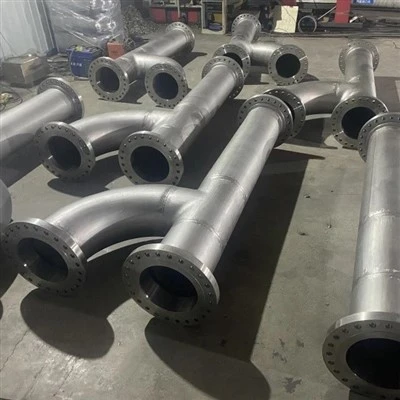
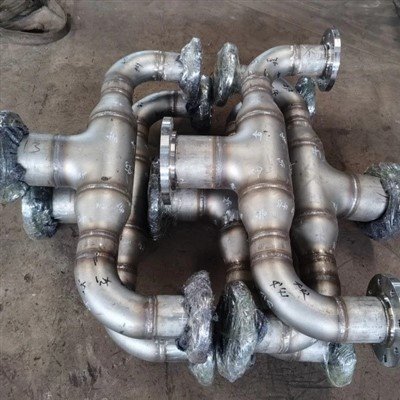
ASTM A789 F55 or UNS S32760/1.4501 super duplex steel pipe is widely used in applications ranging from deepwater oil and gas extraction to chemical processing and desalination plants. 1.4501 super duplex stainless steel offers exceptional mechanical strength and resistance to localized corrosion, especially in high-temperature, chloride-rich environments.

When sourcing this material, one of the most persistent and critical questions is, "What's the price per kilogram of super duplex F55?" The reality is that the cost of S32760 pipe isn't a static number listed on a general price list. Instead, it's a dynamic variable influenced by global commodity markets, manufacturing requirements, and supply chains.
This expert guide analyzes the final cost per kilogram of ASTM A789 F55 super duplex steel pipe.
Raw Material Cost Changes
The most significant contributor to the price per kilogram of Super Duplex S32760 pipe is chemical composition.
Unlike standard stainless steels, S32760 is heavily alloyed with expensive, volatile elements, making its price tied to the global raw nickel material.

Nickel: Nickel is the primary austenite stabilizer and a major cost driver.
Fluctuations in the London Metal Exchange price for nickel have an immediate and proportional impact on the raw material cost of S32760, which contains a substantial percentage of this element.
When nickel prices spike due to geopolitical events or mining shortages, the price per kilogram for the finished pipe must follow suit. Procurement teams must track LME nickel forecasts to anticipate purchasing costs effectively.
Molybdenum and Chromium: The "super" designation of this alloy is earned through high contents of chromium and, critically, molybdenum.
Molybdenum is the single most expensive alloying element used to fight pitting and crevice corrosion, directly contributing to the alloy's high Pitting Resistance Equivalent Number. The cost of ferroniobium and ferrochrome adds a significant amount to the price of the steel.
Copper and Tungsten: A difference for UNS S32760 specifically is the controlled addition of copper and tungsten. The deliberate inclusion of these supplementary, high-cost elements creates a slight but consistent price premium per kilogram compared to its close relative, UNS S32750 (F53).
Processing Premium
Beyond the raw materials, the manufacturing specified by ASTM A789 for super duplex materials adds a premium to the final price per kilogram.

Seamless vs. Welded Pipe Production:
The price per kilogram will fundamentally differ between seamless and welded pipe products.
Seamless pipe, produced by rotary piercing a solid billet, demands intensive energy and rigorous process control, leading to higher intrinsic manufacturing costs and typically a higher price per kilogram.
Welded pipe is often more economical for larger diameters but requires additional inspection, particularly rigorous non-destructive testing of the weld seam, which also influences the final price.
Solution Annealing and Quenching:
Super duplex steels must undergo a stringent solution annealing and rapid water quenching process to ensure the desired $50\%$ ferrite and $50\%$ austenite microstructure. This heat treatment is critical for achieving both the maximum mechanical strength and the best corrosion resistance.
The high temperature and subsequent rapid cooling require high energy consumption and specialized quenching facilities, particularly for large-diameter or thick-walled pipes. This complex and essential step significantly elevates the total conversion cost per kilogram.

Testing and Certification:
Every linear meter of ASTM A789 pipe must be rigorously tested. The final price per kilogram incorporates the cost of mandatory non-destructive tests, mechanical property verification, and chemical analysis.
For Super Duplex, the highly critical microstructure must often be validated via metallographic examination.
Commercial and Logistical:
The price per kilogram is further refined by commercial realities relating to order size, customization, and location.
Order Volume and Minimum Mill Quantities
Manufacturers and large distributors typically impose minimum order quantities to make production.
For custom sizes or non-standard wall thicknesses, the price per kilogram will be significantly higher for a small order, as the buyer must effectively absorb the mill's setup and changeover costs. For large volume orders, conversely, the price per kilogram goes down.
Size, Schedule, and Pipe Length

The dimensional complexity heavily influences the price. Smaller diameter and higher schedule pipe often command a higher price per kilogram due to increased material wastage and the greater difficulty of manufacturing and heat-treating thick sections without microstructural degradation.
Custom cut lengths that deviate from standard mill lengths incur a cutting and handling surcharge that subtly increases the effective price per unit weight.
Market Dynamics and Inventory
The cheapest price per kilogram is often achieved when purchasing from a distributor's existing stock, as opposed to ordering a new mill run. However, the exact price is then determined by the distributor's inventory level, overhead, and the price at which they originally acquired the material.
ASTM A789 F55/1.4501 Super Duplex Steel Pipe Chart
|
Product |
Price (USD) |
MOQ |
|
ASTM A789/A790 UNS S32760 (F55) Weld Pipe |
Inquiry |
Not Sure |
|
Super Duplex S32760 F55 Steel Pipe |
5.13−7.98 USD/Kg |
1000 Kg |
|
Super Duplex Steel S32760 F55 Pipe |
1.20−3.00 USD/Kg |
200 Kg |
|
Super Duplex S32750 Seamless Pipe |
12.00−14.00 USD/Kg |
500 Kg |