Before welding duplex pipe near the coast, control the repair authorization, material identity, salt contamination, condensation, wind exposure, filler condition, root purge and qualified thermal limits. A clean-looking joint is not enough: the repair must also preserve the steel's internal structure and corrosion resistance. IMOA and TWI both emphasize cleanliness, shielding and control of the welding thermal cycle.
Scope: This article addresses planned, isolated pipe repairs-not live-line welding or emergency leak sealing. It is a planning guide, not a welding procedure specification (WPS). The governing code, owner's engineering requirements, qualified procedure and inspection plan determine acceptance.
Why are humid coastal repairs different from workshop welding?
Coastal repairs require stronger environmental control because moisture, salt deposits and unstable gas shielding can undermine an otherwise suitable welding procedure. Duplex steel also needs controlled heating and cooling to retain a useful balance of its two main structures: ferrite and austenite.
Ferrite and austenite are different arrangements of atoms within the steel. Cooling too quickly can leave excessive ferrite near the weld. Excessive time at elevated temperatures can form harmful intermetallic phases, including sigma phase, which reduce toughness and corrosion resistance. The aim is neither "as cold as possible" nor "as hot as necessary," but the qualified thermal window.
|
Control dimension |
Controlled workshop |
Humid coastal field repair |
|
Exposure |
Enclosed work and protected storage are easier to maintain. |
Use a clean, dry shelter and protect the joint during interruptions. |
|
Surface condition |
New stock and clean preparation can be managed centrally. |
Check for service residue, salt deposits and contamination from adjacent work. |
|
Root shielding |
Pipe ends and purge arrangements are usually more accessible. |
Confirm access, sealing, venting and representative oxygen measurement before cutting. |
|
Thermal control |
Positioning and cooling intervals can be planned. |
Plan around restricted access, repair geometry and repeated heating. |
The table is a practical planning comparison, not a separate set of acceptance criteria. Its controls apply IMOA's cleanliness and fabrication guidance and TWI's requirements for joint preparation and shielding.
What must be confirmed before deciding to weld?
Confirm that welding is an approved repair method and that the actual pipe grade, damage extent and remaining wall are known. Do not treat a visible leak or surface crack as a complete damage assessment.
As a proposed engineering hold point, require the owner's responsible engineer to approve the repair scope, isolation, cleaning, access and inspection arrangements. If the damage is extensive, the root is inaccessible or the existing material cannot be verified, assess a replacement spool rather than assuming a local weld repair is suitable.
Match the material certificate and heat identification to the pipe and any replacement parts. Use positive material identification where required, but do not treat a chemistry check alone as proof of heat treatment, toughness or service history. IMOA distinguishes chemical verification from mechanical, metallurgical and corrosion testing.
Define the excavation dimensions and demonstrate removal of the relevant defect using the approved inspection method. TWI notes that joint dimensions need closer control than for conventional stainless steel: a wide root gap can force changes in technique and heat input.
How do 2205 and 2507 change the repair plan?
Super duplex 2507 generally requires a tighter thermal plan than standard duplex 2205; its greater alloy content does not make it more tolerant of uncontrolled welding. IMOA identifies faster formation of detrimental phases in more highly alloyed grades.
|
Planning item |
2205 standard duplex |
2507 super duplex |
|
Material identity |
Verify the specified UNS designation; S31803 and S32205 have different composition limits. |
Verify UNS S32750; do not substitute another super duplex grade by trade name alone. |
|
General interpass guidance |
150°C maximum is commonly recommended. |
100°C maximum is commonly recommended. |
|
Thermal concern |
Avoid both excessive ferrite and harmful phase formation. |
Apply the same controls, with greater attention to accumulated heat and reheating. |
|
Procedure decision |
Use the qualified procedure for the grade, thickness and repair geometry. |
Do not transfer a 2205 repair procedure without verifying qualification coverage. |
The grade distinctions come from IMOA's fabrication guide. The 150°C and 100°C values are general guidance from IMOA and Industeel, not universal code limits or permission to exceed a lower WPS limit. Interpass temperature means the joint temperature before the next pass; it is not the arc temperature.
How should salt and surface contamination be removed?
Remove contamination before drying or welding, and keep the cleaned area protected until the arc starts. Heating a dirty joint is not a substitute for cleaning it. IMOA identifies dirt, grease, paint and moisture as threats to weld quality and corrosion performance.
Use the following proposed cleaning sequence, subject to the owner's approved method:
- Remove coatings, grease and process residues with compatible, approved products.
- For suspected marine salt deposits, use an approved water-based cleaning and rinsing method; do not assume a solvent wipe proves salts are absent.
- Prepare the groove with clean tools reserved for stainless steel and protect it from carbon-steel grinding debris.
- Dry the preparation, including accessible internal surfaces, and reinspect after interruptions or renewed spray exposure.
Where the project requires soluble-salt testing, specify the test method, sampling area and acceptance limit before mobilization. This article intentionally gives no universal chloride surface limit: the service conditions and owner's specification must establish it. IMOA's guidance supports contamination prevention and removal of embedded iron rather than reliance on appearance alone.
Should the pipe be preheated to prevent condensation?
Do not apply routine duplex preheat as though the material were carbon steel. Limited warming may be appropriate to remove moisture, but only within the approved procedure. IMOA recommends approximately 100°C, uniformly applied after cleaning, when warming is needed to eliminate moisture.
For coastal work, make surface temperature and dew-point checks part of the environmental plan. Relative humidity alone is not an adequate release criterion. Specify any required temperature margin above dew point in the project procedure rather than importing a coating rule as a universal welding requirement.
Distinguish drying temperature from interpass temperature. Warming a super duplex joint to approximately 100°C does not automatically release the next pass; the joint must satisfy the applicable interpass limit before welding resumes. Prefer electronic contact probes or thermocouples for interpass monitoring, as IMOA recommends.
What should be controlled in the shelter, shielding and root purge?
Establish stable, dry shielding and verify root-purge quality before welding. TWI states that backing-gas purging is essential for a TIG root pass and that shielding gases must be dry and free of contaminants.
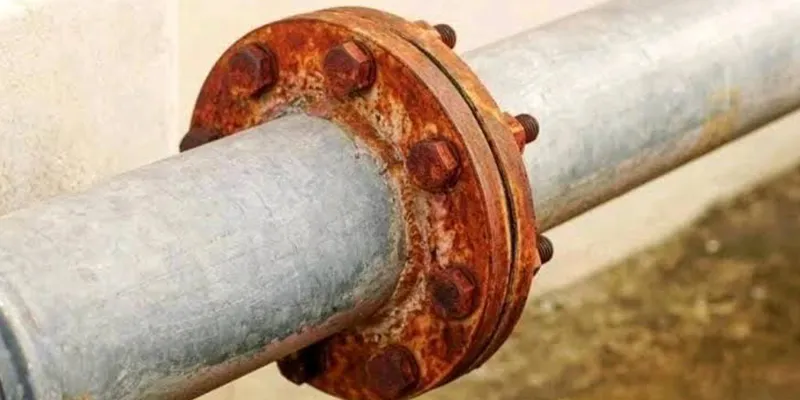
Use a shelter to reduce wind-driven disruption and renewed contamination, while maintaining safe ventilation. Plan the purge volume, dams, seals, vent path, sampling point and analyzer calibration before starting. A gas cylinder connected to the pipe is not evidence that air has been adequately displaced.
Use a WPS-approved gas composition. TWI describes argon shielding and, in some procedures, small nitrogen additions to compensate for nitrogen loss. These are qualified choices-not interchangeable field adjustments. Do not add hydrogen-bearing gas merely because it is used for another stainless steel; duplex ferrite is susceptible to hydrogen-related damage.
Set the oxygen release limit and purge duration in the procedure. For context, ESAB recommends below 50 ppm oxygen in its duplex welding guidance, but that recommendation is not a universal acceptance limit for every repair. Verify the specified value at a representative sampling point and follow the procedure for continued purging through subsequent passes.
How should filler metal and heat input be selected?
Use the qualified filler and stay within both the minimum and maximum thermal limits. Lower heat input is not automatically safer: excessively rapid cooling can leave too much ferrite, while excessive heat exposure can promote harmful phases.
Duplex fillers are commonly enriched in nickel relative to the parent metal to encourage austenite formation. TWI advises against routine autogenous TIG welding-welding without filler-because corrosion resistance can be impaired. Select the exact classification, product and handling requirements through the WPS rather than by matching a familiar stainless wire.
Keep filler clean and dry. Store, issue and recondition covered electrodes and fluxes according to the manufacturer's instructions; avoid improvised rebaking schedules. TWI specifically calls for manufacturer-controlled baking and handling of basic electrodes and submerged-arc fluxes.
Record current, voltage, travel speed and interpass temperature at the frequency required by the inspection plan. State whether the procedure uses arc energy or heat input corrected for process efficiency; the terms should not be silently interchanged. Plan pass sequence and cooling intervals so that a small repair does not accumulate uncontrolled reheating. IMOA emphasizes minimizing cumulative time in harmful temperature ranges.
When is a field repair ready for welding?
Release welding only when the agreed hold points are satisfied and recorded. The following is a proposed pre-weld checklist, not a substitute for the project's inspection and test plan.
|
Hold point |
Evidence to record |
|
Engineering and safety |
Approved repair scope, isolation, work permit and damage assessment. |
|
Material and preparation |
Grade/heat traceability, remaining wall, excavation acceptance and fit-up. |
|
Cleanliness and environment |
Approved cleaning complete; joint dry; shelter effective; environmental checks acceptable. |
|
Procedure and personnel |
Applicable qualified WPS and welder qualifications; specified filler and gases available. |
|
Purge and instrumentation |
Oxygen acceptance achieved; sampling and venting checked; instruments suitable and calibrated. |
|
Thermal and inspection plan |
Pass controls, interpass limit, stop/restart rules and final acceptance methods agreed. |
Stop and reassess if the joint becomes wet, shielding is unstable, purge acceptance is lost or a required temperature limit is exceeded. Record the interruption and follow the approved restart or nonconformance process rather than simply covering the affected area with another pass. These hold points put IMOA and TWI process-control principles into a field-ready format.
What must be planned for after welding?
Plan final cleaning and inspection before welding starts; a visually smooth bead alone does not establish duplex corrosion performance. IMOA treats heat-tint removal, embedded-iron removal, phase balance and corrosion testing as distinct quality considerations.
Specify required visual and nondestructive examinations, any ferrite checks, and applicable pressure or leak testing. Metallography, impact testing and corrosion testing may belong to procedure qualification or specified production sampling; they are not automatically required on every field weld. A ferrite reading alone does not prove the absence of detrimental phases.
Define an approved heat-tint and surface-restoration method, including access to the root. Do not treat passivation alone as a replacement for removing oxide scale. Do not prescribe routine carbon-steel-style stress relief: TWI warns that conventional stress-relief temperatures can damage duplex properties, while full solution annealing and quenching are often impractical for installed structures.
How can JN Alloy support repair planning?
JN Alloy can support the materials and fabrication side of repair planning through its advertised stainless steel, duplex steel and nickel alloy supply, customized processing and pipe-spool services. Its website lists pipes, fittings, flanges and welding materials, alongside testing capabilities including PMI, radiography, metallography and hydrostatic testing. Confirm the applicable supply scope and documentation for each order.
For a repair-material inquiry, provide the specified grade, pipe size and wall thickness, service conditions, drawing, governing specification and required inspection records. If a replacement spool is under consideration, also define tie-in dimensions and documentation requirements. Material supply and shop testing do not replace the owner's field-repair approval or qualified WPS.
Contact JN Alloy: Market@jnalloy.com | +86 19339900211.