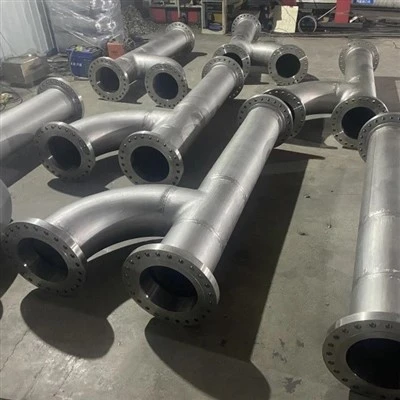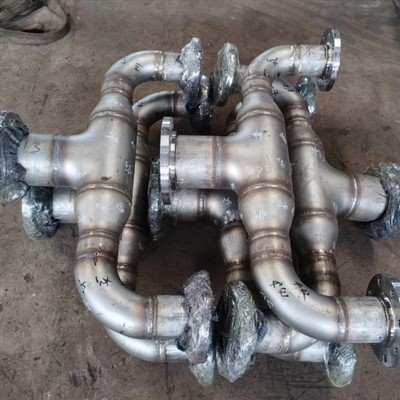
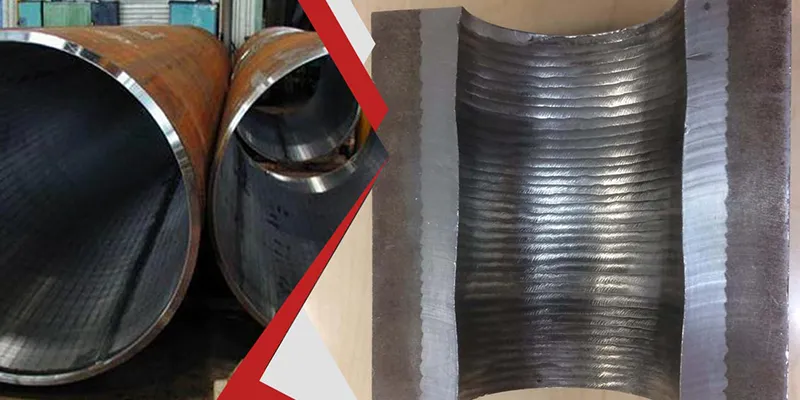
For internal corrosive flow applications - which account for over 80% of all corrosive service piping in the oil & gas, chemical, and power generation industries - metallurgically clad pipe (carbon steel backing + 2-3mm nickel alloy cladding) delivers identical corrosion resistance to solid nickel alloy pipe while reducing material cost by 40-60%. Solid nickel alloy pipe is justified only when the external environment is also corrosive, when pipe diameter is very small (below NPS 2), or when service temperature exceeds 450C.
Scope This guide covers: metallurgical clad pipe manufacturing methods (hot roll bond, explosive bond, weld overlay); cost comparison with solid nickel alloy pipe across typical sizes and alloys; applicable standards (ASTM A264, A265; API 5LD; DNV ST F101); lifecycle cost analysis including CAPEX, installation, inspection, and maintenance; selection limitations and decision matrix; and FAQ for procurement teams.
What Is Clad Pipe?
Clad pipe has a metallurgical bond between the corrosion-resistant alloy (CRA) layer and the carbon steel backing - the two metals are fused at the atomic level. Lined pipe has only a mechanical interference fit. This single difference determines temperature capability (clad: >400C; lined: <150C), resistance to disbonding under thermal cycling, and pressure rating - clad pipe is always the choice for safety-critical, high-temperature, or high-pressure corrosive service.
A clad pipe consists of two layers bonded together at the interface through a metallurgical process: an outer backing layer of carbon steel or low-alloy steel (the "backing" or "base metal") that provides structural strength and pressure containment, and an inner layer (the "cladding" or "clad metal") of a nickel alloy, stainless steel, or other corrosion-resistant alloy (CRA) that provides corrosion resistance to the internal fluid. The cladding layer is typically 2.0-4.0mm thick, accounting for 10-25% of the total wall thickness. The key engineering distinction is the metallurgical bond: the cladding layer and backing metal are joined through atomic diffusion at the interface during high-temperature manufacturing, creating a continuous grain structure across the boundary. This bond has a shear strength exceeding 140 MPa (20,000 psi) per ASTM A264/A265 requirements - higher than the shear strength of many carbon steels themselves.
A lined pipe, by contrast, has a thin-wall CRA sleeve inserted into a carbon steel pipe and mechanically expanded (hydraulically or with a pig) to press-fit against the inner wall. There is NO atomic bond between the liner and the backing. Under thermal cycling, the liner and backing expand and contract at different rates because carbon steel (CTE ~12 x 10 K) and nickel alloys (CTE ~13-14 x 10 K) have different thermal expansion coefficients, creating gaps between the liner and the backing. Over multiple thermal cycles, these gaps grow, potentially causing liner collapse under external overpressure from the annulus. This is why lined pipe is limited to moderate temperatures (typically below 150C) and is not recommended for applications with frequent thermal cycling.
|
Feature |
Clad Pipe (Metallurgical Bond) |
Lined Pipe (Mechanical Fit) |
|
Bond Type |
Metallurgical (atomic diffusion bond) |
Mechanical interference (press-fit) |
|
Interfacial Shear Strength |
>140 MPa per ASTM A265 |
Minimal (friction only) |
|
Maximum Service Temperature |
Up to 450C |
Typically <150C |
|
Thermal Cycling Resistance |
Excellent - no disbonding |
Poor - risk of liner collapse |
|
External Pressure Resistance |
Full (integral structure) |
Limited (liner vulnerable to collapse) |
|
Cladding Thickness |
1.5-4.0mm typical |
1.5-3.0mm typical |
|
Repairability |
Weldable (PWHT standard) |
Limited (alloy sleeve replacement required) |
|
Manufacturing Lead Time |
14-24 weeks typical |
8-16 weeks typical |
|
Cost vs Solid Alloy |
50-65% savings |
60-70% savings |
|
Standard Specification |
API 5LD, ASTM A264/A265 |
API 5LD (lined type) |
[Source] ASTM A265-12: Standard Specification for Nickel and Nickel-Base Alloy-Clad Steel Plate; API 5LD-2015: CRA Clad or Lined Steel Pipe.
Three Manufacturing Methods for Clad Pipe
Clad pipe is manufactured by three methods - Hot Roll Bonding (best for large-diameter, high-volume production), Explosive Bonding (best for thick cladding or small batches), and Weld Overlay Cladding (best for fittings, small diameters, and post-manufacturing repair). The method selection depends on pipe diameter, production volume, and cladding thickness requirements.
Hot Roll Bonding (HRB) - The Industry Standard for Large Pipe
Hot Roll Bonding is the most widely used method for producing clad plate that is subsequently formed into welded clad pipe (UOE or JCOE process). The process begins with two separate slabs: a carbon steel slab (typically ASTM A516 Gr.70 or API 5L X65) and a nickel alloy slab (e.g., Inconel 625, Alloy 825, or 316L stainless steel). The mating surfaces are cleaned to remove all oxides, then the two slabs are assembled with the mating surfaces in contact and sealed around the edges by welding to prevent oxidation during heating.
The assembly is heated to 1,100-1,250C and then hot-rolled to the final clad plate thickness. At this temperature, atomic diffusion occurs across the interface, creating a continuous metallurgical bond. After rolling, the clad plate is cut to size, heat-treated per specification, and then formed into pipe by the UOE (U-press, O-press, Expand) or JCOE process. The longitudinal weld is made with matching filler metal - the backing is welded with a carbon steel electrode, and the cladding side is welded with a nickel alloy electrode.
- Bond mechanism: atomic diffusion at 1,100-1,250C - continuous grain structure across interface
- Typical cladding thickness: 2.0-4.0mm (controlled by slab thickness ratio)
- Pipe diameter range: NPS 16 to NPS 84 (406mm to 2,134mm) via UOE/JCOE
- Lead time: 14-20 weeks from order to delivery for standard sizes
- Production volume: high (thousands of tons per order)
- Quality verification: ultrasonic testing per ASTM A578; shear test per ASTM A265; bend test
Explosive Bonding - for Thick Cladding or Small Batches
Explosive bonding uses a controlled explosive charge detonated above the cladding plate, which is placed at a precise stand-off distance from the base plate. The detonation wave travels across the plates at a velocity of 2,000-3,000 m/s, creating a high-velocity collision that generates pressures exceeding 10 GPa (100,000 atmospheres) at the interface. This extreme pressure removes all surface oxides and forces the two metals together so rapidly that an atomic-level metallurgical bond forms without melting either metal.
The bond interface has a characteristic wavy pattern under microscopic examination - this wavy interface increases the bonded surface area by 30-50% compared to a flat interface, providing bond strength comparable to hot roll bonding. Explosive bonding is ideal for thick cladding (3-10mm), exotic alloy combinations, and small production batches where setting up a hot-rolling campaign is uneconomical.
- Bond mechanism: high-velocity oblique collision (2,000-3,000 m/s) - wavy interface pattern
- Typical cladding thickness: 2.0-10.0mm (can go thicker than hot roll bonding)
- Plate size: limited to explosive facility capacity (typically up to 4m width x 12m length)
- Lead time: 8-14 weeks
- Production volume: small to medium (single plates to 500 tons)
Weld Overlay Cladding (GTAW or PTA) - for Fittings and Small Diameters
Weld overlay cladding deposits a layer of nickel alloy directly onto the internal surface of a carbon steel pipe or fitting using Gas Tungsten Arc Welding (GTAW/TIG) or Plasma Transferred Arc (PTA) welding. The nickel alloy filler wire or powder is melted and fused onto the carbon steel substrate, creating a metallurgically bonded clad layer. The key challenge in weld overlay is dilution: the molten nickel alloy mixes with some carbon steel at the interface, which can reduce the corrosion resistance of the diluted zone.
Good process control keeps dilution below 5-10%, and the first pass is followed by a second pass that has negligible dilution. Weld overlay is the method of choice for: (1) clad fittings (elbows, tees, reducers) that cannot be made from clad plate; (2) small-diameter clad pipe (NPS 2-14) where hot roll bonding is uneconomical; (3) field repair of damaged clad pipe where the cladding layer has been scratched or worn through.
- Bond mechanism: fusion welding - nickel alloy melted and fused onto steel substrate
- Typical clad thickness: 2.0-5.0mm (two-pass minimum for low-dilution top layer)
- Diameter range: NPS 2 to NPS 48; ideal for fittings and small pipe
- Lead time: 10-16 weeks
- Production volume: any volume (single piece to thousands)
- Key QA parameter: Fe content <5% in the top cladding pass (prevents dilution-induced corrosion)
Cost Comparison
Across all common nickel alloy grades and pipe sizes, clad pipe (3mm cladding on carbon steel) costs 40-65% less than solid nickel alloy pipe. The savings increase with pipe diameter: for a 12-inch NPS pipe, clad Inconel 625 is approximately $290/kg equivalent vs ~$55/kg equivalent for clad - a material cost reduction of over 60%. This cost advantage is the primary driver for clad pipe adoption in the oil & gas industry.
|
Pipe Description |
Solid Alloy Cost ($/m) |
Clad Pipe Cost ($/m) |
Savings ($/m) |
Savings (%) |
Annual Savings (10,000m) |
|
8" SCH 40 Inconel 625 (UNS N06625) |
$2,100 |
$840 |
$1,260 |
60% |
$12,600,000 |
|
10" SCH 40 Inconel 625 |
$3,150 |
$1,260 |
$1,890 |
60% |
$18,900,000 |
|
12" SCH 40 Inconel 625 |
$4,100 |
$1,640 |
$2,460 |
60% |
$24,600,000 |
|
16" SCH 30 Inconel 625 |
$6,200 |
$2,480 |
$3,720 |
60% |
$37,200,000 |
|
10" SCH 40 Alloy 825 (UNS N08825) |
$2,800 |
$1,120 |
$1,680 |
60% |
$16,800,000 |
|
12" SCH 40 Alloy 825 |
$3,700 |
$1,480 |
$2,220 |
60% |
$22,200,000 |
|
10" SCH 40 316L Stainless Steel |
$580 |
$290 |
$290 |
50% |
$2,900,000 |
|
12" SCH 40 316L Stainless Steel |
$720 |
$360 |
$360 |
50% |
$3,600,000 |
|
6" SCH 80 Monel 400 (UNS N04400) |
$1,800 |
$720 |
$1,080 |
60% |
$10,800,000 |
[Source] Cost estimates based on 2024-2025 nickel alloy market pricing for mill quantities. Clad cost includes 3mm cladding thickness, carbon steel backing (API 5L X65), manufacturing, and NDE per ASTM A265. Actual prices vary with nickel spot price, order quantity, and location. Annual savings based on 10,000 linear meters - typical for a major offshore topside project.
Why Is Solid Nickel Alloy Pipe So Expensive?
Solid nickel alloy pipe is expensive because it is over 60% nickel by weight - and nickel is a commodity metal priced at $16,000-25,000 per metric ton. Clad pipe replaces 80-90% of this expensive material with carbon steel priced at $600-900 per ton - a 25x raw material cost difference - while maintaining identical internal corrosion resistance. The cost of adding 3mm of nickel alloy cladding to carbon steel is approximately 10-15% of the cost of making the entire wall from nickel alloy.
The cost structure of a solid Inconel 625 pipe is dominated by raw material: Inconel 625 is approximately 61% nickel, 22% chromium, 9% molybdenum, and 3.5% niobium by weight. At a nickel price of $18,000/ton, chromium at $12,000/ton, and molybdenum at $45,000/ton - the raw material cost alone for Inconel 625 is approximately $18-22/kg. Adding melting, hot working, heat treatment, and NDE, the finished pipe cost is approximately $45-65/kg for standard sizes.
A 12-inch SCH 40 pipe weighs approximately 73 kg/m, giving a material cost of approximately $3,300-4,100/m for solid Inconel 625. The carbon steel backing for a clad pipe of the same diameter and schedule weighs approximately 65 kg/m at a cost of about $0.70/kg, and the 3mm Inconel 625 cladding layer weighs about 8 kg/m at a cost of about $50/kg. The total clad pipe material cost is about $45/m (carbon steel) + $400/m (cladding) + $200/m (bonding/forming) = approximately $650/m - compared to $3,300/m for the solid equivalent. That is a 5x cost difference per meter of pipe.
Lifecycle Cost Analysis: CAPEX + OPEX Over 30 Years
Over a 30-year offshore platform lifecycle, clad pipe delivers a total cost of ownership (TCO) approximately 45-55% lower than solid nickel alloy pipe. The CAPEX savings (40-60%) are the dominant factor. OPEX is essentially identical because the cladding layer provides the same corrosion resistance as the solid alloy. The manufacturing premium for clad pipe (cladding process + additional NDE) represents only 5-10% of the total cost, which is negligible compared to the raw material savings.
|
Cost Element |
Solid Inconel 625 Pipe (12" SCH 40, 1,000m) |
Clad Inconel 625 Pipe (12" SCH 40, 1,000m) |
Clad Savings |
|
Material Procurement |
$4,100,000 |
$1,640,000 |
$2,460,000 (60%) |
|
Transportation & Logistics |
$82,000 (2% of material) |
$49,200 (3% of material) |
$32,800 |
|
Installation (welding + NDE) |
$250,000 |
$280,000 (+10% for clad weld) |
-$30,000 |
|
Pre-commissioning |
$45,000 |
$45,000 |
$0 |
|
CAPEX Subtotal |
$4,477,000 |
$2,014,200 |
$2,462,800 (55%) |
|
Annual Inspection (30 yr) |
$300,000 ($10k/yr) |
$300,000 ($10k/yr) |
$0 |
|
Annual Maintenance (30 yr) |
$450,000 ($15k/yr) |
$450,000 ($15k/yr) |
$0 |
|
Replacement Cost (yr 20) |
$0 (designed 30-yr life) |
$0 (designed 30-yr life) |
$0 |
|
OPEX Subtotal (30 yr) |
$750,000 |
$750,000 |
$0 |
|
TOTAL 30-YEAR TCO |
$5,227,000 |
$2,764,200 |
$2,462,800 (47%) |
[Source] TCO estimates for illustrative offshore topside project. Installation cost differential reflects additional welding complexity for clad pipe (backing weld + cladding pass). Actual TCO varies with project location, labor rates, and nickel spot price at time of procurement.
Standards and Specifications
Five standards govern clad pipe procurement and inspection. ASTM A264 (stainless steel clad) and ASTM A265 (nickel alloy clad) specify clad plate requirements. API 5LD covers clad/lined steel pipe for pipeline applications. DNV ST F101 governs submarine pipeline systems including clad pipe. NACE MR0175 / ISO 15156 covers sour service hydrogen sulfide environments - where clad pipe must demonstrate the cladding alloy meets the same sour service qualification as a solid alloy.

|
Standard |
Title |
Scope |
Key Requirements |
|
ASTM A264 |
Stainless Chromium-Nickel Steel-Clad Plate |
Clad plate with 304L/316L/317L stainless cladding on carbon/low-alloy steel |
Shear strength >140 MPa; UT per A578; bend test; cladding thickness tolerance |
|
ASTM A265 |
Nickel and Nickel-Base Alloy-Clad Steel Plate |
Clad plate with Inconel, Hastelloy, Monel, Alloy 20 cladding on carbon/low-alloy steel |
Shear strength >140 MPa; UT per A578; bend test; chemical composition of clad layer |
|
API 5LD |
CRA Clad or Lined Steel Pipe |
Complete pipe product (plate formed + welded) for pipeline service |
Base pipe per API 5L (X42-X80); clad bond per A264/A265; NDE including full-body UT; hydrotest; end preparation |
|
DNV ST F101 |
Submarine Pipeline Systems |
Offshore rigid pipeline systems including clad pipe |
Combined loading design; fatigue analysis; fracture control; installation stress; supplemental to API 5LD for offshore |
|
NACE MR0175 / ISO 15156 |
Materials for H2S-Containing Environments |
Sour service qualification of CRA materials |
Cladding alloy must meet same sour service hardness limits and SSC/SCC resistance as solid alloy |
Inspection and Testing - Verifying Clad Integrity
Clad pipe undergoes more NDE than solid alloy pipe - in addition to standard pipe testing (chemical, mechanical, hydrotest), a clad pipe requires 100% ultrasonic inspection for bond integrity per ASTM A578 (Level S2 or S3), shear strength testing of the clad bond (minimum 140 MPa), bend testing to verify ductility of the clad interface, and PMI (Positive Material Identification) of the cladding alloy to verify grade conformance.
- Ultrasonic Testing (UT): 100% clad bond inspection per ASTM A578 Level S2 (50mm grid) or S3 (25mm grid). Any unbonded area exceeding the acceptance limit must be repaired or cut out.
- Shear Test: A cylindrical specimen is machined with the bond interface at mid-height and sheared. Minimum shear strength: 140 MPa (20,000 psi) per ASTM A264/A265.
- Bend Test: A full-wall-thickness specimen is bent 180 degrees over a mandrel with the cladding in tension. No separation or cracking of the clad bond is permitted after bending.
- Chemical Analysis: The cladding alloy is analyzed per the applicable ASTM standard (e.g., ASTM B443 for Inconel 625). The backing steel is analyzed per ASTM A20/A20M.
- PMI (Positive Material Identification): 100% of clad pipe and fittings per ASTM E2148. XRF or OES analysis verifies that the cladding alloy composition matches the purchase specification.
- Hydrostatic Test: Per API 5LD Section 9.3, each clad pipe joint is hydrotested at 1.5x design pressure for a minimum of 10 seconds hold time.
When Clad Pipe Works - and When It Does Not
Clad pipe is the recommended choice for all internal corrosive flow applications with pipe diameter above NPS 2 and service temperature below 450C. Solid nickel alloy pipe is required only when the external environment is also corrosive, the pipe diameter is too small for economical cladding, or the service temperature exceeds 450C where thermal expansion mismatch becomes significant.
|
Application |
Corrosive Medium |
Temp Range |
Pressure |
Recommended Material |
Why Not Solid? |
Why Not Clad? |
|
Offshore produced water flowline |
Seawater + CO2 + H2S |
4-90C |
Up to 345 bar |
Clad Inconel 625 (3mm) on API 5L X65 |
Solid is 60% more expensive for identical internal corrosion resistance |
- |
|
Offshore gas export riser (dry gas) |
Sweet gas (CH4 + CO2) |
Ambient to 120C |
Up to 250 bar |
Solid API 5L X70 (no CRA needed) |
- |
- |
|
Topside process piping (3-phase separator outlet) |
Produced water + oil + gas |
40-120C |
Up to 100 bar |
Clad 316L (3mm) on API 5L X52 |
Solid 316L is 50% more expensive |
- |
|
Chemical plant sulfuric acid line |
H2SO4 (10-40%, <60C) |
20-60C |
Up to 16 bar |
Solid Alloy 20 (UNS N08020) - NPS 2 |
- |
NPS <2: clad uneconomical |
|
Geothermal well casing |
Brine + H2S + CO2 |
150-350C |
Up to 200 bar |
Solid Inconel 625 or Alloy 825 |
- |
Temp >450C locally: thermal mismatch risk |
|
Subsea flowline (externally buried) |
Produced fluid (internal) + wet soil (external) |
4-80C |
Up to 500 bar |
Clad Inconel 625 (3mm) + external FBE coating on API 5L X70 |
Solid: internal CRA is wasteful because external protection is coating |
External coating handles external corrosion |
|
HF alkylation unit (refinery) |
Hydrofluoric acid (anhydrous) |
20-80C |
Up to 30 bar |
Solid Monel 400 - NPS 4 |
- |
HF requires full Monel wall for safety; clad NB-limit for small diameter |
|
Flue gas desulfurization (FGD) absorber |
SO2 + H2SO4 mist |
50-100C |
Atmospheric |
Solid Hastelloy C276 or clad Hastelloy C276 on carbon steel |
Solid is 60% more expensive |
Clad is standard choice |
|
Small-bore instrumentation tubing |
Process fluid sample |
Ambient to 150C |
Up to 100 bar |
Solid 316L (6mm or 12mm OD) |
- |
Tubing too small for cladding |
|
Refinery sour water stripper overhead |
H2S + NH3 + H2O |
80-130C |
Up to 10 bar |
Clad Alloy 825 (3mm) on carbon steel |
Solid Alloy 825 is 55% more expensive |
- |
The Three Cases Where Solid Nickel Alloy Pipe Is Required
Rule 1 External corrosive environment. When the outside of the pipe is exposed to corrosive media - buried pipe in sour soil with H2S, submerged pipe in acidic water, or pipe in a corrosive atmosphere - solid CRA pipe is required because carbon steel backing would corrode from the outside. Clad pipe only protects the internal surface.
Rule 2 Pipe diameter below NPS 2 (DN 50). Below 2-inch nominal diameter, the cladding-to-wall-thickness ratio becomes uneconomical. A 1.5-inch SCH 40 pipe has a wall thickness of only 3.68mm. If 3mm is cladding, less than 0.68mm is carbon steel - the backing is so thin that it cannot provide structural strength. At this point, a solid CRA pipe costs the same or less than a clad pipe.
Rule 3 Service temperature above 450C. Above 450C, the difference in thermal expansion coefficients between nickel alloys (CTE ~14 x 10 K) and carbon steel (CTE ~12 x 10 K) creates high shear stress at the clad interface during thermal cycling. Above 450C, the yield strength of the interface also decreases, increasing the risk of clad disbonding under combined pressure + thermal stress. Solid alloy pipe eliminates this failure mode.
Clad Pipe Welding
Welding a clad pipe weld joint is a two-step process - the carbon steel backing is welded first with a carbon steel filler metal, then the alloy cladding is restored across the weld with a nickel alloy filler metal. If the backing weld penetrates into the cladding, or if the cladding pass has excessive dilution, the corrosion resistance of the weld zone is compromised. Proper welding procedure qualification per ASME Section IX and API 5LD is mandatory for every clad pipe welding procedure specification (WPS).

The weld joint for clad pipe requires a carefully designed groove geometry. The standard groove for clad pipe butt welding is a compound bevel: the carbon steel backing side has a conventional single-V bevel (60 degree included angle) welded from the outside with a carbon steel electrode (e.g., E7018 for API 5L X65). After the backing weld is complete and inspected (VT and RT/UT), a strip-back area is prepared on the inside of the pipe - the cladding layer is removed approximately 5-8mm from each side of the weld joint to expose clean carbon steel.
The cladding restoration pass is then deposited using a nickel alloy filler metal (e.g., ERNiCrMo-3 for Inconel 625 cladding) with minimal dilution (<5% Fe). After the cladding pass, the weld is inspected by VT and PT (penetrant testing), and PMI verifies that the cladding composition meets the alloy specification. A post-weld cladding pass ferrite check (<5% Fe) is required for sour service per ISO 15156.
Rule 4 The cladding weld pass must be deposited with a nickel alloy filler metal matching the cladding grade - never use a carbon steel filler on the clad side. Even a single carbon steel weld pass in contact with corrosive fluid can initiate pitting corrosion within months of operation.
Rule 5 Post-weld heat treatment (PWHT) for carbon steel backing - typically 600-650C for 1 hour per 25mm of wall thickness - must be performed BEFORE the cladding restoration pass if the cladding alloy is susceptible to sensitization at PWHT temperatures (e.g., 316L stainless steel cladding). For nickel alloy cladding (Inconel 625, Alloy 825), PWHT can be performed after cladding if care is taken to avoid chromium carbide precipitation.
Welding Cost Differential - Clad vs Solid
|
Welding Parameter |
Solid Inconel 625 Pipe |
Clad Inconel 625 Pipe |
Clad vs Solid Cost Impact |
|
Filler Metal Cost |
$80-120/kg (ERNiCrMo-3 full joint) |
$30/kg (E7018 backing) + $100/kg (ERNiCrMo-3 clad pass) |
Clad: +10-15% (two filler metals, two passes) |
|
Welder Skill Required |
Nickel alloy certified welder |
Carbon steel + nickel alloy certified welder (dual certification) |
Clad: higher skill requirement |
|
NDE Cost |
Standard (RT + PT) |
RT + PT + PMI + Fe-check for clad pass |
Clad: +20-30% NDE cost |
|
Total Weld Joint Cost (12" SCH 40) |
$400-500/joint |
$500-650/joint |
Clad: +20-30% per joint |
[Source] Welding cost estimates for shop fabrication. Field welding costs are typically 1.5-2x shop costs. Clad pipe welding is more expensive per joint, but this is a small percentage of total installed cost - the material savings (60%) far outweigh the welding premium (20-30% per joint).
Frequently Asked Questions
Q: How much money does clad pipe save compared to solid nickel alloy pipe?
A: Clad pipe saves approximately 40-60% of the material cost compared to solid nickel alloy pipe. For a typical 12-inch Inconel 625 pipe, clad pipe costs about $1,640/m vs $4,100/m for solid - a saving of $2,460 per meter. For a project with 1,000 meters of 12-inch pipe, this is $2.46 million in material savings. Over a 30-year lifecycle, clad pipe delivers approximately 47% lower total cost of ownership because the corrosion-resistant cladding layer provides identical service life to a solid alloy pipe while eliminating 80-90% of the expensive nickel alloy material.
Q: Is clad pipe as strong as solid nickel alloy pipe?
A: Yes - and in some cases, it is stronger. The structural strength of a pipe is determined by its carbon steel backing (e.g., API 5L X65 with 450 MPa yield strength), not by the thin cladding layer. Inconel 625 has a yield strength of ~414 MPa in the annealed condition, while API 5L X65 has a yield strength of 450 MPa - the clad pipe is actually 8% stronger in terms of pressure containment. The cladding layer contributes negligible structural strength because it is only 3mm of a 9.53mm total wall (12" SCH 40). The pressure rating is calculated based on the total wall thickness per ASME B31.3 or DNV ST F101 - the cladding layer counts fully toward the wall thickness for mechanical design.
Q: Can clad pipe be used in sour service (H2S-containing environments)?
A: Yes, provided the cladding alloy is qualified for the specific H2S partial pressure, temperature, and chloride concentration per NACE MR0175 / ISO 15156. The clad pipe must meet three additional requirements: (1) the cladding alloy hardness must be 22 HRC (248 HV10) maximum for wrought nickel alloys; (2) the weld zone dilution must be <5% Fe in the top cladding pass to maintain the alloy chemistry in the corrosion-resistant range; (3) the carbon steel backing must also meet NACE hardness requirements for the backing material grade (primarily relevant for the weld HAZ). Clad Inconel 625 and Alloy 825 pipes are widely used in sour gas production facilities worldwide - they are NACE MR0175 / ISO 15156 listed materials when the cladding alloy meets the qualification requirements.
Q: What is the difference between clad pipe and weld overlay pipe?
A: Clad pipe (hot roll bonded or explosive bonded) has the cladding layer formed integral with the base metal during plate manufacturing, BEFORE the pipe is formed. Weld overlay pipe has the cladding layer deposited by welding onto the inside of an already-formed carbon steel pipe. The key differences: (1) Clad pipe has zero dilution of the cladding layer (the alloy chemistry is identical to the original plate), while weld overlay has 5-10% dilution in the first pass (Fe from the steel backing mixes into the cladding); (2) Clad pipe has uniform cladding thickness by design, while weld overlay thickness varies by 10-20% due to the nature of the welding process; (3) Weld overlay is more flexible - it can be applied to fittings, small diameters, and repairs - but is typically more expensive per unit area than hot roll bonded cladding. For large-diameter straight pipe (NPS 16+), hot roll bonded clad pipe is the standard; for fittings and small diameters, weld overlay is the standard.
Q: What happens if the cladding layer is damaged during installation or service?
A: A damaged cladding layer can be repaired by weld overlay in the field - this is one of the advantages of clad pipe over lined pipe, which cannot be repaired. The repair procedure is: grind out the damaged cladding layer to a depth that exposes clean, uncontaminated carbon steel; fill with matching nickel alloy filler metal by GTAW (TIG) welding; grind flush with the adjacent cladding surface; PT inspect; and PMI verify that the repair alloy matches the original cladding specification. If the damage extends through the carbon steel backing (e.g., external impact causing a dent), the affected section should be cut out and replaced with a new clad pipe pup piece welded into place per the qualified clad pipe welding procedure.
Q: How long does clad pipe last in offshore service?
A: Clad Inconel 625 pipe in offshore produced water service has a design life of 25-30 years with zero internal corrosion allowance - the same as solid Inconel 625 pipe. The cladding layer corrodes at a rate of less than 0.01 mm/year in typical offshore produced fluids (seawater + CO2 + trace H2S at 4-90C). At this rate, a 3mm cladding layer would take over 300 years to corrode through - far exceeding any project design life. The external carbon steel backing is protected by a 3-layer polypropylene (3LPP) or fusion-bonded epoxy (FBE) coating, which has a 25-30 year design life for buried or submerged service per DNV RP F106. If the external coating fails, the carbon steel backing will corrode at 0.1-0.3 mm/year in seawater, which is accounted for in the external corrosion allowance (typically 3-6mm). With both internal and external corrosion protection, a properly designed clad pipe achieves 25-30 year life.