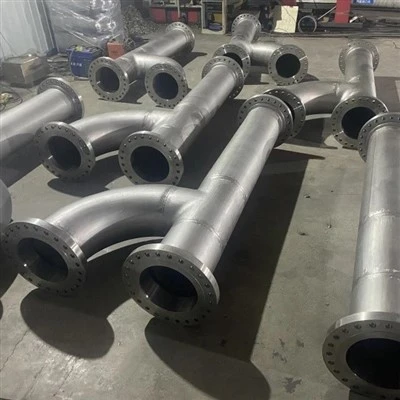
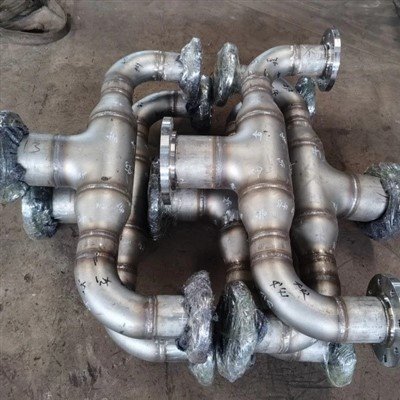
As a supplier and writer specializing in nickel alloy forged pipe fittings, I've spent countless days on the factory floor in China's bustling industrial hubs, like those in Jiangsu and Zhejiang provinces.

Pure Nickel 201 (UNS N02201), a low-carbon variant of Nickel 200 with carbon content limited to 0.02% max, has excellent corrosion resistance in alkaline environments and reduced risk of embrittlement at temperatures above 600°F.
In this blog, I'll outline the comprehensive manufacturing process for Nickel 201 forged pipe fittings.
Raw Material Selection and Verification
We source Pure Nickel 201 (UNS N02201) with strict attention to its low-carbon composition (C ≤ 0.02%), which is crucial for preventing carbide precipitation at grain boundaries during subsequent thermal cycles.
Each incoming batch undergoes positive material identification (PMI) using X-ray fluorescence spectroscopy. We verify that nickel content reaches ≥99.0% and ensure residual elements like iron and copper remain within ASTM B160 specifications.
This step is critical because even minor deviations in composition can compromise the final product's corrosion resistance, particularly in the alkaline and halogen-rich environments where Nickel 201 excels.
Pre-Forging Heating: Temperature Precision
The verified billets move to our computer-controlled induction furnaces. We heat the material to a precise range of 950-1050°C, maintaining a protective argon atmosphere to prevent surface oxidation.

Our furnace operators monitor thermal profiles in real-time, ensuring uniform heat penetration. The objective is to achieve optimal forgeability without approaching the material's incipient melting point.
This careful heating enhances the nickel's austenitic microstructure plasticity, allowing for efficient deformation during forging while preserving its essential metallurgical properties.
Die Forging and Forming
We use closed-die forging techniques to shape the glowing billets into near-net-shape fittings-elbows, tees, flanges, and other complex geometries. The 3,000-ton hydraulic press applies controlled pressure, causing the metal to flow into die cavities precisely machined to ASME B16.11 dimensions.
Our operators ensure grain flow direction follows the contour of the fitting, which is crucial for enhancing mechanical strength and resistance to stress corrosion cracking. This alignment of the grain structure through plastic deformation is a key advantage of forging over alternative manufacturing methods like casting or machining from bar stock.
Post-Forging Heat Treatment

Once formed, the components undergo solution annealing to rectify any microstructural inconsistencies introduced during forging. We heat the fittings to 1000-1050°C, holding them until achieving a uniform temperature throughout, followed by rapid water quenching.
This thermal treatment serves dual purposes: it dissolves any carbon precipitates that may have formed during forging, and it refines the austenitic grain structure.
The result is restoration of the alloy's optimal corrosion resistance and ductility, essential for withstanding aggressive media in chemical processing applications.
Secondary Machining and Finishing
After heat treatment, components proceed to our CNC machining centers. Here, we achieve final dimensions and surface qualities, turning critical features like socket-weld pockets or thread profiles to exacting ASME B16.11 standards.
We employ specialized tool geometries and cooling strategies to maintain surface integrity, preventing work hardening that could complicate subsequent welding or installation.
Final electropolishing creates a smooth, passive surface finish that enhances resistance to oxidation and facilitates easier cleaning in high-purity applications.
Rigorous Quality Validation
No component leaves our facility without passing comprehensive testing. Our quality lab conducts multiple checks:
Dimensional verification against digital models and physical gauges.
Dye penetrant inspection to detect surface imperfections.
Ultrasonic testing to identify internal flaws.
Hydrostatic testing to validate pressure integrity.
We provide material test certificates with each shipment, tracing the component's journey from melt to final inspection.
Conclusion
The forging of Pure Nickel 201 represents a harmonious blend of metallurgical science and industrial craftsmanship.
Each fitting we produce carries our commitment to quality, destined to perform silently in facilities across the globe, from chemical plants in Germany to LNG terminals in the Middle East.