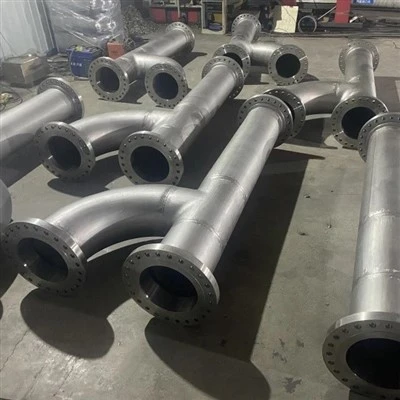
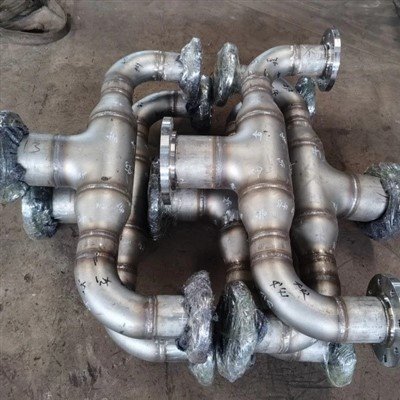
For systems handling seawater, hydrofluoric acid, or caustic solutions, Monel Alloy 400 (UNS N04400) stands out as a material of choice due to its exceptional corrosion resistance. Within these systems, 45-degree socket-weld (SW) elbows manufactured to ASME B16.11 are critical for directional changes.

This blog provides a detailed, technical overview of their dimensions and weight as per the ASME B16.11 standard.
Monel 400 and the ASME B16.11 Introduction
Monel 400 is a nickel-copper alloy renowned for its superior performance in corrosive settings. It exhibits excellent resistance to seawater, sulfuric and hydrofluoric acids, alkalis, and high-temperature steam. This makes it indispensable in offshore, marine, chemical processing, and oil and gas applications.
The ASME B16.11 standard governs the pressure ratings, dimensions, tolerances, and marking requirements for forged steel and alloy socket-weld and threaded fittings. For Monel 400 SW 45° elbows, this standard ensures geometry, pressure integrity across manufacturers.
Standards and Manufacturing Specifications
For a forged SW 45-degree elbow to be considered "fit for purpose," it must adhere to the ASME B16.11 standard. This standard covers pressure-temperature ratings, dimensions, tolerances, marking, and material requirements.

Pressure Classes
In the forged world, we categorize fittings by "class" rather than schedule. For socket weld fittings, the common classes are
Class 3000: Roughly corresponds to Sch 80/XS pipe.
Class 6000: Roughly corresponds to Sch 160 pipe.
Class 9000: Used for ultra-high-pressure applications (XXS).
Alloy 400 Monel Forging SW 45 Deg Elbow Dimension

|
Nominal size |
Socket bore diameter |
Bore diameter of fittings |
Socket wall thickness |
Body wall |
Depth of socket |
Center to bottom of socket |
|||||||||||||||
|
DN |
NPS |
B |
D |
C |
Gmin |
Jmin |
A |
||||||||||||||
|
3000 |
6000 |
9000 |
3000 |
6000 |
9000 |
3000 |
6000 |
9000 |
90°Elbow,Tee,Cross |
45°Elbow |
|||||||||||
|
Avg |
Min |
Avg |
Min |
Avg |
Min |
3000 |
6000 |
9000 |
3000 |
6000 |
9000 |
||||||||||
|
6 |
1/8 |
10.9 |
6.1 |
3.2 |
- |
3.18 |
3.18 |
3.96 |
3.43 |
- |
- |
2.41 |
3.15 |
- |
9.5 |
11.0 |
11.0 |
- |
8.0 |
8.0 |
- |
|
8 |
1/4 |
14.3 |
8.5 |
5.6 |
- |
3.78 |
3.30 |
4.60 |
4.01 |
- |
- |
3.02 |
3.68 |
- |
9.5 |
11.0 |
13.5 |
- |
8.0 |
8.0 |
- |
|
10 |
3/8 |
17.7 |
11.8 |
8.4 |
- |
4.01 |
3.50 |
5.03 |
4.37 |
- |
- |
3.20 |
4.01 |
- |
9.5 |
13.5 |
15.5 |
- |
8.0 |
11.0 |
- |
|
15 |
1/2 |
21.9 |
15.0 |
11.0 |
5.6 |
4.67 |
4.09 |
5.97 |
5.18 |
9.53 |
8.18 |
3.73 |
4.78 |
7.47 |
9.5 |
15.5 |
19.0 |
25.5 |
11.0 |
12.5 |
15.5 |
|
20 |
3/4 |
27.3 |
20.2 |
14.8 |
10.3 |
4.90 |
4.27 |
6.96 |
6.04 |
9.78 |
8.56 |
3.91 |
5.56 |
7.82 |
12.5 |
19.0 |
22.5 |
28.5 |
13.0 |
14.0 |
19.0 |
|
25 |
1 |
34.0 |
25.9 |
19.9 |
14.4 |
5.69 |
4.98 |
7.92 |
6.93 |
11.38 |
9.96 |
4.55 |
6.35 |
9.09 |
12.5 |
22.5 |
27.0 |
32.0 |
14.0 |
17.5 |
20.5 |
|
32 |
11/4 |
42.8 |
34.3 |
28.7 |
22.0 |
6.07 |
5.28 |
7.92 |
6.93 |
12.14 |
10.62 |
4.85 |
6.35 |
9.70 |
12.5 |
27.0 |
32.0 |
35.0 |
17.5 |
20.5 |
22.5 |
|
40 |
11/2 |
48.9 |
40.1 |
33.2 |
27.2 |
6.35 |
5.54 |
8.92 |
7.80 |
12.70 |
11.12 |
5.08 |
7.14 |
10.15 |
12.5 |
32.0 |
38.0 |
38.0 |
20.5 |
25.5 |
25.5 |
|
50 |
2 |
61.2 |
51.7 |
42.1 |
37.4 |
6.93 |
6.04 |
10.92 |
9.50 |
13.84 |
12.12 |
5.54 |
8.74 |
11.07 |
16.0 |
38.0 |
41.0 |
54.0 |
25.5 |
28.5 |
28.5 |
|
65 |
21/2 |
73.9 |
61.2 |
- |
- |
8.76 |
7.62 |
- |
- |
- |
- |
7.01 |
- |
- |
16.0 |
41.0 |
- |
- |
28.5 |
- |
- |
|
80 |
3 |
89.9 |
76.4 |
- |
- |
9.52 |
8.30 |
- |
- |
- |
- |
7.62 |
- |
- |
16.0 |
57.0 |
- |
- |
32.0 |
- |
- |
|
100 |
4 |
115.5 |
100.7 |
- |
- |
10.69 |
9.35 |
- |
- |
- |
- |
8.56 |
- |
- |
19.0 |
66.5 |
- |
- |
41.0 |
- |
- |
Weights of SW 45° Elbows in Monel 400
Weights depend on volume and density. Standard charts often cite carbon steel; for Monel 400, multiply by 1.12. Below are approximate weights for Class 3000 and 6000, calculated via volume estimation and verified against industry data. Actual weights vary ±5% due to forging tolerances.
Class 3000 SW 45° Elbows in Monel 400 Weights
|
NPS |
Weight (lbs) |
|
1/2 |
0.20-0.25 |
|
3/4 |
0.30-0.35 |
|
1 |
0.45-0.50 |
|
1-1/4 |
0.70-0.80 |
|
1-1/2 |
0.95-1.05 |
|
2 |
1.50-1.65 |
|
2-1/2 |
2.50-2.75 |
|
3 |
3.80-4.20 |
|
4 |
7.00-7.70 |
Class 6000 SW 45° Elbows in Monel 400 Weights
|
NPS |
Weight (lbs) |
|
1/2 |
0.25-0.30 |
|
3/4 |
0.40-0.45 |
|
1 |
0.60-0.70 |
|
1-1/4 |
1.00-1.10 |
|
1-1/2 |
1.40-1.55 |
|
2 |
2.20-2.40 |
Important Notes on Dimensions & Weights:
Pressure Class: Class 6000 fittings have a significantly higher pressure rating than Class 3000. This is achieved through thicker wall sections and more robust forging, which is reflected in the increased weight for the same NPS.
Material Density: Monel 400 has a density of approximately 8.80 g/cm³. This is heavier than carbon steel (7.85 g/cm³), so a Monel fitting will be about 12% heavier than its carbon steel counterpart of the same size and class.
Tolerances: ASME B16.11 defines strict tolerances for all dimensions (e.g., ±0.8 mm on center-to-end for sizes up to 2"). Certified manufacturers adhere to these.
Advantages of the Socket Weld (SW) Connection

For small-diameter, high-pressure piping systems common with Monel 400, the socket weld connection offers distinct benefits:
High Integrity: The fillet weld provides a robust, leak-proof connection superior to threaded joints for severe service.
Ease of Alignment: The socket helps align the pipe accurately before welding, simplifying installation.
Smooth Flow Path: The bore of a forged elbow is typically smooth, minimizing turbulence and pressure drop.
Disclaimer: The data provided is based on standard ASME B16.11 specifications for informational purposes. For final design and procurement, always refer to the manufacturer's latest certified dimensional drawings and technical data sheets.