C22 is usually the stronger starting candidate for oxidizing, chloride-bearing acid condensate, while C276 can be the stronger candidate for specific reducing-acid conditions. Neither alloy is universally better: the defensible choice depends on acid concentration, metal temperature, oxidants, liquid–vapor exposure, and the finished weld condition. Published alloy data support screening, not a blanket service guarantee.

What is the main difference between C22 and C276?
C22 contains more chromium; C276 contains more molybdenum and tungsten. This balance helps explain why their rankings change with the chemical environment. Both are nickel–chromium–molybdenum alloys, not stainless steels. C22 identifies UNS N06022, and C276 identifies UNS N10276.
|
Property / nominal wt.% |
C22 / C-22 |
C276 / C-276 |
|
UNS designation |
N06022 |
N10276 |
|
Nickel |
56, balance |
57, balance |
|
Chromium |
22 |
16 |
|
Molybdenum |
13 |
16 |
|
Tungsten |
3 |
4 |
|
Iron |
3 |
5 |
|
Carbon, maximum |
0.01 |
0.01 |
|
Silicon, maximum |
0.08 |
0.08 |
Composition source: Haynes International alloy data. Values are nominal unless marked maximum; they are not a substitute for the applicable material specification or heat certificate.
Chromium supports the protective surface film that helps C22 resist oxidizing chemicals. More molybdenum does not automatically make C276 superior in every acid: its benefit must be checked against concentration and temperature. Both alloys resist oxidizing and non-oxidizing chemicals within defined limits.
Why must acid condensate lines be compared by service rather than acid name?
The relevant exposure is the liquid film touching the metal, not simply the acid name on the process flow diagram. A service-specific comparison must distinguish continuously flooded drain lines from vapor lines where acid first condenses on a cold surface.
Acid dew-point corrosion occurs when conditions allow acid-bearing vapor to condense. For sulfuric-acid dew-point corrosion, the condensation temperature depends on factors including sulfur trioxide and water-vapor partial pressures. Consequently, bulk gas temperature alone does not establish whether a pipe wall remains dry.
For a useful screening study, divide the line into exposure zones: initial condensation, liquid–vapor interfaces, fully wetted sections, low points, and shutdown hold-up. This is a proposed engineering workflow, not a claim that one published immersion test reproduces every zone. Haynes' wet-chlorine testing demonstrates why separating liquid, vapor, and interface exposures matters.
Which operating data are needed before selecting an alloy?
Define a bounded operating envelope before requesting a C22 or C276 recommendation. At minimum, document the chemistry, temperature, exposure mode, and abnormal conditions that the selected material must tolerate.
|
Input |
What to record |
Why it belongs in the comparison |
|
Acid chemistry |
Acid species and minimum/normal/maximum concentration in wt.% |
Laboratory corrosion rates depend on the exact acid and concentration. |
|
Temperature |
Liquid, gas, and estimated pipe-wall temperatures during all operating modes |
Corrosion and condensation are different temperature-dependent questions. |
|
Oxidizing species |
Dissolved oxygen, free chlorine, ferric/cupric ions where relevant |
An oxidizing chloride mixture is not equivalent to pure HCl. |
|
Physical exposure |
Flooded, vapor, interface, intermittent wetting, deposits and stagnant pockets |
Localized attack can differ from average metal loss. |
|
Fabricated condition |
Base metal, weld metal, heat-affected zone, forming and heat treatment |
Finished joints need their own corrosion assessment. |
|
Design and consequence |
Pressure, design temperature, required life, leak consequence and inspection access |
Material screening must connect to mechanical design and risk. |
This checklist is a proposed specification framework. Its corrosion-related inputs follow the variables and exposure distinctions in the manufacturer's acid, localized-corrosion, and weld data; condensation assessment requires a separate process review.
When is C22 the stronger candidate for acid condensate lines?
C22 deserves priority in screening when the condensate contains oxidizing species and chlorides, especially where crevices or liquid–vapor interfaces are difficult to avoid. Its advantage is supported by specific laboratory comparisons, not universal immunity.

In Haynes' acidified 6 wt.% ferric-chloride testing, the reported critical crevice temperature is 80°C for C22 and 55°C for C276. The test identifies the lowest temperature at which crevice attack occurs under the stated laboratory procedure within 72 hours. These figures rank resistance in that solution; they are not maximum operating temperatures for a real condensate line.
A separate 30-day saturated wet-chlorine study used a 3,000 ppm chloride solution initially adjusted to pH 1.5 with HCl, with chlorine gas continuously bubbled through it. C276 suffered severe weld-metal corrosion and heat-affected-zone attack in liquid at 80°C. C22 showed no localized attack under that exposure, although uniform corrosion was measured. C22 also showed no localized attack in a later test at 95°C liquid temperature and 90°C vapor temperature.
This evidence supports C22 screening for comparable oxidizing, chlorine-bearing conditions. It does not establish a safe temperature limit for a different condensate composition, nor does it mean that chloride alone behaves like free chlorine.
When can C276 outperform C22?
C276 can outperform C22 in particular hydrochloric- and sulfuric-acid concentration–temperature combinations. However, even pure-acid data show that the preferred alloy can change when the temperature changes.
|
Reagent-grade exposure |
C22, mm/year |
C276, mm/year |
Lower reported rate |
|
10 wt.% HCl at 38°C |
0.01 |
0.17 |
C22 |
|
10 wt.% HCl at 66°C |
0.98 |
0.46 |
C276 |
|
20 wt.% HCl at 66°C |
0.90 |
0.55 |
C276 |
|
10 wt.% H₂SO₄ at 93°C |
0.04 |
0.14 |
C22 |
|
70 wt.% H₂SO₄ at 66°C |
0.28 |
0.05 |
C276 |
Source: selected corrosion data published by Haynes International for the two alloys. These are separate published laboratory datasets, not a new matched-pair JN Alloy test. Concentrations are weight percentages; values represent uniform corrosion rates in reagent-grade acids.
The practical lesson is that "C276 for reducing acids" is a screening shortcut, not a final specification. The 10 wt.% HCl examples reverse the ranking between 38°C and 66°C. A lower rate also does not automatically mean an acceptable rate: the project must define its acceptance criteria.
How do welding and fabrication change the comparison?
Compare the finished weldment, not just solution-annealed parent metal. Both alloys are weldable, but weld-metal corrosion can differ substantially from the surrounding material.
For example, Haynes reports 0.02 mm/year for C22 wrought base metal in 50 wt.% sulfuric acid at 66°C, versus 0.24 mm/year for its all-weld-metal sample. Under the same listed chemistry and temperature, C276 is reported at 0.02 mm/year for base metal and 0.03 mm/year for all-weld metal. These results apply to the stated laboratory samples, not every production weld.
For a condensate-line qualification plan, specify representative welds, root-side surface condition, filler selection, heat input controls, shielding and purging, and any required post-forming heat treatment. Evaluate weld metal, the heat-affected zone, and parent metal separately. This proposed plan addresses the manufacturer's documented weld-performance differences.
Haynes lists ERNiCrMo-10 bare filler for C22 and ERNiCrMo-4 for C276. These are matching-filler designations, not automatic instructions for dissimilar joints; the qualified welding procedure must govern the actual assembly.
How should engineers validate C22 versus C276 for actual condensate?
Use published data to shortlist materials, then validate the leading candidates under representative service conditions. Haynes explicitly encourages field testing and states that users must determine suitability for their actual application.

Define the test envelope: include normal condensate, credible acid or oxidant excursions, and the relevant metal temperatures.
Use representative samples: include the proposed base metal and production-representative weldments; add creviced specimens where the design creates crevices.
Separate exposure modes: test immersion, vapor/interface exposure, and intermittent wetting when those conditions occur in the line.
Measure more than mass loss: record uniform corrosion, maximum pit or crevice depth, weld attack, and evidence of cracking.
Set acceptance criteria before testing: document allowable uniform loss, localized-attack limits, inspection requirements, and the authority approving material selection.
This is a proposed qualification sequence, not a standardized test method. The test procedure, duration, replication, and acceptance limits should be agreed with the responsible corrosion and piping engineers. A ferric-chloride ranking cannot replace a representative condensate test.
Which specifications and purchasing checks belong in the RFQ?
Specify the UNS grade, product form, governing material standard, dimensions, heat treatment, and inspection package. "Hastelloy pipe" alone does not adequately define the purchase. Haynes lists the following product-standard families for both grades.
|
Product form |
ASTM standard family |
|
Seamless pipe and tube |
B622 |
|
Welded pipe |
B619 |
|
Sheet, plate and strip |
B575 |
|
Rod and bar |
B574 |
|
Wrought fittings |
B366 |
|
Forgings |
B564 |
Confirm the current applicable edition, grade coverage, dimensions, testing requirements, and ASME counterpart where required. A product specification establishes supply requirements; it does not by itself approve a material for a particular corrosive service.
Recommended RFQ attachments include the operating-envelope sheet, piping drawings, weld requirements, inspection and test plan, and requested traceability records. Agree heat-certificate review, positive material identification, dimensional checks, weld examination, and pressure or leak testing as applicable. These are proposed purchasing controls, not a claim that every order includes every test.
Which alloy offers better lifecycle value?
The better-value alloy is the one that meets the documented service requirements at the lower evaluated lifecycle cost-not necessarily the lower price per kilogram.
Compare quoted material and fabrication costs alongside qualification, installation, inspection, planned replacement, and credible leak or downtime consequences. Use current quotations and project-specific assumptions; this comparison does not assume that either grade is always cheaper or available faster. Do not convert a laboratory uniform-corrosion rate directly into guaranteed pipe life, particularly where localized attack or weld degradation could control failure.
How can JN Alloy support a service-specific comparison?
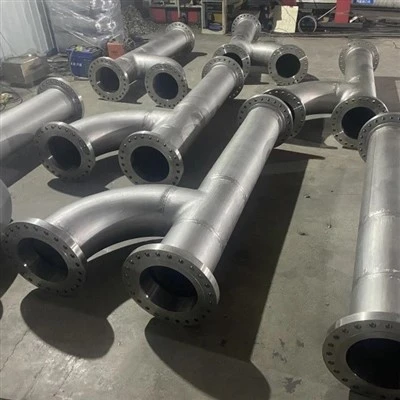
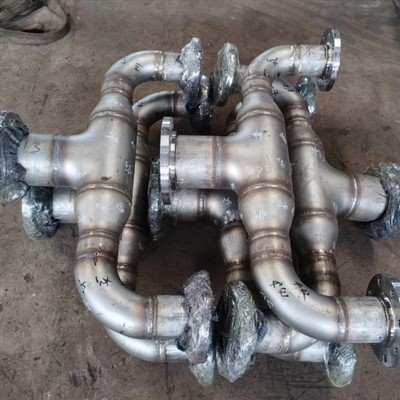
JN Alloy's published scope aligns with complete piping procurement: nickel alloy and stainless steel supply, pipes and tubes, fittings, flanges, plates, bars, forgings, welding materials, and customized pipe-spool processing. Its website also describes technical consultation and testing capabilities including PMI, radiography, mechanical testing, and hydrostatic or nondestructive electric testing. Confirm the exact capability and documentation applicable to the proposed order.
For an acid-condensate enquiry, send JN Alloy the condensate analysis, operating and wall-temperature range, oxidant information, exposure mode, drawings, material standards, and required inspection records. Request a coordinated quotation for the pipe, fittings, flanges, and fabrication scope, subject to grade availability and engineering approval.
Contact: Market@jnalloy.com | +86 19339900211.
What is the final selection rule for C22 vs C276?
Prioritize C22 for evaluation in oxidizing, chloride-bearing condensate; retain C276 as a serious candidate where defined reducing-acid conditions favor its published performance. Approve neither solely from its trade name, bulk pH, or a generic corrosion chart. Compare the worst credible chemistry, wall temperature, exposure mode, and fabricated condition, then validate the choice.
Technical note: This article supports preliminary material screening and purchasing discussions; it is not a pressure-design calculation, corrosion warranty, or substitute for project-specific engineering approval. HASTELLOY, C-22, and C-276 are Haynes International trademarks. Generic UNS designations identify the alloy grades; the use of a trade name here does not assert JN Alloy's authorization to supply trademarked-origin material.