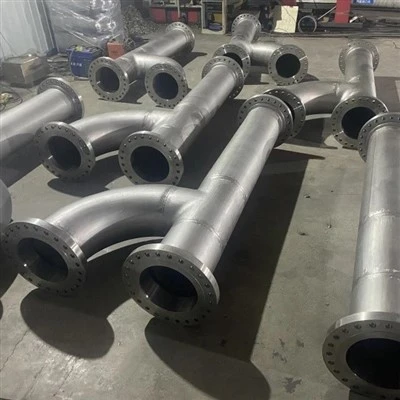
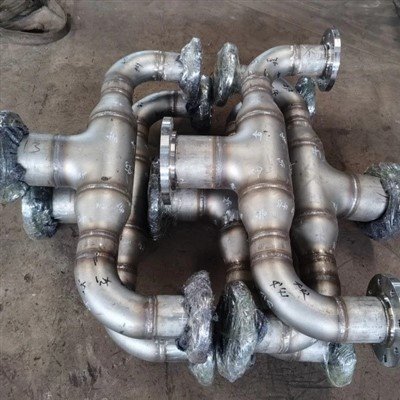
ASTM B462 UNS N08020 (Alloy 20) Price varies, typically ranging from $15 to $50 per kilogram, or approximately $15,000 to $50,000 per ton. The exact price depends on your supplier.

The price of ASTM B462 UNS N08020 is primarily determined by several key factors: raw material cost; product form and specifications; purchase volume; supplier type and service; and delivery terms. Therefore, to obtain an accurate quote, it is important to provide suppliers with detailed technical requirements, such as standard grade, size, quantity, delivery status, and required documentation. Compare multiple suppliers and monitor nickel price trends.
What Is ASTM B462 UNS N08020?
ASTM B462 Standard
ASTM B462, a standard specification developed by the American Society for Testing and Materials (ASTM), stands for "Standard Specification for Forged or Rolled Nickel Alloy Pipe Flanges, Forged Fittings, Valves, and Parts." It is primarily intended for use in corrosive, high-temperature environments. This standard covers wrought or rolled products of various nickel-based corrosion-resistant alloys, including nearly 20 alloy grades such as UNS N08020, UNS N06022, UNS N06200, and UNS N10276.
Its scope specifically covers pipe flanges, forged fittings, valves, and other key components, and specifies their chemical composition, mechanical properties, dimensional tolerances, heat treatment processes, and testing methods (such as chemical analysis, tensile testing, and nondestructive testing).

This standard typically requires products to have relevant certifications, such as EN 10204 3.1/3.2 type material certificates, and may comply with industry-specific requirements such as NACE MR0175/ISO 15156, API 20E, and PED. This aims to ensure the material reliability of these critical components in harsh environments such as chemical, oil and gas, and offshore engineering.
UNS N08020 Alloy
UNS N08020, commonly known commercially as Alloy 20 or Carpenter 20, is a nickel-iron-chromium-based austenitic alloy with a carefully balanced chemical composition, typically containing 32-38% nickel (Ni), 19-21% chromium (Cr), 2-3% molybdenum (Mo), and 3-4% copper (Cu). Niobium (Nb) is added to stabilize the carbon, significantly improving its resistance to intergranular corrosion.
Alloy 20 exhibits excellent resistance to uniform corrosion in aggressive media such as sulfuric acid, phosphoric acid, and mixed acids, and also offers good resistance to chloride stress corrosion cracking. Its physical properties include a density of approximately 8.1 g/cm³ and a melting point range of 1350-1400°C.

In mechanical properties, the annealed tensile strength is typically no less than 550 MPa, the yield strength no less than 240 MPa, and the elongation can exceed 30%. The alloy exhibits excellent workability and can be formed by hot working (hot working temperature range approximately 970-1065°C) and cold working and is suitable for joining using common welding methods.
Its primary application areas are extensive, including in the chemical processing industry, such as sulfuric acid storage tanks, reactors, heat exchanger piping, pharmaceutical equipment, offshore engineering components, and flue gas desulfurization systems.
UNS N08020 Alloy 20 Chemical Composition Chart
The following is a detailed chemical composition chart, including the standard content of each element and its main function.
|
Composition |
Value (wt%) |
Main Functions and Description |
|
Ni |
32.0 - 38.0 |
Stabilizes the austenite structure, providing a foundation for corrosion resistance, especially against reducing media. |
|
Cr |
19.0 - 21.0 |
Forms a dense oxide film, endowing the alloy with excellent resistance to oxidizing media. |
|
Fe |
Remain |
As a matrix element in the alloy, it balances cost and performance. |
|
Cu |
3.0 - 4.0 |
A key additive, significantly enhancing the alloy's corrosion resistance in sulfuric acid environments. |
|
Mo |
2.0 - 3.0 |
Improves resistance to pitting, crevice corrosion, and chloride stress corrosion cracking. |
|
Nb* |
(8 × C) - 1.0 |
A stabilizing element, combining with carbon to form niobium carbide, effectively inhibiting intergranular corrosion in the weld heat-affected zone. |
|
Mn |
≤ 2.0 |
Serves as a deoxidizer and improves hot workability; the content must be controlled to avoid adverse effects on corrosion resistance. |
|
Si |
≤ 1.0 |
A deoxidizer used during the smelting process; excessive levels may affect toughness and workability. |
|
C |
≤ 0.07 |
Strictly controlling its content is key to ensuring corrosion resistance; excessive levels can combine with chromium, leading to susceptibility to intergranular corrosion. |
|
P |
≤ 0.045 |
A harmful impurity element, strictly controlled to prevent segregation at grain boundaries and deterioration of alloy properties. |
|
S |
≤ 0.035 |
Harmful impurities affect hot work plasticity and corrosion resistance. |
ASTM B462 UNS N08020 Price List

The price of ASTM B462 UNS N08020 material is not a fixed value, but is affected by factors such as product form, specifications, purchase quantity and market supply and demand.
|
Products |
Price (USD) |
MOQs |
|
Flanges |
2.00−10.00 / PCS |
For example, the price of a WN blind flange is approximately 2-5, and the price of a BL flange is approximately 6-10. The minimum order quantity is typically 100 pieces. |
|
Forged Fittings |
6.00−10.00 / PCS |
For example, a 3-inch 900LB SCH160 BL flange can have a minimum order quantity as low as 1 piece. |
|
Bar/ Rod |
About $9,600.00 / Ton |
This is a reference price per ton for seamless steel pipe. |
|
Fastener |
- |
- |
Note: The above prices are for reference only. The actual transaction price will be determined by the following factors.
Specifications: Specific product dimensions, pressure ratings, and manufacturing standards.
- Purchasing Scale: Larger quantities typically yield more favorable unit prices.
- Raw Material Costs: Fluctuations in the international market prices of metals such as nickel, molybdenum, and chromium, key alloy components, can directly impact final product pricing.
- Supplier Factors: Quotes from manufacturers, distributors, or agents can vary, and the inclusion of value-added services such as material certification and testing reports can also affect pricing.
To obtain an accurate quote, provide your detailed technical requirements directly to the supplier and submit a quotation request.