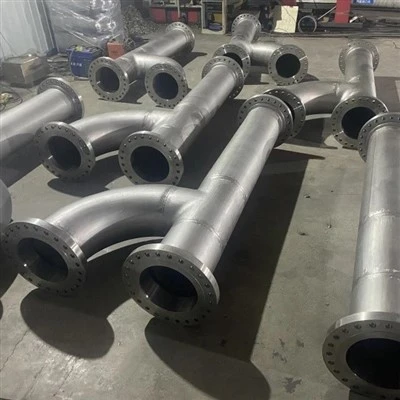
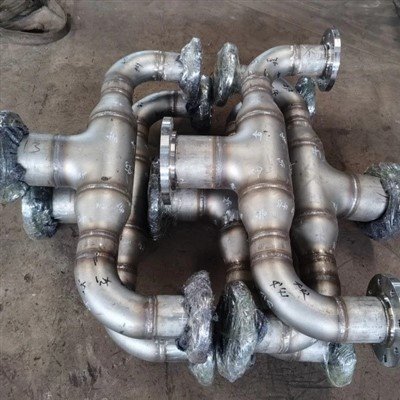
What is Slip On Flange?
Slip on flange is characterized by its installation method: it "slips over" the end of a pipe. The flange's inner diameter is slightly larger than the outer diameter of the pipe. The pipe is then fillet-welded both on the hub's outside and on the inside, creating a strong connection suitable for moderate pressure and temperature applications. Its advantages include:
Ease of Installation: The loose fit simplifies alignment compared to a Weld Neck flange.
Reduced Cost: In general, installation time and the initial material cost are shorter.
It should be noted that it is less appropriate for high-pressure or severe cyclic loading applications because to its lower fatigue strength and resilience to mechanical stress compared to a Weld Neck flange.
Slip On Flange Standards: ASME B16.5 and ASME B16.47

In order to guarantee safety and interchangeability, worldwide standards have strictly regulated the dimensions of slip-on flanges.The most important criteria are:
ASME B16.5: This standard is "Pipe Flanges and Flanged Fittings" for nominal pipe sizes ranging from NPS ½" to 24". For a variety of industrial applications, spanning pressure classes 150–2500, it is the most frequently cited standard.
ASME B16.47: Larger-diameter flanges for NPS 26" to 60" diameters are covered by ASME B16.47. Series A, which is equivalent to MSS SP-44, and Series B, which is equivalent to API 605, are its two series. Generally speaking, Series A flanges are stronger and can support more weight.
Other regional standards with comparable but distinct dimension tables are JIS B2220 in Japan and EN 1092-1 in Europe.
Slip On Flange Dimensions Explained
For engineers, designers, and inspectors, knowing the precise measurements on a flange drawing is essential.As per ASME B16.5, the following are the main measurements for a slip-on flange:
Nominal Pipe Size: The dimensionless designation known as Nominal Pipe Size (NPS) closely reflects the exterior diameter of the pipe.The flange is made to suit pipes with an OD of about 12.75 inches; however, NPS 12 does not imply that it is 12 inches in any particular dimension.
Pressure Class (or Rating): This represents the pressure-temperature tolerance of the flange.Classes 150, 300, 400, 600, 900, 1500, and 2500 are frequently offered.Higher pressures can be handled by a Class 300 flange than by a Class 150 flange of the same NPS.Bolts and flanges are thicker in higher classes.
Outside Diameter (O): The flange's overall diameter is known as the outside diameter (O). In order to guarantee sufficient clearance for installation and bolt tightening, this dimension needs to be taken into account.
Bolt Circle Diameter (BC): The diameter of the circle through which each bolt hole is centered. This has to match the mating flange's bolt circle exactly.
Bolt Hole Size and Number: The diameter of the bolt holes and the quantity of bolts. The size and number increase with the NPS and Pressure Class to withstand higher loads.
Hub Diameter (X) and Hub Length (Y): For a slip-on flange, the hub is the raised portion that the pipe slides into. The Hub Diameter (X) must be larger than the pipe's OD. The Hub Length (Y) determines the depth of engagement and weld preparation area.
Bore Diameter (B): This is the flange's inner diameter. There are two methods to specify it:
- Standard Bore: Made to fit schedule pipes, such as Schedule 40 or Schedule 80.
- Large Bore (also known as "Bore to Match Pipe"): To reduce turbulence and pressure drop, the bore is enlarged to match the connecting pipe's inner diameter.
Flange Thickness (T): The flange's total thickness.The flange's resistance to bending under pressure is greatly influenced by this.
Face Type: The surface that seals the gasket. The Raised Face (RF) type, which has a tiny raised ring surrounding the bore, is the most popular.This elevated face's height is likewise standardized.
Why Are Slip On Flange Dimensions So Important?

Interchangeability and Safety: Standardized dimensions ensure that a flange manufactured in one country will mate perfectly with a flange from another, provided they conform to the same standard (e.g., ASME B16.5, Class 150). This eliminates guesswork and ensures the system's integrity.
Correct Gasket Compression: If the bolt holes are not positioned correctly or if the face height is increased, uneven gasket compression may result in leaks.
Structural Integrity: Flanges transfer loads from the pipe by serving as structural elements and seals. Under pressure, an improper hub or inadequate thickness can result in disastrous failure.
Efficiency in Procurement and Fabrication: Using standard dimensions streamlines the procurement process and allows for pre-fabrication of piping spools.
How to Select Slip On Flange Dimensions?
Selecting the right flange involves a systematic process:
Find the nominal pipe size of the connecting pipe to ascertain the pipe NPS.
Choose the proper pressure class using ASME B16.5 Appendix D charts or process engineering data based on the service conditions (fluid, temperature, and pressure).
Select a material that is compatible with the fluid and surroundings, such as ASTM A105 for carbon steel and A182 F304/304L for stainless steel.
The face type is defined as raised face (RF) in the majority of applications.With cast iron equipment or at lower pressures, Flat Face (FF) is utilized.
To find the precise measurements, refer to the ASME B16.5 or B16.47 dimensional table.
Conclusion
Understanding of slip-on flange measurements is essential. Even while the slip-on flange has useful benefits, its proper use depends largely on exact adherence to recognized dimensional standards such as ASME B16.5.Professionals are able to select components that ensure system safety, dependability, and lifespan by comprehending the significance of each important parameter, from the bolt circle and bore to the NPS and pressure class.When it comes to important applications, always study the most recent edition of the governing standards and seek advice from expert engineers.