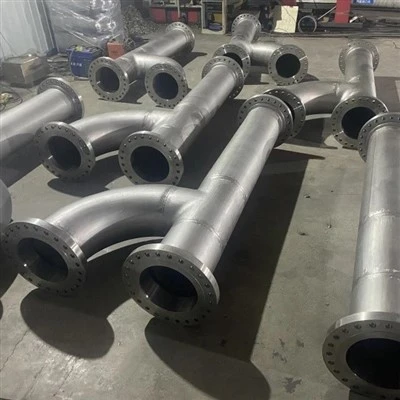
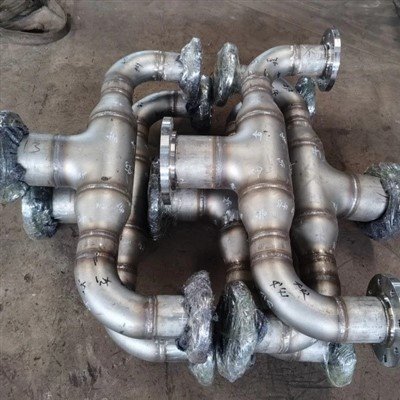
What Is ASTM B161 Nickel 201 Welded Pipes?
ASTM B161 Nickel 201 Welded Pipes made from the low-carbon nickel alloy UNS N02201, are tubular goods that adhere to the stringent requirements specified in the ASTM B161 standard.
In order to guarantee that nickel and high-nickel alloy pipes have particular chemical compositions, mechanical characteristics, and dimensional tolerances, ASTM B161, "Standard Specification for Nickel Seamless Pipe and Tube," sets down the standards for these pipes. The "welded" term indicates that these pipes are made from a flat sheet or strip of Nickel 201 that has been rolled and then bonded along its length using a welding method, usually TIG welding, which produces a seam that is clean and high-integrity.

Nickel 201 is specifically chosen for its maximum carbon content of 0.02%, which makes it exceptionally resistant to graphitization and embrittlement in high-temperature applications exceeding 600°F. These pipes are renowned for their excellent corrosion resistance in various environments, high thermal and electrical conductivity, and good mechanical properties. Consequently, they are critical components in demanding industries such as chemical processing, food processing, aerospace, and electronics for transporting corrosive fluids, handling high-temperature gases, or serving in electrical applications.
ASTM B161 Nickel 201 UNS N02201 Chemical Composition
Nickel (Ni): ≥ 99.0%
Ni is a basic element. Due to its face-centered cubic (FCC) crystal structure, it has exceptional cold-working properties, hardness, and ductility by nature.The alloy's remarkable resistance to corrosion in a variety of conditions, including reducing atmospheres, caustic alkalis, and non-oxidizing salts, is attributed to nickel's basic characteristics, which also confer good electrical and thermal conductivity.Stability and resistance to chloride ion stress corrosion cracking are further guaranteed by the high nickel content.
Carbon (C): ≤ 0.02%
The amount of carbon in nickel 200 and nickel 201 varies greatly. Even at service temperatures above 315°C, nickel 201 is less prone to embrittlement because of its incredibly low maximum carbon concentration. Impact strength and ductility are greatly decreased by high temperatures because carbon diffuses into grain boundaries and either precipitates as graphite or combines with the nickel to create nickel carbide. By lowering its carbon content, nickel 201 preserves its mechanical integrity.
Manganese (Mn): ≤ 0.35%
Manganese is mostly added during the smelting process as a deoxidizer. It produces stable compounds that clean the melt in conjunction with oxygen and sulfur, improving the ingots' weldability and hot workability while also making them healthier and cleaner. The primary benefit of manganese is that it makes items easier to create and of greater quality, with a minor strengthening effect on solid solutions.

Iron (Fe): ≤ 0.40%
Nickel 201 contains very little iron since it is an impurity. Iron can be tolerated in small amounts and may provide slight solid-solution strengthening, but in some pure chemical environments, such as high-temperature caustic solutions, where the purity of the nickel matrix is essential for the formation of a stable passive film, large amounts of iron can slightly reduce the alloy's ideal corrosion resistance.
Sulfur (S): ≤ 0.01%
Sulfur is a harmful contaminant that needs to be tightly managed. At grain boundaries, it frequently forms low-melting-point nickel sulfide phases and is extremely insoluble in nickel. These stages may result in extreme hot shortness, which could cause cracking when welding or hot operations. Weld integrity and good hot workability are guaranteed by the low sulfur limit.
Copper (Cu): ≤ 0.25%
As an accidental contaminant, copper is frequently found in raw materials or recycling streams. It is soluble in the nickel matrix in trace amounts and, in most settings, has little effect on corrosion resistance and mechanical qualities. To preserve the alloy's chemical "purity" and guarantee reliable performance, especially in specialized electrical and corrosive applications, its concentration is restricted.
Silicon (Si): ≤ 0.35%
Silicon acts as a potent deoxidizer, similar to manganese. It is beneficial during melting and casting to improve fluidity and reduce porosity. In the solid alloy, silicon in solution can provide some strengthening. However, if present in amounts approaching the upper limit, it can influence the formation of secondary phases and may slightly affect performance in extreme oxidizing conditions. Its level is balanced to aid manufacturability without compromising key properties.
Find Reliable ASTM B161 Nickel 201 Welded Pipes Exporter

Establish Your Needs
You must create a thorough and clear specification sheet for your project before contacting any suppliers. The product form (welded pipe), the necessary material grade ASTM B161 Nickel 201 / UNS N02201, and all important measurements (length, wall thickness, and outer diameter) should all be clearly stated in this document. A obligatory Mill Test Certificate that complies with ASTM B161 is non-negotiable. You also need to list any extra non-destructive testing requirements, including hydrostatic or eddy current testing. In addition to expediting the quotation process, precisely stating the order quantity, target price range, desired incoterms (such as FOB, CIF), and chosen payment methods can also instantly weed out suppliers who are unable to satisfy your basic needs.
Perform screening and search.
Employ a variety of methods to create a longlist of possible exporters, including industry-specific directories, international B2B marketplaces like Thomasnet and Alibaba, and focused search engine inquiries with exact terms like "ASTM B161 Nickel 201 welded pipe manufacturer." Their digital presence should be the primary focus of the first screening; a well-designed, technically complex website that provides details about their manufacturing capabilities, quality control procedures, and company history is a good sign. At this point, suppliers who have a particular concentration on nickel alloys or high-performance metals should be given preference over general-purpose steel stockists because specialists usually have more in-depth technical knowledge and consistently high-quality products.
Technical proficiency and assurance of quality.
Get comprehensive details about the manufacturing and quality control procedures of the businesses who made the short list by getting in touch with them. A trustworthy exporter will openly describe their heating treatment procedures, welding techniques, and their entire range of non-destructive testing procedures. Verifying that they have in-house capabilities for mechanical testing and spectroscopic chemical analysis, as well as 100% testing as required by the ASTM B161 standard, is crucial. In order to confirm their operational consistency and dedication to standardized quality standards, you should also check their quality management system certifications, such as an ISO 9001:2015 accreditation.

Assess the company's legitimacy, experience, and reputation in the market.
The technical prowess of a provider must be matched by demonstrated business dependability. Find reputable exporters with a number of years of experience by looking into the company's history. You can also ask for case studies or references from customers in related industries, like aerospace or chemical processing. On sites like SGS or Bureau Veritas, look for independent third-party verification reports. You can also look for customer evaluations or testimonials. Significant red flags should be avoided when dealing with suppliers who are unable to provide references or whose internet presence indicates a history of complaints about material quality or contractual conflicts.
Professional Communication and Quotations
Ask your final shortlist of three to five exporters for specific quotes, then carefully compare them. Make sure every quote is thorough, including the cost of certificates, packaging, and shipping under explicit terms, in addition to the price per unit. A trustworthy partner will respond to your questions in a prompt, understandable, and technically correct manner; pay special attention to how professional and responsive their communication is. Given that the cost basis for producing high-quality nickel alloys is significant and non-negotiable, evasive responses, ongoing demands for advance payment, or pricing that appear unusually low in comparison to the market average are all clear signs of possible risk.
Inspection by a Third Party for Last Verification
Purchasing a pre-shipment inspection by an impartial third-party organization (such as SGS, BV, or Intertek) is a strongly advised risk mitigation tactic for a first-time order or a big, important shipment. The inspector will visit the exporter's warehouse to observe material testing, check dimensional accuracy, confirm the legitimacy of the material's certificate, and evaluate if the packaging is appropriate for international shipping. This last phase offers the utmost piece of mind and safeguards your investment by providing an objective evaluation of the product's compliance with your criteria prior to payment being completed and the goods being dispatched.

Create a Plan for Long-Term Collaboration
Following the completion of due diligence, thoroughly review the sales contract and proforma invoice to make sure that all technical details, delivery schedules, and payment deadlines have been clarified. A reliable exporter will additionally exhibit a dedication to post-purchase assistance by swiftly supplying all required shipping documentation and offering assistance with any customs-related documentation. The success of projects requiring high-integrity materials depends on a stable, long-term supply chain collaboration, which is established by successful initial transactions.
Conclusion
A trustworthy exporter of ASTM B161 Nickel 201 Welded Pipes offers value that goes much beyond the straightforward exchange of goods; their main advantage is serving as a strategic partner who ensures integrity, reduces risk, and makes sure your projects are successful in the long run. By providing materials with completely traceable and certified chemical and mechanical properties that closely adhere to ASTM B161, this is accomplished through an unwavering commitment to technical rigor, thereby removing the catastrophic risks of material failure in crucial applications such as handling corrosive chemicals or processing at high temperatures.
Such an exporter offers significant operational savings beyond simple compliance by avoiding expensive production downtime, project delays, and potential liability issues resulting from subpar pipes. Additionally, their knowledge of documentation and logistics guarantees a smooth, transparent supply chain from their mill to your job site, ultimately delivering not just a product but also certified peace of mind and the fundamental dependability your operations rely on.