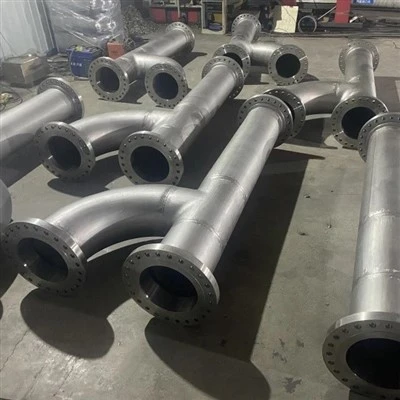
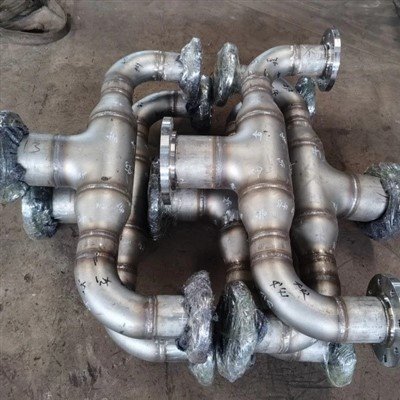
ASTM A312 Pipe is the most widely accepted specification worldwide for seamless, straight-seam welded, and heavily cold-worked welded austenitic stainless steel pipes. Developed and maintained by ASTM International, this standard defines the technical requirements for pipes designed to handle corrosive fluids and high-temperature service in demanding industries like chemical processing, power generation, oil and gas, food production, and pharmaceuticals.
Its primary function is to ensure pipes meet minimum criteria for material quality, mechanical performance, dimensional accuracy, and pressure integrity, providing engineers and fabricators with reliable components for critical piping systems.

Understanding ASTM A312 Pipe Material Grades
The standard covers a comprehensive range of austenitic stainless steel alloys, each identified by its Unified Numbering System (UNS) designation. Common grades include TP304/304L (UNS S30400/S30403), TP316/316L (UNS S31600/S31603), TP321 (UNS S32100), TP347 (UNS S34700), and more specialized alloys like TP317L or high-performance grades like TP310 and TP310S.
The letter "TP" stands for "Tube or Pipe" and indicates the material meets pressure-containing service requirements. The choice of grade depends entirely on the service environment – factors like specific chemicals, temperature extremes, chloride presence, or requirement for extra-low carbon content (L-grades) to prevent sensitization and subsequent corrosion during welding or high-heat operation. Each grade must adhere to strict chemical composition limits defined in the standard, verified through certified mill test reports.
Key Manufacturing Processes of ASTM A312
The standard defines three main manufacturing routes for producing compliant pipe: seamless, welded/as-welded, and welded plus cold-worked. Seamless pipes are formed by piercing a solid billet, offering inherent uniformity without a welded seam, often preferred for the highest pressure services.
Welded pipes begin as strip/skirl material (plate or coil), formed into a tube, and then longitudinally welded, making them cost-effective for large diameters. Crucially, welded pipes intended for pressure service undergo additional processing: heavily cold-worked to reduce their outside diameter and/or wall thickness significantly.
This cold working refines the weld microstructure and improves mechanical strength to levels comparable to seamless pipes. Heat treatment is mandatory for all pipes to dissolve chromium carbides, achieve uniform austenitic structure, restore corrosion resistance, and meet required mechanical properties.
Dimensional Requirements and Tolerances
ASTM A312 references ASME B36.19M for standard outside diameters (NPS: Nominal Pipe Size) and wall thickness designations (schedules like 40S, 80S, or direct wall thicknesses). The standard provides precise tolerance limits that manufacturers must adhere to. This includes permissible variations in outside diameter (typically around ±1% for NPS 1/8 to 18), wall thickness (usually -12.5% but specific limits vary based on process and wall thickness), cut lengths, and straightness requirements. These stringent tolerances ensure interchangeability between components from different producers and enable reliable fit-up during field installation or prefabrication of welded spools, minimizing costly rework.
Mandatory Testing and Inspection Requirements
To guarantee performance, every single pipe ordered to ASTM A312 must undergo a rigorous battery of tests and inspections. Tensile testing confirms the pipe meets minimum yield strength (YS) and ultimate tensile strength (UTS) requirements specific to the grade and product form. Flattening or bend testing or flaring/hardness testing assures formability and weld soundness.
Hydrostatic testing or electromagnetic testing over the full pipe length is mandatory to verify leak-tightness at a pressure calculated based on wall thickness and material strength. For welded pipes, non-destructive examination (NDE) like radiography (RT) or ultrasonic testing (UT) is often specified to ASTM A450 for detecting internal or surface flaws along the entire weld seam. Positive Material Identification (PMI) using XRF analyzers to verify chemistry is increasingly common as a final quality checkpoint before releasing material.
Applications of ASTM A312 Piping
The unique combination of corrosion resistance, strength at temperature, and controlled manufacturing makes ASTM A312 pipes indispensable across process industries.
They handle everything from boiler feed water at high pressures and temperatures to highly corrosive acids like sulfuric or hydrochloric acid in chemical reactors.
In food and beverage plants, their hygienic smooth surfaces prevent bacterial buildup and withstand cleaning agents.
Oil refineries use them in crude units for corrosive hydrocarbon streams.
Pharmaceutical manufacturing requires their purity and cleanability for critical bioprocessing lines.
In power plants, they are vital as superheater and reheater tubing and steam lines. Offshore platforms rely on them for seawater injection systems and topside pipework.
Essentially, wherever highly corrosive fluids, high purity transfer, elevated temperatures, or critical pressure integrity is involved, ASTM A312 pipe remains the primary choice for engineers designing safe and reliable piping networks.
Choosing ASTM A312 Pipe signifies a commitment to proven performance under demanding conditions. Its strict requirements for chemistry, processing, dimensions, testing, and documentation provide confidence that the pipe will perform reliably throughout its service life, forming the backbone of safe and efficient industrial infrastructure globally. Always ensure material traceability through certifi