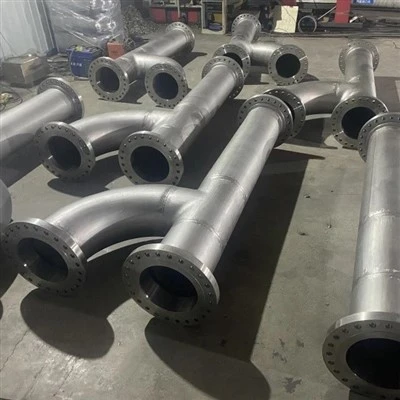
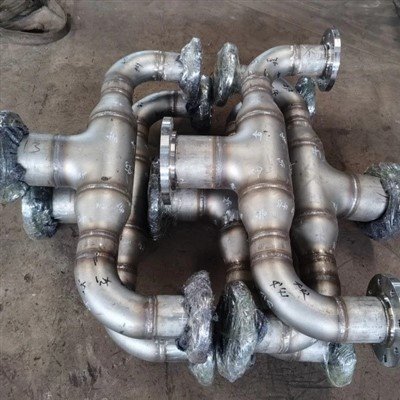
Introduction to Stainless Steel Welded Pipe
Stainless Steel Welded Pipe is a fundamental component in modern industrial and commercial infrastructure, formed by rolling stainless steel plate or strip into a cylindrical shape and joining the seam through precision welding. Unlike seamless pipes created by piercing solid billets, welded pipes offer significant cost efficiencies, especially in larger diameters and thinner walls, without compromising critical performance characteristics for many applications. This manufacturing versatility allows for consistent production of pipes in a wide range of sizes – from small-bore tubing to large-diameter lines exceeding 100 inches.
Predominant grades include the austenitic Type 304/L and 316/L for general corrosion resistance, duplex grades like 2205 for enhanced strength and chloride resistance, and specialized ferritic or super austenitic alloys for specific environments. The core advantage of Stainless Steel Welded Pipe lies in its optimal balance of performance, availability, dimensional consistency, and cost-effectiveness, making it the preferred choice across diverse sectors where reliability and longevity are paramount.

Stainless Steel Welded Pipe Properties
The properties of Stainless Steel Welded Pipe are primarily dictated by the base alloy composition, the manufacturing process, and subsequent treatments. Key mechanical properties include high tensile strength and yield strength, particularly notable in duplex and high-strength austenitic grades, enabling their use in structural and high-pressure applications. Crucially, these pipes inherit the exceptional corrosion resistance inherent to stainless steels – resistance to oxidation, pitting, crevice corrosion, and stress-corrosion cracking (especially in duplex grades) – making them indispensable for handling corrosive media, saline environments, or exposure to acidic/alkaline substances.
The welded seam, often the focus of scrutiny, undergoes microstructural changes during welding. Reputable manufacturers employ controlled welding procedures followed by solution annealing (for austenitic grades) or heat treatments (for duplex) and pickling/passivation. This restores corrosion resistance in the Heat-Affected Zone (HAZ) and ensures the weld region meets or exceeds the base metal's performance. Additional properties like hygienic smoothness (achieved through internal polishing for sanitary tubes), good thermal conductivity, low thermal expansion coefficients, and non-magnetic nature (in austenitic grades) further broaden their applicability.

Stainless Steel Welded Pipe Types
Stainless Steel Welded Pipes are categorized based on their welding methodology, each suited to specific requirements:
- Longitudinally Welded Pipe: The most common type, formed by welding along a single straight seam parallel to the pipe axis. Subtypes include:
- Tungsten Inert Gas (TIG) Welded / Automatic Welded (AW) Pipe: Produced using a non-consumable tungsten electrode under inert gas shielding (Argon). Ideal for precision welding of thinner walls (typically up to 4-6mm) and smaller diameters. Delivers smooth, spatter-free, high-purity welds essential for sanitary, food & beverage, semiconductor, and high-purity chemical applications. Offers excellent control and aesthetic weld beads.
- High-Frequency Induction (HFI) / Electric Resistance Welded (ERW) Pipe: Formed by rolling strip and using high-frequency electrical current to heat and forge the seam edges together without filler metal. Highly efficient and cost-effective for larger production volumes and thicker walls (up to approx. 20mm) in common grades like 304 and 316. Widely used for mechanical, structural, and lower-pressure fluid conveyance applications. Requires careful process control to ensure weld integrity.
- Laser Welded Pipe: Employs a highly focused laser beam for extremely precise, high-speed, narrow welds with minimal HAZ. Ideal for ultra-thin walls and high-precision applications, often found in specialized instrumentation, automotive exhausts, and medical components.
- Plasma Arc Welded (PAW) Pipe: Similar to TIG but uses a constricted plasma arc for deeper penetration and faster speeds on thicker sections (typically 3-12mm). Offers good consistency and is often used for larger diameter pipes.
- Spiral Welded Pipe (HSAW): Manufactured by continuously forming strip into a helical spiral and welding the seam. Primarily used for very large diameter pipes (often over 24 inches) for applications like water transmission, piling, and some structural uses. While cost-effective for large sizes, the spiral weld geometry can introduce different stress patterns compared to longitudinal welds.
Stainless Steel Welded Pipe Applications
The unique combination of properties makes Stainless Steel Welded Pipe ubiquitous across numerous industries:
Chemical and Petrochemical Processing: Handling corrosive chemicals, acids, solvents, and hydrocarbons in reactors, heat exchangers, distillation columns, and transfer lines (Grades 316L, 317L, 904L, Duplex).
Oil and Gas Exploration and Production: Downhole tubing, surface gathering lines, injection lines, and process piping, particularly where corrosion resistance is critical (Duplex, Super Duplex, 13% Cr Martensitic).
Power Generation: Boiler feedwater, condensate lines, cooling systems, flue gas desulfurization (FGD) units, and nuclear auxiliary systems (Grades 304L, 316L, 317L, Duplex).
Food, Beverage and Pharmaceutical (Sanitary Tubing): Essential for hygienic processing, transfer, and packaging lines requiring smooth, non-contaminating, cleanable surfaces.
Water and Wastewater Treatment: Potable water distribution, desalination plants, seawater intake/discharge lines, and sewage treatment due to corrosion resistance and longevity (Grades 304L, 316L, Duplex 2205).
Architecture, Building and Construction (AEC): Structural applications, handrails, curtain walls, decorative elements, and HVAC systems (Grades 201, 304, 316).
Pulp and Paper Industry: Handling corrosive pulping liquors, bleaching chemicals, and wastewater (Grades 316L, 317L, 6% Mo alloys, Duplex).
Automotive and Transportation: Exhaust systems (ferritic grades like 409, 439), fuel lines, brake lines, and structural components.
Industrial Machinery and Equipment: Hydraulic lines, instrumentation tubing, process equipment fabrication.
Conclusion
Stainless Steel Welded Pipe stands as a versatile, reliable, and economically viable solution for countless piping and structural needs globally. Its diverse manufacturing methods (TIG, ERW, Laser, Spiral) cater to specific demands regarding size, wall thickness, precision, and budget. The inherent properties of stainless steel – outstanding corrosion resistance, strength, hygiene, and durability – combined with the controlled welding and finishing processes, ensure performance across extreme environments from deep-sea oil platforms to sterile pharmaceutical plants. Understanding the different types, their properties driven by alloy choice and manufacturing, and the vast range of applications is crucial for engineers, designers, and procurement specialists to select the optimal Stainless Steel Welded Pipe solution. When sourced from reputable manufacturers adhering to stringent international standards (ASTM A312, A358, A789/A790, EN 10217-7, etc.), these pipes deliver long-term value, safety, and operational efficiency.