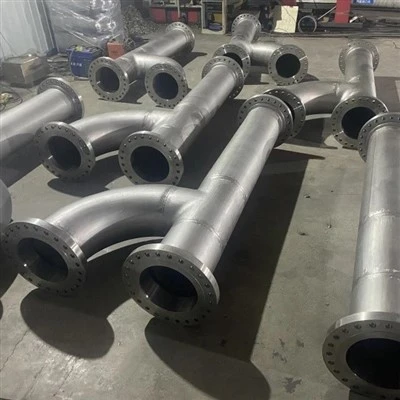
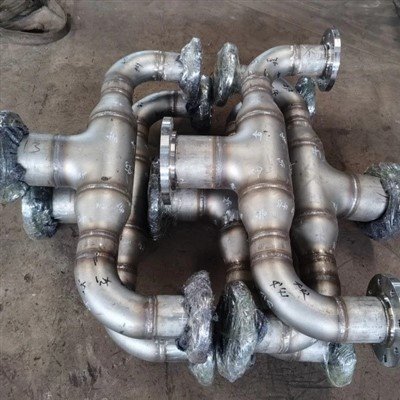
AL6XN (UNS N08367) is a super austenitic stainless steel renowned for its exceptional resistance to chloride corrosion, including pitting, crevice corrosion, and stress corrosion cracking.

AL6XN is the gap between stainless steel and nickel alloys, providing a cost-effective solution for corrosive environments. Its composition includes high chromium (20-22%), nickel (23.5-25.5%), molybdenum (6-7%), and nitrogen (0.18-0.25%), which together enhance its durability in acidic, alkaline, and chloride-rich media.
Typical applications include chemical processing, flue gas desulfurization (FGD) systems, desalination plants, and nuclear power infrastructure.
ASTM A312 Main Specifications for AL6XN Pipes
ASTM A312 specifies seamless and welded austenitic stainless steel tubes for use in high-temperature and corrosive environments. For AL6XN (UNS N08367) tubing, this standard imposes stringent requirements on dimensions, tolerances, and testing. Key specifications include:
Material Grade: UNS N08367 (marked as "AL6XN" or "Incoloy 25-6HN").
Manufacturing Form: Seamless tubing (hot extrusion/cold drawing) or welded tubing (using TIG/plasma welding).
Dimensions: Outer diameter ranges from 1/8 inch to 48 inches, wall thickness conforms to wall thickness grade specifications (e.g., SCH5S to SCH80)
End Treatment: Beveled (for welding) or flat end, with optional protective caps.
Chemical Composition and Mechanical Properties
Table 1: Chemical Composition (Weight %)
|
Element |
Min (%) |
Max (%) |
|
Carbon (C) |
– |
0.03 |
|
Chromium (Cr) |
20.00 |
22.00 |
|
Nickel (Ni) |
23.50 |
25.50 |
|
Molybdenum (Mo) |
6.00 |
7.00 |
|
Nitrogen (N) |
0.18 |
0.25 |
|
Manganese (Mn) |
– |
2.00 |
|
Silicon (Si) |
– |
1.00 |
|
Phosphorus (P) |
– |
0.04 |
|
Sulfur (S) |
– |
0.03 |
|
Iron (Fe) |
Balance |
– |
Table 2: Mechanical Properties
|
Property |
Value |
|
Tensile Strength |
≥690 MPa (100 ksi) |
|
Yield Strength |
≥310 MPa (45 ksi) |
|
Elongation |
≥30% |
|
Hardness (Max) |
241 HB (90 HRB) |
|
Density |
8.24 g/cm³ |
The high nitrogen content boosts strength while maintaining ductility, and the low carbon minimizes sensitization during welding.
Dimensional Tolerances per ASTM A312
ASTM A312 defines precise tolerances for outer diameter (OD) and wall thickness (WT):
Table 3: OD Tolerances
|
Nominal OD Range (Inches) |
Allowable Deviation (mm) |
|
1/8 – 1/2 |
+0.40/–0.80 |
|
>1/2 – 4 |
+0.80/–0.80 |
|
>4 – 8 |
+1.60/–0.80 |
|
>8 – 18 |
+2.40/–0.80 |
Table 4: Wall Thickness Tolerances
|
Nominal Thickness |
Allowable Deviation |
|
All sizes |
+22%/–12.5% |
Pipes must also pass ovality tests (max deviation: 1.5% of nominal OD).

Manufacturing and Quality Assurance Requirements
Heat Treatment: Solution annealing at 980–1150°C followed by rapid quenching ensures optimal corrosion resistance.
Testing: Mandatory hydrostatic/eddy current tests, plus optional nondestructive exams (e.g., ultrasonic, radiographic) for critical applications.
Certifications: Suppliers should provide ASTM A312-compliant mill test certificates, with third-party verification (e.g., BV, DNV) for traceability.
Advantages of AL6XN in Corrosive Environments
Pitting Resistance Equivalent (PRE): ≥40, outperforming 316L (PRE ~26) in chloride-rich media.
Temperature Resilience: Suitable for –40°C to 427°C, with oxidation resistance up to 500°C.
Cost Efficiency: Comparable corrosion resistance to nickel alloys (e.g., C-276) at lower cost.
Applications
AL6XN pipes are ideal for:
Chemical Processing: Reactors, acid storage tanks.
Energy: FGD scrubbers, nuclear plant cooling systems.
Marine Engineering: Seawater pipelines, offshore platform components.
Comparison with Other ASTM A312 Grades
|
Grade |
Cr/Ni/Mo Content |
Key Applications |
|
AL6XN (N08367) |
20/24/6 |
Chloride-rich, high-temperature environments |
|
316L (S31603) |
17/12/2.5 |
Mild corrosive conditions (e.g., food processing) |
|
254 SMO (S31254) |
20/18/6 |
Similar to AL6XN but higher cost |
AL6XN's nitrogen-enhanced strength allows thinner walls, reducing material costs without compromising safety.
254 SMO vs AL6XN

Chemical Composition Differences
The core difference between the two lies in their nickel content. 254SMO contains approximately 18% nickel, while AL-6XN has a significantly higher nickel content, reaching approximately 24% to 25%.
Due to its higher nickel content, AL-6XN exhibits a more stable austenitic structure, which more effectively inhibits the precipitation of harmful intermetallic phases during welding or heat treatment, thus offering advantages in manufacturing thick-walled components. 254SMO, with its relatively low nickel content, relies heavily on approximately 0.2% nitrogen (N) for its stability.
Corrosion Resistance
Both exhibit very similar resistance to pitting and crevice corrosion. In most chloride environments, their corrosion resistance is essentially equivalent.
However, because 254SMO contains approximately 0.7% copper, while AL-6XN has a lower copper content, the lower copper content may result in slightly better crevice corrosion resistance in specific seawater crevice corrosion tests.
Mechanical Properties and High-Temperature Applications
In terms of mechanical strength, AL-6XN typically exhibits slightly higher strength. This is primarily attributed to its higher nickel and nitrogen content, resulting in yield strength and tensile strength that are approximately 5% to 10% higher than 254SMO.
In high-temperature applications, according to ASME specifications, AL-6XN is approved for use in environments up to approximately 427°C, while the permissible temperature limit for 254SMO is approximately 371°C.

Machinability and Cost
Since nickel is one of the most expensive alloying elements in specialty stainless steels, 254SMO, with its lower nickel content, typically offers a significant raw material cost advantage and is considered one of the most cost-effective 6% molybdenum stainless steel options.
However, 254SMO has poor machinability. AL-6XN, on the other hand, has better hot workability and cold formability, making it easier to manufacture complex parts.
Standards and Certifications & Industry Applications
In terms of industry standards and certifications, 254SMO is widely included in major international standard systems, including American Standards (ASTM) and European Standards (EN), and enjoys very high market recognition.

While AL-6XN also exists in American Standards, its coverage in European Standards is relatively limited. In industries with extremely high safety requirements, such as oil and gas and chemical industries, both meet the NACE MR0175 standard and can be used in harsh acidic environments.
In practical applications, 254SMO plays an important role in seawater desalination and flue gas desulfurization systems due to its excellent cost-effectiveness.
AL-6XN, with its higher strength, better high-temperature performance and structural stability, is more often selected for high-pressure condenser tubes in power plants and for more demanding chemical processing equipment.
Conclusion
ASTM A312 AL6XN pipes combine superior corrosion resistance, mechanical strength, and lifecycle economy. Adherence to ASTM tolerances, proper heat treatment, and rigorous testing ensures reliability in demanding applications.
For detailed project specifications, consult ASTM A312/A312M-2022 and material test reports from certified manufacturers.