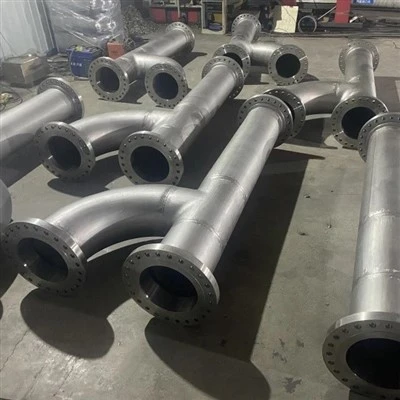
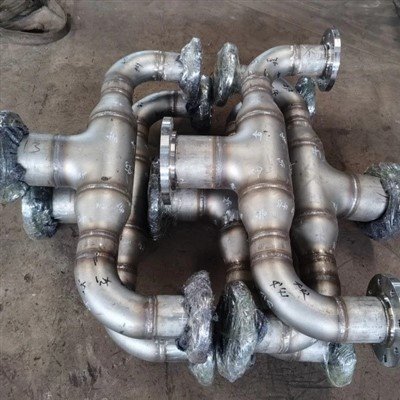
What Is 17-4ph Stainless Steel?

17-4PH (UNS S17400) is a martensitic stainless steel renowned for its high strength, excellent corrosion resistance, and versatile heat treatment properties. 17-4PH alloy is widely used in aerospace, shipbuilding, chemical, and medical device industries.
Its equivalent is UNS S17400, ASTM A693 grade 630, or DIN 1.4542.
17-4 Stainless Steel Chemical Composition
The chemical composition of 17-4PH include:
Chromium (15.0–17.5%): Provides foundational corrosion resistance by forming a protective passive oxide layer.
Nickel (3.0–5.0%): Stabilizes the austenitic phase during heat treatment, enhancing toughness.
Copper (3.0–5.0%): Forms epsilon (ε) precipitates during aging, responsible for significant strength enhancement.
Niobium + Tantalum (0.15–0.45%): Refines grain structure and inhibits sensitization, reducing intergranular corrosion risk.
Low Carbon (≤0.07%): Minimizes carbide precipitation, preserving weldability and corrosion resistance.
This composition enables 17-4PH to achieve a pitting resistance equivalent number (PREn) > 40, making it suitable for moderate chloride-containing environments.
17-4 Stainless Steel Mechanical and Physical Properties
Strength and Hardness
The mechanical properties of 17-4PH are directly tied to its heat treatment. Below are typical values under different aging conditions:
|
Aging Condition |
Tensile Strength (MPa) |
Yield Strength (MPa) |
Elongation (%) |
Hardness (HRC) |
|
H900 (480°C) |
≥1310 |
≥1180 |
≥10 |
40–45 |
|
H1150 (620°C) |
≥930 |
≥725 |
≥16 |
28–31 |
Density: 7.80 g/cm³.
Operating Temperature Range: -40°C to 300°C; prolonged exposure above 300°C risks over-aging and strength loss.
Corrosion Resistance
17-4PH has corrosion resistance comparable to Type 304 stainless steel in mild atmospheres, dilute acids, and saltwater environments. However, it is not recommended for strongly reducing acids without protective coatings. Its resistance to stress corrosion cracking (SCC) makes it valuable in marine and chemical applications.
17-4 Stainless Steel Heat Treatment

17-4PH undergoes a two-stage heat treatment process to achieve optimal properties:
Solution Treatment: Heating to 1020–1060°C followed by rapid cooling (water or air) to form a supersaturated martensitic structure.
Aging (Precipitation Hardening): Heating to 480–620°C for 1–4 hours to precipitate copper-rich phases (e.g., H900 at 480°C for maximum strength).
Critical considerations include:
Avoiding temperatures between 370°C and 480°C during service to prevent σ-phase embrittlement.
Post-weld aging to restore strength in heat-affected zones.
17-4 Stainless Steel Price
The price of 17-4 stainless steel is influenced by a variety of factors.
Raw material costs are fundamental, especially since market price fluctuations of alloying elements such as nickel and chromium directly impact the price of the finished product.
The complexity of the manufacturing process is also crucial; for example, seamless pipes are generally more expensive than welded pipes, and cold drawing, precision machining, or special heat treatments all increase costs.

Purchase volume significantly affects the unit price; large-volume purchases typically yield substantial discounts. Furthermore, quality certifications and standards also influence prices; materials with complete certifications and strong traceability command higher prices.
The following table summarizes the reference prices for different types of 17-4 stainless steel products:
|
Product Forms |
Price (USD/kg) |
Price (USD/t) |
|
17-4PH Stainless Steel Seamless Tube |
3.50−3.80 |
1,400−1,500 |
|
17-4PH Stainless Steel Round Bar |
1.80−3.50 |
1,100−2,325 |
|
17-4PH Stainless Steel Sheet/Plate |
1.45−2.32 |
1,450−2,320 |
Stainless Steel 17 4PH vs 316L

Chemical Composition
The fundamental difference between 17-4PH and 316L lies in their chemical composition and microstructure.
17-4PH is a martensitic stainless steel, nominally containing approximately 17% chromium (Cr) and 4% nickel (Ni), with the addition of elements such as copper (Cu) and niobium (Nb).
316L is an austenitic stainless steel, containing a higher nickel content (approximately 10-14%) and an additional 2-3% molybdenum (Mo).
Molybdenum is a key element giving it excellent resistance to chloride pitting corrosion. Its low carbon content (C≤0.03%) makes it insensitive to intergranular corrosion.
Mechanical Properties
In terms of mechanical properties, the two differ significantly. With proper heat treatment, 17-4PH can easily achieve a tensile strength exceeding 1310 MPa, a yield strength exceeding 1180 MPa, and a hardness of HRC 40-45, making it a typical high-strength, wear-resistant material.
In contrast, 316L typically has a tensile strength in the range of 580-650 MPa and a lower yield strength, but it possesses extremely high ductility and toughness, with an elongation of 32%-49%. It can absorb a large amount of energy without fracturing, performing exceptionally well in applications requiring impact and fatigue resistance.
At high temperatures, the strength advantage of 17-4PH can be maintained up to approximately 300°C, while 316L maintains the stability of its austenitic structure over a wider temperature range.
Corrosion Resistance
In terms of corrosion resistance, 316L is superior to 17-4PH.
17-4PH's corrosion resistance is comparable to 304 stainless steel, resisting corrosion from the atmosphere, diluted acids, or salts, but it is prone to pitting and crevice corrosion in harsh environments containing halides.
316L, on the other hand, exhibits significantly enhanced resistance to pitting and crevice corrosion, making it particularly suitable for environments containing chlorides, such as seawater and chemical media. Furthermore, 316L's low carbon content makes it less susceptible to intergranular corrosion, maintaining good corrosion resistance even after welding.
Machining and Welding Properties
The two differ significantly in their machinability.
17-4PH has good machinability in the solution-treated state, but after heat treatment, its high strength and hardness increase the difficulty of machining, and its weldability is relatively poor, requiring preheating.
316L, on the other hand, is renowned for its excellent formability and weldability. It is easy to cold work, deep draw, and weld, and requires no complex heat treatment after welding. These characteristics make it highly popular in the manufacture of containers, pipes, and complex structures.
From a physical property perspective, the coefficient of thermal expansion of 17-4PH is approximately 6.0 × 10⁻⁶/°F, while that of 316L is approximately 9-11 × 10⁻⁶/°F.
17-4PH Stainless Steel Applications
The following are main applications:

Aerospace and Defense: The alloy is extensively used in aircraft fittings, fasteners, turbine blades, engine components, and structural parts. In these applications, the material's high strength-to-weight ratio, fatigue resistance, and ability to maintain properties at moderately elevated temperatures are particularly valuable.
Oil and Gas Industry: Components such as valves, pumps, shafts, and downhole tools utilize 17-4PH for its resistance to sour gas environments, high strength for deep well applications, and general corrosion resistance in offshore environments.
Medical and Surgical Instruments: The biocompatibility, corrosion resistance, and ability to be precision-machined make 17-4PH suitable for surgical instruments, orthopedic implants, and dental components.
Chemical and Food Processing: Equipment such as mixing shafts, valves, pumps, and processing components benefit from the alloy's corrosion resistance to various chemicals and food products. In many environments, its corrosion resistance is comparable to type 304 stainless steel but with significantly higher strength.
Nuclear Power Industry: The combination of radiation resistance, dimensional stability, and corrosion resistance makes 17-4PH suitable for nuclear waste casks, control rod mechanisms, and other nuclear components.
Industrial Applications: The material finds broad use in gears, bearings, molds, dies, and various mechanical components where wear resistance, high strength, and moderate corrosion resistance are required.