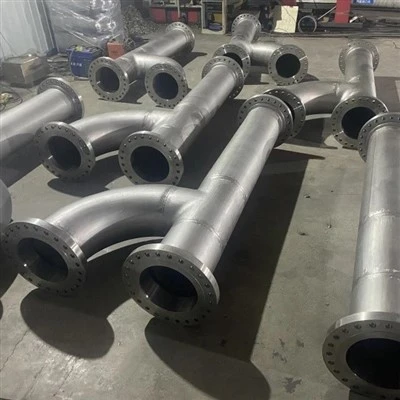
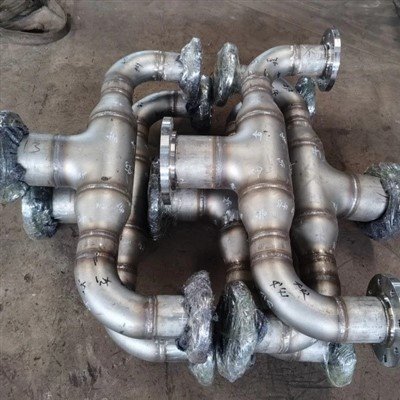
ASTM A269 321H seamless pipe is a solution for applications demanding exceptional performance under elevated temperatures and corrosive environments. This comprehensive guide provides detailed dimensional specifications, technical properties, and application considerations for ASTM A269 321H seamless pipes, offering valuable insights for professionals.

The importance of understanding precise dimensional specifications cannot be overstated, as even minor deviations can significantly impact system integrity, especially in critical applications such as power generation, petrochemical processing, and high-temperature heat exchangers.
Understanding ASTM A269 Standard and 321H Material
ASTM A269 Standard
ASTM A269 standard specifies requirements for seamless and welded austenitic stainless steel tubing intended for general corrosion resistance and low- or high-temperature service. This comprehensive standard covers dimensional tolerances, mechanical properties, testing requirements, and certification protocols that manufacturers must adhere to to ensure product quality and reliability.
The standard encompasses various grades of austenitic stainless steels, including TP321H. ASTM A269 tubes are typically supplied in annealed condition to optimize their corrosion resistance and mechanical properties. The standard mandates specific nondestructive testing requirements, including hydrostatic or eddy current tests, to verify tube integrity and prevent premature failures in service.

321H Material Composition and Properties
The 321H grade is a titanium-stabilized austenitic stainless steel characterized by its higher carbon content compared to the standard 321 grade, which enhances its high-temperature strength properties. The key differentiating element in 321H is titanium, added in a minimum ratio of 5 times the carbon content but not exceeding 0.70%.
The chemical composition of 321H stainless steel typically includes:
Chromium (17.0-19.0%): Provides excellent oxidation and corrosion resistance.
Nickel (9.0-12.0%): Maintains austenitic structure and enhances high-temperature durability.
Titanium (≥5×C to 0.70%): Stabilizes against sensitization by forming carbides preferentially to chromium.
This specific composition results in superior creep and stress rupture properties compared to conventional stainless steels, making 321H particularly suitable for high-temperature applications such as superheaters, heat exchangers, and boiler tubes where continuous operation at elevated temperatures is required.
ASTM A269 321H SMLS Pipe Dimensional Specifications

Standard Size Ranges
ASTM A269 321H seamless pipes are manufactured in a comprehensive range of sizes to accommodate diverse industrial requirements. The standard covers:
Outside Diameter Range: 15.0 mm to 228.0 mm, with extended availability up to 610.0 mm for specialized applications.
Wall Thickness Range: 0.4 mm to 20.0 mm, with specific thicknesses correlated to diameter sizes and pressure requirements.
Standard Lengths: Typically supplied in fixed lengths of 6,000 mm or 12,000 mm, with custom lengths available according to project specifications.
For instrumentation applications requiring smaller diameters, ASTM A269 321H tubing is available in outer diameters ranging from 3.18 mm to 101.6 mm with wall thicknesses from 0.5 mm to 20.0 mm.
This dimensional versatility enables engineers to select precisely sized tubing for various applications, from complex instrument manifolds to large-scale process lines.
Dimensional Tolerances
The ASTM A269 standard establishes precise dimensional tolerances to ensure proper fit-up and compatibility in piping systems. The tolerance specifications include:
Table: ASTM A269 321H Seamless Pipe Dimensional Tolerances
|
Parameter |
Size Range |
Tolerance |
|
Outside Diameter |
<38.1 mm |
±0.13 mm |
|
≥38.1-88.9 mm |
±0.25 mm |
|
|
≥88.90-139.70 mm |
±0.38 mm |
|
|
≥139.70-203.20 mm |
±0.76 mm |
|
|
≥203.20-304.80 mm |
±1.01 mm |
|
|
≥304.80-355.60 mm |
±1.26 mm |
|
|
Wall Thickness |
OD<12.7 mm |
±15% |
|
OD≥12.7 mm |
±10% |
|
|
Length |
For random lengths |
+3.2 mm / -0 mm (OD<38.1 mm) |
|
+4.8 mm / -0 mm (OD≥38.1 mm) |
ASTM A269 321H SMLS Pipe Manufacturing Process
ASTM A269 321H seamless pipes are manufactured using either cold drawing or cold rolling processes, both capable of producing tubes with precise dimensions and superior surface finish. The manufacturing sequence typically involves:
Material Preparation: Melting and casting of 321H composition followed by hot working to create initial tube hollows.
Cold Working: The tubes are processed through cold drawing or rolling operations to achieve final dimensions.
Heat Treatment: Solution annealing at temperatures typically exceeding 1040°C (1900°F) to dissolve carbides and restore corrosion resistance.
Finishing Operations: Descaling, pickling, polishing, and bright annealing to achieve the required surface finish.
ASTM A269 321H Material Technical Data
The 321H grade exhibits characteristic physical and mechanical properties:
Table: Typical Physical and Mechanical Properties of ASTM A269 321H
|
Property |
Value |
|
Density |
8000 kg/m³ |
|
Elastic Modulus |
193 GPa |
|
Mean Coefficient of Thermal Expansion |
15.9 × 10⁻⁶/°C |
|
16.2 × 10⁻⁶/°C |
|
|
18.4 × 10⁻⁶/°C |
|
|
Thermal Conductivity |
16.2 W/m·K |
|
21.5 W/m·K |
|
|
Specific Heat |
500 J/kg·K |
|
Tensile Strength |
≥515 MPa |
|
Yield Strength (0.2% offset) |
≥205 MPa |
|
Elongation |
≥35% |
These properties make 321H particularly suitable for high-temperature applications where thermal stability and strength retention are data.

Specification Guide
When selecting ASTM A269 321H seamless pipes for specific applications, several factors warrant consideration:
Temperature Limitations: 321H is suitable for continuous service up to 816°C (1500°F) and intermittent service to 900°C (1652°F).
Corrosion Considerations: While resistant to oxidation and many corrosive media, 321H is susceptible to chloride stress corrosion cracking in environments containing chlorides.
Fabrication Considerations: The material exhibits good weldability and formability, though post-weld heat treatment may be necessary for certain applications.
Surface Finish Requirements: Specify appropriate surface finishes (e.g., bright annealed, polished) based on application needs.
ASTM A321H SMLS Pipe Applications and Specifications

ASTM A269 321H seamless pipes are specified across diverse industries requiring reliable performance in demanding environments:
Power Generation: Boiler tubes, superheaters, and high-pressure steam lines where high-temperature strength and oxidation resistance are critical.
Petrochemical Industry: Heat exchangers, condenser tubes, and process piping handling corrosive media at elevated temperatures.
Oil and Gas: Onshore control panels, topside processing facilities, and subsea manifolds where corrosion resistance and reliability are essential.
Aerospace and Automotive: Hydraulic lines, exhaust systems, and other high-temperature components.
Food and Pharmaceutical: Sanitary tubing applications where surface finish and cleanability are paramount.
The titanium stabilization in 321H makes it particularly suitable for applications involving thermal cycling or operating in the sensitization temperature range (425-815°C), where standard austenitic stainless steels would be susceptible to intergranular corrosion.
Industry Standards and Specifications
ASTM A269 321H seamless pipes comply with numerous international standards and specifications, including:
ASME SA269: Identical to ASTM A269 but with ASME stamping requirements for pressure application.
EN 10216-5: European standard for seamless steel tubes for pressure purposes.
PED 97/23/EC: Compliance with European Pressure Equipment Directive.
NACE MR0175/ISO 15156: Requirements for sulfide stress cracking resistant materials.
This multi-standard compliance facilitates global procurement and utilization of 321H seamless pipes across different regions and regulatory environments.
Conclusion
ASTM A269 321H seamless pipes represent a specialized solution for demanding applications requiring excellent high-temperature strength, corrosion resistance, and long-term reliability.
The titanium-stabilized composition of 321H offers distinct advantages over conventional austenitic stainless steels in applications involving thermal cycling or extended exposure to elevated temperatures.
When selected and specified appropriately, ASTM A269 321H seamless pipes contribute significantly to system reliability, safety, and performance across diverse industrial sectors.