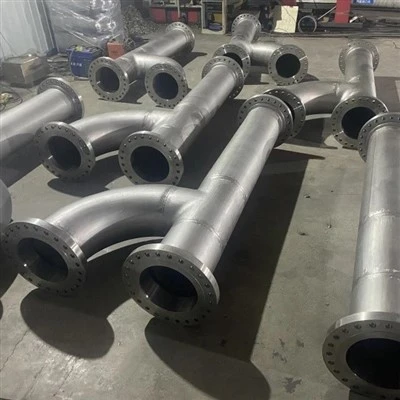
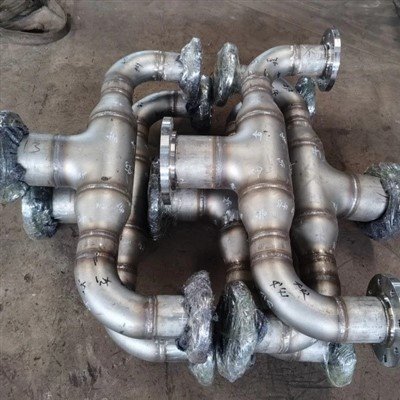
This blog provides a detailed exploration of the ASTM A213 SS310s pipe specification. We will delve into its chemical composition, mechanical properties, manufacturing standards, and unique characteristics.

What is SS310s (UNS S31008)?
SS310s, also known by its UNS designation S31008, is an austenitic stainless steel renowned for its excellent resistance to oxidation and corrosion at high temperatures. It is essentially the low-carbon version of the basic 310 alloy.
The "S" in 310S signifies its low carbon content, which reduces the tendency for carbide precipitation during welding, thereby enhancing its weldability and corrosion resistance in the as-welded condition. This alloy is also commonly referred to as "2520" stainless steel, indicating a typical composition of 25% chromium and 20% nickel.
Characteristics and Advantages of SS310s
Exceptional Oxidation Resistance: The high chromium content allows SS310s to form a stable, protective chromium oxide layer on their surface when exposed to high temperatures.
This layer protects the underlying metal from further oxidation, enabling continuous use at temperatures up to 1150°C and peak temperatures up to 1200°C.
High Temperature Strength: SS310s retains a significant portion of its strength at elevated temperatures. It offers high creep strength, which is the material's resistance to deformation under mechanical stress at high temperatures over extended periods. At 1000°C, it can retain approximately 70% of its room-temperature strength.

Good Carburization Resistance: This alloy performs well in carbon-rich atmospheres, such as those found in petrochemical cracking furnaces, by resisting the diffusion of carbon into the metal, which can cause embrittlement.
Corrosion Resistance: It offers good general corrosion resistance, superior to some common austenitic steels like 304 and 309, particularly against oxidizing acids.
ASTM A213 Specification for SS310s Pipes
The ASTM A213 specification is a standard that covers seamless ferritic and austenitic alloy-steel boiler, superheater, and heat-exchanger tubes. Pipes manufactured to this standard are intended for service in high-pressure and high-temperature environments. When combined with SS310's material, the resulting tubes are designated as ASTM A213 TP310S.
Chemical Composition
The following table outlines the chemical composition requirements for ASTM A213 TP310S as per the standard.
Table 1: Chemical Composition of ASTM A213 TP310S
|
Element |
Composition (%) |
|
Carbon (C) |
≤ 0.08 |
|
Manganese (Mn) |
≤ 2.00 |
|
Phosphorus (P) |
≤ 0.045 |
|
Sulfur (S) |
≤ 0.030 |
|
Silicon (Si) |
≤ 1.50 |
|
Chromium (Cr) |
24.00 - 26.00 |
|
Nickel (Ni) |
19.00 - 22.00 |
|
Iron (Fe) |
Balance |
Mechanical Properties
The mechanical properties of ASTM A213 TP310S seamless pipes at room temperature must meet or exceed the following values:
Table 2: Mechanical Properties of ASTM A213 TP310S
|
Property |
Value |
|
Tensile Strength |
≥ 515 MPa (min) |
|
Yield Strength (0.2% Offset) |
≥ 205 MPa (min) |
|
Elongation (in 2 inches) |
≥ 40% (min) |
|
Hardness (Brinell) MAX |
217 HB |
Manufacturing and Dimensions
Process: ASTM A213 tubes are seamless, meaning they are produced by piercing a solid billet to create a hollow shell without any welds. This process is ideal for high-pressure applications, as it eliminates a potential line of weakness.
Size Range: These pipes are available in a wide range of outer diameters, typically from 6 mm to 2500 mm (3/8" to 100"), with wall thicknesses ranging from 1 mm to 150 mm or according to schedule walls.
Surface Finish: The tubes are typically supplied with a pickled or annealed surface finish. Other finishes like polished or bright annealed are also available for applications requiring a smoother surface for cleanliness or aesthetic reasons.
ASTM A213 TP310S Pipes Applications
Due to their robust properties, ASTM A213 TP310S pipes are specified in numerous critical high-temperature applications across various industries:

Power Generation: Boiler tubes, superheaters, and high-temperature reheaters in large power generation boilers, especially those with supercritical or near-critical parameters.
Petrochemical Industry: Tubing for catalytic recovery systems, cracking furnace tubes, and high-temperature heat exchangers.
Industrial Furnaces: Components for fluidized bed furnaces, pulverized coal burners, heat treatment furnace parts, oven linings, and radiant tubes.
Other Industries: Aerospace, metallurgy, and incineration systems.
310s Stainless Steel Temperature Limit
Under continuous use, 310S stainless steel can withstand temperatures up to approximately 1150°C, while under intermittent exposure, its maximum withstand temperature can reach 1100°C to 1200°C.
This excellent heat resistance is primarily due to its high chromium and nickel content, which allows it to form a protective chromium oxide film at high temperatures, thus providing excellent resistance to oxidation and creep.
It is important to note that prolonged use within the temperature range of 425°C to 860°C may lead to carbide precipitation, affecting its performance in certain corrosive environments;
Furthermore, its performance may degrade in atmospheres containing reducing sulfur gases.
Therefore, it is widely used in high-temperature critical components such as boilers, heat exchangers, industrial furnace tubes, and petrochemical processing equipment.
How to Maintain 310s Stainless Steel Pipe?

Regular Cleaning and Surface Care
Regular cleaning aims to remove surface contaminants and maintain its integrity. Daily cleaning can be done with soap and water and a soft cloth. For stubborn organic stains, a small amount of alcohol can be used.
After cleaning, be sure to rinse the surface thoroughly with clean water and immediately dry it with a soft cloth to prevent water residue. Never use abrasive tools such as steel wool, as this may scratch the protective film on the surface.
Welded Joints
Welded joints are a key focus and weak point in the maintenance of 310S stainless steel pipes. During welding, ensure the use of high-purity gas and effective argon gas protection or application of a special welding backing agent to the inside of the pipe to prevent high-temperature oxidation and blackening at the weld root.
For completed welds, post-weld pickling and passivation treatment should be performed to remove the oxide color from the heat-affected zone and restore its corrosion resistance. If serious defects such as macroscopic cracks are found in the weld, it should be marked off and re-welded immediately.
Corrosion Protection
310S stainless steel pipes still require targeted corrosion protection in certain environments. In high-temperature environments containing chloride ions or sulfides, a specialized protective coating should be considered.
The selected coating system should withstand the operating temperature and have good compatibility with the stainless steel.

Proper Storage
310S stainless steel pipes should be stored in a dry, well-ventilated indoor environment, ideally on wooden or composite material supports, avoiding direct contact with other metals such as carbon steel to prevent galvanic corrosion.
If the piping system is to be out of service for an extended period, it must undergo thorough cleaning, drying, and sealing. This can be achieved by purging with an inert gas such as dry nitrogen.