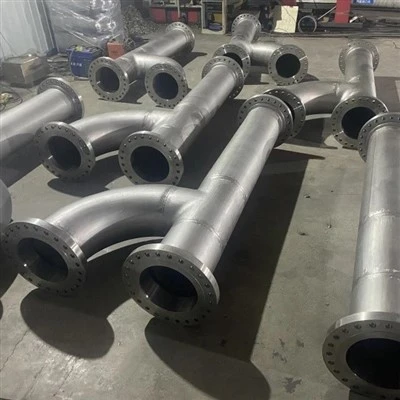
Stainless Steel 317 is an austenitic chromium-nickel steel, which enhances resistance to corrosive chemicals and chloride pitting. This alloy is critically important in industries where standard stainless steels like 304 or 316 are insufficient for handling aggressive environments.

This article provides a detailed analysis of 317 stainless steel pricing, examining the key variables that influence its cost and offering informed purchasing decisions.
Understanding 317 Stainless Steel and Price
Stainless Steel 317 (UNS S31700) is characterized by its higher alloy content compared to standard austenitic steels. With a typical composition including 18-20% chromium, 11-15% nickel, and 3-4% molybdenum, it offers superior performance in corrosive environments.
This alloy maintains excellent high-temperature strength and oxidation resistance, further expanding its utility in furnace components, heat exchangers, and exhaust systems.
317 Stainless Steel Price
The price of 317 stainless steel varies significantly based on form, size, quantity, and supplier. The following table summarizes approximate price ranges across 317 different product forms:
|
Product Form |
Price Range |
Unit |
Minimum Order Quantity |
|
Sheet/Plate |
800−5,000 |
per ton |
1 ton |
|
Round Bar |
1.30−4.99 |
per kilogram |
1,000 kg |
|
Square Pipe/Tube |
490−4,500 |
per ton |
1 ton |
|
Coil |
945−2,400 |
per ton |
1-3 tons |
This table reflects standard grades of 317 stainless steel in common forms and sizes.
Specialty sizes, custom specifications, and products with additional certifications typically command premium pricing. For instance, 317L has a slightly higher price due to its enhanced weld ability and corrosion resistance in welded structures.
Factors Influencing 317 Stainless Steel Price

Raw Material Costs
The price of 317 stainless steel is profoundly influenced by its chemical composition, particularly nickel, chromium, and molybdenum. For instance, nickel prices can be particularly volatile, directly impacting 317 stainless steel's cost since it contains 11-15% nickel content.
Market dynamics between major stainless steel producers and consumer nations also significantly affect pricing. Trade policies, import/export duties, and transportation costs all contribute to the final price that end-users pay.
Production Methods and Processing
The manufacturing process directly affects both the quality and cost of 317 stainless steel products. Hot-rolled products generally cost less than cold-rolled alternatives due to reduced processing steps but may have dimensional limitations and surface finish constraints.
Cold-working processes enhance mechanical properties and surface quality but require additional equipment, energy, and labor, increasing the final price.
Further processing such as heat treatment, pickling, passivation, and various surface finishes (2B, BA, No. 4, No. 8) add incremental costs but enhance performance characteristics.
Specialized forms like seamless tubes or precision-made components require more complex manufacturing techniques, resulting in higher per-unit costs compared to standard forms like sheets or bars.
Quality Certifications and Supplier Reputation
Suppliers with established reputations for quality consistency, reliable delivery, and technical support typically command premium prices of 5-20% above market averages.
These suppliers typically invest in comprehensive quality management systems, third-party certifications, and rigorous testing protocols, all of which contribute to their operating costs but provide customers with assurance of material reliability.
Certified materials for specific industries involve additional testing, documentation, and liability insurance, which increases their cost.
Established suppliers like Baosteel and other major mills typically price their products higher due to their recognized quality standards and technical support capabilities.
Stainless Steel 317 Applications

Chemical Processing Industry: 317 stainless steel is widely used in reactors, distillation columns, heat exchangers, and piping systems handling corrosive chemicals.
In these applications, the material's resistance to sulfuric and phosphoric acids justifies its premium cost compared to standard grades, with pricing typically ranging from 2,000 to 4,000 per ton for specially fabricated components.
Pollution Control Equipment: Scrubbers, ducting, and stack liners in flue gas desulfurization systems expose materials to highly corrosive environments. The superior pitting resistance of 317 stainless steel in chloride-containing environments makes it a preferred choice, with pricing for these applications typically falling in the upper quartile of market ranges due to stringent quality requirements.

Marine and Offshore Applications: While duplex stainless steels are often preferred for structural components in marine environments, 317 finds applications in specialized equipment, fasteners, and components. Marine-grade certifications typically add 10-15% to the base price of the material.
Pharmaceutical and Food Processing: While 316L is more common, 317 sees use in highly corrosive processing environments, particularly where acidic cleaners or sterilants are regularly used.
Materials for these applications require superior surface finishes and specific certifications, commanding prices at the higher end of the spectrum.
Purchasing Guide for 317 Stainless Steel
Prices for stainless steel tend to be cyclical, influenced by global economic conditions, raw material availability, and industrial demand cycles.
Monitoring nickel and molybdenum prices can provide indicators for optimal purchasing times, as these alloying compositions significantly impact 317's price.

Building relationships with multiple suppliers and requesting regular quotations helps identify pricing trends and opportunities. Many suppliers offer slight discounts during traditionally slow business periods or when they have excess inventory.
Consider establishing framework agreements with price adjustment mechanisms based on recognized indices for large, long-term projects.
Order quantities significantly impact per-unit costs, with bulk purchases typically offering substantial savings. However, balancing inventory carrying costs against volume discounts is essential.
The following strategies can reduce procurement costs:
Consolidated Purchasing: Combine requirements across projects to achieve volume price breaks.
Standardization: Where possible, use standard sizes and forms rather than custom specifications to avoid premium pricing.
Supplier Selection: Evaluate suppliers based on total value rather than just price, considering technical support, reliability, and certification requirements.
Difference Between 316 And 317 Stainless Steel
In simple terms, 317 can be seen as an "enhanced" version of 316. It offers superior corrosion resistance by increasing the content of alloying elements; naturally, it's also more expensive.
The table below shows their main differences:
|
Characteristics |
316 Stainless Steel |
317 Stainless Steel |
|
Differences |
Standard molybdenum content, economical and practical |
Higher molybdenum content, designed for harsh environments. |
|
Chemical Composition |
Chromium (Cr): 16-18% Nickel (Ni): 10-14% Molybdenum (Mo): 2-3% |
Chromium (Cr): 18-20% Nickel (Ni): 11-15% Molybdenum (Mo): 3-4% |
|
Corrosion Resistance |
Good performance, suitable for most environments such as seawater and mild chemicals. |
Superior resistance, especially to pitting and crevice corrosion, suitable for highly corrosive environments. |
|
Mechanical Strength |
Tensile strength ≥485 MPa, Yield strength ≥170 MPa |
Slightly higher: Tensile strength ≥515 MPa, Yield strength ≥205 MPa |
|
Main Applications |
Marine equipment, food processing machinery, building facades, medical devices. |
Suitable for chemical processing equipment, pulp and paper industry, offshore oil platforms) |
|
Cost |
Low cost, high cost-performance ratio. |
Typically 15-30% more expensive than 316 |
Choose 316 stainless steel: Your application environment is not highly corrosive or moderately corrosive, requiring a balance between cost and performance. 316 is a general-purpose material, performing well in food processing, construction, and offshore environments, and is more cost-effective.
Choose 317 stainless steel: Your equipment will be exposed to high concentrations of chlorides, strong acids, or other highly corrosive chemicals.
Conclusion
The worth of 317 stainless steel is determined by a complex interplay of factors, including its specialized composition, manufacturing processes, quality certifications, and market dynamics.
While prices range from 800 to 5,000 per ton depending on product form and specifications, the true value of this alloy emerges in applications where its enhanced corrosion resistance and durability are needed.