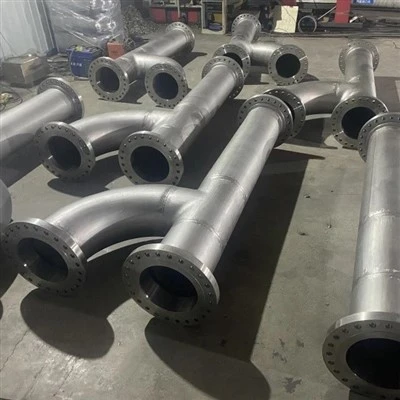
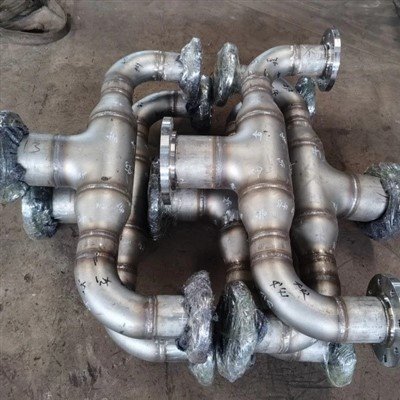
When designing and building systems for high-temperature and high-pressure environments – like power plants, refineries, and chemical processing units – selecting the correct materials is critical for safety and performance. In piping, valves, flanges, and fittings, you'll often encounter wrought steels like A182 F6 and cast steels like A216 Gr. WCB. While both serve similar purposes, understanding their differences is essential. This article compares A182 F6 Class 1 (the most common grade) with its common cast counterpart, ASTM A216 Gr. WCB.

ASTM A182 F6 and ASTM A216 Cast Steel Applications
Both A182 F6 and A216 WCB fall under the "high-temperature, carbon, and low-alloy steels" category covered by ASME B16.34 for valves. They are commonly specified for pressure-containing parts like valve bodies, bonnets, and gate/globe/check valve components operating within specific pressure and temperature limits defined by the ASME Boiler and Pressure Vessel Code (BPVC). Both offer good strength and weldability compared to regular carbon steels.
Forging vs. Casting
The most significant difference lies in how they are made. ASTM A182 F6 is a wrought (forged) material. Steel in a semi-solid state is hammered or pressed (forged) into a shape near its final dimensions. This intense mechanical working aligns the internal grain structure, removes porosity, and greatly improves uniformity and mechanical properties like strength and toughness, particularly impact resistance. ASTM A216 Gr. WCB, however, is a cast material. Molten steel is poured into a mold and solidifies into the desired shape. Casting is excellent for achieving complex geometries cost-effectively but inherently involves less control over the internal structure and can introduce micro-porosity or inclusions, resulting in slightly lower overall strength and toughness compared to a wrought equivalent.
ASTM A182 F6 and ASTM A216 Cast Steel Property Differences
- Strength & Hardness: A182 F6 has significantly higher minimum tensile and yield strength values compared to A216 WCB (e.g., typical A182 F6 tensile around 415 MPa (60 ksi) min vs. WCB at 485 MPa (70 ksi) min only for sections ≤ 2 inches; WCB yield is lower). A182 F6 also exhibits higher hardness inherently due to its alloy content (typically RC 19-23 for Class 1), offering better resistance to wear, galling, and erosion - crucially important for moving valve parts like stems and seats. WCB, being softer, is more susceptible to damage in abrasive services.
- Impact Toughness: This is a major distinction. A182 F6, thanks to its forged structure, has much superior low-temperature toughness (impact resistance). Standard Charpy V-Notch (CVN) requirements for A182 F6 are significantly higher than for A216 WCB, especially at sub-zero temperatures. This makes A182 F6 the preferred choice where shock loading or low operating/service temperatures are involved.
- Internal Soundness & Quality: The forging process creates a denser, more homogeneous structure in A182 F6, minimizing the risk of internal defects like shrinkage cavities. While A216 WCB undergoes inspection per standards, the cast nature inherently carries a higher risk of porosity or inclusions compared to meticulously wrought material.
Corrosion Resistance
This is where A182 F6 shines clearly. It contains 10.5% - 13% Chromium (Cr), giving it significantly better corrosion and oxidation resistance compared to carbon steel A216 WCB. A182 F6 resists atmospheric rusting, oxidation scaling at high temperatures, and mild corrosive environments like steam condensate much better. WCB offers only minimal corrosion resistance and relies heavily on protective coatings or linings in corrosive services; it is highly susceptible to oxidation at elevated temperatures unless specifically designed alloys are used.
When to Choose A182 F6 Class 1? Choose A182 F6 when:
- High Pressure or High Temperature Service: Its inherent strength and oxidation resistance are vital.
- Critical Valve Components: Especially for stems, wedges, seats, and other moving/mating parts subject to wear, galling, or erosion – the hardness of F6 is crucial.
- Low Temperature Requirements: Superior impact toughness makes F6 safer for parts exposed to chill or thermal cycles.
- Mild Corrosive Environments: The chromium content provides essential protection where WCB would quickly corrode or oxidize.
- Maximizing Reliability: For critical applications where the extra cost is justified by reduced risk of failure.
- Parts Subject to Deformation Loads: The higher yield strength of F6 provides better resistance.
When is A216 Gr. WCB Suitable? Choose A216 WCB when:
- Budget Constraints Apply: Cast WCB components are generally less expensive.
- Complex Shapes are Needed: Casting excels at intricate geometries that might be costly or impossible to forge economically.
- Operating Conditions are Less Severe: Moderate temperatures/pressures, non-corrosive services (like clean water or oil), where shock loading isn't a primary concern and wear/galling resistance is less critical.
- Large Parts: Casting is often the only practical manufacturing route for very large valve bodies or components.
- Non-Critical Components: Static parts like some body adapters where high strength, wear resistance, or low-temperature toughness aren't governing factors.
Conclusion
While both A182 F6 and A216 serve the high-temperature valve and fitting market, they are not direct performance equivalents. A182 F6 delivers superior strength, toughness hardness, wear resistance, and corrosion resistance due to its chromium content and the inherent benefits of the forging process. However, these advantages come at a higher cost. A216 WCB is a reliable workhorse cast carbon steel ideal for less demanding applications due to its lower cost and ease of casting complex shapes, but it cannot match A182 F6's capabilities for safety-critical, high-stress, low-temperature, or corrosive environments. Always refer to the specific design requirements, operating conditions (P, T, and media), ASME codes, and manufacturer recommendations to select the right material. For high-performance components facing stress, wear, corrosion, or thermal shocks, A182 F6 is the robust, reliable choice.