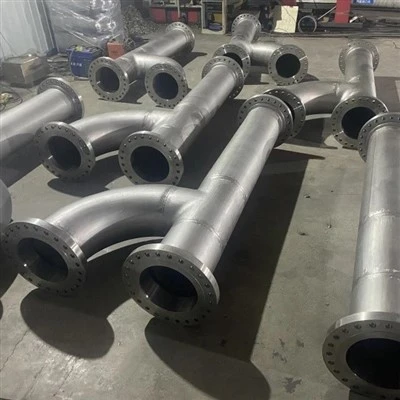
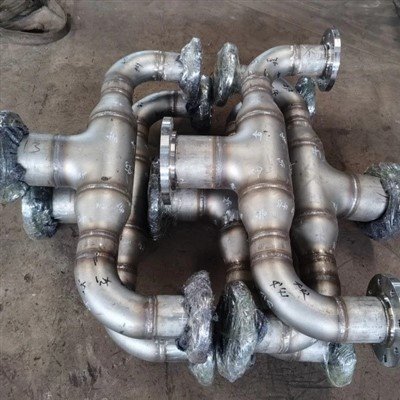
What are ASTM A182 F5 Flanges?
ASTM A182 F5 flanges connect pipes, valves, pumps, and equipment in demanding industrial piping systems. Manufactured from forged chromium-molybdenum alloy steel, they offer superior strength, excellent resistance to corrosion (especially oxidation and sulfidation), and retain their properties at elevated operating temperatures, typically up to 650°C (1200°F). This makes them essential components in critical applications such as refineries, petrochemical plants, fossil fuel and nuclear power generation plants, where handling high-pressure steam and corrosive hydrocarbons requires utmost reliability and safety. Choosing a trusted manufacturer of A182 Grade F5 flanges ensures the integrity of these systems under severe service conditions.

A182 F5 Alloy Steel Advantages
The core strength of A182 F5 flanges lies in their chemical composition specified by the ASTM standard. Primarily an alloy of iron, chromium (around 5%), and molybdenum (around 0.50%), Grade F5 gains significant benefits. Chromium enhances corrosion and oxidation resistance at high temperatures, forming a protective oxide layer. Molybdenum contributes greatly to elevated temperature strength (creep resistance) and improves resistance to pitting and sulfidation corrosion caused by sulfur compounds common in oil and gas streams. This combination results in outstanding high-temperature mechanical properties and long-term service life in aggressive environments, outperforming standard carbon steels which suffer significant strength loss and corrosion above roughly 260°C (500°F).
A182 F5 Flange Manufacturing Process
At JN, our manufacturing of ASTM A182 Grade F5 flanges adheres strictly to the ASTM A182 specification, beginning with certified raw materials. We utilize the forging process to craft these critical components. Forging involves shaping heated alloy steel material under significant pressure using powerful presses. This process fundamentally alters the internal grain structure of the metal, aligning the grain flow with the final shape of the flange. The result is a denser, stronger, more homogeneous part with superior mechanical properties – significantly enhanced toughness, ductility, and fatigue resistance compared to flanges made via other methods like casting or plate cutting. This inherent strength and reliability are vital for high-integrity systems.
Heat Treatment
Heat treatment is a non-negotiable step in producing high-quality A182 F5 flanges, crucial to achieve the required material properties. After forging, flanges undergo normalization. This involves heating the components to a specific austenitizing temperature, holding them there, and then allowing them to air cool. Normalization refines the grain structure further, enhances uniformity, relieves internal stresses induced by forging, and prepares the material for tempering. Subsequent tempering involves reheating to a lower temperature followed by controlled cooling. This step optimizes the balance required by the standard: it increases ductility and toughness while maintaining sufficient tensile and yield strength, resulting in flanges that are strong yet resistant to brittle fracture under load.
JN guarantees the integrity of every ASTM A182 F5 flange through a comprehensive quality assurance (QA) program, integral to our manufacturing identity. Chemical composition is verified via precise spectrographic analysis of the melt. Mechanical properties – including tensile strength, yield strength, elongation, and hardness – are rigorously tested on samples taken from representative forgings in each batch. We perform impact testing (Charpy V-Notch) to confirm toughness at specified temperatures. Visual inspection checks for surface imperfections. Dimensional accuracy is ensured against ASME B16.5, B16.47 Series A or B (or relevant standards like EN 1092 or AS 4087), or customer drawings. Non-Destructive Testing (NDT) like magnetic particle inspection (MPI) or liquid penetrant inspection (DPI) is employed to detect surface flaws, with ultrasonic inspection often added for thicker sections. Every flange shipment includes a comprehensive Material Test Report (MTR or Mill Test Certificate) traceable to the heat number, documenting compliance with all requirements of ASTM A182 F5 and any specified supplementary requirements. We also hold relevant certifications like ISO, PED CE Marking (AD2000-W0, W10), and API Monogram to meet global standards.
Why Choose JN as Your A182 F5 Flanges Manufacturer?
JN stands as a trusted source for high-performance alloy steel flanges globally. Our core focus is on manufacturing reliability built into every product. We leverage years of specialized expertise and dedicated facilities specifically engineered for producing high-grade alloy steel forged flanges under strict process control. Our commitment ensures you receive ASTM A182 F5 flanges that meet the precise chemical, mechanical, and dimensional specifications for critical installations. We understand the demanding nature of your projects and supply flanges with the assurance of full traceability and comprehensive certification (MTRs to 3.1/3.2), supporting regulatory compliance and your own QA documentation. We offer a wide range of pressure ratings (Class 150 to Class 2500), sizes, and configurations, including welding neck, slip-on, socket weld, lap joint, blind, threaded flanges and customized designs for specialized applications.
Getting Your High-Quality A182 Grade F5 Flanges
When your piping systems demand the proven high-temperature and corrosion resistance of alloy steel, choose the quality and reliability of JN ASTM A182 F5 flanges. Contact our technical sales team today to discuss your specific project needs, request an updated price offer, or learn more about our alloy steel flange manufacturing capabilities. We are ready to provide tailored solutions backed by our commitment to quality, performance, and on-time delivery for your critical infrastructure requirements. Let us help you ensure the integrity and longevity of your pressure-retaining systems.